 Elena Vasquez
Decorah rewards visitors who sequence it properly: start with cold water and colder stone at Dunning’s Spring and the Ice Cave, spend the middle of the day inside Vesterheim, the National Norwegian-American Museum, and finish on the Upper Iowa River or one of its trout streams. This small town in northeast Iowa, in the unglaciated Driftless Area, packs a 200 foot waterfall, an ice cave that holds ice into summer, and the country’s flagship Norwegian-American museum into a visit that fits comfortably into two days.
Quick Facts
- Where: Decorah, Winneshiek County, northeast Iowa, in the Driftless Area
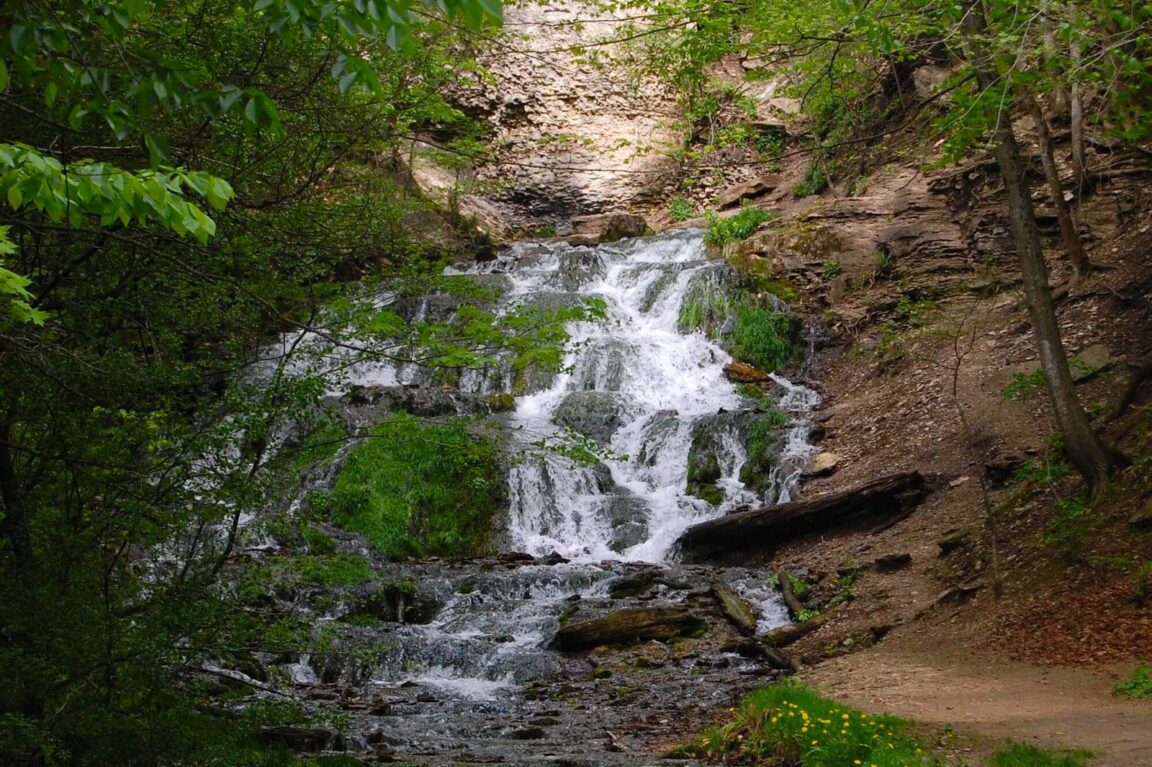
- Headline nature stop: Dunning’s Spring Park, a spring fed 200 foot waterfall a short walk from downtown
- Strangest stop: Decorah Ice Cave State Preserve, about a half mile from the Dunning’s Spring parking area, free and open to the public
- Headline museum: Vesterheim, the National Norwegian-American Museum and Heritage Center, on West Water Street
- Vesterheim admission, checked November 22, 2026: Adults $15, seniors 65 and over $13, ages 7 to 18 $8, with free admission on the second Saturday of the month
- Vesterheim winter hours: November 1 to April 30, daily 10:00 a.m. to 4:00 p.m.
- City parks hours: Decorah parks, including Dunning’s Spring, are open daily 7:00 a.m. to 11:00 p.m. and free
- Water: The Upper Iowa River for paddling, plus cold, spring fed trout streams including Trout Run
- Visitor center: Visit Decorah, 507 West Water Street, open 9:00 a.m. to 4:00 p.m. Monday to Friday
Why does Decorah look nothing like the rest of Iowa?
Because the glaciers missed it. The Driftless Area, covering corners of Iowa, Minnesota, Wisconsin and Illinois, escaped the ice sheets that flattened most of the Midwest, so the landscape around Decorah is one of limestone bluffs, deep river valleys, cold springs and sinkholes rather than flat cornfields. That geology explains almost everything on the itinerary. The same fractured limestone that carves the bluffs feeds the springs, chills the trout streams, and creates the cold air drainage that keeps the Ice Cave frozen. Travelers who expect a typical Iowa farm town get a hill town instead, closer in feel to the river towns of the upper Mississippi than to Des Moines.
How should you sequence Dunning’s Spring and the Ice Cave?
Do them together, first thing, from the same parking area. From the gravel lot on Ice Cave Road, the waterfall at Dunning’s Spring is about a 200 yard walk north on the paved drive, and there is no parking at the falls themselves, so the walk is part of the plan. The spring emerges from the rock and drops in a long cascade that the city parks guide describes as 200 feet, fed by water that stays near 45 degrees Fahrenheit and flows year round. A stone arch bridge and a stairway climb beside the falls to the spring outlet, and the surrounding park adds picnic space and trail connections into the wider Decorah trail system.
The Ice Cave is the second half of the same outing: about a half mile east on Ice Cave Road from the same lot, on foot or by bike. Cold air trapped in the fractured limestone and talus slope keeps ice forming inside well into the warm months, a classic algific talus slope effect, and the preserve is free with no admission charge. Bring a flashlight and shoes with grip, expect the air at the entrance to feel dramatically colder than the street, and treat the interior as an enter at your own risk space, because it is unsupervised. In late autumn the effect is subtler than in June, when the ice deposit is at its most dramatic, but the cold blast at the cave mouth still makes the geology tangible.
What does Vesterheim actually tell you about Norwegians in America?
Vesterheim is not a quaint costume museum. Across four floors of its main building and a Heritage Park of 12 historic structures, it tells the full Norwegian-American story: why people left Norway, what the crossing and the first prairie winters cost, and how folk traditions survived, adapted or faded in America. The collections run from humble tools and furnishings to elaborate folk art, silverwork and rosemaling, and the museum also runs a folk art school, so classes and demonstrations often animate a visit. Plan at least two hours, and note the seasonal rhythm: Heritage Park guided tours run in the warmer months, while the main building keeps daily hours year round, 10:00 a.m. to 4:00 p.m. in winter. If your trip lands on the second Saturday of the month, admission is free.
Decorah’s Norwegian identity is not confined to the museum. Luther College, founded by Norwegian immigrants, anchors the town’s cultural calendar, Norwegian names and phrases thread through downtown businesses, and the town’s food scene carries the heritage into kitchens and bakeries. For the eating side of that story, see our Decorah food guide to seed saver dinners and local tables, which covers where locals actually eat beyond the heritage headline acts.
Where do the trout streams and the Upper Iowa River fit in?
After the museum, go to the water. The Upper Iowa River winds past Decorah in a limestone valley and is the town’s paddling river, with public access points and mileage detailed in the paddlers guide available at the visitor center. Conditions, water levels and outfitter seasons vary, so check locally before planning a float, especially in late autumn when paddling becomes a cold water decision rather than a casual one.
The trout water is the quieter prize. Cold springs keep streams such as Trout Run, which loops the town on the 11 mile Trout Run Trail corridor, and the Decorah Fish Hatchery at Siewers Spring cold enough for trout in a state not known for them. The hatchery is a worthwhile short stop in its own right, with raceways of fish and an up close look at the spring that feeds them. Anglers need an Iowa fishing license and should check current regulations with the Iowa Department of Natural Resources before casting. Walkers and cyclists get their share too: the Trout Run Trail circles the town and links the hatchery, the river and the parks into one loop.
How many days do you need, and where else does Decorah pair with?
Two days is the honest answer. Day one covers Dunning’s Spring, the Ice Cave, Vesterheim and a downtown evening. Day two belongs to the river, the hatchery, the Trout Run Trail and a slower pass through the shops and galleries on Water Street. Decorah also works as one half of an Iowa small town pairing with Pella, the Dutch town to the southwest: our Pella festival guide covers its windmill and Tulip Time, and together the two towns make a neat Norwegian and Dutch heritage loop through the state. Drive times in the Driftless are scenic rather than fast, so build the bluff roads into the pleasure of the trip instead of treating them as transit.
Frequently Asked Questions
Is Dunning’s Spring really the tallest waterfall in Iowa?
It is widely described that way, and the city parks guide puts the spring fed cascade at 200 feet. What matters on the ground is simpler: it is a substantial, year round waterfall a few minutes from downtown, reached by a short paved walk, and it is free.
When is the Ice Cave at its iciest?
Ice builds through spring and is typically most impressive in early summer, lingering into August. The cave is open year round and free, but late autumn and winter visits trade the dramatic ice sheet for a quieter, colder and emptier preserve.
How much does Vesterheim cost?
Checked on November 22, 2026, on the museum’s own visit page: adults $15, seniors 65 and over $13, and ages 7 to 18 $8. Members, Luther College students, faculty and staff enter free, and admission is free for everyone on the second Saturday of the month.
Can you fish for trout near Decorah?
Yes. Spring fed streams around Decorah, including Trout Run, hold trout, and the state fish hatchery at Siewers Spring sits right in town. You need an Iowa fishing license and should confirm current stream regulations with the Iowa DNR before you go.
What is the best season to visit Decorah?
Late spring through autumn gives you the full hand: the iciest cave, paddleable river, Heritage Park tours and trail weather. Late autumn is quieter and colder, with the waterfall still flowing, the museum on winter hours, and the bluffs bare enough to show their geology.
Facts, admission prices and hours checked November 22, 2026, against Vesterheim’s official visit page, the City of Decorah parks guide, and Visit Decorah, the town’s official visitor authority.