 Omar Haddad
Decorah eats like a town with two grandmothers, one Norwegian and one a seed saver, and both insist you sit down. This small Driftless city in northeast Iowa runs on three food institutions: Seed Savers Exchange, whose 890 acre Heritage Farm north of town preserves more than 20,000 heirloom plant varieties; Toppling Goliath, the brewery that grew from a 2009 home brewing success into one of America’s most sought after taprooms; and Water Street, the main street where Norwegian bakeries, a food co-op and pizza and supper institutions feed everyone in between. Eat them in that order, farm first, taproom second, main street throughout, and Decorah makes sense in a weekend.
Quick Facts
- Where: Decorah, Iowa, a city of about 8,000 in Winneshiek County, in the Driftless Area of northeast Iowa
- Seed Savers Exchange, Heritage Farm: 3074 North Winn Road, Decorah, IA 52101, phone (563) 382-6104. An 890 acre farm growing nearly 1,000 seed varieties a year in display gardens, with orchards, trails and trout streams
- Visitor centre hours, per Seed Savers’ own site: The Lillian Goldman Visitors Center is open Tuesday to Saturday, 10 am to 5 pm, in season through late November. The farm’s trails, gardens and trout streams are open to the public sunrise to sunset year round
- Guided tours: For groups of 15 or more, May to September, at 8 dollars per person for a 45 to 60 minute garden and history tour, booked at least two weeks ahead, per the official visit page
- Toppling Goliath Brewing Co: 1600 Prosperity Road, Decorah. Founded in 2009 by Clark and Barbara Lewey. The taproom opens at 11 am daily, pours more than 20 taps including Pseudo Sue and King Sue, and runs brewery tours on Saturdays
- Water Street: The main street, home to the Vesterheim Norwegian-American Museum, the Oneota Community Food Co-op, Mabe’s Pizza and the town’s bakeries and cafes
Why does the farm come first?
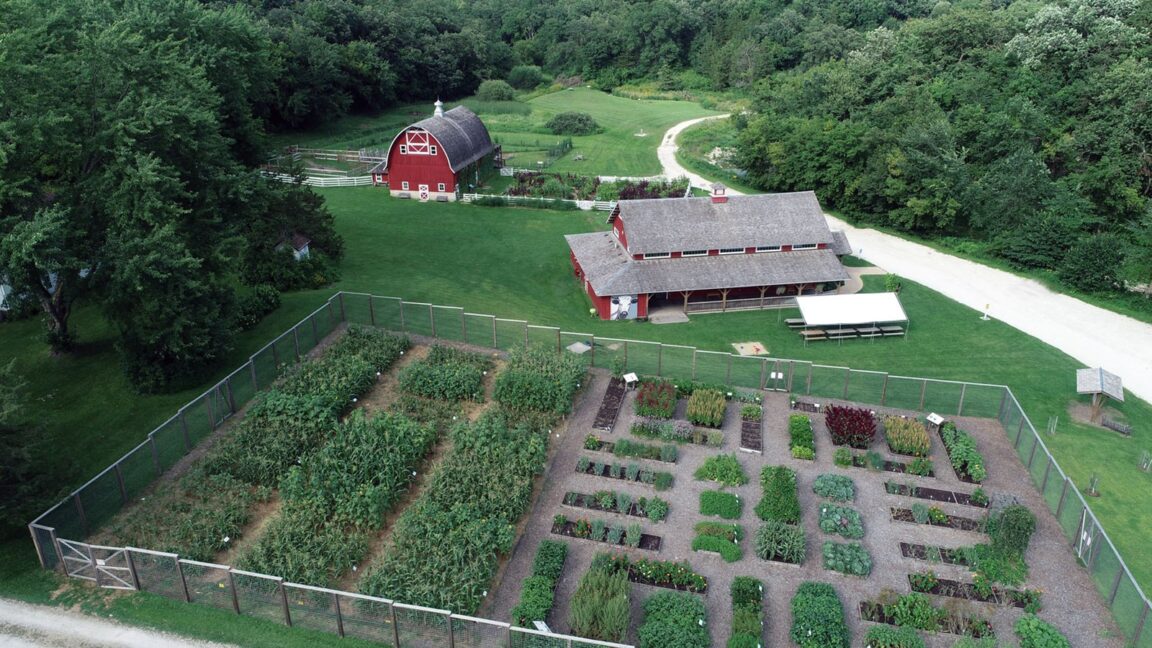
Because Seed Savers is why Decorah tastes the way it does. The organisation was founded in 1975 by Diane Ott Whealy and Kent Whealy, starting with two varieties carried from Bavaria by Diane’s grandfather’s family, a morning glory and the German Pink tomato, and it now stewards a collection of more than 20,000 heirloom and open pollinated varieties at Heritage Farm, the largest non-governmental seed bank of its kind in the country. The farm is a working landscape open to visitors: display gardens laid out in fenced grids below the red barns, historic and orchard plantings, heritage livestock, and more than nine miles of trails through bluffs and along spring fed trout streams.
Start at the Lillian Goldman Visitors Center for the story, then walk the gardens reading the variety labels like a menu written by 200 years of immigrants. The table dinners and farm events Seed Savers hosts in season, and the town’s wider farm to table culture, grow directly out of those beds: this is a place where the distance between a seed catalogue and a supper plate is about six miles. Check the official visit page before you go, because the visitor centre keeps seasonal hours, Tuesday to Saturday in the current listing, while the grounds themselves open every day from sunrise to sunset.
What happens at Toppling Goliath?
The opposite of quiet gardening, in the best way. Toppling Goliath began in 2009 when Clark and Barbara Lewey’s home brewing outgrew the hobby, and it now fills a 52,000 square foot brewery and taproom on Prosperity Road that beer travellers cross states to visit. The names to know are Pseudo Sue, the Citra hopped pale ale that made the brewery famous, and King Sue, its double IPA big sibling, at the head of a tap list of more than 20 beers, usually including barrel aged stouts that sell out in bottles. The taproom is a full restaurant, family friendly, with pizza, burgers and wraps, a pet friendly patio in season, and brewery tours on Saturdays.
Go for a late lunch. The room opens at 11 am daily, flights let you work through the hoppy end of the list in small pours, and the kitchen is built for exactly the food this beer wants. Buy cans and bottles to go at the taproom counter, including taproom only releases, and note the civilised detail that the brewery sells online for taproom pickup. Beer is the headline, but the taproom’s real role in a Decorah food trip is simpler: it is the town’s big, joyful dining room.
Where does the Norwegian table fit?
Everywhere on Water Street. Decorah was settled heavily by Norwegian immigrants, Luther College and the Vesterheim Norwegian-American Museum anchor that heritage, and the food follows: bakeries and cafes serving lefse, the potato flatbread griddled and rolled with butter and sugar; kringle and rosettes in season; and a town wide sweet tooth that peaks during Nordic Fest, the Norwegian heritage festival that fills the streets each July. The Oneota Community Food Co-op, on Water Street, is the everyday expression of the same culture, part grocery, part deli and cafe, and the best single stop for local cheese, baked goods and picnic supplies.
For the institutions, eat where generations have. Mabe’s Pizza, the family pizza house on Water Street, is the town’s default celebration dinner, thin crust pies cut in squares and a dining room that has hosted Luther students and their grandparents in the same booths. Around it, Water Street and Washington Street carry the cafes, sandwich shops and supper spots that feed a college town, plus the farmers market in season for Driftless produce, trout and baked goods. Compare Decorah’s immigrant food preservation with another seed to table tradition in our Mumbai food guide, and its small town main street eating with San Sebastian’s pintxos circuit, a very different street with the same seriousness.
Two days, sequenced
Day one: Heritage Farm in the morning, visitor centre first, then the display gardens and a trail, back to town for a co-op lunch and Water Street bakeries, the Vesterheim if museums are your appetite, and Mabe’s or a Water Street supper for dinner. Day two: a slow bakery breakfast, the farmers market in season, then Toppling Goliath at opening for a flight and a long taproom lunch, and a final picnic from the co-op beside the Upper Iowa River or at Dunning’s Spring, where the waterfall drops beside the park the town picnics in. Trout, from the cold spring fed streams the Driftless is famous for, is the order whenever a local menu offers it.
Frequently Asked Questions
Can you eat at Seed Savers Exchange?
Heritage Farm is a farm and visitor attraction rather than a restaurant: the Lillian Goldman Visitors Center sells seeds, books and local gifts, and the organisation hosts seasonal events and dinners. Eat in town before or after, and picnic on the grounds from the co-op.
What are the Heritage Farm hours?
Per Seed Savers’ own visit page, the visitor centre is open Tuesday to Saturday, 10 am to 5 pm, in season through late November, while trails, gardens and trout streams are open sunrise to sunset year round. Guided group tours run May to September at 8 dollars per person for groups of 15 or more, booked two weeks ahead.
What beer should I order first at Toppling Goliath?
Pseudo Sue, the Citra pale ale that built the name, then King Sue if you want the bigger double IPA. A flight is the smart format: more than 20 taps pour at once, including barrel aged stouts that rarely leave Decorah.
What is lefse, and where do I try it?
A soft Norwegian potato flatbread, griddled thin and usually rolled with butter, sugar and cinnamon. Water Street bakeries and the co-op carry it, and Nordic Fest in July is peak lefse season.
When is the best food weekend in Decorah?
Late summer into fall: Heritage Farm gardens at full growth, the farmers market loaded, trout streams and taproom patios in season, and the seed harvest story visible in the display beds. Nordic Fest in July is the biggest single weekend.
Photo: Aerial view of the display gardens, barns and orchards at Heritage Farm, Seed Savers Exchange, Decorah. Photo from Seed Savers Exchange, official website.