 Aiko Tanaka
Pella is a Dutch town that Iowa built and never stopped maintaining, and bloom season is when the whole arrangement runs at full power. The Vermeer Windmill, at 124 feet 6 inches the tallest working windmill in North America, still grinds grain above a 20 plus building Historical Village. Every May the Tulip Time festival takes over for three days, the first Thursday to Saturday of the month, with parades, Dutch dress, a craft market and more than 300,000 tulips planted across town. And on Franklin Street, Jaarsma Bakery, baking since 1898, sells the Dutch letters that half the state seems to queue for. The trip is easy from Des Moines, about 40 miles away, but bloom season rewards planning: book rooms early, tour the windmill outside festival hours if you can, and treat the bakery queue as a scheduling problem with a known solution.
Quick Facts
- Where: Pella, Iowa, about 40 miles southeast of Des Moines, roughly a 45 minute drive
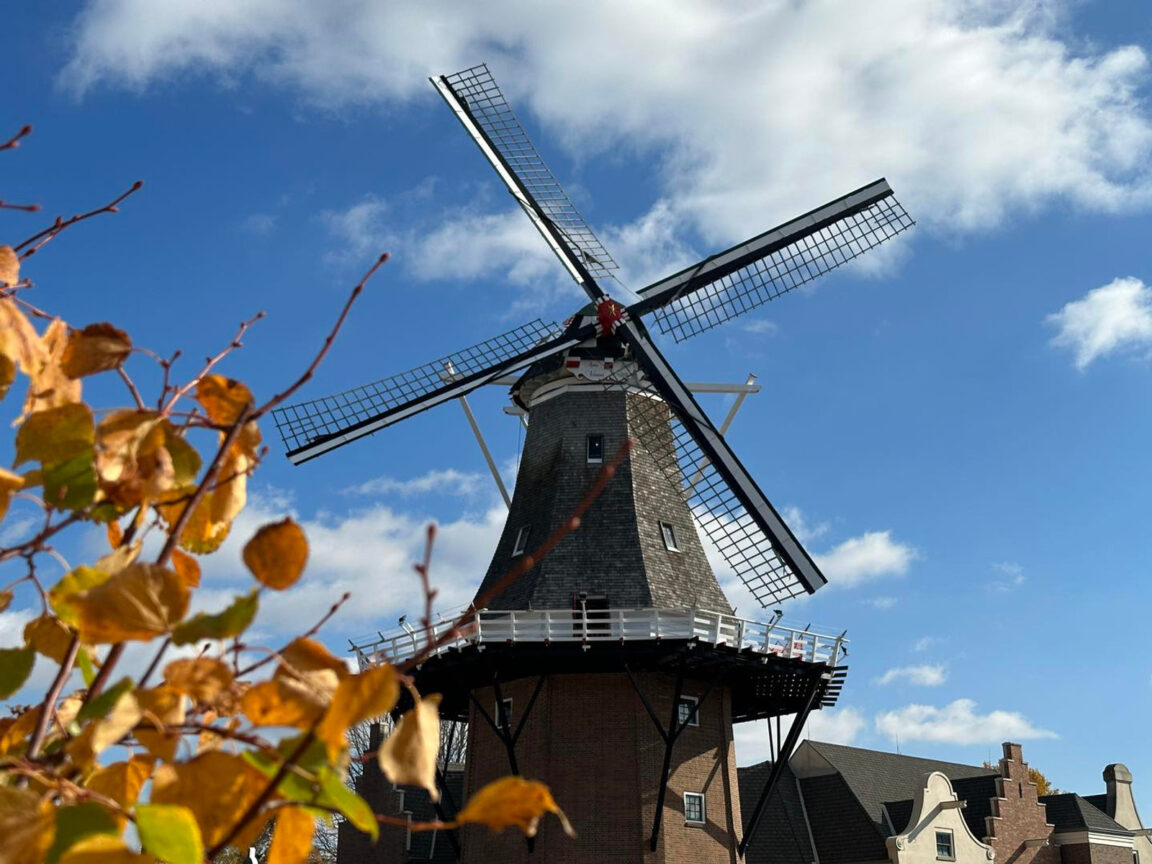
- The windmill: The Vermeer Windmill, an 1850s style grain mill built in the Netherlands and reassembled in Pella in 2002; 124 feet 6 inches tall, the tallest working windmill in North America, five floors, guided tours
- Museum hours and admission (Pella Historical Museums, standard season): Historical Village Monday to Friday 10 a.m. to 5 p.m., Saturday 10 a.m. to 4 p.m.; windmill tours Monday to Friday at 10:30 and 11:30 a.m. and 1:30 and 2:30 p.m., Saturday at 10:30 and 11:30 a.m. and 1:30 p.m. Windmill plus Village admission is $20 for adults and $15 for youth 5 to 18, with a combined ticket including the Scholte House at $28 and $18. Hours and prices change during Tulip Time
- Tulip Time: Three days, the first Thursday, Friday and Saturday of May, running since 1935; the 2026 edition fell on 7 to 9 May. More than 300,000 tulips bloom across parks, streets and gardens
- The bakery: Jaarsma Bakery on Franklin Street, family run since 1898, famous for Dutch letters, the S shaped almond paste pastries; Vander Ploeg Bakery is the second classic stop
- Also in town: The Scholte House, home of Pella’s founder Dominie Scholte; the 65 foot Tulip Toren tower in Central Park; the Klokkenspel carillon on Franklin Street; Lake Red Rock, Iowa’s largest lake, minutes away
- When to book: Tulip Time lodging fills months ahead. Book festival weekend rooms as early as you can, and expect Des Moines to absorb the overflow
Why does a Dutch town exist in the middle of Iowa?
Pella was founded in 1847 by Dutch immigrants led by Dominie Hendrik Pieter Scholte, who left the Netherlands seeking religious freedom and bought the land for a new settlement whose name means city of refuge. The Dutch identity was never a theme applied later; it is the town’s founding document, maintained through architecture rules, the Historical Village’s rescued buildings, and a festival that began in 1935 as a modest tulip celebration and grew into one of the Midwest’s defining spring events. That continuity is what separates Pella from a generic pretty town. The windmill is a working mill, not a facade. The bakeries are multi generation family businesses, not concessions. Even the newer landmarks, the Tulip Toren and the Klokkenspel with its mechanical figures, were built by the community to extend the same story. Visitors feel the difference quickly: Pella reads as a place that does these things for itself, and lets travellers watch.
How should you tour the Vermeer Windmill and the Historical Village?
Buy the combined windmill and village ticket and give it half a day. The guided windmill tour, 45 minutes to an hour, climbs the mill’s five floors from grain intake to the milling floor, explains how wind power, sails and stones actually grind flour, and ends on the deck with the best view in town. The mill was built in the Netherlands in 2002, shipped across the Atlantic and reassembled by Dutch millwrights in Pella, and it remains a working grain mill, which is the fact that makes the superlative honest: plenty of places have taller decorative towers, but this is a functioning 1850s style mill at 124 feet 6 inches. The Historical Village around it is self guided: more than 20 buildings, including the boyhood home of Wyatt Earp, who spent part of his childhood in Pella, a miniature Dutch village display, blacksmith and craft demonstrations in season, and gardens that carry a large share of the town’s tulip planting. Practical order matters. In standard season, take the first windmill tour of the day at 10:30 a.m., then wander the village while tour groups thin. During Tulip Time the rhythm changes, guided group tours pause around the festival, hours and admission change, and the village works best early in the morning before parade crowds build. Small town festival logistics like these are the same skill covered in our Yellow Springs, Ohio festival guide.
How does Tulip Time actually run, and how do you work it?
The festival occupies the first Thursday, Friday and Saturday of May, and the town’s tulip displays peak with it, though bloom is weather dependent and the city publishes bloom updates as the season approaches. The daily pattern is consistent: mornings for the gardens, the Historical Village and the Scholte House before crowds peak; parades and street scrubbing ceremonies, Dutch dancing and the craft market through the middle of the day; food stands selling poffertjes, Dutch letters and Pella bologna between everything. The honest constraints are rooms and queues. Pella’s own lodging is small and sells out for the festival well in advance, so late planners base in Des Moines and drive in early, which works fine at 45 minutes if you arrive before the parade road closures. Parking tightens by mid morning, and the famous food lines are longest at lunch. The counter strategy is simple: eat bakery goods for breakfast at opening time, graze the food stands off peak, and schedule the windmill and museums for Thursday or Friday rather than the Saturday peak. If your dates are flexible, the week before the festival often delivers near peak bloom with a fraction of the crowd, a trade the locals themselves will confirm.
How do you beat the Jaarsma Bakery queue?
Jaarsma Bakery has stood on Franklin Street since 1898, and its Dutch letter, a flaky S shaped pastry filled with almond paste, is the single most queued for food in Pella. During Tulip Time the line can run out the door and down the block, and visitors routinely report giving up and trying the also excellent Vander Ploeg Bakery a short walk away, which is a perfectly good outcome rather than a defeat. The queue is beatable with timing rather than luck. Go at opening, or in the late afternoon lull after the parade crowds drift to dinner. Order like a regular: Dutch letters first, then the supporting cast of almond patties, speculaas and other Dutch cookies, and stroopwafels for the drive home. Buy more than you think you need, because Dutch letters travel well and freeze well, and the person who bought two is always envied by the person who bought one. Outside festival season the same bakery on a weekday morning is a calm, quick stop, which is one of the strongest arguments for a non festival visit. Travellers building a wider small town and island itinerary around a Pella trip can pair it with our Prince Edward Island travel guide for the same slow pace at the other end of the continent.
Where should you base yourself, and what does a trip cost?
Base in Pella if you book early: the town has a small set of hotels, inns and vacation rentals, and staying in town converts the festival from a day trip with parking stress into a walkable weekend. Base in Des Moines if you book late; the drive is about 45 minutes, the hotel supply is deep, and an early start still beats the crowds. The core paid items are modest by festival standards: the windmill and village at $20 per adult, the combined ticket with the Scholte House at $28, and trolley tours at $20 on the standard season schedule, with Tulip Time pricing and hours varying, so confirm both on the Pella Historical Museums site before you go. The festival itself is a street festival at heart: parades, gardens and the town in bloom cost nothing to walk through, and a day’s budget goes on food, the craft market and museum tickets. Add Lake Red Rock, minutes northwest of town, for the non Dutch half of the trip: Iowa’s largest lake, with trails, beaches and a different quality of quiet once the festival day ends.
Frequently asked questions
When is Tulip Time in Pella?
The first Thursday, Friday and Saturday of May each year. The festival has run since 1935; the 2026 edition fell on 7 to 9 May. Tulip bloom peaks around the festival but shifts with the weather, and the city posts bloom status updates in spring.
Is the Vermeer Windmill really the tallest working windmill in North America?
Yes, on the terms that matter: it is a working grain mill, built in the Netherlands in an 1850s style, reassembled in Pella in 2002, standing 124 feet 6 inches tall. Guided tours climb its five floors and it still grinds grain, which is what separates it from taller decorative structures.
How much is admission to the windmill and Historical Village?
In the standard season, $20 for adults and $15 for youth 5 to 18 for the windmill plus village, or $28 and $18 including the Scholte House; children 4 and under are free. Pella Historical Museums states that hours and admission prices change during Tulip Time, so check the official site for festival dates.
What should you buy at Jaarsma Bakery?
Dutch letters, the S shaped almond paste pastries the bakery has made since 1898, then almond patties, speculaas and stroopwafels. Go at opening or in the late afternoon to avoid the worst queues, and know that Vander Ploeg Bakery nearby is a strong second stop, not a consolation prize.
How long do you need in Pella?
One full day covers the windmill tour, the Historical Village, the Scholte House and the bakeries outside festival season. For Tulip Time, give it two days so the festival crowds, parades and garden time do not squeeze the museums out of the trip.
Where do you stay if Pella is sold out?
Des Moines, about 40 miles and 45 minutes away, with a deep hotel supply. Drive in early, before parade closures and mid morning parking pressure, and the overflow base works smoothly even on the festival Saturday.
Featured image: The Vermeer Windmill in Pella, Iowa. Photo by Pella Historical Museums, from the museum’s official website (pellahistorical.org). Used with credit.