 River Callahan
Astoria is the working port at the mouth of the Columbia River first and a film location second, and planning it in that order is what makes a visit work. Founded in 1811 as a fur trading post, it is the oldest United States settlement west of the Rocky Mountains, and the river still runs the town: bar pilots cross one of the most dangerous river mouths on earth, ships queue for Portland, and the cannery era survives in pilings, warehouses and the great red brick bones along the waterfront. Above it all, the Astoria Column climbs Coxcomb Hill with 164 steps to the view, and across the water the Astoria Megler Bridge stretches 4.1 miles to Washington. Give the town a full day at minimum, start at the Columbia River Maritime Museum, and let the weather, which can turn four times before lunch, set the order of the rest.
Quick Facts
- Where: the south bank of the Columbia River near its mouth, in Clatsop County, Oregon, on US Highway 101.
- Founded: 1811, as the fur post Fort Astoria, the first permanent United States settlement on the Pacific coast.
- The landmark: the Astoria Column on Coxcomb Hill, dedicated in 1926, with a 164 step spiral staircase and a hand painted frieze wrapping the tower.
- The museum: the Columbia River Maritime Museum at 1792 Marine Drive, open daily 9:30 am to 5:00 pm; admission is $18 for adults, $15 for seniors and $8 for children aged 6 to 17, with children 5 and under free, per the museum’s own site.
- The bridge: the Astoria Megler Bridge, 4.1 miles long, completed in 1966 and the longest continuous truss bridge in North America.
- The Column climb: visiting the park and climbing are free; parking is $10 per vehicle and the pass is good for one year, per astoriacolumn.org. Park hours are 5:00 am to 10:00 pm daily.
- Film fame: The Goonies (1985) was filmed around town, one layer of a much older cannery and fishing story.
Why does the Columbia River bar define everything here?
The Columbia meets the Pacific in a collision of river current and ocean swell that sailors call the Graveyard of the Pacific. Hundreds of vessels have been lost around the river mouth, and the crossing is still so specialised that trained bar pilots board ships offshore and guide them in, a handover system that has run here for generations. That single fact explains Astoria’s shape: the pilot stations, the Coast Guard presence, the cannery wharves built to serve the salmon fleet, and a town that has always earned its living facing dangerous water rather than admiring it. Visitors who grasp the bar understand the museum, the waterfront and the local temperament in one move.
The Columbia River Maritime Museum: start with the bar crossing
The Maritime Museum on Marine Drive is the essential first stop, and its centrepiece is the story of the bar itself: a large interactive map of the river mouth, the story of the pilot boats, and galleries that run from Native American canoes and the fur trade through the salmon canning industry to modern Coast Guard rescue work. The National Historic Landmark Lightship Columbia is moored alongside and included in the visit, a floating lighthouse that once held station offshore so ships could find the channel. Allow two hours. The museum is also expanding, with its Mariners Hall project under way through 2026, so check the museum site on the day for any gallery closures. Readers planning other Pacific coast heritage towns may enjoy our guide to Sitka, Alaska, with its Russian domes and totem park, which tells a parallel story of a working port layered with older cultures.
What should you not miss inside?
Prioritise the bar crossing exhibits and the lightship, then the canning gallery, which explains the waterfront you are about to walk. The museum’s 3D theatre runs films through the day for a small extra charge, and the gift shop is one of the better places in town for serious maritime books rather than souvenirs.
The Astoria Column: 164 steps above the river mouth
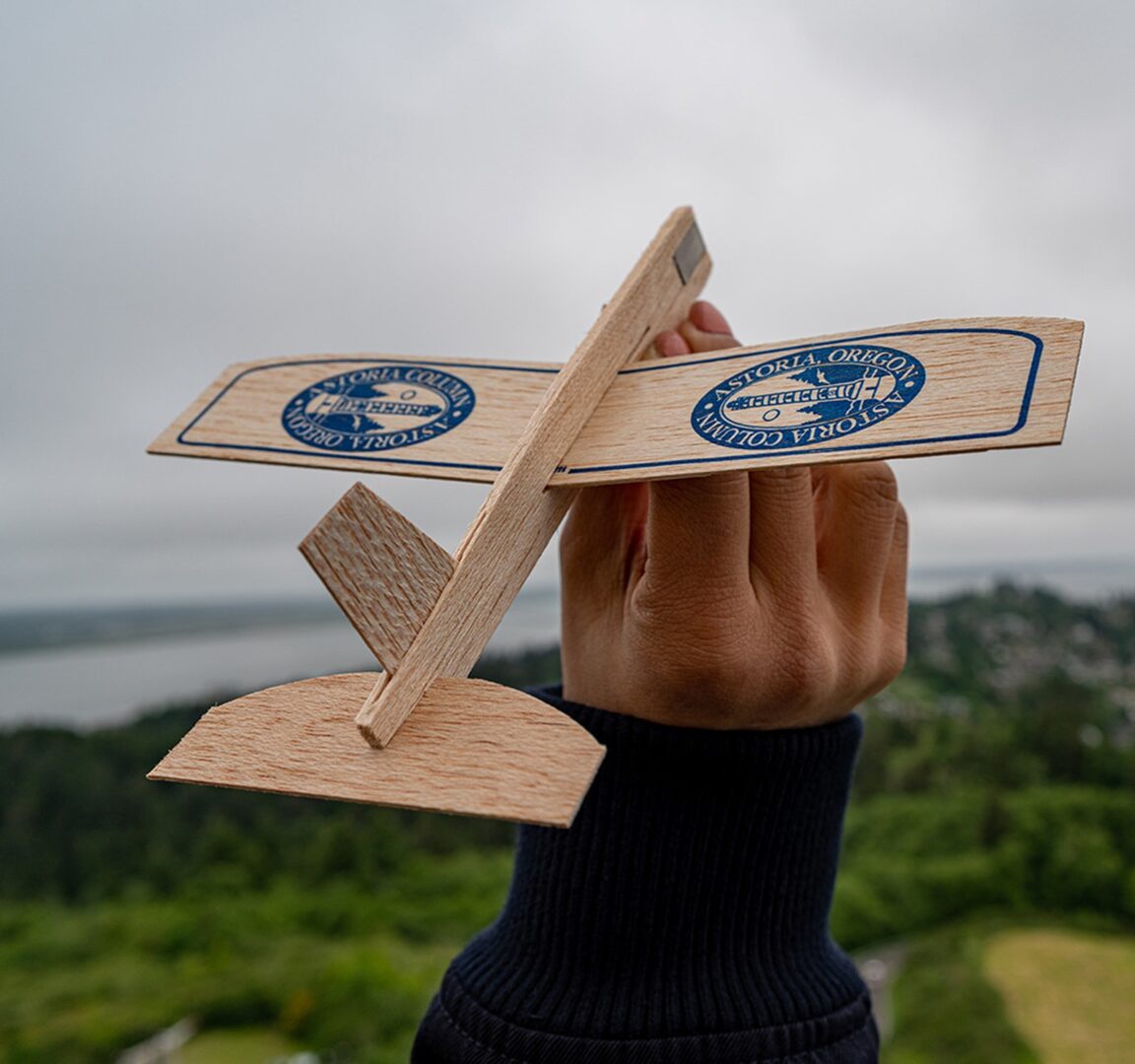
The drive up Coxcomb Hill is short and steep, and the Column rewards it twice: once for the artwork and once for the view. The tower’s spiral frieze, created by Italian immigrant artist Attilio Pusterla in 1926, winds some 525 feet around the column and narrates the region’s story from Native American life through exploration, settlement and the arrival of the railroad. Inside, 164 spiral steps climb to the observation deck, from which the whole geography of the town reads at a glance: the river mouth and the Pacific to the west, Youngs Bay to the south, the bridge arcing north to Washington, and the Victorian rooftops of Astoria stacked on the hillside below. A beloved local tradition is to buy a small balsa wood glider in the gift shop and launch it from the top to circle down to the grass. Go early for the clearest air, and note the park’s rules from its official site: no drones, camping or cooking on the premises.
Walking the cannery waterfront and the Riverwalk
Below the hill, the Astoria Riverwalk runs along the old rail line at the water’s edge, passing the stumps of cannery pilings, working docks and the foot of the bridge. This is where the town’s industrial bones show most clearly. In the late nineteenth and early twentieth centuries, salmon canneries lined this shore and employed generations of Finnish, Chinese, Scandinavian and Native workers; the Bumble Bee company began here, and the Hanthorn Cannery at Pier 39, dating to the 1870s, survives as the oldest cannery building on the river, now holding small businesses and a museum corner. Sea lions haul out on the docks near the east end and announce themselves loudly. The historic Astoria Riverfront Trolley runs a 1913 car along part of the route in season. Walk it in the morning, when the light is on the bridge and the fishing fleet is moving.
The Goonies layer, kept in proportion
Yes, the Goonies house stands in the Uppertown neighbourhood and the film’s Astoria is recognisable across town, from the county jail that now houses the Oregon Film Museum to the school and streets of the chase scenes. Film fans should enjoy it as a walking layer, viewed respectfully from public streets, since the house is a private home. But the film works here precisely because Astoria already looked like itself: a steep, weathered, working town at the edge of the continent. Treat the movie as the garnish, not the meal.
How should you sequence one day in Astoria?
Start at the Maritime Museum at opening, while tour groups are still thin, then walk a stretch of the Riverwalk east toward Pier 39. Lunch on the waterfront, where chowder and locally caught fish are the honest orders. Drive up to the Column in the afternoon, when the frieze is lit and the view west toward the bar often clears, and finish with the drive across the Megler Bridge and back, which is worth doing purely for the scale of the river mouth beneath you. Travellers building a longer Pacific Northwest small town loop can pair Astoria with our weekend guide to Winthrop, Washington, in the Methow Valley, a very different, mountain version of the same preserved main street pleasure.
What about the weather and the seasons?
Astoria is one of the wetter towns in Oregon, and its drama is weather driven. Winter brings storm watching, when the bar is at its most violent and the museum at its most relevant, along with the FisherPoets Gathering in February, when working fishermen read their own writing in bars around town. Summer brings the driest skies, the Sunday market downtown and the best odds of a clear Column view. In every season, pack a waterproof shell rather than an umbrella, because the wind at the river mouth defeats umbrellas as a matter of routine.
Where should you eat and sleep in Astoria?
Keep both simple and central. The downtown grid along Commercial Street holds the town’s breweries, coffee roasters and seafood kitchens, and the waterfront hotels put the Riverwalk and the bridge outside the window. Cannery Pier Hotel, built on the pilings of a former cannery in the river itself, is the splurge address; the restored downtown inns and motels along Marine Drive cover the rest of the range. Wherever you sleep, eat at least once where the fishing fleet eats: chowder, Dungeness crab in season and whatever the boats brought in, ordered without ceremony. Astoria is not a town that rewards fussiness. It rewards appetite, a waterproof jacket and a second morning.