 River Callahan
Isle Royale is planned from the ferry out, because the crossing is not a detail of the trip, it is the trip’s foundation: this is a roadless island archipelago in Lake Superior with no cars, no roads in, and no way to arrive except by ferry, seaplane or private boat. The National Park Service closes the park to all visitors from November 1 to April 15, and the ferries and seaplane run only from the middle of May to September, so the first decision is which mainland port you sail from. Houghton and Copper Harbor in Michigan land you at Rock Harbor on the island’s east end. Grand Portage in Minnesota lands you at Windigo on the west end. Everything else, the lodge versus the backcountry, the trails you can reach, even the weather days that can strand you, follows from that single choice. Make it first, book the boat before anything else, and build the island days around the sailing you actually hold.
Quick Facts
- Park: Isle Royale National Park, Michigan, an island archipelago in northwestern Lake Superior
- Season: Closed to all visitors November 1 to April 15; ferries and seaplane operate mid May to September, per the National Park Service
- Access: Ferry, seaplane or private boat only. No cars: transport carries people, and vehicles stay on the mainland
- Mainland ports: Houghton and Copper Harbor, Michigan; Grand Portage, Minnesota
- Arrival points: Rock Harbor at the northeast end, Windigo at the southwest end
- Crossings: Ranger III from Houghton about 6 hours; Isle Royale Queen IV from Copper Harbor about 3.5 hours; Voyageur II from Grand Portage to Windigo about 2 hours; seaplane about 40 minutes
- Entrance fee: $7 per person per day, with a $60 season pass, per the National Park Service fees page checked November 2026
- Prices and schedules checked: November 24, 2026, against National Park Service sources
Which mainland port should you choose?
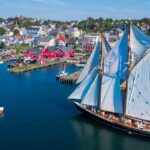
The three ports are not interchangeable, because they serve different ends of a 45 mile long island and take very different amounts of Lake Superior to get there. From Houghton, the park’s own ferry Ranger III sails to Rock Harbor in about six hours, departing at 9 am eastern time and arriving at 3 pm, and Isle Royale Seaplanes covers the same crossing in about 40 minutes from its base on Torch Lake at Hubbell. From Copper Harbor, at the tip of the Keweenaw Peninsula 52 miles north of Houghton, the Isle Royale Queen IV reaches Rock Harbor in about three and a half hours, the shortest Michigan crossing. From Grand Portage, Minnesota, the Voyageur II reaches Windigo in about two hours, and the Sea Hunter III makes the Windigo run in about an hour and a half, mainly as a day trip boat. The Voyageur II also works around the island, taking about five hours from Windigo to Rock Harbor, which is what makes an end to end traverse possible without backtracking.
Choose by where your trip starts and what kind of visit you want. Rock Harbor is the serviced end, with the lodge, the main visitor centre, rentals and boat tours, and it suits a first trip built around day hikes and a bed. Windigo is the quiet end, with a small visitor centre, camper cabins and immediate access to the Feldtmann Lake and Huginnin Cove loops, and it suits backpackers who want the trails more than the facilities. Minnesota based travellers save hours by sailing from Grand Portage. Michigan based travellers should weigh the drive to Copper Harbor against the longer Ranger III sailing from Houghton: the Queen IV’s shorter crossing is worth real money and stomach comfort to anyone who suffers on open water.
Ferry, seaplane or your own boat?
The ferries are the default for a reason. They carry backpacks, canoes and kayaks, they run to a published schedule, and their crews know the lake. The Ranger III is the park’s own vessel and the most capacious. The Queen IV is a private line sailing from Copper Harbor. The Voyageur II doubles as the island’s mail and supply link, stopping at points around the shore, which makes it the flexible choice for one way itineraries. The seaplane is the luxury of time: about 40 minutes in the air against up to six hours on the water, with landings at both Rock Harbor and Windigo. Its constraints are weight limits on baggage, a higher fare, and a greater vulnerability to fog and wind, which can delay a departure by hours. Private boats are welcome, but Lake Superior is cold, big and changeable, and the park expects boaters to register and to manage docks and anchorages that fill in peak weeks.
Whichever you choose, treat the return sailing as fixed and everything before it as elastic. Build at least one spare day into a backcountry itinerary, and never schedule a same day flight home after a morning boat. The lake makes the timetable, and the operators are blunt about it: sailings cancel or run late in heavy weather, and a traveller who has planned gladly for a weather day treats the delay as part of the island’s character rather than a ruined trip.
Lodge or backcountry: the second decision
Rock Harbor Lodge is the island’s only hotel style lodging, with rooms and housekeeping cottages near the dock, and it books out for peak summer weeks well ahead. Windigo offers a pair of camper cabins. Beyond those, the island is a backpacking park: 36 campgrounds linked by about 165 miles of trails, with overnight permits issued at the Rock Harbor and Windigo visitor centres on arrival. Groups of seven or more work under a separate group permit system with advance reservations. The lodge versus backcountry choice is really a choice about what you carry. Lodge guests travel light, eat at the lodge, and day hike the Scoville Point and Mount Franklin trails or take the lodge’s boat tours. Backpackers carry everything, filter water, and earn the island’s interior lakes, where moose feed at dawn and the only sound is loons.
A hybrid suits many first trips: two lodge nights to settle in and day hike, then two or three campground nights on the Rock Harbor end trails, returning to the same dock for the boat out. It keeps the pack weight modest, keeps one foot in comfort, and still puts you under the island’s genuinely dark sky.
What about the moose and the wolves?
Isle Royale is famous in science for its wolf and moose study, running since 1958 and among the longest predator prey studies in the world. Visitors should set expectations honestly. Moose are the realistic sighting: the herd numbers in the hundreds to over a thousand depending on the year, and they browse the interior lakes and wander campgrounds at dawn and dusk. Wolves are few, shy and almost never seen; their presence is felt in how the island works, not in a viewing guarantee. The park’s rule is simple and enforced: keep distance, never feed wildlife, and store food properly so that neither animal learns to associate people with meals. The no cars rule is part of the same bargain. With no roads and almost no machinery, the island stays quiet enough that a moose feeding in a beaver pond is an ordinary morning, not a spectacle.
How many days do you need?
A day trip is possible from Grand Portage to Windigo or on the Queen IV to Rock Harbor, but it sells the island short: you spend more time crossing than walking. Three days is the honest minimum for a lodge based visit, enough for the arrival afternoon, one full trail day and one boat tour or paddle day. Five days opens the island properly, either as a lodge and campground hybrid or as a one way backpack from Windigo to Rock Harbor using the Voyageur II’s around island run. Traverse hikers walking the Greenstone Ridge Trail end to end should allow four to five walking days plus the weather buffer. However you count it, add the spare day. The island rewards the unhurried and strands the optimist, sometimes literally, and a traveller with a buffer day reads a storm delay as one more evening in moose country.
Frequently Asked Questions
When is Isle Royale open?
The park is open to visitors from April 16 to October 31 and closed to all visitors from November 1 to April 15, per the National Park Service. Ferries and the seaplane operate in the narrower window from mid May to September, which is the practical season for most travellers.
Can you drive to or on Isle Royale?
No. There are no roads to the island and no visitor cars on it. Ferries and seaplanes carry people only, and vehicles stay at the mainland port. On the island you move on foot, by paddle or on tour boats.
Which ferry is fastest?
From Michigan, the Isle Royale Queen IV from Copper Harbor takes about three and a half hours to Rock Harbor, against about six hours for the Ranger III from Houghton. From Minnesota, the Sea Hunter III reaches Windigo in about an hour and a half. The seaplane beats them all at about 40 minutes.
Do you need a permit to camp?
Yes. Overnight backcountry permits are issued free at the Rock Harbor and Windigo visitor centres when you arrive, where rangers check your itinerary against campground capacity. Groups of seven or more need a group permit arranged in advance.
Will you see a wolf?
Almost certainly not, and any operator who promises one is misleading you. Wolves are few and avoid people. Moose, loons, beaver and foxes are the realistic wildlife of an Isle Royale trip, and they are more than enough.
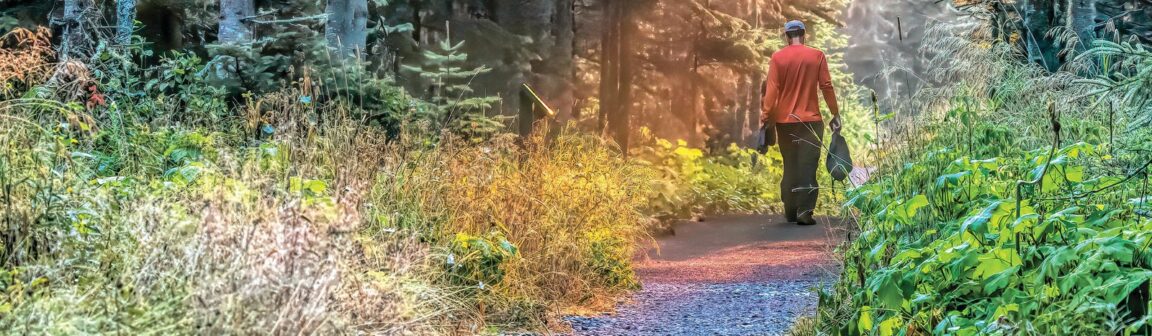
Image: A hiker on a forest trail in Isle Royale National Park. Photo: National Park Service, via nps.gov.