 Jordan Ellis
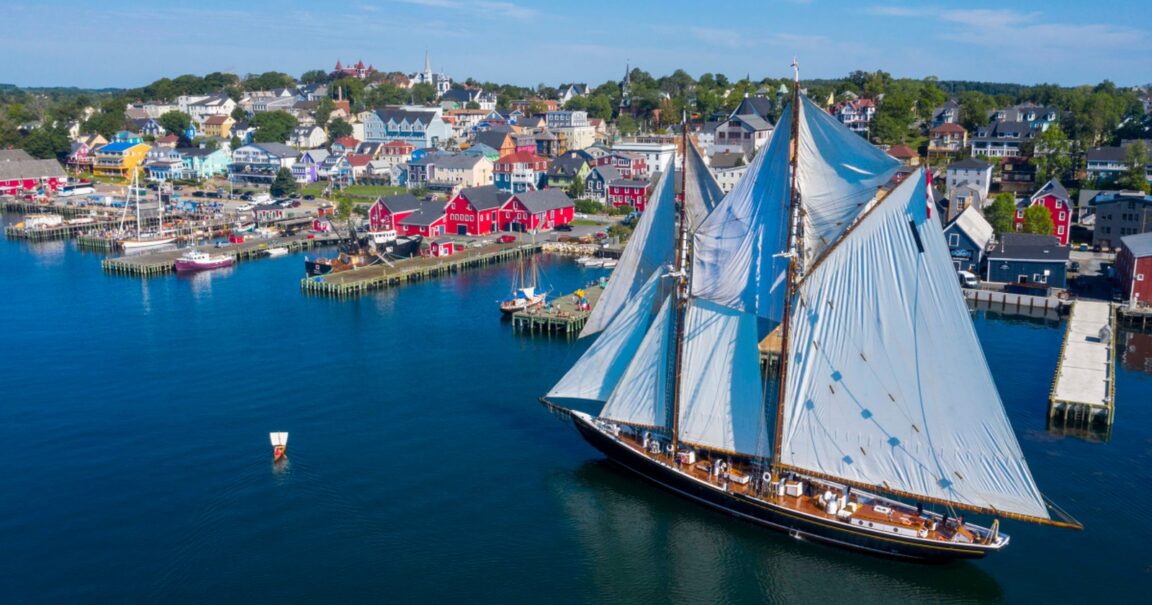
Lunenburg should be read from the water up. This is a working port that happens to be a UNESCO World Heritage Site, not a museum town with boats for decoration: the Fisheries Museum of the Atlantic fills the red former fish plants on the wharf, the schooner Bluenose II ties up at her home port between sails, and the ironworks and boat shops that built the original Bluenose in 1921 still shape the streets above. Start at the museum wharf in the morning, climb the 1753 street grid in the afternoon, and check the schooner’s schedule before anything else, because the day she is in port is the day the town is complete.
Quick Facts
- The designation: Old Town Lunenburg was inscribed by UNESCO in 1995, recognised as the best surviving example of a planned British colonial settlement in North America, with its original 1753 grid and wooden architecture intact
- The founding: Established in 1753 and settled by German, Swiss and French Protestant settlers, the Foreign Protestants, under British plan
- The museum: The Fisheries Museum of the Atlantic, part of the Nova Scotia Museum, in the red waterfront buildings of a former fish plant, with vessels at its wharf including the side trawler Cape Sable
- The schooner: Bluenose II, Nova Scotia’s sailing ambassador and a replica of the undefeated 1921 racing and fishing schooner Bluenose, whose image sails on the Canadian dime; her home port is Lunenburg
- The architecture signature: The Lunenburg Bump, a distinctive oversized dormer, on houses climbing the grid streets above the harbour
- The season: The museum and the schooner’s sailing programme run on a late spring to autumn season; winter Lunenburg is a quiet local town, so dates decide the visit
Why does the working port come first?
Lunenburg’s wealth was built on the Grand Banks fishery and on the schooners that worked it, and the waterfront still tells that story in the present tense. Fishing boats land at the wharves, the red sheds of the old fish plants line the shore, and the Fisheries Museum of the Atlantic, run as part of the Nova Scotia Museum, occupies those plant buildings with three floors of exhibits on the fishery, the banks schooners and the town’s shipbuilding, plus floating vessels at its own wharf that visitors board, among them the steel side trawler Cape Sable.
The museum’s Bluenose galleries carry the town’s central legend. The original Bluenose, launched at Lunenburg in 1921 from the Smith and Rhuland shipyard, never lost the International Fishermen’s Trophy in her racing career and became so completely the symbol of the Nova Scotia schooner that Canada put her on the dime, where she sails today. The replica, Bluenose II, launched in 1963 and rebuilt since, is operated as the province’s sailing ambassador. When she is in port she offers deck tours, and in season she sails on harbour cruises from her home wharf; when she is away on her ambassador’s rounds, the museum and the wharf carry the story without her, which is the practical reason her published schedule is the first document of any Lunenburg plan.
What does the Old Town grid add?
Above the wharf, the town climbs in the grid the British surveyors drew in 1753, and UNESCO’s inscription rests on how completely that plan survives: the same street pattern, the same plot sizes, and street after street of wooden houses from the eighteenth and nineteenth centuries, painted in the strong colours that make the town’s photographs look retouched. The architectural signature to hunt is the Lunenburg Bump, the oversized five sided dormer that local builders pushed out of attic storeys to gain light and room, found on houses across the old town.
The climb repays itself in institutions. St John’s Anglican Church, one of Canada’s oldest churches in continuous use, rebuilt after a devastating 2001 fire with international support, stands in the upper town. The Lunenburg Academy, the grand 1895 school on the hill, watches over the grid. Down on Montague Street, Ironworks Distillery pours its spirits in a former marine blacksmith shop, a building that once shod the schooner fleet’s ironwork, which makes it the town’s neatest summary: the working trades of the port, still working, in a new form. The Knaut-Rhuland House, a 1793 merchant’s house run as a museum by the Lunenburg Heritage Society, shows the domestic half of the same century.
How should a visit be sequenced?
Morning belongs to the waterfront, when the museum opens and the harbour light is on the red sheds. Board the vessels first, while the wharf is quiet, then work up through the museum floors to the Bluenose story. Lunch on the waterfront, where the town’s restaurants serve the fishery in its current form, scallops above all. The afternoon is the grid: climb Lincoln and Pelham streets slowly, read the bumps and the paint colours, visit the church and the house museum, and end on Blockhouse Hill, where the view takes in both harbours and the whole geometry of the plan at once.
With a second day, the coast opens. Blue Rocks, a few minutes east, is a working fishing village of sheds and stages on blue slate, painted by generations of artists. Mahone Bay, with its three church spires across the water, and the LaHave River ferry and bakery country lie west. But the sequencing rule stands on any itinerary length: check Bluenose II’s schedule first, put the museum on the first morning, and let the grid fill the hours the sea leaves free.
What season does Lunenburg actually run on?
Lunenburg is a seasonal town wearing a year round address, and honest planning starts there. The Fisheries Museum runs its full programme across the warmer months, from late spring into autumn, with reduced presence outside them. Bluenose II’s sailing and deck tour programme is a summer instrument, fitted around her ambassador commitments. Restaurants, galleries and the house museum follow the same curve, opening fully as the season builds and thinning after the autumn. A winter visit is not a mistake, but it is a different product: a quiet, handsome, working town of 2,500 or so residents, with the grid and the harbour to itself, short days, and the sea weather doing what it wants. The shoulder weeks on either side of summer are the connoisseur’s choice, with the museum open, the schooner most likely in home waters, the grid uncrowded and the South Shore’s inns at their most reasonable. Whatever the month, the order of operations in this guide holds: the schooner’s schedule first, because it is the scarcest resource in town; the museum on the first morning; the grid whenever the light is kind.
Eating follows the fishery’s logic. The waterfront restaurants serve scallops, haddock and lobster in season, and the town’s signature dishes carry its settler history alongside the catch: Lunenburg pudding and sauerkraut from the German founding, Solomon Gundy, the pickled herring appetiser of the coast, and hodge podge, the summer vegetable chowder in cream that appears on menus across the South Shore in season. A first visit should eat at least once on the wharf side of town, within sight of the boats that make the menu possible.
Frequently Asked Questions
When is Bluenose II in Lunenburg?
Her programme is seasonal and published in advance by her operators: she sails harbour cruises from her home port in season and spends other periods visiting ports around Nova Scotia and beyond, with deck tours offered when she is alongside. The schedule changes with weather and commitments, so it should be checked for the exact dates of a visit rather than assumed.
Why is Lunenburg a UNESCO site?
UNESCO inscribed Old Town Lunenburg in 1995 as the best surviving example of a planned British colonial settlement in North America. The 1753 grid, the plot pattern and the wooden building stock survive together, and the town’s schooner and fishery history gives the plan its working context.
Is the Fisheries Museum suitable for a rainy day?
It is the town’s designated rainy day anchor: three floors of exhibits in the former fish plant, an aquarium, and vessels at the wharf for the gaps in the weather. A wet day costs the grid walk its views but nothing of the museum.
How far is Lunenburg from Halifax?
About 100 kilometres southwest along the South Shore, roughly an hour and a quarter by road in normal conditions. It works as a long day trip, but an overnight is what the museum, the grid and the schooner schedule jointly argue for.
Photo: Bluenose II under full sail with the Lunenburg waterfront behind her, via Bluenose II (bluenose.novascotia.ca), the schooner’s official website, used with credit. Museum and heritage details checked against the Nova Scotia Museum and UNESCO listings on 24 November 2026.