 Jordan Ellis
Marfa is planned around distance or it is not planned at all. The town of fewer than 2,000 people sits in the West Texas high desert at about 4,700 feet, roughly three hours by road from El Paso, and its two engines run on reservations: the Chinati Foundation’s guided tours, the only way to see most of Donald Judd’s permanently installed work, and the Judd Foundation’s guided visits to his living and working spaces in town. Book those first. Everything else, the Marfa Lights viewing platform nine miles east after dark, the food trucks that set dinner hours, the galleries on Highland Avenue, arranges itself around them.
Quick Facts
- The art anchor: The Chinati Foundation, 1 Cavalry Row, open Wednesday to Sunday, 9:00 a.m. to 5:00 p.m., final entry 4:00 p.m.; guided tours are the only way to see the majority of the collection and grounds, and tickets should be bought in advance
- The site: Chinati occupies 340 acres of the former Fort D.A. Russell, with Judd’s 100 untitled works in mill aluminum in two artillery sheds and 15 untitled works in concrete in the field
- The current caveat: Chinati began a major restoration of the Artillery Sheds in October 2026, so part of the campus is under construction; check the foundation’s site when booking
- The second anchor: The Judd Foundation, a separate organisation, runs guided visits to Judd’s Marfa living and working spaces, including the Block, by advance reservation
- The night sight: The Marfa Lights Viewing Area, about 9 miles east of town on US Highway 90 toward Alpine, free, open nightly, with benches, viewing scopes and restrooms
- The rhythm: Marfa runs Wednesday to Sunday. Many galleries, shops and restaurants close Monday and Tuesday, and food trucks decide the evening more often than dining rooms do
Why do the Judd foundations come first?
Donald Judd moved to Marfa in the 1970s and spent the rest of his life converting the town into the permanent home his work required: buildings bought one by one, installations placed where they would stay. The Chinati Foundation, which he founded, presents that project at full scale. Its grounds hold his 100 untitled works in mill aluminum, identical in outline and endlessly varied in interior division, installed across two former artillery sheds, and the 15 concrete works standing in the field beyond, alongside major permanent installations by a dozen other artists including Dan Flavin, John Chamberlain and Robert Irwin.
Access is the constraint. Chinati states it plainly: guided tours are the only way to see the majority of the collection and grounds, visitors should purchase tickets in advance, and tours often sell out. The John Chamberlain Building and Robert Irwin’s untitled (dawn to dusk), both in town, are accessible by guided tour only. The Judd Foundation’s visits are a separate booking with a separate organisation, showing the domestic and studio interiors Chinati does not: the rooms where Judd lived and worked, kept as he left them. A Marfa trip built without both halves is a trip to the frame without the picture, and both halves are finite: tour places, not walk in crowds.
What does the town itself add?
Between the reservations, Marfa is a small desert town with an outsized main street. Highland Avenue carries the galleries, the Hotel Paisano, where the cast of Giant stayed during filming in the 1950s and which trades openly on the fact, and the Presidio County Courthouse anchoring the square. The Chinati and Judd visits pace the day; the town fills the gaps at walking speed, which in summer heat and at 4,700 feet means short walks, long shade and water carried as a habit.
Food is the town’s known variable. Marfa’s restaurants keep short weeks and shorter hours, kitchens close when they close, and the food trucks parked around town are not a fallback but a main system, setting the real dinner hours on many nights. The working rule is to decide dinner by mid afternoon, from what is actually open that day, rather than arriving at 19:00 with a name from a list written in another season. The same honesty applies to the drive in: the nearest airport of size is El Paso, the road east is beautiful and empty, fuel stops are far apart, and arriving after dark with no reservation and no dinner plan is the classic Marfa mistake.
How should the lights be done?
End the day nine miles east. The official Marfa Lights Viewing Area on US Highway 90 is a purpose built platform with benches, mounted viewing scopes and restrooms, free and open every night. The lights themselves, glowing orbs reported over Mitchell Flat since the nineteenth century, may appear, drift, split and vanish, or may not appear at all, and no honest guide promises them. The viewing area’s pleasure is partly the vigil itself: desert dark, a sky with no light pollution worth the name, and a crowd of strangers sharing rumours.
Give it two nights if the itinerary allows, because a single blank night proves nothing and the second costs only the drive. On the way back into town, the detour that completes the Marfa circuit is a daytime one: Prada Marfa, the permanent art installation styled as a sealed luxury boutique, standing alone in the desert northwest of town outside Valentine. It is a photograph and a punchline rather than a stop with hours, and it belongs to the arrival or departure drive, not to an evening.
What is the right order for a first visit?
Day one belongs to Chinati. Take the fullest guided tour the foundation offers that day, in the morning if the choice exists, when the desert light rakes across the concrete works in the field and the aluminum boxes in the sheds change by the minute; the Irwin courtyard building, designed around the passage of light from dawn to dusk, makes the same argument architecturally. Lunch in town, then the galleries and the courthouse square at walking pace, then an early dinner decided by what is open, then the drive east to the viewing platform as the light fails. Day two belongs to the Judd Foundation’s interiors in the morning, which reframe everything seen at Chinati the day before by showing the domestic scale Judd worked at, followed by the town’s second tier: the bookstore, the remaining galleries, the Paisano’s bar for the Giant story, and a long unplanned hour that Marfa always finds a use for. The second night at the lights platform closes the trip. Travellers with a third day should spend it on the road rather than in town: the drive south toward Presidio and the river road, or the loop through Fort Davis and its observatory country, which is the landscape argument that explains why an artist from New York chose this county and never left.
Book the room early in the same pass as the tours. Marfa’s lodging stock is small, a handful of hotels and motor courts plus rentals, and the weekends that pair with Chinati’s fullest tour days are the weekends the town fills. The Paisano is the historic choice, the motor courts are the road trip choice, and either fails the trip if it is left to the week of travel in festival season, when Marfa’s calendar draws crowds far beyond the town’s bed count.
Frequently Asked Questions
How many days does Marfa need?
Two full days inside the Wednesday to Sunday window cover both foundations properly, with the lights on both nights. A single day forces a choice between Chinati’s fullest tour and the Judd Foundation visits, and a Monday or Tuesday arrival misses the town’s working week entirely.
Can Chinati be visited without a tour?
Only in part. The foundation is open Wednesday to Sunday with final entry at 4:00 p.m., but guided tours are the only way to see the majority of the collection and grounds, and the Chamberlain Building and the Robert Irwin work are tour only. Book the tour; the self guided remainder is a supplement, not the visit.
Are the Marfa Lights real?
The reports are real and date to the nineteenth century; the explanation remains unsettled, with theories from atmospheric effects to distant headlights argued for decades. The viewing area exists because people reliably see something. Whether the lights perform on a given night is chance, which is why the platform, the scopes and the dark sky are framed as the experience.
Where do visitors fly into for Marfa?
El Paso International is the usual gateway, with Midland as the alternative, and both mean a desert drive of roughly three hours. There is no shortcut: the distance is the filter that keeps Marfa what it is, and the drive should be planned in daylight with fuel to spare.
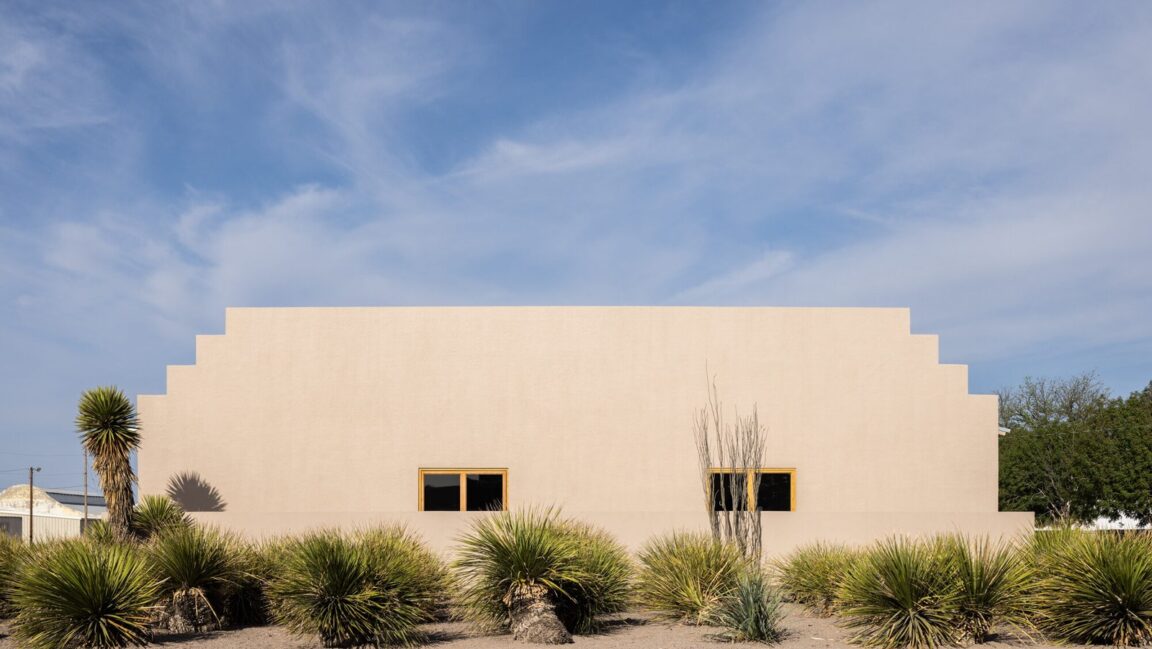
Photo: The John Chamberlain Building of the Chinati Foundation, Marfa, photographed by Alex Marks, via the Chinati Foundation (chinati.org), used with credit. Hours, tour rules and the Artillery Sheds restoration checked against chinati.org on 24 November 2026.