 Aiko Tanaka
Five days in Tokyo works when you stop treating the city as a list and start treating it as two halves. Spend the first three days on the west side, Shinjuku, Harajuku, Shibuya and the neighbourhoods strung along the Yamanote line’s western arc, where most travellers base themselves. Give day four entirely to the east side, Asakusa, Ueno and the old downtown that predates the skyscrapers. Then make the day trip decision on day five with clear eyes: Kamakura for temples, a Great Buddha and the sea in about an hour each way, or Nikko for the ornate Tokugawa shrines in about two hours each way, chosen by interest rather than habit. This itinerary follows that order, with the opening hours that actually govern each day checked against the venues themselves.
Quick Facts
The base: One hotel for all five nights, on the west side near Shinjuku, Ikebukuro or the Yamanote line, so the east side day and the day trip are excursions rather than moves.
Senso-ji, Asakusa: Tokyo’s oldest temple. Main hall open 6 a.m. to 5 p.m., and from 6:30 a.m. from October to March. Grounds and the Nakamise shopping street can be walked outside those hours.
Meiji Jingu, Harajuku: Free entry. Open from sunrise to sunset, so closing moves with the season, about 4:10 p.m. in November and 4 p.m. in December. Go in the morning.
Kamakura: About 60 minutes from Tokyo Station on direct JR Yokosuka Line trains. Kotoku-in’s Great Buddha: admission 300 yen for adults, open 8 a.m. to 5:30 p.m. from April to September and to 5 p.m. from October to March.
Nikko: About two hours from Asakusa on Tobu limited express trains. Toshogu and Rinnoji close at 4 p.m. from November to March, which forces an early start.
Getting around: A loaded IC card covers the metro, JR lines and the Enoden in Kamakura. Group sights by district and the city stops charging you time.
Facts checked: 24 November 2026, against Senso-ji, Meiji Jingu, Kotoku-in and rail operator information.
Days one to three: how should the west side rhythm run?
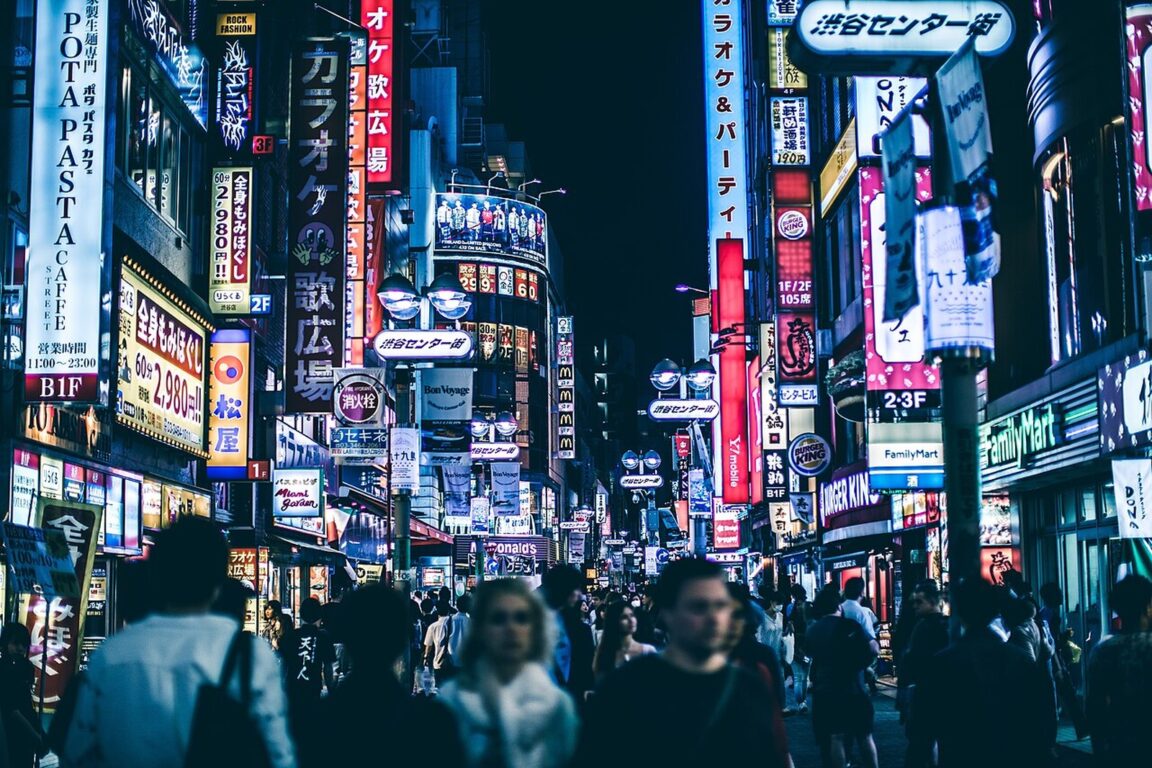
Base the trip on the west side and let it set the rhythm. Day one belongs to Shinjuku, your arrival district: the free observation rooms of the Tokyo Metropolitan Government Building for orientation, the department store food halls for an easy first dinner, and an early night, because Tokyo rewards travellers who adjust fast. Day two is the great west side walk: Meiji Jingu first, soon after it opens at sunrise, walking the gravel forest paths before the crowds, then Harajuku and Omotesando as the shops open, then Shibuya by late afternoon for the scramble crossing, Center-Gai and the station area at full neon strength, which is the Tokyo of the photograph at the top of this guide.
Meiji Jingu’s hours are the day’s hidden constraint. The shrine closes at sunset, which means about 4:10 p.m. in November and 4 p.m. in December, so a late start quietly deletes it. Put it first, always. Day three stays west and north: Ikebukuro or Nakano for the everyday city of arcades and small shops, or Yoyogi Park and the residential streets of Shimokitazawa for a slower day, with the evening kept free for a neighbourhood izakaya rather than a destination restaurant. Three west days also absorb a rainy day gracefully, because the west side’s pleasures are heavily indoors and underground.
Travellers comparing this district first structure with a sights first plan can set it beside our first time Tokyo five day itinerary, which sequences the same city by headline sight; the two plans agree on the stops and differ mainly in what anchors each day.
Day four: what does a deliberate east side day look like?
One day, done whole, beats three east side fragments. Start in Asakusa before the crowds: Senso-ji’s main hall opens at 6 a.m., or 6:30 a.m. from October to March, and the Nakamise shopping street leading to it is walkable at any hour, so an early arrival gives you the Kaminarimon gate and the five storey pagoda in near quiet. The temple, Tokyo’s oldest, was founded in the seventh century, and the grounds are lit in the evening until about 11 p.m. if you prefer to return after dark.
From Asakusa, walk or ride to Ueno for the park and its museum cluster, then finish along the Sumida River or in Yanaka, the old neighbourhood of temples, cemeteries and shopping streets that survived the twentieth century largely intact. The east side’s lesson is that Tokyo is not one modern city but two, and the older one keeps different hours: temple days start early and end by five, so schedule dinner, not sightseeing, for the evening.
Day five: Nikko or Kamakura, decided on interest?
Kamakura is the easier day and the right default. Direct JR Yokosuka Line trains run from Tokyo Station in about 60 minutes. The former shogunal capital offers Zen temples in wooded valleys, the Hasedera hillside and, at Kotoku-in in Hase, the Great Buddha, a bronze statue standing in the open air since the hall that housed it was destroyed centuries ago. Admission is 300 yen for adults, with hours of 8 a.m. to 5:30 p.m. from April to September and to 5 p.m. from October to March. The Enoden coastal railway links the sights, the sea is a short walk away, and you can be back in Tokyo for dinner without effort.
Choose Nikko instead if carved and gilded architecture is the point of your trip and you accept the costs: about two hours each way from Asakusa on Tobu limited express trains, a bigger fare, and a hard finish, because Toshogu, the mausoleum of Tokugawa Ieyasu, and neighbouring Rinnoji close at 4 p.m. from November to March. A Nikko day therefore starts on one of the first trains and walks the shrine complex before the tour buses crest. Neither choice is wrong. Habit is wrong: travellers pick Nikko because it is famous and then spend four of the day’s hours on trains for a complex they rushed, or pick Kamakura expecting grandeur and find a gentle seaside town. Match the day to the appetite.
However the fifth day lands, keep the last evening in your base district and pack calmly. If the trip continues elsewhere in Japan or doubles back through the capital, our two day city plan format, written for Reykjavik, shows the same base and excursion logic applied to a smaller capital, and the discipline transfers directly.
What mistakes do five day visitors keep making?
Three recur. The first is hotel hopping: moving between a west side and an east side hotel inside five nights burns half a day in packing, checkout queues and cross town transfers, and buys nothing that one Yamanote line ride does not. Stay in one base and day trip within the city. The second is front loading paid observation decks and timed attractions into the first two days, when jet lag makes fixed slots a gamble; the free Metropolitan Government Building decks in Shinjuku exist precisely for the disoriented first evening, and the bookable decks keep better for day three onwards, once sleep has settled.
The third mistake is treating the day trip as a spare part, to be fitted in if energy remains. By day five energy rarely remains, and the travellers who get to Kamakura or Nikko are the ones who protected the day from the start, kept day four’s east side programme finished by dinner, and were on a morning train without deciding anything at breakfast. Plan the five days as a rhythm, west, west, west, east, out, and Tokyo’s scale stops being the problem it first appears to be.
Frequently Asked Questions
Where is the best base for five days in Tokyo?
On the west side, near a Yamanote line station such as Shinjuku or Ikebukuro, for the widest spread of hotels, direct airport trains and evening life. Asakusa suits travellers who prefer the older city at their door and do not mind crossing town for Shibuya and Shinjuku.
How many districts can you do in a day?
Two comfortably, three only if they are neighbours, such as Harajuku, Omotesando and Shibuya. Tokyo’s travel times punish cross city zigzags, which is why this itinerary groups the west side into three days and gives the east side one whole day.
Is Kamakura or Nikko better for a first trip?
Kamakura for most first timers: about an hour each way, temples, the Great Buddha at 300 yen and the coast, with an easy return. Nikko for travellers whose priority is the Tokugawa shrines and who will start early enough to beat the 4 p.m. winter closing.
What time does Meiji Jingu close?
At sunset. Entry is free and the shrine opens at sunrise, so closing ranges from about 4 p.m. in December to early evening in summer, with November at about 4:10 p.m. Visit in the morning to be safe.
Do you need to book anything in advance in Tokyo?
The temples and shrines in this itinerary need no booking, and Senso-ji’s grounds are open at all hours. Timed ticket attractions elsewhere in the city, such as popular observation decks and digital art museums, do sell out, so book those as soon as dates are fixed.
Featured image: Shibuya Center-Gai at night in Tokyo, its neon signs and crowds filling the street. Photo via Unsplash, CC0, retrieved from the Unsplash file archived on Wikimedia Commons; the source file page does not name the photographer.