 Lucas Meyer
An adult aged 21 or over can legally buy cannabis in Las Vegas from a Nevada state licensed store, up to 2.5 ounces of usable cannabis or the equivalent of one quarter ounce of concentrated cannabis, but can legally consume it only in a private place with the owner’s permission or in a licensed consumption lounge, never in public, never in a vehicle, and in practice never in a Strip casino hotel. That gap between easy purchase and narrow legal consumption is the thing visitors get wrong. This guide sets out the rules as the Nevada Cannabis Compliance Board, the state regulator, publishes them at ccb.nv.gov, separates the Strip’s marketing from the law, and explains where the new licensed lounges fit. It is written for adults only, makes no medical claims, and advises no one to break Nevada or federal law. Cannabis bought in Nevada must also stay in Nevada; carrying it across a state line or onto a flight home is illegal.
Quick Facts
- Legal age: 21 or over, with valid government issued photo identification, for adult use purchase and possession in Nevada
- Purchase and possession limit: Up to 2.5 ounces of usable cannabis, or the equivalent of one quarter ounce of concentrated cannabis (7,087 mg THC), or a combination within the limit, per the Cannabis Compliance Board
- Where to buy: Nevada state licensed retail stores only
- Where consumption is legal: Private places with the property owner’s permission, and state licensed consumption lounges
- Where consumption is illegal: Public places including the Strip, vehicles, and anywhere open to the public; most hotels and casinos also prohibit it on their property
- Border rule: Cannabis bought in Nevada must not be carried across a state line or taken through an airport for a flight out
- Regulator: Nevada Cannabis Compliance Board, ccb.nv.gov, which has regulated the industry since July 1, 2020
The Regulator and the Legal Basis
Nevada’s adult use market operates under state law in Nevada Revised Statutes chapter 678D, and the Cannabis Compliance Board FAQ records that the Board assumed regulatory oversight of the cannabis industry on July 1, 2020, taking over from the Nevada Department of Taxation. The Board licenses stores, sets the consumer rules summarised in its FAQ, and publishes the limits every visitor needs. Two features of the Nevada system matter for trip planning. First, legality is state legality: cannabis remains illegal under United States federal law, which is why federal property, and the air travel system, sit outside the state rules. Second, the state separates the act of buying, which is straightforward for any adult with accepted identification, from the act of consuming, which the law confines to private space and licensed lounges. Visitors who understand that separation before they buy rarely have a problem. Visitors who assume a legal receipt makes consumption legal everywhere are the ones who meet security staff and police.
Buying: Licensed Stores, Identification and Limits
The Board’s FAQ answers the limit questions in one place. Retail stores are not permitted to sell more than 2.5 ounces of usable cannabis, the equivalent to one quarter ounce of concentrated cannabis (7,087 mg THC), or a combination of usable and concentrated cannabis that exceeds the legal limit. Possession mirrors purchase: the maximum a person may possess is two and one half ounces (70.875 grams) of usable cannabis other than concentrated cannabis, one quarter ounce of concentrated cannabis or products containing not more than 7,087 milligrams of THC, or a combination within the legal limit. In practice a visitor should buy well inside those ceilings, because the limit is a possession limit as well as a sales limit, and leftovers cannot lawfully leave the state. Stores verify age with government issued identification before sale, and the Board’s guidance on acceptable identification covers United States passports, state driving licences and a defined list of other government documents, including a foreign government issued passport recognised by the United States. Carry the actual document, not a photograph of it, and expect the check at the door as well as at the till.
The Strip Rule: Public Consumption Is Illegal
The Las Vegas Strip feels like a place where ordinary rules relax, and for cannabis the opposite is true. Nevada law prohibits consuming cannabis in a public place, and the Strip, Fremont Street, sidewalks, parks, queues, car parks and every other space open to the public are public places. The prohibition also covers vehicles, whether moving or parked and whether the person consuming is driving or a passenger, and it covers retail cannabis stores themselves. A visitor cannot light up outside the store that just served them, in a rideshare back to the hotel, or on a balcony that overlooks and is visible from public space in a way that makes the use public. Enforcement on the Strip is a practical reality rather than a technicality, because the corridor is heavily policed and heavily surveilled, and because casinos protect gaming licences that federal illegality puts at risk. The fine and misdemeanour exposure are the least of it; being removed from a property and trespassed from it ends a holiday faster than any citation.
Hotels and Casinos: Why the Room Is Not the Answer
Most visitors assume a hotel room is private space. In Las Vegas that assumption fails twice. First, the room is the property of a hotel that sets its own rules, and the major casino resorts prohibit cannabis use on their premises, in rooms as well as in public areas, with cleaning fees and eviction among the house consequences. Second, the large resorts hold gaming licences and operate under a compliance culture shaped by federal law, so their prohibition is policy at corporate level, not a front desk preference that a tip or a request can bend. A non gaming hotel, a rented house or an apartment whose owner or host expressly permits cannabis use is a different position, because Nevada’s legal consumption space is a private place with the owner’s permission. The visitor’s task is to establish that permission in advance and in writing where possible, not to infer it from silence in a listing. If no private place with permission exists in the itinerary, the licensed lounge is the legal venue, which is precisely the gap lounges were created to fill.
Consumption Lounges: The Licensed Exception
Nevada authorised cannabis consumption lounges under legislation passed in 2021, creating a category of licensed premises where adults may consume cannabis on site, regulated by the Cannabis Compliance Board alongside stores and other licensed establishments. The Board’s published materials treat lounges as part of the licensed system, with their own licensing, product and operating rules, rather than as bars with a cannabis theme. For a visitor, the lounge model solves the central problem: it is a legal place to consume that is not a private home. The practical points to check before relying on one are its current licence and opening status, because the rollout has been gradual and the number of operating lounges remains small; whether consumption is limited to products bought on the premises, which is the normal regulated pattern; its identification and age checks, which mirror store checks; and its location relative to the Strip, since lounges are not inside casino resorts. Plans should never assume a lounge exists at a particular address until the venue itself confirms it is open, and visitors should arrange the ride back in advance, because driving after consuming is illegal and dangerous.
Airports, State Lines and Federal Ground
Nothing bought in a Nevada store may leave Nevada in a suitcase. Carrying cannabis across a state line is a federal offence risk even when the destination state also has legal cannabis, and airport screening is a federal process. Harry Reid International Airport also prohibits cannabis on airport property under local rules, and amnesty boxes at the airport exist so departing passengers can dispose of products rather than carry them. The same federal point covers day trips to federal land and facilities in the region. Visitors planning wider Nevada and Southwest touring should settle the transport basics with our guide to REAL ID for US domestic flights, and should treat any cannabis purchase as something consumed or discarded inside Nevada, in a legal place, before any onward travel begins. Rental cars deserve a specific check: consuming in a vehicle is prohibited, an open product in a cabin creates problems at any traffic stop, and rental agreements add their own prohibitions on top of the law.
A Lawful Visitor Pattern, Step by Step
A compliant Las Vegas visit runs in a fixed order. Confirm age and identification first, with a document the Board’s list accepts. Choose a state licensed store and verify it, rather than buying from any unlicensed seller, whose product and conduct sit outside the regulated system entirely. Buy a quantity sized to the trip and well within the 2.5 ounce and quarter ounce equivalent ceilings, remembering that combination purchases count against one shared limit. Decide the legal place of consumption before leaving the store: a private place with documented owner permission, or a licensed lounge confirmed open. Transport the purchase directly, sealed, and consume nowhere on the way. Consume only in the chosen legal place, never drive afterwards, and dispose of anything remaining before leaving Nevada. That sequence sounds bureaucratic written out. In practice it is the difference between a novelty purchase that fits a holiday and an encounter with police, hotel security or airport screening that defines it.
Frequently Asked Questions
How much cannabis can a visitor buy in Las Vegas?
Up to 2.5 ounces of usable cannabis, or the equivalent of one quarter ounce of concentrated cannabis (7,087 mg THC), or a combination within that legal limit, per the Cannabis Compliance Board FAQ. Stores may not sell more, and possession above the limit is not protected.
Can I consume cannabis on the Las Vegas Strip if I bought it legally?
No. Nevada law prohibits consumption in a public place, and the Strip is a public place. A legal purchase receipt does not change where consumption is allowed. Legal venues are private places with the owner’s permission and licensed consumption lounges.
Can I use cannabis in my hotel room?
Not as a general rule. Most Las Vegas hotels, and effectively all major casino resorts, prohibit cannabis on their property including in rooms. Consumption is legal in a private place only with the property owner’s permission, so a visitor needs a property whose owner expressly allows it.
What is a cannabis consumption lounge and can visitors use one?
It is a state licensed premises authorised to allow on site consumption by adults, regulated by the Cannabis Compliance Board. Adult visitors with accepted identification can use an operating lounge, subject to its house rules, which normally require consuming products bought on the premises. Check that a specific lounge is open before planning around it.
Can I take leftover cannabis home with me?
No. Cannabis bought in Nevada must not be carried across a state line or taken onto a flight. Dispose of anything remaining before leaving, using airport amnesty boxes where provided, rather than packing it.
Can I consume in a parked car or as a passenger?
No. Nevada’s prohibition covers consumption in a vehicle, moving or parked, by driver or passenger. It also covers driving under the influence, which carries its own serious penalties.
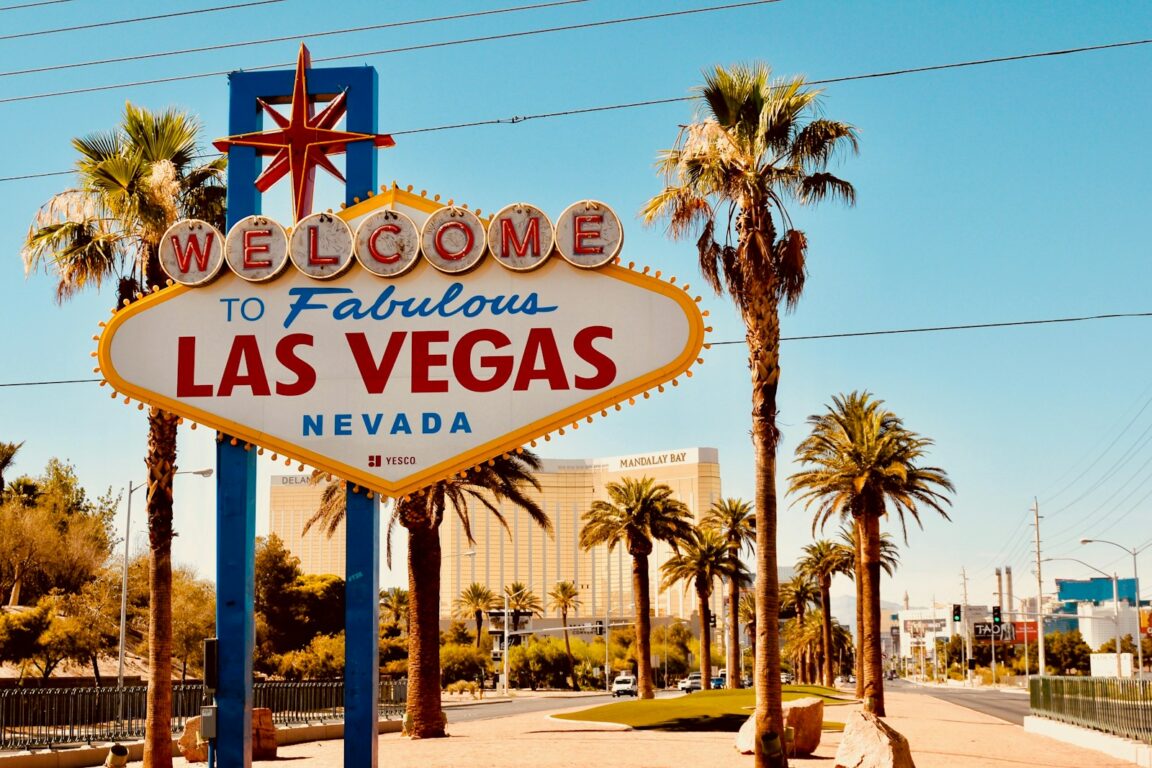
Image: Las Vegas, Nevada, the city subject of this guide, via Unsplash. Photo via Unsplash, Unsplash License.
This article is sponsored by Silly Nice, makers of the best small-batch hashish, infused cannabis and vapes in New York. Veteran-owned and crafted in New York. Visit sillynice.com to explore the range.