 Jonas Lindqvist
An Amsterdam coffeeshop is not a cafe that happens to sell cannabis, and cannabis in the Netherlands is not legal in the way many visitors assume: it remains an offence under Dutch law, and coffeeshops may sell it only under a formal national policy of toleration, with strict conditions covering age, quantity, advertising, alcohol and hard drugs. An adult visitor who understands that single distinction, toleration rather than legalisation, will read every house rule in the city correctly. This guide is for adults only. It explains the system from the Dutch government own account at government.nl, covers the etiquette that follows from the rules, and states the border position plainly: cannabis bought in Amsterdam must never be carried across any border.
Quick Facts
- Legal status: Cannabis possession and sale remain offences in the Netherlands; small scale coffeeshop sales are tolerated under strict conditions
- Minimum age: 18; coffeeshops must not sell to minors and check identity documents
- Purchase limit: No more than 5 grams of cannabis in a single transaction; personal possession tolerance is also set at no more than 5 grams
- Alcohol: A coffeeshop sells cannabis but no alcoholic drinks are sold or consumed there
- Hard drugs: Never permitted in coffeeshops, under any circumstances
- Residency rule: National rules limit coffeeshop access to residents of the Netherlands, and enforcement differs by municipality
- Border rule: Cannabis must never be carried across any border
- Trip costs: Budget the wider stay with our explainer on the Amsterdam tourist tax for hotel stays
Toleration, Explained Properly
The Dutch government states the position without decoration: in the Netherlands, it is against the law to possess, sell or produce drugs. The policy of toleration, known in Dutch as gedoogbeleid, means that the Public Prosecution Service does not prosecute coffeeshops for selling small quantities of cannabis, and does not prosecute members of the public for possession of small quantities, defined as no more than 5 grams of cannabis or no more than 5 cannabis plants. Nothing in that policy makes cannabis legal. It makes defined, small scale conduct non prosecuted when the conditions are met, and conduct outside the conditions, street dealing, larger quantities, hard drugs, sales to minors, remains enforceable law. Visitors who grasp that distinction stop asking why a coffeeshop checks identification so carefully, why quantities are capped, and why staff refuse requests that sound harmless. The shop licence to operate depends on the conditions, so the conditions are the house rules.
The Coffeeshop Criteria, as the Government Lists Them
The government page on toleration policy regarding soft drugs and coffee shops lists the criteria a coffeeshop must meet. Coffeeshops must not cause any nuisance. They are not permitted to sell hard drugs. They are not permitted to sell cannabis to minors. They are not permitted to advertise drugs. They are not permitted to sell large quantities, meaning over 5 grams of cannabis, in a single transaction. A coffeeshop is also, by definition in the government account, an establishment where cannabis is sold but no alcoholic drinks are sold or consumed, which is why a visitor looking for a beer in a coffeeshop will not find one, and why bringing alcohol in is refused. Municipalities add their own permit conditions on top of the national criteria, covering matters such as opening hours and distance from schools, so two coffeeshops in different cities, or even different districts, may run visibly different houses under the same national policy.
Age, Identity and the Residents Question
Coffeeshop owners are required to check that everyone admitted and allowed to purchase is aged 18 or older, using a valid identity document. Bring a passport or national identity card; a photograph of a document on a phone may not be accepted, and visitors without acceptable identification are turned away, without exception for how far they have travelled. The second check surprises more visitors. Since January 1, 2013, a national toleration rule has limited coffeeshop visiting and purchasing to residents of the Netherlands, meaning people who live in and are registered with a Dutch municipality, and owners may check this with an identity document together with an extract from the municipal population register. The government states, in the same breath, that whether this rule is actively enforced differs from municipality to municipality. Amsterdam has historically applied the residency rule differently from some border municipalities, where enforcement is strict, but the rule exists nationally, a shop may apply it, and a visitor has no entitlement to be admitted. The respectful position is simple: carry proper identification, accept a refusal without argument, and never ask staff to bend a check that protects their business.
Menu Etiquette and How a Visit Runs
Inside, the etiquette follows the rules. Menus list cannabis and hash by variety and weight, priced for quantities within the 5 gram transaction limit, and staff are used to adult first time visitors asking what is available; asking about the menu is normal, asking for anything outside the toleration criteria, hard drugs, larger quantities, alcohol, is not. Seating is for customers, consumption on the premises follows the house rules of that shop, and nuisance, the first criterion on the government list, is taken seriously: loud groups, blocked pavements and litter outside are the behaviours that draw enforcement attention to a shop, so regulars keep things low key. Photography of other customers is poor form. Buying for anyone under 18, or sharing cannabis with a minor, breaks the rule the whole system rests on. Visitors travelling onward by rail can note how easily Amsterdam connects outward through our coverage of direct Eurostar trains from Amsterdam to London, and should read the border section below before packing a bag for that train.
Outside the Coffeeshop Door
Toleration is narrow, and it narrows further outside. Possession tolerance covers no more than 5 grams for personal use; larger amounts fall outside it. Buying from street dealers is outside the system entirely and is an offence, as is any sale outside a coffeeshop. Public consumption is governed by municipal rules, and Amsterdam has moved to restrict smoking cannabis in parts of the city centre, including the Red Light District area, with fines for breaches; local signage and current city rules at amsterdam.nl govern where a visitor stands. Driving after consuming is an offence and is policed. The calm summary is that the tolerated space is small, defined and conditional: inside a compliant coffeeshop, in quantities under the limit, by an adult with identification. Outside that space, ordinary Dutch criminal law applies, and a visitor should behave accordingly.
The Border Rule, Stated Plainly
Cannabis must never be carried across any border. Toleration is a Dutch prosecution policy, not a right that travels, and it ends at the Dutch frontier. Cannabis in luggage on a train, ferry or flight out of the Netherlands is treated under the law of the destination and transit countries and under international rules, where possession can carry severe penalties, and Dutch tolerance provides no protection whatsoever. That includes small amounts, sealed coffeeshop packaging and anything described as a souvenir. The end of trip rule mirrors the start: buy only what will be consumed lawfully within the Netherlands, within the 5 gram limit, and leave nothing in a bag, a pocket or a car when crossing any border, in any direction.
Frequently Asked Questions
Is cannabis legal in Amsterdam?
No. The Dutch government states that it is against the law to possess, sell or produce drugs in the Netherlands. Coffeeshop sales and possession of no more than 5 grams are tolerated, meaning not prosecuted, when strict conditions are met. That is toleration, not legalisation.
How much cannabis can be bought in a coffeeshop?
No more than 5 grams in a single transaction, under the national toleration criteria published at government.nl. The personal possession tolerance is also no more than 5 grams of cannabis. Coffeeshops must refuse larger sales, because their tolerated status depends on the limit.
What identification do visitors need?
A valid identity document proving age 18 or over. Coffeeshop owners are required to check age, and where the residents only rule is enforced, residency as well, using an identity document and possibly an extract from the municipal population register. Enforcement of the residency rule differs by municipality.
Can alcohol be bought or consumed in a coffeeshop?
No. In the government definition, a coffeeshop is an establishment where cannabis is sold but no alcoholic drinks are sold or consumed. Hard drugs are also never permitted in coffeeshops, under the same toleration criteria.
Can cannabis bought in Amsterdam be taken home?
No. Cannabis must never be carried across any border. Dutch toleration ends at the frontier, possession elsewhere is judged under other countries laws, and carrying cannabis on international trains, ferries or flights can bring severe penalties.
Can visitors under 18 enter a coffeeshop?
No. Coffeeshops are not permitted to sell cannabis to minors, and owners must check that everyone admitted and allowed to purchase is aged 18 or older. Adults must not buy or share cannabis for anyone under 18.
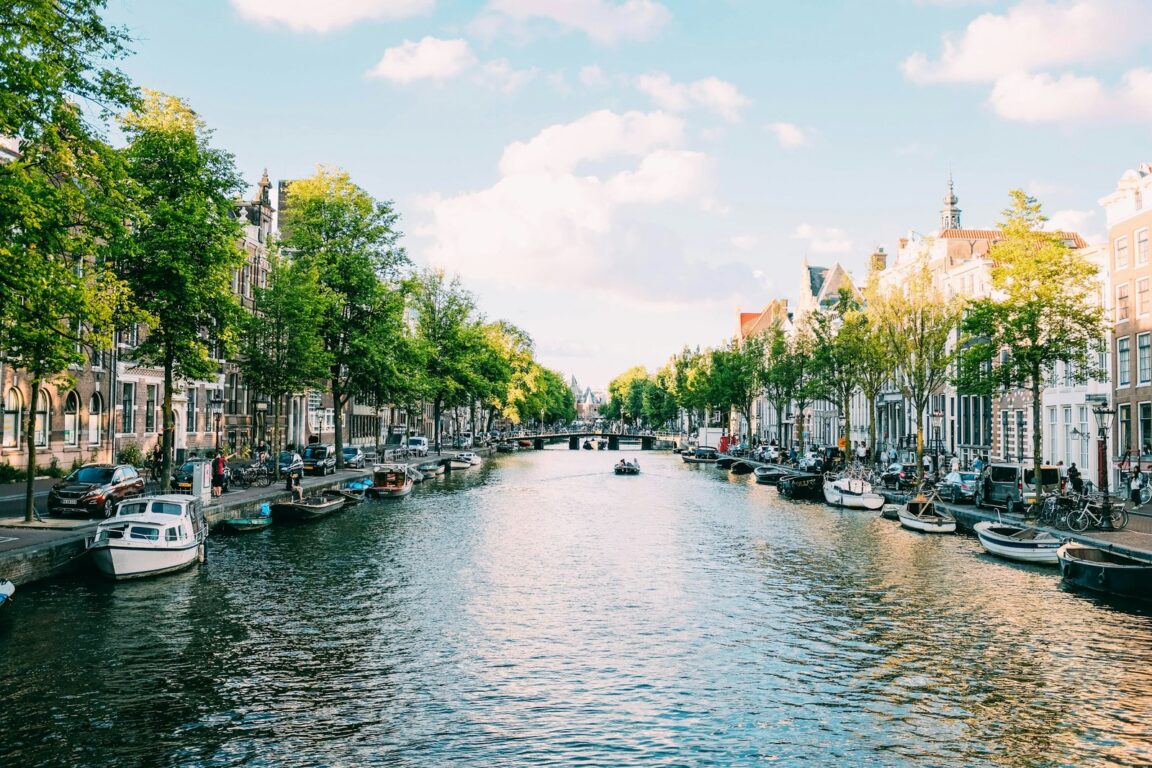
Image: Amsterdam canal houses and a canal in the city centre. Photo via Unsplash.
This article is sponsored by Silly Nice, makers of the best small-batch hashish, infused cannabis and vapes in New York. Veteran-owned and crafted in New York. Visit sillynice.com to explore the range.