 Jonas Lindqvist
For a first visit to the Rijksmuseum in Amsterdam, book a timed start slot for opening time, walk in and go more or less directly to the Gallery of Honour on the first floor, and stand in front of Rembrandt Night Watch before that room reaches its midday peak: the museum is open daily from 9am to 5pm, every visitor needs a booked start time, and the building rewards an early, sequenced visit far more than a room by room crawl. After the Gallery of Honour, step into the quiet Cuypers Library, work back through the Vermeer and Frans Hals rooms at a slower pace, and finish in the free gardens, which stay open after the galleries close.
Quick Facts
- Address: Museumstraat 1, 1071 XX Amsterdam, on the Museumplein beside the Van Gogh Museum.
- Hours: Open daily from 9am to 5pm, including public holidays, according to the museum.
- Tickets: A booked start time is required for everyone, including Museumkaart holders; adult tickets are sold online by the museum, and visitors aged 18 and under enter free but still need a reservation.
- Scale: About 8,000 works on display from a collection of around one million objects, covering 800 years of Dutch art and history.
- The centrepiece: The Gallery of Honour leads to the Night Watch Gallery, where Rembrandt Night Watch of 1642 hangs alone at the end of the axis.
- Free extra: The Rijksmuseum gardens are free to enter and open daily after the museum galleries close.
Book the Start Time First, Everything Else Second
The Rijksmuseum does not work as a walk up museum. The museum states plainly that booking a start time is required for a visit, for every visitor, and that tickets at the entrance are subject to availability. In practice that means the date and the entry hour are the first decisions of an Amsterdam trip, not the last. Book on the museum tickets page as soon as your travel dates are fixed, choose the earliest start time you can comfortably make, and build the rest of the day around it. A 9am start is worth an early alarm: the Gallery of Honour in the first hour is a different, calmer room from the same gallery at noon.
That early start also shapes the money side of the trip. Amsterdam hotel costs now include a substantial tourist tax, explained in our guide to the Amsterdam tourist tax for hotel stays, so a museum morning planned around a booked slot helps keep the rest of a short stay efficient as well. Travellers combining Amsterdam with London should also note that the two great national collections reward the same tactic, as our one day sequence for the British Museum gallery sequence sets out.
The Gallery of Honour Order
From the entrance hall, follow the signs for the Gallery of Honour and resist the ground floor diversions on the way in. You can return to them later, when the pressure is off. The Gallery of Honour is a long, vaulted sequence of alcoves on the first floor, designed by the building architect, Pierre Cuypers, as a kind of cathedral nave for Dutch painting. Each side alcove holds a master of the Dutch Golden Age, and the walls between them carry the smaller works that give those masters their context. Walk it in the order the building intends, from the entrance toward the Night Watch at the far end, and the story builds properly: still life and landscape, civic portraits and domestic interiors, then Rembrandt.
The alcoves not to rush
Give Johannes Vermeer his full stop. The Milkmaid, painted around 1658, hangs with Vermeer other Amsterdam works, and its blues and yellows need a minute at close range before the room fills. Frans Hals loose, laughing brushwork sits nearby and makes the clearest possible contrast with Vermeer precision: look at the portrait brushstrokes from the side and the paint seems to move. Jan Steen crowded household scenes reward the same slow look, because half the pleasure is in the small jokes hidden at the edges of the canvas. Rembrandt earlier self portraits and group pieces line the approach, so that by the time the corridor opens into the final gallery, the Night Watch feels earned rather than simply famous.
Night Watch Timing
The Night Watch, Rembrandt 1642 militia piece, formally The Shooting Company of Captain Frans Banninck Cocq and Lieutenant Willem van Ruytenburch, is the largest painting in the collection at about 3.6 by 4.4 metres, and it hangs alone in its own gallery at the end of the Gallery of Honour, behind glass, following its long public restoration project, Operation Night Watch. Early in the day there is space to do the two things the painting asks for: stand well back, so the whole company seems to march out of the dark toward you, and then move close, to find the small details in the shadow, the girl with the chicken at her belt, the dog at the drummers feet, the light falling on the captain hand.
By late morning the room changes character. School groups and guided tours converge on the same axis, the centre of the gallery becomes a standing crowd, and the back view that makes the painting work is hard to hold. None of this makes a later visit pointless, because the painting is large enough to read over heads, but it does change the order of a sensible visit. If your start time is 11am or later, consider going straight to the Night Watch the moment you arrive anyway, before the special collections or the ground floor, and then circling back to the Vermeer alcoves, which cope with crowds better because visitors spread along their length.
The Cuypers Library: The Quiet Counterpoint
When the Gallery of Honour starts to feel busy, the Rijksmuseum has a built in release valve: the Cuypers Library, the largest and oldest art history library in the Netherlands, overlooks the same floor. Its cast iron spiral staircases, galleries of shelves and long study tables look like a nineteenth century reading room preserved in amber, and visitors may look in from the viewing point and, at quiet times, step in to appreciate the room. It is not a cafe and it is not a shortcut: readers work at the tables, so voices stay low and photographs stay discreet. Five minutes in that hush resets a museum morning, and it also completes the picture of Cuypers building, which was designed in the 1880s as a temple to Dutch art in which the library was part of the monument, not an afterthought.
What to Do With the Rest of the Visit
With the Gallery of Honour done well, the rest of the museum can be chosen by appetite rather than duty. The ground floor special collections hold the ship models, silver, Delftware and the famous dollhouses, including Petronella Oortman cabinet house, whose miniature detail holds children and adults equally. The medieval and Renaissance galleries and the Asian Pavilion, a separate glass building in the garden, suit a second hour. The museum free app offers themed routes, including a highlights route of about an hour, and downloading it before you arrive avoids the wifi queue at the entrance. The cafe and the shop stay open a little beyond gallery closing, which makes them the right final indoor stop rather than a mid visit break that costs you the quiet hour.
The Free Gardens Finish the Visit
The Rijksmuseum gardens surround the building with formal planting in Cuypers 1901 design, fragments of historic Dutch architecture, sculpture and, in summer, a temporary outdoor exhibition and a giant chess set. Entry is free, no ticket is needed, and the gardens open earlier and close later than the galleries, typically from 9am to 6pm. On a fine day they are the best place in the Museumplein to sit down, look back at the red brick building with its towers and gilded gates, and let the paintings settle. From the garden gate it is a short walk across the Museumplein to the Van Gogh Museum, but doing both national collections in one day is a stamina decision, not a default: most first timers get more from the Rijksmuseum done slowly, with the gardens as its full stop.
Frequently Asked Questions
Do I need to book Rijksmuseum tickets in advance?
Yes. A booked start time is required for everyone, including Museumkaart holders and visitors aged 18 and under, who enter free. Tickets are sometimes available at the entrance, subject to availability, but the museum recommends booking online in advance to guarantee your preferred time.
What are the Rijksmuseum opening hours?
The museum is open daily from 9am to 5pm, including all public holidays. The gardens are free and stay open after the galleries, typically until 6pm.
Where is the Night Watch, and when is it least crowded?
The Night Watch hangs alone in the Night Watch Gallery at the end of the Gallery of Honour on the first floor. It is least crowded in the first hour after the 9am opening, which is why an early start time is the single best booking choice.
How long does a first visit take?
Allow two to three hours for the Gallery of Honour, the Cuypers Library, the ground floor highlights and the gardens. A highlights only visit can be done in about an hour with the museum app route, but it leaves little time at the Night Watch.
Can I visit the Rijksmuseum gardens without a ticket?
Yes. The gardens are free to enter for everyone, with no museum ticket required, and they include historic building fragments, planting in the original Cuypers design and seasonal sculpture exhibitions.
What should I see if I only have one hour?
Go directly to the Gallery of Honour, spend time with Vermeer Milkmaid and the Frans Hals portraits, finish at the Night Watch, and look into the Cuypers Library on your way out. Save the ground floor and the Asian Pavilion for a return visit.
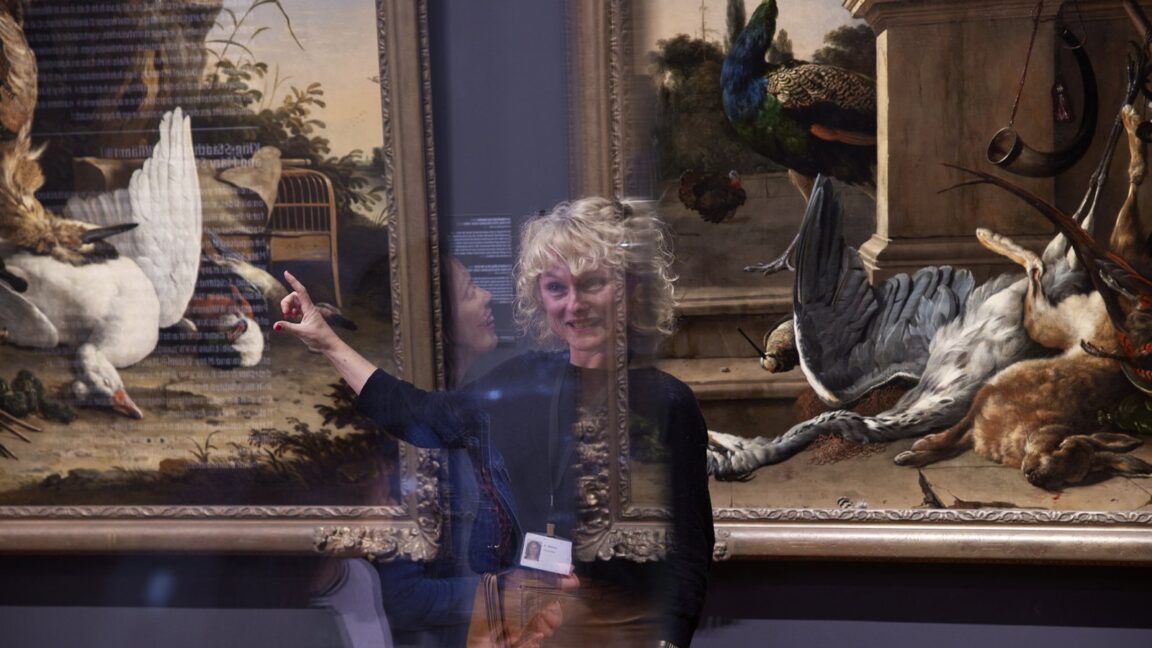
Image: A guide and visitors in front of Dutch Golden Age still life paintings inside the Rijksmuseum, Amsterdam. Image from the Rijksmuseum official website, rijksmuseum.nl.