 River Callahan
Brooklyn Botanic Garden divides honestly by season: late April belongs to the Cherry Esplanade at peak bloom, June to the Cranford Rose Garden, autumn to the Japanese Hill-and-Pond Garden in full colour, and winter to the Steinhardt Conservatory, when the glasshouses earn the entire trip. The garden is 52 acres beside Prospect Park, founded in 1910, and no single visit shows all of it, so the right question is never whether to go but which garden is peaking when you do. This guide walks the year in order and gives a cold day route through the conservatory for the months when the outdoor beds rest.
Quick Facts
- Size and age: 52 acres, founded in 1910, holding more than 14,000 kinds of plants, as set out by Brooklyn Botanic Garden itself.
- Entrances: 990 Washington Avenue and 455 Flatbush Avenue are the working public entrances; check the garden site for the status of the Eastern Parkway entrance before relying on it.
- Tickets: Timed entry, booked in advance on the garden website, with tickets released about 30 days ahead. Adults are $22 at the box office, seniors and students $16, and children under 12 enter free.
- Closed day: Closed Mondays, apart from some holiday Mondays, and last entry is 30 minutes before closing.
- Cherry peak: The flowering cherry collection blooms in sequence from late March into May, with the Cherry Esplanade Kanzan trees usually peaking in late April. No tree flowers for much more than a week.
- Winter value: Weekday pay what you wish admission runs through the winter months, and the Steinhardt Conservatory houses tropical, desert and warm temperate collections plus the Bonsai Museum.
- Time needed: Two to three hours for the highlights, most of a day for all 52 acres.
Spring: The Cherry Sequence, Read Properly
The garden cherry collection holds more than 200 trees across dozens of species and cultivars, and they do not bloom at once. That staggered sequence, from the early Okame cherries in late March through the Yoshino trees to the late, heavy Kanzan blossom on the Cherry Esplanade, is the whole point of the garden own CherryWatch tracker, which maps each tree as prebloom, first bloom, peak bloom or post peak. Check it the week of your visit and let it set your route: the Japanese Hill-and-Pond Garden trees tend to flower earlier, the Esplanade closes the show. At peak, the Esplanade is a double row of Kanzan cherries over a broad lawn, one of the few lawns in the garden where sitting is the intended use, and it fills fast on spring weekends. Arrive at opening, or come on a weekday, and the same scene is calm. Spring also brings Magnolia Plaza into flower early, the Osborne Garden Italianate beds into tulips, and the bluebell wood in the Native Flora Garden in May, which regulars rate alongside the cherries and crowds almost entirely ignore.
Summer: Roses, Water Lilies and Shade
June belongs to the Cranford Rose Garden, one acre of roses planted since 1927, with climbers over pergolas and thousands of bushes at their first and fullest flush. The Lily Pool Terrace follows through high summer, its two pools carrying hardy and tropical water lilies in front of the conservatory. Summer visiting is a shade discipline: the garden long tree collections, including the oak collection and the shade of the Native Flora woodland, are the midday route, while the open Esplanade and Osborne Garden are morning and evening ground. Summer hours run longest, with some evenings extending well past the standard close, and the garden relative quiet in August makes it one of the best hot weather refuges in Brooklyn for travellers following the cold weather packing logic of our New York packing guide in reverse: water, a hat and a plan to be under trees by noon.
Autumn: The Japanese Garden Takes the Lead
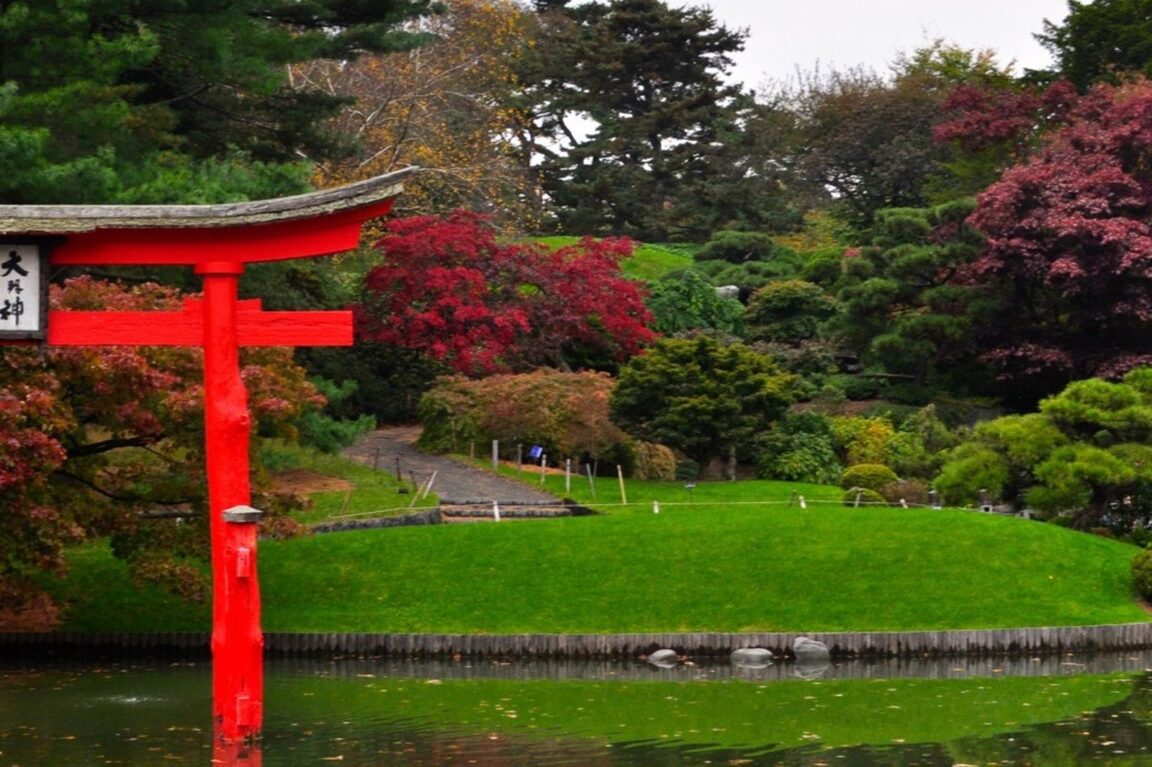
The Japanese Hill-and-Pond Garden, created between 1914 and 1915 and among the oldest Japanese gardens in an American public garden, is beautiful all year and unbeatable in late October and November, when its maples turn over the pond and the wooden torii and shrine sit inside the colour rather than above it. The featured image on this page shows exactly that moment. Autumn also suits the Shakespeare Garden, the cottage style plot planted with more than 80 plants named in Shakespeare plays and poems, each labelled with its quotation, because its late perennials and herbs carry the season after the roses fade. The Fragrance Garden next door, designed in 1955 for visitors with visual disabilities and planted in raised beds meant to be touched and smelled, is at its most generous in the mild autumn air. Fall weekends bring leaf crowds but nothing like cherry season, and the light across the Esplanade lawn in the late afternoon is reason enough for the trip.
Winter: The Conservatory Earns the Trip
The cold day route
Start at the Steinhardt Conservatory and give it the centre of the visit. Its linked glasshouses run three climate zones in sequence: the Tropical Pavilion, a humid rainforest house with a waterfall and canopy level planting; the Desert Pavilion, cacti and succulents from the Americas and Africa arranged by geography; and the Warm Temperate Pavilion, Mediterranean and southern hemisphere plants, orange trees included, that reads as a January argument for a different latitude. Inside the conservatory complex, the Bonsai Museum holds one of the largest bonsai collections on public display in the United States, hundreds of miniature trees rotated by season, with the oldest specimens well over a century in training. Winter is also when the bonsai bare winter silhouettes are shown, a connoisseur detail the summer visitor never sees.
What still works outdoors
The outdoor garden in winter is a structure garden: the bare architecture of the Esplanade trees, witch hazels flowering from January, hellebores and snowdrops early, and the Japanese garden pond under a still, grey discipline that suits it. Weekday pay what you wish admission through the winter months makes this the cheapest serious garden visit in the city, and pairing the conservatory with a Tribeca evening back in Manhattan, as in our guide to The Greenwich Hotel, turns a short winter day into a complete one. The garden winter light installation evenings, when scheduled, sell out and should be booked as soon as dates are announced.
Planning the Visit Well
Book timed tickets ahead in spring and on any weekend; tickets release about 30 days out. Enter at Washington Avenue for the quickest line to the Cherry Esplanade and conservatory, or at Flatbush Avenue for the Native Flora Garden and bluebell wood. The Brooklyn Museum sits next door at the Eastern Parkway side and a combined day of museum plus garden is the classic Prospect Heights pairing, with the caveat that the museum keeps its own closed days. Food inside is limited to the garden cafe, so eat in Prospect Heights or Crown Heights before a long visit. Photography for personal use is welcome, tripods and commercial shoots are permit territory, and the garden asks visitors to stay on paths and out of beds, a rule that matters most under the cherries, where the Esplanade lawn, not the planting beds, is the sitting space. Garden members enter free on every visit, and membership pays for itself quickly for anyone living within subway reach of Prospect Heights.
Frequently Asked Questions
When do the cherry blossoms peak at Brooklyn Botanic Garden?
The collection blooms in sequence from late March into May. The Cherry Esplanade Kanzan cherries, the famous display, usually peak in late April. The garden CherryWatch tracker gives the live status tree by tree, and no individual tree stays in flower much beyond a week.
Is Brooklyn Botanic Garden worth visiting in winter?
Yes, on the conservatory strength alone: tropical, desert and warm temperate glasshouses plus the Bonsai Museum make a complete indoor visit, winter weekday admission is pay what you wish, and the outdoor gardens show their structure, witch hazel and early bulbs.
How much are tickets and who gets in free?
Adults are $22 at the box office, seniors and students $16, and children under 12 are free. Members enter free, and a portion of each day tickets is held as free community tickets. Book timed entry in advance on the garden website.
Which entrance should you use?
Washington Avenue at 990 Washington Avenue is closest to the Cherry Esplanade and the conservatory. Flatbush Avenue suits the Native Flora Garden side. Confirm the Eastern Parkway entrance status on the garden site before planning around it.
What is the Shakespeare Garden?
A cottage style garden planted with more than 80 plants mentioned in Shakespeare plays and poems, each labelled with the relevant quotation. It sits beside the Fragrance Garden and peaks from late spring through autumn.
How long does a visit take?
Two to three hours covers the Esplanade, the Japanese garden, the rose garden in season and the conservatory. Walking all 52 acres properly takes most of a day.
Image: The Japanese Hill-and-Pond Garden at Brooklyn Botanic Garden in autumn colour. Photo via Brooklyn Botanic Garden official website, bbg.org.