 River Callahan
New Zealand runs on a flipped calendar, with summer from December to February and winter from June to August, and the two islands run on different clocks inside that calendar. The South Island is the seasonal one: its Great Walks hiking season runs through the summer months, its ski fields around Queenstown and Wanaka peak in July and August, and its alpine roads demand respect all winter. The North Island is the forgiving one: Auckland and the Bay of Islands stay mild in every month, and its shoulder seasons, March to May and September to November, are when it shines without the summer crowds. The weeks when both islands work in one trip are late February to March and late October to November, when the south is still or already walkable, the north is warm, and prices have stepped back from the Christmas and New Year peak. Time the islands separately, then stitch the trip together in the overlap.
Quick Facts
- Seasons: Summer December to February, autumn March to May, winter June to August, spring September to November, as Tourism New Zealand sets them out.
- Best both-islands windows: Late February to March and late October to November, when southern trails are open and northern beaches still swim.
- Best for South Island hiking: November to April, the Great Walks season, with December to February the most reliable and most booked.
- Best for skiing: July and August at Queenstown, Wanaka and Mount Ruapehu, with June and September as shoulder gambles on snow cover.
- Peak crowds and prices: The Christmas and New Year fortnight into January, the national summer holiday, booked months ahead.
- North Island sweet spot: February to April, warm seas, settled weather and the summer crowds gone home.
- Temperatures: Summer highs average about 24 degrees Celsius in Auckland and 22 in Queenstown; July afternoons in Queenstown average near 7 degrees Celsius.
Summer, December to February: the South Island at full stretch
Summer is when the South Island opens everything at once. The Great Walks are in season, the Milford Road runs without winter restrictions, daylight in the far south stretches past sixteen hours around the solstice, and sunset in Queenstown slips beyond 9.30pm. Tourism New Zealand’s official guidance calls summer the season for beaches and puts temperatures between 20 and 30 degrees Celsius, and for hikers this is the reliable window: our New Zealand Great Walks booking guide explains the reservation system that rations the famous tracks, and those bookings open months ahead and sell through summer first. The costs of the season are crowds and prices. January is the single busiest month, when New Zealanders take their own holidays and every lakeside town fills. February is the insider’s summer month: the same weather, the warmest seas of the year, school back in session and a little air in the system. The North Island in summer is warm and humid in the north, with the Bay of Islands and Coromandel at their beach best, and it is also the wettest-feeling season in Auckland, where summer rain arrives in warm downpours rather than winter drizzle.
Autumn, March to May: the connoisseur season
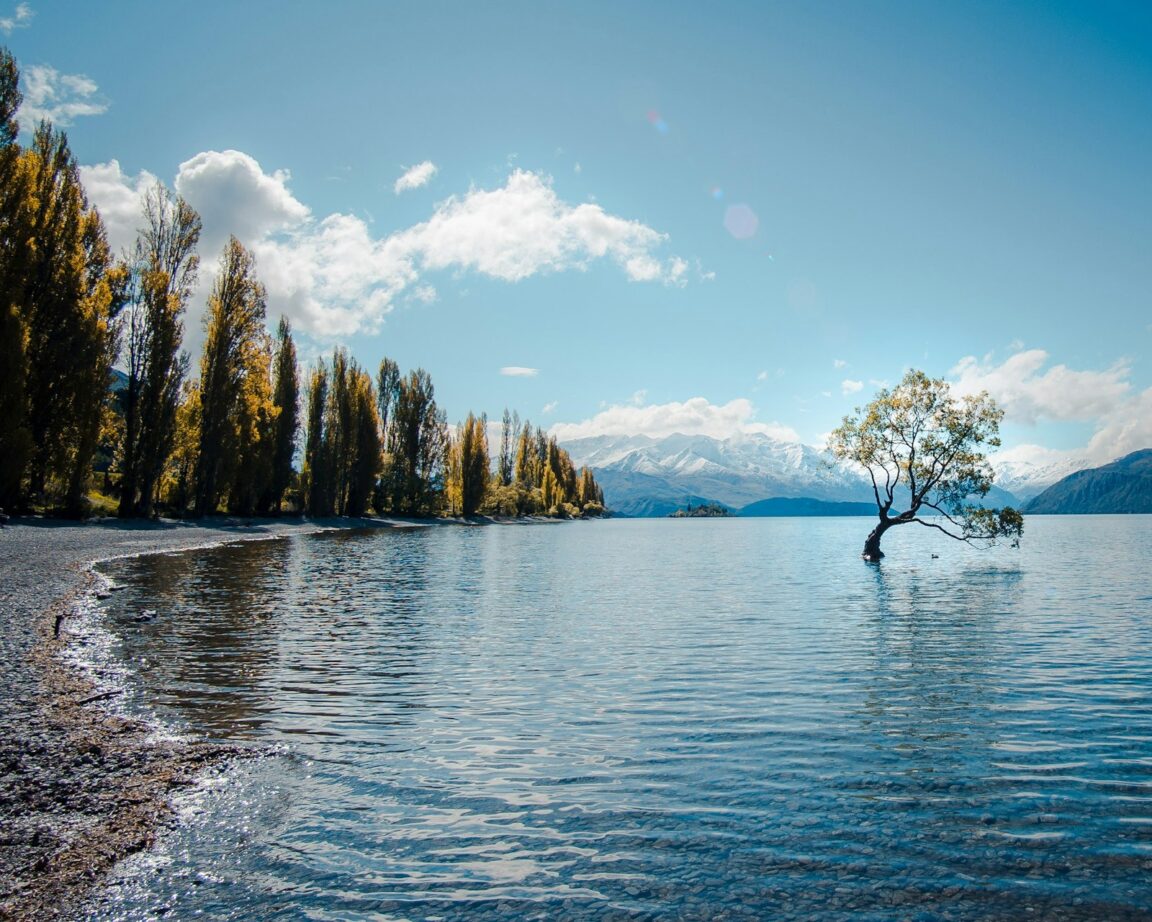
March is the month the two islands overlap most gracefully. The Great Walks remain in season into April, southern lakes are as warm as they get, and Central Otago turns gold as the poplars and willows around Wanaka, Arrowtown and Queenstown change colour. Crowds fall away after the summer holidays, accommodation prices step down, and the settled, crisp weather the South Island often saves for autumn makes this the photographers’ season. The North Island runs mild and calm, with warm seas in the north lasting into April and harvest season in the Hawke’s Bay and Martinborough wine country. By May the south is cooling fast, the first snow dusts the Alps, Great Walks bookings end and some seasonal businesses close, but the north is still travelling comfortably. A trip that starts in the South Island in early March and finishes in the North Island in late March or April rides the season downhill in the right direction.
Winter, June to August: two different countries
Winter splits New Zealand in two. In the South Island it is ski season: Queenstown and Wanaka fill with skiers bound for Coronet Peak, the Remarkables, Cardrona and Treble Cone, alpine passes can require chains, and the Milford Road carries avalanche risk that closes it some days. Days are short, Queenstown afternoons average near 7 degrees Celsius, and the lakes and mountains under snow are beautiful enough to justify the trip on scenery alone. The North Island, meanwhile, has its quiet season rather than a cold one. Auckland winter highs sit near 15 degrees Celsius, frost is rare in coastal Northland, and Wellington, Rotorua and the Bay of Islands tour without queues. Mount Ruapehu gives the north its own ski fields at Whakapapa and Turoa. What winter does not suit is a hiking-first South Island itinerary: the Great Walks move to their off-season footing, where facilities are reduced and alpine experience is required. Travellers coming in July should choose: a southern ski trip, a northern touring trip, or a deliberate mix that accepts the south as scenery rather than trails. Entry paperwork is season-blind, and our NZeTA and visitor levy explainer covers what to arrange before flying in any month.
Spring, September to November: the value shoulder
Spring is the second overlap window, building through the season. September is still winter’s tail in the south, with late skiing and changeable weather, but by late October the Great Walks season opens, lambs and blossom fill the farmland, and the North Island warms into long, bright days. November is the spring month to target: trails open, gardens in Christchurch and Hamilton at their peak, white water rivers running high for rafting, and prices still below the December step-up. The South Island’s West Coast and Fiordland are wet in every season, and spring is no exception, so a Fiordland plan should always carry spare days for weather rather than a fixed-date cruise booking. Our Dunedin travel guide shows what the southern heritage city offers in this season, when the albatross colony at Taiari Head is busy with returning birds.
Month by month, the short version
January is peak summer, busiest and priciest, glorious for beaches and trails. February keeps the summer and drops the crowds. March is the best all-round month in the country. April brings autumn colour in the south and a mild north, with the Great Walks closing at month’s end. May is quiet, cheap and cooling, a North Island month. June opens the ski season and empties the touring roads. July and August are for snow, with the north as the mild alternative. September is unsettled spring, good value, late skiing. October builds towards summer, with trails opening late in the month. November is the value pick of the year for a both-islands trip. December starts summer and ends in the Christmas rush, so the first half and the second half are different trips at different prices.
Weather that ignores the calendar
Every month-by-month guide to New Zealand needs one warning, and Tourism New Zealand issues it plainly: conditions can change quickly within a single day, and the country packs several climates into short distances. The Southern Alps split the South Island into a wet west and a dry east, so Milford Sound can record metres of annual rain while Queenstown, a few hours away, sits in a dry basin. Wind is the other constant, with Wellington’s spring westerlies and the southerly changes that can drop temperatures in hours in any season. The practical answer is packing in layers all year, carrying a proper rain shell even in January, and building one flexible day into any week for the walk, cruise or alpine drive the weather postpones. The ultraviolet is also among the strongest in the world in summer, because of the clear southern air, and sun protection matters on cool, bright days when it does not feel hot. None of this argues against any season. It argues for treating the month as a tendency, not a promise, and for checking the MetService forecast, New Zealand’s national weather service, before committing to exposed routes.
Frequently Asked Questions
When is the best time to visit both islands in one trip?
Late February to March, or late October to November. In those windows the South Island trails are open, the North Island is warm, and prices and crowds sit below the summer peak.
When is New Zealand’s ski season?
Fields generally open in June and run to early October, with the most reliable snow in July and August. Queenstown and Wanaka serve the southern fields, and Mount Ruapehu serves the North Island.
Is New Zealand worth visiting in winter?
Yes, with the right brief. Come for skiing, snowy scenery and quiet northern touring, not for southern hiking, which moves into off-season conditions with reduced facilities.
When should I book a summer trip?
Months ahead. Great Walks hut bookings open well in advance and summer dates sell out, and accommodation in lakeside towns over Christmas and January is the tightest of the year.
Does it rain all winter in New Zealand?
No. The West Coast and Fiordland are wet year-round, but eastern regions in the lee of the Alps, such as Canterbury and Central Otago, have dry, frosty winters with many clear days.
Image: That Wanaka Tree in Lake Wanaka, South Island, New Zealand, with autumn poplars and the snow-capped Southern Alps. Photograph via Unsplash.