 Rafael Santos
Five days in Mexico City works when the capital is sequenced by neighbourhood and altitude is respected. Day 1 covers the Centro Historico, the Zocalo, the Templo Mayor and the Palacio de Bellas Artes. Day 2 belongs to Chapultepec, with the National Museum of Anthropology given the hours it deserves. Day 3 pairs Roma and Condesa for cafes, galleries and an easier pace. Day 4 goes south to Coyoacan and San Angel, timed to a weekend if possible for their markets. Day 5 starts before dawn for Teotihuacan, reaching the pyramids before the heat and the tour buses, with a relaxed final afternoon back in the city.
Quick Facts
- Altitude: About 2,240 metres (7,350 feet) above sea level; take Day 1 gently, hydrate, and go easy on alcohol on the first night.
- Best base: Roma Norte, Condesa or the Centro edge for walkable evenings and direct routes to every day in this plan.
- Day 1: Centro Historico, Zocalo and Metropolitan Cathedral, Templo Mayor museum, Bellas Artes and the Alameda.
- Day 2: Chapultepec Park and the National Museum of Anthropology, with Chapultepec Castle as the second stop.
- Day 3: Roma and Condesa at cafe pace, Parque Mexico, Avenida Amsterdam and small galleries.
- Day 4: Coyoacan for the Frida Kahlo Museum (booked ahead) and San Angel, best on Saturday for the Bazaar Sabado.
- Day 5: Teotihuacan as an early start, about one hour each way; climb and shade are limited, so go before mid morning.
- Museum closures: Most major museums close on Mondays; schedule the Anthropology Museum Tuesday to Sunday. Official site information is at Museo Nacional de Antropologia.
Day 1: Centro Historico, the City Foundation Story
Start at the Zocalo, one of the largest public squares in the world, built over the ceremonial heart of Aztec Tenochtitlan. The Metropolitan Cathedral, constructed across nearly three centuries, anchors the north side, and the National Palace on the east side holds Diego Rivera murals tracing Mexican history. Beside the cathedral, the Templo Mayor museum shows the excavated main temple of the Mexica and the objects recovered from it, the single best introduction to what stood here before the Spanish city. The federal culture ministry background on the site is at INAH, Mexico national institute of anthropology and history.
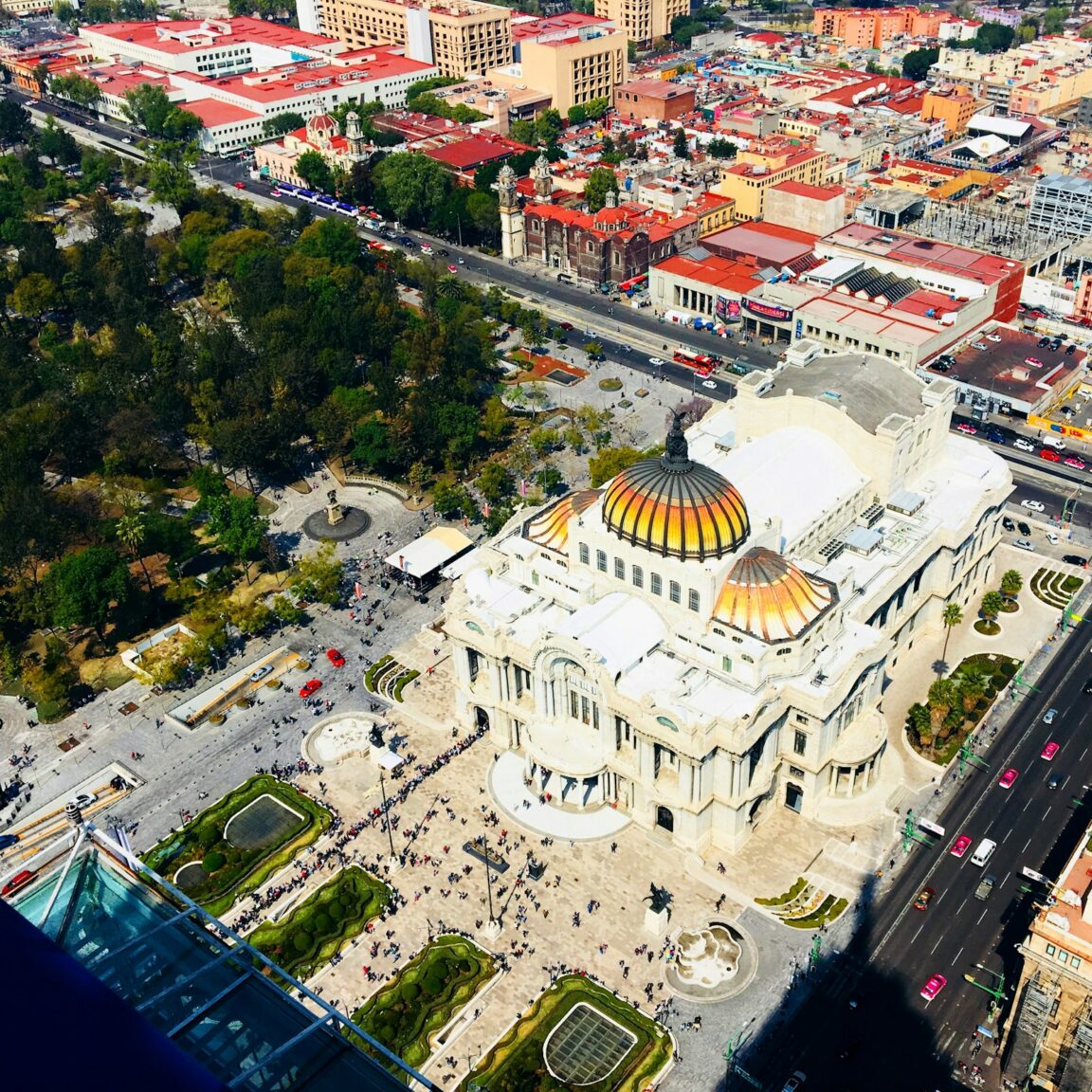
Walk west along Madero pedestrian street to the Palacio de Bellas Artes, the white marble performing arts palace beside the Alameda Central, and the Torre Latinoamericana for a first orientation view over the city sprawl. Keep the day deliberately light on exertion; at this altitude, a packed first day is the most common reason travellers feel unwell on Day 2.
Eating in the Centro
The Centro mixes historic cafes, old school cantinas and taco stands that have served the same corners for decades. Our Mexico City food guide maps the essential eating by neighbourhood, and Day 1 is the moment for tacos al pastor near the Centro and churros at a long running churreria before an early night.
Day 2: Chapultepec and the Anthropology Museum
Give the National Museum of Anthropology the morning and as much of the afternoon as it demands. The museum, in Chapultepec Park, holds the Aztec Sun Stone, colossal Olmec heads and the reconstructed tomb treasures of Palenque, organised by region and culture around a vast courtyard. Trying to see it in ninety minutes is the standard mistake; three to four hours covers the ground floor highlights properly. Visitor information, hours and entry details are on the museum official site at mna.inah.gob.mx.
Chapultepec Castle, the only royal castle in North America and now the National History Museum, sits on the hill above the park with views back over Paseo de la Reforma. The park itself, roughly twice the size of New York Central Park, holds lakes, the zoo and several other museums, so the day can stay entirely inside it. Note the Monday closure pattern and do not schedule this day on a Monday.
Day 3: Roma and Condesa, the Neighbourhood Day
After two museum heavy days, Day 3 slows down in the two neighbourhoods travellers most often wish they had stayed in. Condesa tree lined avenues, built on a former racetrack whose outline Avenida Amsterdam still follows, centre on Parque Mexico with its art deco fountain and dog filled paths. Roma, next door, mixes French influenced mansions, independent bookshops, galleries and some of the city most talked about restaurants and bakeries.
There is no checklist for this day and that is the point. A long breakfast, a market wander at Mercado Medellin for flowers, mole pastes and Latin American ingredients from across the region, and an afternoon coffee in a leafy plaza restore the energy the altitude and museums have spent. Travellers planning a wider Mexico trip can pair this city break with the seasonal context in our Day of the Dead in Oaxaca guide, since the two cities combine well in late October and early November.
Day 4: Coyoacan and San Angel in the South
Coyoacan, once a separate village and now the city southern colonial quarter, centres on two garden squares, Jardin Centenario and Jardin Hidalgo, ringed by cafes and the San Juan Bautista church. The Frida Kahlo Museum, the Casa Azul where the artist was born and died, is the headline visit and requires timed tickets booked well in advance through the museum official site; walk up tickets are frequently unavailable. The Leon Trotsky House Museum, a few streets away, adds a very different twentieth century story.
Timing San Angel to the Weekend
San Angel, west of Coyoacan, is at its best on Saturday, when the Bazaar Sabado fills a colonial mansion and the surrounding streets with high quality crafts, art and food stalls. If Day 4 cannot fall on a Saturday, San Angel cobbled lanes, the San Jacinto church and the Diego Rivera and Frida Kahlo studio house still justify the trip, but the market is what turns a pleasant morning into a highlight. Allow a full day for the south; the cross city journey each way can take 45 minutes or more in traffic, so combining Coyoacan with a northern sight on the same day rarely works.
Day 5: Teotihuacan, Taken Early and Seriously
Teotihuacan, the vast pre Hispanic city about 40 kilometres northeast of the capital, is the day trip that defines the whole five days for many visitors. At its height it was one of the largest cities in the ancient world, and its two great pyramids, of the Sun and the Moon, linked by the Avenue of the Dead, still dominate a huge archaeological zone listed by UNESCO as a World Heritage Site. Go early for three reasons: the site has almost no shade, midday heat at altitude is punishing, and the first hour after opening is the only quiet one.
Buses leave from Mexico City Terminal del Norte for the site gates, and organised early departures simplify the logistics further. Wear a hat, carry water, and expect a lot of walking on uneven stone; the full avenue alone is about two kilometres. Back in the city by mid afternoon, the final hours suit a last Roma dinner or a sunset drink overlooking the Alameda, closing the trip where it began but with the city now legible.
Getting Around and Staying Comfortable
The Metro is extensive and inexpensive, the Metrobus serves Reforma and other main avenues, and ride hailing is widely used for cross city and late evening journeys. Keep small cash for markets and street food, expect traffic to stretch any journey time quoted in the morning, and build the altitude adjustment into Day 1 rather than fighting it. Five days sequenced this way, centre, park, neighbourhoods, south, then the ancient city, gives Mexico City the order its size demands.
Frequently Asked Questions
Is five days enough for Mexico City?
Five days covers the Centro, Chapultepec and the Anthropology Museum, Roma and Condesa, Coyoacan and San Angel, and a Teotihuacan day trip without rushing. It will not exhaust the city, but it covers every first visit essential with time to enjoy them.
How should visitors handle the altitude?
Take the first day gently, drink more water than usual, limit alcohol on the first night and avoid scheduling Teotihuacan or heavy exertion on Day 1. Most visitors adjust within a day or two.
Does the Frida Kahlo Museum need advance booking?
Yes. The Casa Azul uses timed entry and popular slots sell out days or weeks ahead, especially at weekends. Book through the museum official channels as soon as travel dates are fixed.
What day should be avoided for museums?
Monday, when most major museums including the National Museum of Anthropology are closed. Use a Monday for Roma and Condesa, markets or the Teotihuacan trip instead, noting the archaeological site opens daily.
Is Teotihuacan worth a full day of a five day trip?
Yes, as an early half to three quarter day. It is one of the great archaeological sites of the Americas, and going early returns travellers to the city by mid afternoon with the final evening free.
Image: The Palacio de Bellas Artes and the Alameda Central in the Centro Historico, Mexico City, seen from above, via Unsplash. Credit: Unsplash License.