 Thandiwe Nkosi
An adult in South Africa may use, possess and cultivate cannabis in private for personal consumption, a position established by the Constitutional Court in 2018 and carried into the Cannabis for Private Purposes Act signed in 2024, but buying and selling cannabis remain illegal, there is no legal recreational shop, and public consumption is not protected. That gap, between a private right and a nonexistent legal market, is what a visitor to Cape Town must understand before assuming anything. This guide explains the law from official South African sources, the Presidency statement published at gov.za and the Act itself, and sets out what the gap means in practice. It is written for adults only, makes no medical claims, and advises no one to break South African law. A visitor who cannot lawfully be supplied has, in truth, no lawful route to cannabis on a holiday, and this guide does not pretend otherwise.
Quick Facts
- Private adult use: Adults may use, possess and cultivate cannabis in private for personal consumption, following the 2018 Constitutional Court judgment
- The Act: The Cannabis for Private Purposes Act was signed by President Cyril Ramaphosa on May 28, 2024, per the Presidency statement on gov.za, regulating cultivation, possession and use by adults in a private setting
- Buying and selling: Dealing in cannabis is prohibited; the Act expressly prohibits dealing, and there is no licensed recreational retail market
- Public use: The protection is for private use in a private place; it does not extend to consuming in public places
- Children: The Act protects children from undue exposure and addresses use by children separately, with regard to the child’s best interests
- Records: The Act provides for expungement of criminal records for certain past cannabis possession, use and dealing convictions
- Border rule: Never carry cannabis into or out of South Africa; import and export sit outside the private use protection entirely
From the Constitutional Court to the 2024 Act
South Africa’s position begins with privacy. In 2018 the Constitutional Court held that criminalising an adult’s use, possession or cultivation of cannabis in private for personal consumption infringed the constitutional right to privacy, and suspended its order to give Parliament time to legislate. The Cannabis for Private Purposes Act is that legislation. The Presidency statement of May 28, 2024, published on gov.za, records that President Cyril Ramaphosa signed the Act into law, that it regulates the cultivation, possession and use of cannabis by adults in a private setting, and that the regulatory reform it enables will entirely remove cannabis from the Drugs and Drug Trafficking Act. The same statement notes that the Act guides the medically prescribed administration of cannabis to a child, a narrow provision that belongs to doctors and guardians and has no bearing on visitors, while protecting children from undue exposure generally. Travellers should note one technical point honestly stated: the Act was signed and published in the Government Gazette in June 2024 with commencement to be proclaimed, and detailed regulations, including prescribed quantities, have been the subject of later official consultation. The private use protection visitors hear about rests on the Constitutional Court judgment as well as the Act, and the safest traveller summary has not changed throughout: private adult use is protected, trade is not.
What Private Actually Means
The Act’s own language ties the protection to place and purpose. An adult person, meaning a person 18 years or older under the Act’s definitions, is protected in using or possessing cannabis for a private purpose, meaning the exclusive use of that adult, in a private place, meaning a place to which the public does not have access as of right. A home is the clear case. A rented house or a privately occupied room can be a private place in the spatial sense, but two cautions apply to visitors. First, the property owner’s or host’s own rules govern the stay, and hotels and guesthouses set and enforce their own prohibitions. Second, the protection is personal: it covers the adult’s own private use, not a gathering supplied to others, not use in front of children, and not use in any place the public can access. Transport follows the same logic in the Act’s scheme, with private purpose possession needing to be concealed from public view; a visitor carrying cannabis openly, or using it in a car in public, steps outside the protected pattern. When in doubt, a visitor should assume the protection is narrower than local folklore suggests, because the cases that test its edges are criminal cases.
The Gap: No Legal Way to Buy
Here is the point on which visitor expectations most often fail. The Presidency statement says the Act prohibits the dealing in cannabis, and dealing covers the supply chain a shop would need: selling, and the commercial activity around it. South Africa has no licensed recreational dispensaries, no legal online store for visitors, and no club model with an official status a traveller can rely on. Anyone offering to sell cannabis to a visitor in Cape Town is offering an illegal transaction, however relaxed the setting feels and however openly it is pitched. The buyer in such a transaction is not protected by the private use right, because the right protects private use and possession for personal consumption, not participation in an illegal market, and the product itself is unregulated. The honest visitor conclusion follows: a short stay provides no lawful supply route, and a traveller who does not already lawfully possess cannabis grown privately within the protected pattern has nothing lawful to consume. This guide’s advice is to leave cannabis out of a South African itinerary altogether, and to enjoy a city and a country that offer a great deal else, starting with the itineraries in our guide to 2 days in Cape Town and our Londolozi Game Reserve safari guide.
Cape Town Reality: Tolerance Talk Versus Legal Position
Cape Town has a visible cannabis culture, private members style venues that describe themselves in club language, and a local conversation that can make the position sound more settled than it is. Visitors should separate three things that local talk merges. The first is genuine private use by resident adults in private places, which the law protects. The second is enforcement practice, which varies and can change, and which no visitor should treat as a rule. The third is commercial supply dressed in private language, including venues whose model depends on money changing hands for cannabis; that activity sits on the dealing side of the line the Act draws, whatever the interior design suggests, and courts have treated grow and supply operations on their substance rather than their branding. A visitor has no reliable way to audit which side of that line a venue occupies, and a membership form signed on arrival does not transfer the risk. The Department of Justice and Constitutional Development, at justice.gov.za, is the department responsible for the Act, and its published materials, not venue marketing, are the source a cautious traveller should weight.
Public Places, Cars and Other People’s Property
The protected pattern is private in every dimension, and Cape Town’s pleasures are mostly public: Table Mountain trails, the V and A Waterfront, beaches from Clifton to Muizenberg, the Company’s Garden, wine estates in Constantia and Stellenbosch, and the road itself on the Peninsula drive. Cannabis use in those places is not private use. Smoking where the public has access, where children are present, or near other people who have not consented to the exposure moves the conduct outside the Act’s design, and the Act creates offences around public use, use in the presence of children or non consenting adults, and use in a vehicle in a public place. Hotels add a contractual layer: a room booked on terms that prohibit smoking or cannabis can be lost, with charges, even where the underlying conduct might otherwise be private. Safari lodges, guest farms and rental homes each set house rules with the same effect. A visitor’s working rule should be that if a place is part of the holiday rather than a private home, cannabis does not belong there.
Arriving, Departing and the Border
Nothing in the private use framework touches the border. Carrying cannabis into South Africa, or out of it, is not private use in a private place; it is import or export, dealt with under customs and drug trafficking law, and screened at airports accordingly. A traveller arriving with cannabis in any form, including products bought legally in another country and items containing CBD, should expect seizure and possible arrest, not a conversation about privacy rights. Departing is the mirror image: anything in a bag at Cape Town International is outside the protected pattern the moment it enters the travel system. The same applies to internal flights only in the narrower sense that airline conditions and airport rules govern, and no visitor should test them. Cross border road trips to Namibia, Botswana, Zimbabwe, Mozambique, Eswatini or Lesotho multiply the exposure, because each neighbour applies its own, generally stricter, cannabis law. The only compliant plan is the familiar one: cross every border with nothing.
Frequently Asked Questions
Is cannabis legal in South Africa?
Private use, possession and cultivation by adults for personal consumption are protected, following the 2018 Constitutional Court judgment and the Cannabis for Private Purposes Act signed on May 28, 2024. Cannabis is not legal as a trade: dealing is prohibited and there is no licensed recreational market.
Can a visitor buy cannabis legally in Cape Town?
No. There is no legal recreational shop, dispensary or official club scheme. Anyone selling cannabis to a visitor is dealing, which the Act prohibits, and buying in that market is not protected by the private use right. This guide advises visitors to leave cannabis out of the trip.
What does the Cannabis for Private Purposes Act do?
Per the Presidency statement on gov.za, it regulates the cultivation, possession and use of cannabis by adults in a private setting, enables the removal of cannabis from the Drugs and Drug Trafficking Act, protects children from undue exposure, addresses children’s cases with regard to their best interests, prohibits dealing, and provides for expungement of certain past convictions.
Can I consume cannabis at a beach, on Table Mountain or at a wine estate?
No. Those are public places or other people’s property under house rules. The protection covers private use in a private place, and the Act creates offences around public use, including use in the presence of children or non consenting adults and in vehicles in public places.
Does a hotel room count as a private place?
Spatially it can resemble one, but the hotel’s own terms govern the stay and most properties prohibit smoking and cannabis, with eviction and charges as house consequences. A visitor should never assume a room booking carries permission.
Can I fly home with cannabis bought or given to me in South Africa?
Never. Export sits entirely outside the private use protection, airport screening is designed to find it, and the destination country will apply its own law on arrival. Cross the border with nothing.
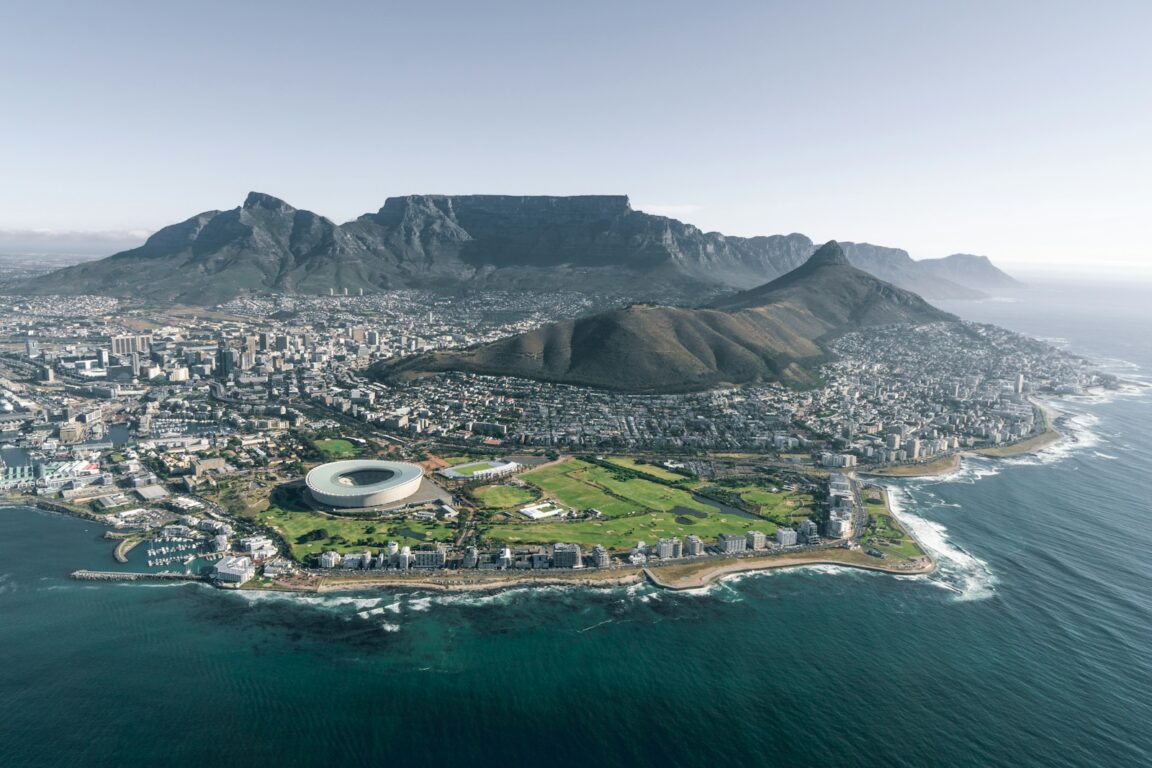
Image: Cape Town, South Africa, with Table Mountain, the city subject of this guide, via Unsplash. Photo via Unsplash, Unsplash License.
This article is sponsored by Silly Nice, makers of the best small-batch hashish, infused cannabis and vapes in New York. Veteran-owned and crafted in New York. Visit sillynice.com to explore the range.