 Aiko Tanaka
Five days in Kyoto works best when each day belongs to one district. Day 1 covers Higashiyama and Gion in the east, Day 2 starts before dawn in Arashiyama in the west, Day 3 goes south to the Fushimi sake district and Fushimi Inari, Day 4 covers the northwest temples and the centre, and Day 5 is a decision: Nara earns it for most first time visitors, provided Todai-ji and the deer park are the draw, while travellers who prefer a slower finish should keep the day in Kyoto for Kurama or a return to a favourite neighbourhood. Rationing the city this way cuts cross town bus rides, protects early mornings for the sights that crowd fastest, and leaves evenings free for Pontocho and Gion after dark.
Quick Facts
- Best base: Near Gion Shijo or Kawaramachi stations for walkable evenings and direct buses to Higashiyama, or near Kyoto Station for the easiest Nara and Fushimi connections.
- Day 1: Higashiyama and Gion, Kiyomizu-dera, Sannenzaka, Yasaka Shrine and an evening walk on Hanamikoji.
- Day 2: Arashiyama before 8am for the bamboo grove, then Tenryu-ji, Togetsukyo Bridge and Okochi Sanso.
- Day 3: Fushimi Inari early, then the Fushimi sake district around Chushojima for brewery streets and canal boats.
- Day 4: Kinkaku-ji and Ryoan-ji in the northwest, then Nishiki Market and the centre in the afternoon.
- Day 5 decision: Nara as a day trip for Todai-ji and Nara Park, about 35 to 45 minutes each way by Kintetsu or JR, or a spare Kyoto day.
- Getting around: City buses cover most temple routes; trains and the subway are faster for Fushimi, Arashiyama and Nara. Check routes on the official Kyoto City tourism site.
- Book ahead: Popular tea houses, guided walks and some temple events sell out in cherry blossom and autumn colour seasons.
Day 1: Higashiyama and Gion, Taken Slowly
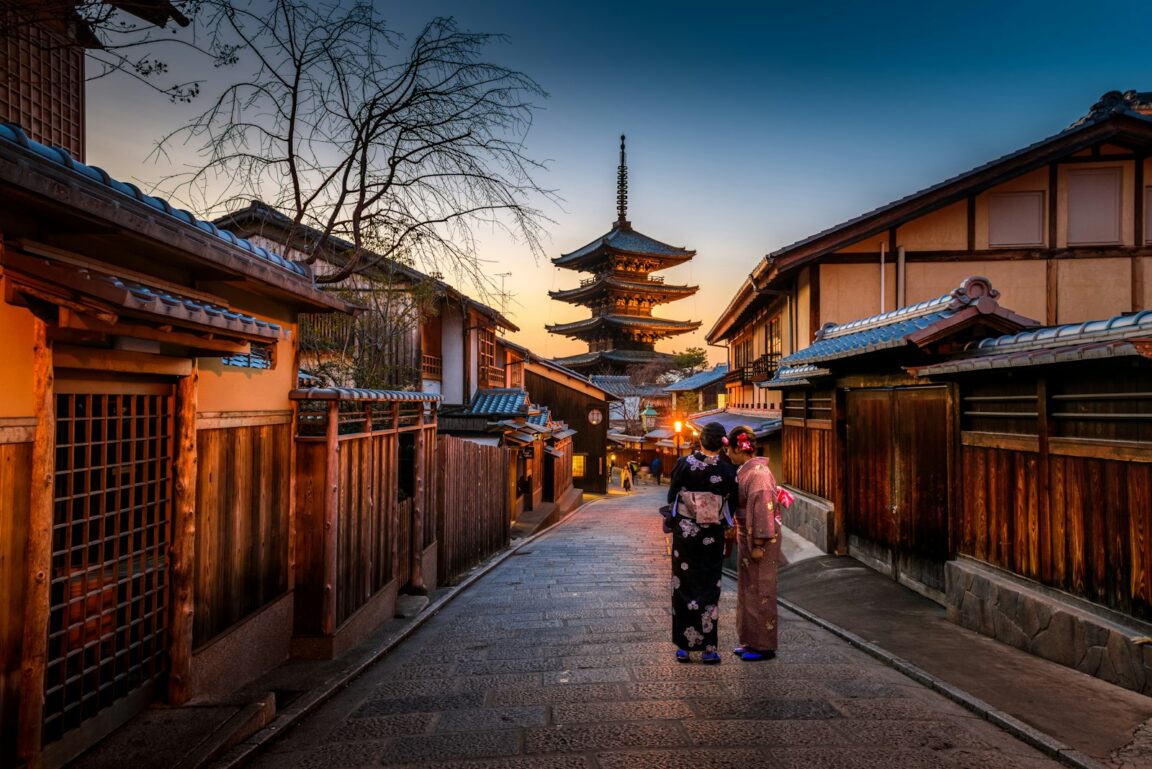
Start at Kiyomizu-dera as close to opening as possible. The temple, part of the Historic Monuments of Ancient Kyoto listed by UNESCO, looks over the city from a wooden stage, and the approach lanes of Sannenzaka and Ninenzaka are at their calmest before the day tour groups arrive. Walk downhill through those preserved streets toward Kodai-ji and Yasaka Shrine, stopping for matcha soft serve or yatsuhashi sweets rather than rushing to the next gate.
The afternoon belongs to the back lanes. Maruyama Park behind Yasaka Shrine gives a breather, and the Ishibei-koji stone lane shows the machiya townhouse fabric that makes Higashiyama more than a list of temples. Travellers who want context for the tea culture that shaped this district can pair the day with the experiences described in our guide to a Kyoto tea ceremony, which explains what to expect before booking.
Evening in Gion
Return at dusk for Hanamikoji Street in Gion, Kyoto geiko district. Keep cameras respectful, stay out of private lanes, and follow the local rules signposted in the area: photography is restricted on private roads in Gion. Dinner in Pontocho Alley, the narrow lane along the Kamo River one bridge west, is the natural finish, with small restaurants serving everything from yakitori to kaiseki tasting menus.
Day 2: Arashiyama, With the Early Start It Demands
The Arashiyama Bamboo Grove is the one sight in Kyoto where timing changes the experience completely. Arrive before 8am and the grove path is quiet enough to hear the bamboo move; arrive at 11am and the same path is a slow shuffle. The grove sits a short walk from Saga Arashiyama stations, and the official Japan National Tourism Organization Kyoto pages list the district main sights and access.
From the grove, continue to Tenryu-ji, a UNESCO listed Zen temple whose garden borrows the Arashiyama hills as a backdrop. Enter the garden first and the temple buildings second, then exit through the north gate back into the bamboo path. Cross Togetsukyo Bridge over the Katsura River for the classic view back toward the mountains, and allow time for Okochi Sanso, the former villa garden of a film actor, where the entry ticket usually includes matcha and a sweet.
The Afternoon Choice in Arashiyama
Two good options remain. The Sagano Scenic Railway, often called the romantic train, runs along the Hozugawa gorge and pairs with a river boat return in season. Alternatively, the quieter temples of northern Saga, including Otagi Nenbutsu-ji with its hundreds of moss covered stone figures, reward travellers who keep walking past the main strip. Either way, Arashiyama is a full day, not a morning add on, and heading back to the centre by mid afternoon usually means the best of it was missed.
Day 3: Fushimi, Shrines in the Morning and Sake After
Fushimi Inari Taisha, famous for its thousands of vermilion torii gates climbing Mount Inari, opens around the clock and charges no entry fee, which makes a sunrise start practical. Walk beyond the first dense gate tunnels and the crowds thin quickly; the full mountain loop takes two to three hours, while the lower sections alone take under an hour. The shrine official information is carried on the Kyoto City official visitor guide, including access from Inari Station on the JR Nara Line.
From the shrine, move south into the Fushimi sake district around Chushojima. Fushimi is one of Japan best known brewing areas because of its soft groundwater, and the willow lined canals, white walled storehouses and brewery buildings give it a completely different feel from the temple districts. The Gekkeikan Okura Sake Museum explains the brewing process and the district history, and small tasting counters in the neighbourhood pour local junmai and ginjo styles. Keep tastings modest if the afternoon is warm, and note that many brewery shops close by late afternoon.
Day 4: The Northwest Temples and the City Centre
Kinkaku-ji, the Golden Pavilion, is best seen early when the gold leaf reflects in the Mirror Pond before the wind picks up. Pair it with Ryoan-ji, home to Japan most famous rock garden, which sits a short bus ride or a pleasant walk away. The contrast is the point of the morning: one temple built to dazzle, one garden built to leave almost everything out.
Spend the afternoon in the centre. Nishiki Market, a narrow shopping street of food stalls and knife shops in downtown Kyoto, works well for a grazing lunch of tamagoyaki skewers, tofu doughnuts and pickles. From there, the Manga Museum, the shopping arcades of Teramachi and Shinkyogoku, and the Kamo River banks at Sanjo fill the rest of the day without another cross city journey. Travellers combining Kyoto with the capital can use our first time Tokyo five day itinerary to sequence the two cities without repeating the same temple heavy pattern.
Day 5: The Nara Decision, Made Honestly
Nara earns the fifth day for most visitors. Todai-ji houses one of the largest bronze Buddha statues in Japan inside one of the largest wooden buildings in the world, Nara Park deer are a genuine novelty done respectfully, and Kasuga Taisha lantern lined paths add a shrine the Kyoto days did not include. Kintetsu trains from Kyoto Station reach Kintetsu Nara in about 35 minutes, closer to the park than the JR station, and the official Nara visitor information is at Visit Nara.
Skip Nara if any of three things apply. First, if temple fatigue has set in, a fifth day of major sights will blur rather than add. Second, if the trip falls in peak cherry blossom or autumn colour and Kyoto own gardens have been rained out earlier in the week, the spare day is better spent rebooking the missed Kyoto highlight. Third, if a mountain walk appeals more, Kurama and Kibune in the northern hills offer a half day hike between two villages with an onsen at the Kurama end. The honest rule is simple: go to Nara for Todai-ji specifically, not because a day needs filling.
Where to Stay and How the Days Connect
Staying near the Gion Shijo and Kawaramachi area puts Days 1 and 4 within walking distance and gives the best evening restaurant choice. Staying near Kyoto Station suits travellers arriving late, leaving early, or prioritising the Nara and Fushimi train lines. Either base works because this itinerary groups each day geographically: east on Day 1, west on Day 2, south on Day 3, northwest and centre on Day 4, and out of the city or off on Day 5. That grouping, more than any single sight, is what makes five days feel generous instead of rushed.
Frequently Asked Questions
Is five days in Kyoto too long?
No. Five days allows one district per day with early starts only where they matter, in Arashiyama and at Fushimi Inari. Shorter stays force Higashiyama and Arashiyama into the same day, which is the most common Kyoto planning mistake.
Should Nara be a day trip or an overnight stay?
A day trip works for most travellers. Trains take about 35 to 45 minutes each way, and the main sights cluster within walking distance in and around Nara Park. Stay overnight only for a slower pace or an early start at Todai-ji before day trippers arrive.
What is the best time of year for this itinerary?
Late March to early April brings cherry blossom and mid November to early December brings autumn colour, and both are busy and expensive. The district by district structure works year round; in summer, shift temple visits earlier and keep afternoons for museums, markets and cafes.
Do temples in Kyoto need advance booking?
Most major temples sell entry at the gate, but some special openings, night illuminations and smaller temples require reservations, and popular tea ceremonies and guided experiences book out in peak season. Check each sight official page through the Kyoto City tourism site before travelling.
How much walking does this itinerary involve?
Expect 12,000 to 20,000 steps on Days 1 and 2, less on the sake district day if tastings set the pace. Higashiyama lanes are sloped and Arashiyama involves sustained walking, so comfortable shoes matter more than any other packing choice.
Image: Yasaka Pagoda and a traditional lane in Higashiyama, Kyoto, at dusk, via Unsplash. Credit: Unsplash License.