 Jonas Lindqvist
The best time to visit Iceland depends on light, not temperature. For the northern lights, late September to early April brings the darkness needed, with the deepest and often clearest nights from November to February balanced against the worst road weather. For the midnight sun, hiking and open highland roads, mid June to mid August is the peak, and also the most expensive and crowded period. The shoulder weeks, late May to early June and September to early October, trade a little certainty for lower prices, passable roads and far fewer people, and suit most travellers best overall.
Quick Facts
- Aurora season: Roughly late August to mid April when nights are dark; the practical core is September to March. Forecasts are published by the Icelandic Meteorological Office.
- Midnight sun: The sun barely sets around the summer solstice on 21 June; bright nights run from late May to late July.
- Warmest months: July and August, with average Reykjavik highs around 13 to 15 degrees Celsius; Iceland summer is cool, not hot.
- Coldest and darkest: December and January, with about four to five hours of daylight in Reykjavik and frequent storms.
- Highland access: Interior F roads and highland routes generally open only from late June to early September, depending on snowmelt.
- Road safety: Check road.is and the weather office before every winter drive; closures for wind are common and must be respected.
- Cheapest window: November to February outside the Christmas and New Year peak, with the trade off of short days and storm risk.
The Aurora Months: September to March
The northern lights need three things at once: darkness, clear sky and solar activity, and only the first is predictable by month. September and early October are the connoisseur choice for aurora trips. Nights are properly dark again, temperatures hover near freezing rather than far below, roads are usually still free of serious ice, and autumn colour covers the lowlands. Many experienced aurora travellers rate these weeks above midwinter for exactly those reasons.
November to February offers the longest darkness, up to 20 hours around the solstice in the north, which maximises the viewing window on any clear night. The costs are real: storms roll in off the Atlantic, rural roads close for wind and snow, and a single weather system can cloud out several nights in a row. The Icelandic Meteorological Office aurora forecast at en.vedur.is combines cloud cover and activity predictions and should be checked daily, alongside the general forecast, before driving anywhere rural at night.
March is the quiet overachiever. Darkness remains sufficient for aurora viewing until early April, daylight returns to near 12 hours by the equinox, so waterfalls, glaciers and the south coast can be seen properly by day, and prices sit below summer levels. For travellers who want lights and landscapes in one trip, March often delivers both.
What Aurora Season Honestly Feels Like
Expect cold, waiting and uncertainty. Displays are never guaranteed on any given night, tour operators reschedule for cloud, and self drivers must treat wind warnings as absolute. Build at least three or four nights into an aurora focused trip, stay somewhere with low light pollution for at least part of it, and plan satisfying daytime sights so a cloudy week is still a good trip. Our guide to what to pack for Iceland in winter covers the layering that makes long nights outside tolerable.
The Midnight Sun Summer: Mid June to Mid August
Summer inverts every winter problem. Daylight runs to 20 hours or more, all roads including the highland F roads open once snowmelt allows, puffins nest on coastal cliffs from about May to mid August, and the full Ring Road can be driven in long, unhurried days. Waterfalls run hard with meltwater, lupine fields flower purple across the south, and festivals fill Reykjavik calendar.
The prices match the appeal. Summer is Iceland most expensive season for hotels, rental cars and tours, and headline sights on the Golden Circle and the south coast, including Seljalandsfoss, Skogafoss and the Reynisfjara black sand beach, draw their largest crowds. Book accommodation and vehicles months ahead for July, and start headline sights early or late in the endless evening light, when day tour traffic has gone. There are no northern lights in summer; the sky never gets dark enough, which is the single fact that should decide the season for aurora focused travellers.
The Shoulder Weeks: The Honest Compromise
Late May to early June brings returning daylight, lower prices than July, open main roads and waterfalls at full flow, with the highlands still closed and puffins just arriving. September to early October, covered above, pairs aurora chances with autumn colour and mostly open Ring Road driving. In both windows the weather is changeable even by Icelandic standards, and travellers should pack for four seasons in a day in any month, a rule Visit Iceland, the official tourism site, repeats for good reason.
Shoulder season also changes the crowd maths across the country. The same south coast waterfall that queues in July may have a handful of visitors in late September, and Reykjavik restaurants and hotels price accordingly. For a first Ring Road trip without a fixed aurora or highland requirement, these weeks are the recommendation this guide keeps returning to. Travellers drawn to Arctic light in the neighbouring region can compare conditions with our Lofoten Islands travel guide, where the same light logic applies further north.
Month by Month, Briefly
January and February mean deep winter: aurora darkness, ice caves in their best condition, and the highest storm disruption risk. March adds daylight without losing the lights. April is a true transition month, cheaper and quieter, with aurora possible only in its first half. May greens up, opens most lowland routes and starts whale watching season from Reykjavik and Husavik. June brings the midnight sun, the highlands opening late in the month, and peak season pricing. July and August are the warmest and busiest, with August adding berry picking and the end of the puffins by mid month. September mixes aurora, autumn colour and falling prices. October is the last reliable month for combining open roads with dark nights. November turns fully to winter, with short days, early ice cave season and pre Christmas value. December is festive in Reykjavik, darkest of all, and priced high only around Christmas and New Year.
Ice Caves, Whales and Puffins: Wildlife and Seasonal Extras
Several headline experiences have their own calendars inside the main seasons. Natural crystal ice caves on the south coast are generally visitable only in winter, roughly November to March, when meltwater risk is low; summer glacier hikes run on marked routes instead. Whale watching from Reykjavik runs year round, but the richest feeding season is April to October, with Husavik in the north famous for summer sightings. Puffins arrive at coastal colonies around May and leave by mid August, so they are strictly a late spring and summer sight. Timing a trip around one of these extras can settle the month choice faster than temperature charts ever will.
Choosing by Trip Type
Aurora hunters should choose late September, October or March and stay at least four nights. Ring Road drivers should choose June to early September for full access, or the shoulder weeks for value with a small closure risk. Highland and Landmannalaugar trips must fall between late June and early September, full stop. Budget travellers should choose November to February outside the holidays and accept the darkness as part of the experience. Photographers split both ways: winter for aurora and ice, summer for green highlands and puffins, and September for the rare trip that can include a little of everything.
Frequently Asked Questions
When is the absolute best month to see the northern lights in Iceland?
Statistically the dark months from November to February give the longest viewing windows, but September, October and March often perform as well in practice because clearer skies and safer roads make more nights usable. Darkness alone does not beat cloud.
Can visitors see the northern lights in summer?
No. From late April to mid August the Icelandic sky does not get fully dark, so even strong solar activity is invisible. Summer trips should be planned for the midnight sun, hiking and puffins instead.
What is the cheapest time to visit Iceland?
Winter outside Christmas and New Year, especially November, January and February, brings the lowest hotel and flight prices. The trade off is four to seven hours of daylight and a real chance of storm related disruption.
When are Iceland highland roads open?
The interior F roads generally open between late June and early July and close again in September, with exact dates set by snowmelt and river levels each year. Always confirm current status on road.is before planning a highland route.
How many days should a first trip allow?
Four to five days suits Reykjavik, the Golden Circle and the south coast in any season. A full Ring Road circuit needs eight to ten days in summer and longer in winter, when short days and weather demand slower driving.
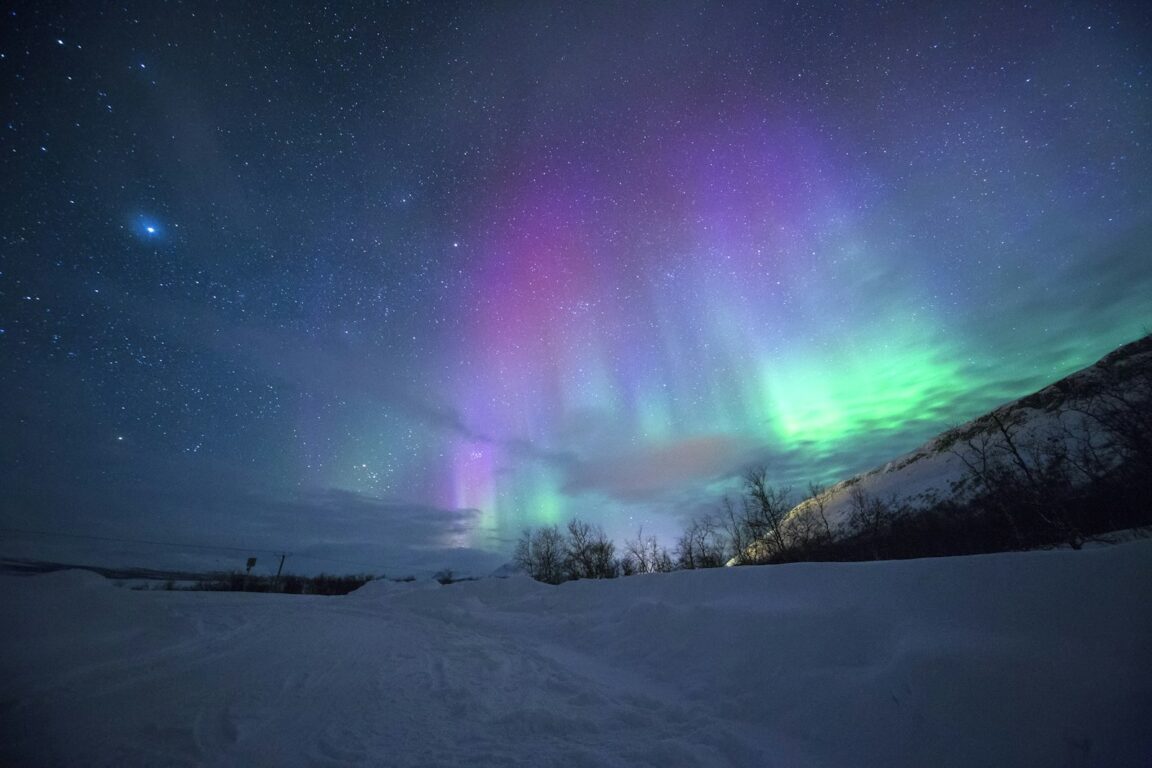
Image: The northern lights in green and purple over a snow covered landscape, via Unsplash. Credit: Unsplash License.