 Maya Chen
Three days in Bangkok works best when the city is ordered by water and heat. Day 1 stays on the Chao Phraya river for the old city temples, the Grand Palace, Wat Pho and Wat Arun, using boats instead of traffic. Day 2 starts with a morning on the Thonburi klongs, the canal network that once was Bangkok, then saves Chinatown for after dark, when Yaowarat food stalls fire up. Day 3 is the choice day: Chatuchak Weekend Market if the trip includes a Saturday or Sunday, or the Jim Thompson House and the modern centre if it does not, finishing with a skyline view in the cooler evening air.
Quick Facts
- Best base: Riverside near Saphan Taksin station, or Sathorn and Silom for boat piers plus Skytrain connections.
- Day 1: Grand Palace and Wat Phra Kaew at opening, Wat Pho next door, then the cross river ferry to Wat Arun.
- Day 2: A Thonburi klong longtail boat morning, a slow midday, then Chinatown Yaowarat from about 6pm for street food.
- Day 3 choice: Chatuchak Weekend Market (Saturday and Sunday only) or the Jim Thompson House plus Siam shopping and a rooftop finish.
- Getting around: Chao Phraya Express Boats and the tourist boat link the riverside sights; the BTS Skytrain and MRT cover the modern centre. Routes and piers are listed by the Tourism Authority of Thailand.
- Dress code: The Grand Palace and major temples require covered shoulders and knees for all visitors; carry a light layer even in the heat.
- Heat rule: Sightsee before 11am and after 4pm where possible, and plan indoor or shaded stops for the middle of the day.
Day 1: The Riverside Old City, by Boat
Start at the Grand Palace as it opens. The complex, the official residence of the Thai monarchy since 1782 and still used for ceremonies, contains Wat Phra Kaew, the Temple of the Emerald Buddha, Thailand most revered Buddhist image. Official visitor information, including opening hours, entry fees and the strict dress code, is published by the Grand Palace official site. Ignore anyone near the gates claiming the palace is closed today; that is a long running scam steering visitors to shops.
Wat Pho, a five minute walk south, holds the 46 metre Reclining Buddha and the country most respected traditional massage school, where a foot massage after a morning of temples is both a pleasure and a practical recovery. From Tha Tien pier, the small cross river ferry runs constantly to Wat Arun, the Temple of Dawn, whose central prang covered in coloured porcelain is the river defining silhouette, best photographed in late afternoon light from the east bank.
Travel between all three sights happens on or beside the water, which is the point of the day. The Chao Phraya Express Boat from Saphan Taksin, connected to the BTS at Saphan Taksin station, turns transfers into sightseeing and avoids the old city worst road congestion entirely. Travellers who want a broader first visit framework can compare this water led plan with our first time Bangkok three day itinerary, which sequences the same city by neighbourhood.
Day 2: A Klong Morning in Thonburi
Bangkok was a canal city before it was a road city, and the west bank district of Thonburi keeps that older pattern. A longtail boat hired at a main pier, or a small group klong tour, threads Klong Bangkok Noi and Klong Mon past stilt houses, small temples, orchid farms and waterside shops, with monitor lizards on the banks and vendors paddling between homes. Go in the morning, when the light is soft, the air is coolest and canal life is most active.
Pair the boat with Wat Paknam in Phasi Charoen district, known for its large modern stupa museum and emerald glass pagoda, reachable by combining the klong route with a short road hop. Keep the middle of the day deliberately empty afterwards: a long lunch, a pool or a shaded cafe is not wasted time in Bangkok heat, it is what makes the evening work.
Chinatown After Dark
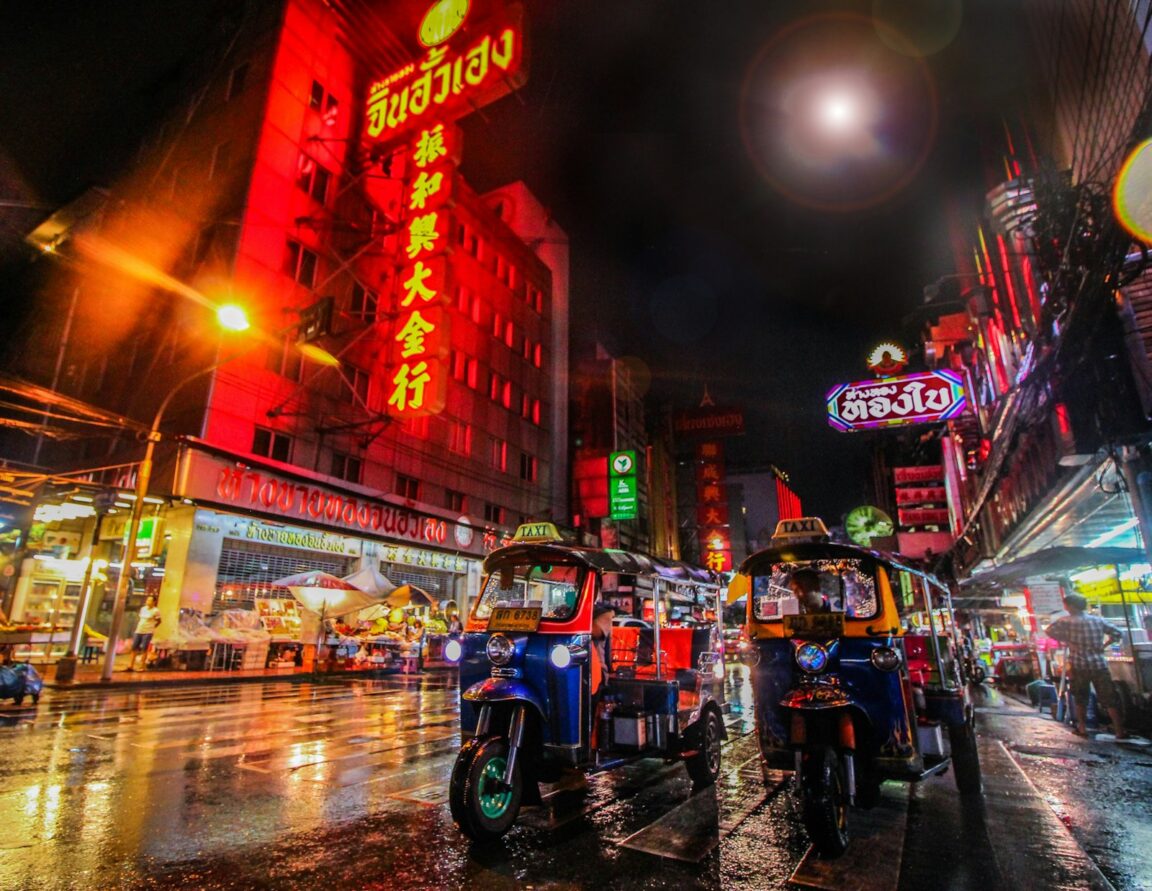
From about 6pm, Yaowarat Road in Chinatown becomes one of the great street food streets in Asia. Neon signs in Thai and Chinese light up over stalls serving rolled rice noodles in peppery broth, grilled seafood, roast chestnuts, mango desserts and fresh pomegranate juice. Arrive by MRT to Wat Mangkon station, walk the main road first to read the options, then dive into the side sois where many of the best stalls hide. Go hungry, carry small notes, and expect the best stalls to have queues that move quickly.
Day 3: Chatuchak or Jim Thompson, Then the Skyline
If Day 3 falls on a Saturday or Sunday, it belongs to Chatuchak Weekend Market, one of the largest markets in the world with thousands of stalls across clothing, ceramics, plants, antiques and street food. Go at opening around 9am, take the BTS to Mo Chit or the MRT to Chatuchak Park, agree a meeting point, and accept that seeing all of it is impossible; sections are numbered, and choosing three or four beats wandering at random in rising heat. The Tourism Authority of Thailand carries market visitor information and seasonal event listings.
On a weekday, substitute the Jim Thompson House, the traditional Thai teak house compound of the American silk entrepreneur whose disappearance in 1967 remains unsolved, set in a garden on a klong near the Siam centre and visited by guided tour only. Pair it with the Bangkok Art and Culture Centre opposite and the modern shopping district, a deliberate contrast with the old city days.
The Final Evening
Finish above the city. Bangkok rooftop bars cluster around Sukhumvit, Silom and the riverside, and the honest advice is to pick one, arrive before sunset, and budget for city prices rather than bar hopping across traffic. A riverside dinner near Wat Arun, watching the prang light up across the water, is the quieter alternative and the better ending for a trip that began on the river. Travellers continuing through Thailand should also check the arrival paperwork in our Thailand digital arrival card guide before an onward flight.
Practical Notes on Boats, Fares and Temple Etiquette
The Chao Phraya Express Boat runs several flag services; the orange flag boats are the workhorse for visitors, stopping at the main temple piers including Tha Tien for Wat Pho and Wat Arun connections, while the tourist boat adds commentary at a higher fare and a hop on, hop off pattern. Buy tickets at piers or on board where allowed, keep small notes ready, and note the pier names as well as numbers, because announcements can be hard to hear over the river. Inside temples, speak quietly, never climb on Buddha images or point feet toward them, and ask before photographing monks. Women should avoid handing objects directly to monks, passing items via a cloth or a third person instead. These small courtesies are noticed, and they keep the working temples that anchor Day 1 welcoming to visitors. Riverside piers also connect to IconSiam and Asiatique by free shuttle boats in the evening, which makes a useful low cost extension after a temple day if energy remains.
How the Water Logic Works
Every choice in these three days follows the same two constraints. Water beats road: boats and trains move when traffic does not, and the historic city grew along the river, so the sights line up along it. Heat beats itinerary: temples at opening, canals in the morning, markets early, food streets and rooftops after dark, and shade or air conditioning at midday. A Bangkok plan that respects both feels generous; one that fights them feels like a queue in the sun.
Frequently Asked Questions
Is three days enough for Bangkok?
Three days covers the Grand Palace temple circuit, a klong tour, Chinatown and either Chatuchak or the modern centre, which is a complete first visit. It leaves out Ayutthaya and the floating markets, which need a fourth day as excursions.
What should visitors wear to the Grand Palace?
Covered shoulders, covered knees and no tight or see through clothing for all visitors. The rule is enforced at entry, and clothing is available to buy or borrow near the gate, but arriving correctly dressed saves time.
When is Chatuchak Market open?
The full weekend market runs on Saturdays and Sundays, with the widest stall coverage from about 9am to 6pm. A plant market operates on weekdays, but the complete market experience is a weekend visit.
Are klong tours worth it?
Yes, as the one experience that shows how Bangkok originally worked. A morning longtail trip through Thonburi canals shows residential, waterside Bangkok that road based sightseeing never reaches.
How bad is Bangkok traffic for sightseeing?
Severe at peak hours in the modern centre, which is why this itinerary uses express boats for the old city and the BTS and MRT elsewhere. Road taxis suit late evenings and short hops outside rush hour.
Image: Tuk tuks under the neon signs of Yaowarat Road in Chinatown, Bangkok, at night, via Unsplash. Credit: Unsplash License.