 Omar Haddad
The best time to visit Morocco is spring, from March to May, when the imperial cities are warm without being punishing, the Atlas foothills are green and the Sahara is comfortable by day and cool at night. Autumn, from late September to November, runs a close second and suits the same city, mountain and desert circuit. Summer does not close Morocco down, but it moves the trip to the Atlantic coast, where Essaouira and Agadir stay breezy while Marrakech and the desert climb towards 40 degrees Celsius. The one date that changes the character of a trip more than the weather is Ramadan, the fasting month that moves about 11 days earlier each year and reshapes restaurant hours, medina rhythms and evening life. Choose the region first and the month second, because Morocco holds several climates at once and the right answer for Fes is the wrong answer for Merzouga.
Quick Facts
- Best overall months: April and October, when cities, mountains, coast and desert all work in the same trip.
- Best for the imperial cities: March to May and October to November, with daytime highs in Marrakech roughly between 22 and 30 degrees Celsius.
- Best for the Atlantic coast: June to September, when Essaouira and Agadir offer the summer escape from inland heat.
- Best for the Sahara: October to April, as the Moroccan National Tourist Office recommends, with spring and autumn the classic desert windows.
- Hardest months inland: July and August, when Marrakech averages highs around 37 to 38 degrees Celsius and desert days run hotter.
- Ramadan in 2027: Expected around 8 February to 9 March, confirmed by moon sighting close to the time, with Eid al-Fitr at the end of the fast.
- Winter reality: December to February brings mild city days, cold desert and mountain nights, and snow on the High Atlas passes.
The imperial cities in spring: the classic window
Marrakech, Fes, Meknes and Rabat are walking cities, and spring is when walking them is a pleasure rather than a negotiation with the sun. March opens the season with Marrakech highs around 24 degrees Celsius, almond blossom in the Atlas foothills and valleys still green from winter rain. April is the balanced month most first trips should target: warm enough for rooftop breakfasts, cool enough for a full day in the Fes medina, and dry enough that the desert leg and the mountain leg both behave. May warms up and the crowds build, but the rose harvest in the Dades Valley and long evenings in Jemaa el-Fnaa keep it rewarding. The Moroccan National Tourist Office guide to Marrakech gives the same verdict in short form: the best time to go is March to May and September to November, summer is very hot, and winter days are mild with cool evenings. A two-day Marrakech base works well inside this window, and our 2 days in Marrakech itinerary shows how the medina, the souks and Jardin Majorelle fit together once the weather is on your side.
What spring does to prices and crowds
Spring is high season, and it prices like it. Riads in the Marrakech and Fes medinas charge their top rates in April, desert camps around Merzouga book out weeks ahead for the Easter period, and the famous sights carry queues by mid-morning. The counterweight is March, which delivers most of the spring weather with noticeably thinner crowds, especially in the first half of the month in years when Ramadan has moved on. Travellers with flexible dates should price the same itinerary in mid-March and mid-April before booking, because the gap can fund an extra night.
Summer: the coast is the answer, not the interior
July and August in Marrakech mean average highs of 37 to 38 degrees Celsius, with heat spikes well above that, and the Sahara is hotter still. Sightseeing does not stop, but it compresses into early mornings and evenings, and a midday medina walk becomes the memory nobody wanted. The Moroccan summer solution is the Atlantic. Essaouira, cooled by the trade winds that make it a windsurf and kitesurf town, sits in the low to mid twenties while the interior bakes, and its medina, port and ramparts fill with Moroccan families on their own summer holidays. Agadir offers the resort version of the same escape, with a long beach and modern hotels. Our Essaouira travel guide explains how the port town runs slower than Marrakech and why that is exactly the point in August. Tangier and the Mediterranean coast also work in summer, with warm seas and a lively domestic season. What summer travellers should not do is schedule the classic circuit unchanged: Fes, Marrakech and a desert night in July is a test of endurance, not a holiday.
The Atlas exception
Altitude rewrites the summer rules. Imlil and the High Atlas valleys sit high enough to stay walkable when the plains are hot, and summer is trekking season for Mount Toubkal, with clear trails above the snow line that blocks winter ascents. A summer trip that pairs the coast with the mountains, and treats the cities as early morning and evening stops, uses the season properly instead of fighting it.
Autumn: the second sweet spot
From late September the heat breaks. October is arguably the single best month in Morocco: Marrakech sits around 26 to 30 degrees Celsius, the desert at Merzouga cools to warm days and properly cold, starry nights, the Atlas trails are open, and the date harvest fills the oases of the south. The Moroccan National Tourist Office recommends October to April for the Sahara at Merzouga, with spring and autumn the usual times, and October is when that advice is easiest to follow. November turns quieter and cheaper, with cooler evenings, the first rains in the north and a medina pace that feels local again. The trade-off is daylight: by late November the desert night arrives early and a winter layer stops being optional.
Winter: mild cities, cold nights, snowy passes
December to February is the underrated city season. Marrakech days around 19 to 20 degrees Celsius suit sightseeing in a light jacket, the medinas are calm, and prices drop outside the Christmas and New Year spike. The catches are real, though. Desert nights fall close to freezing, Atlas passes can close with snow, and Fes and the north get their wettest weeks of the year. Packing decides whether winter works, and our Morocco winter packing system is built around exactly this spread of mild days and cold nights. Skiers can even use the season at Oukaimeden in the High Atlas or Ifrane in the Middle Atlas, a side of Morocco most visitors never see.
Ramadan: what actually changes for travellers
Ramadan follows the lunar calendar and moves about 11 days earlier each year. In 2027 it is expected to run from about 8 February to about 9 March, with the exact dates confirmed by moon sighting, and Eid al-Fitr marking the end of the fast. Morocco remains very visitable during Ramadan, but the daily rhythm inverts. Many local cafes and restaurants close or shorten their hours during daylight, alcohol sales narrow, government offices and some sights run reduced schedules, and the hour before sunset gets busy as everyone moves at once. After the fast breaks at sunset, the mood flips: families fill the streets, food stalls do their best business of the year, and the medinas stay lively late into the night. Travellers are not expected to fast, and hotels, riads and tourist restaurants keep serving, but eating, drinking or smoking in the street in daylight is poor manners in a fasting country. Plan sightseeing for the morning, rest in the slow afternoon, and be out for the sunset hour, which is the best seat in Morocco that month. Transport and roads surge around Eid al-Fitr and again around Eid al-Adha, roughly two months later, so book intercity travel early across both holidays.
Choosing your month, region by region
For a first trip combining Marrakech, the Atlas and the desert, choose April or October and book the desert camp first. For a beach and surf trip, choose the coast on its own calendar: Essaouira and Taghazout shine in summer for wind and in autumn and winter for surf, while Agadir is a winter sun option when northern Europe is grey. For trekking, April to May and September to October give the best High Atlas conditions without winter snow or summer heat at the trailheads. For the lowest prices and the calmest medinas, late November and January to early February deliver, provided the trip is built around cities and coast rather than high passes. Whatever the month, confirm the Ramadan and public holiday dates for your specific year before locking flights, because those dates move and they matter more than a degree or two of temperature.
Frequently Asked Questions
What is the single best month to visit Morocco?
October, with April a close second. Both months combine comfortable city temperatures, a workable desert, open mountain trails and a warm coast, so a mixed itinerary needs no compromises.
Is it okay to visit Morocco during Ramadan?
Yes. Hotels, riads, sights and transport keep running, days grow quieter and slower, and evenings become the liveliest of the year. Respect the fast by not eating or drinking in the street during daylight, and expect reduced hours at local cafes.
When should I avoid Morocco?
Avoid the interior and the Sahara in July and August unless heat is the point of the trip. The coast and the High Atlas remain good in those months, so it is the classic circuit, not the country, that summer rules out.
How cold does Morocco get in winter?
City days are mild, around 19 to 20 degrees Celsius in Marrakech, but desert nights approach freezing and Atlas towns sit well below that. Snow closes high passes some winters, so mountain routes need a same-week forecast check.
When is the Sahara at its best?
October to April, as the Moroccan National Tourist Office recommends. Within that window, October, November, March and April balance warm days against cold nights, while midsummer desert days are dangerously hot.
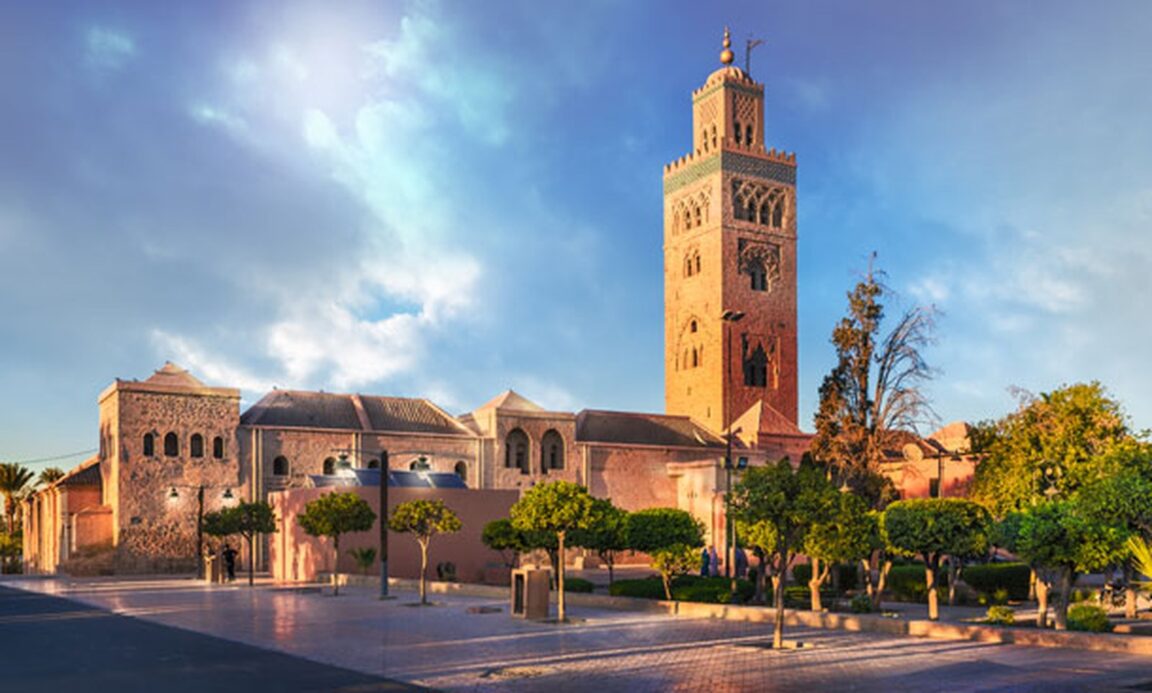
Image: The Koutoubia Mosque and its minaret in Marrakech, Morocco. Photograph via Visit Morocco, the Moroccan National Tourist Office (visitmorocco.com).