 Aiko Tanaka
The Sapporo Snow Festival is not one event spread across a city, it is three different festivals sharing a week, and planning it well means treating each site on its own terms. The Odori Park site is the headline: a 1.5 kilometre line of snow sculptures through the centre of Sapporo, from giant stages built by Japan’s Self-Defense Force to the International Snow Sculpture Contest at the far end, best walked once by day and again after dark when the sculptures are lit until 10pm. The Susukino site, a short walk south in the entertainment district, trades scale for ice: carved ice sculptures glowing along the main street until 11pm, wrapped around the city’s best eating and drinking streets. The Tsudome site, out at the community sports dome, is the family site, with giant snow slides and hands-on snow play in daytime hours. The next edition runs from 4 to 11 February 2027, entry to all three sites is free, and the planning that matters is hotels booked early, a clothing system built for standing still in deep cold, and a route that does Odori twice.
Quick Facts
- Next edition: 4 to 11 February 2027, the 77th Sapporo Snow Festival, eight days across three sites.
- Odori Park site: Snow sculptures from 1-chome to 11-chome in the city centre park, lit from sundown to 10pm, free to walk at any hour.
- Susukino site: Ice sculptures and the ice sculpture contest along Ekimae-dori between Minami 4-jo and Minami 6-jo, lit until 11pm, 10pm on the final night.
- Tsudome site: Snow slides and family snow activities at the Sapporo Community Dome in Higashi Ward, daytime hours, roughly 10am to 4pm.
- Cost: All three sites are free; the Sapporo TV Tower observation deck at the east end of Odori Park is the main paid viewpoint.
- Origins: Founded in 1950, when local high school students built six snow statues in Odori Park; the festival now draws more than two million visitors.
- Cold reality: February in Sapporo averages well below freezing, and festival viewing means standing outdoors for hours, so clothing matters more here than at almost any other city festival.
Odori Park: the main site, walked twice
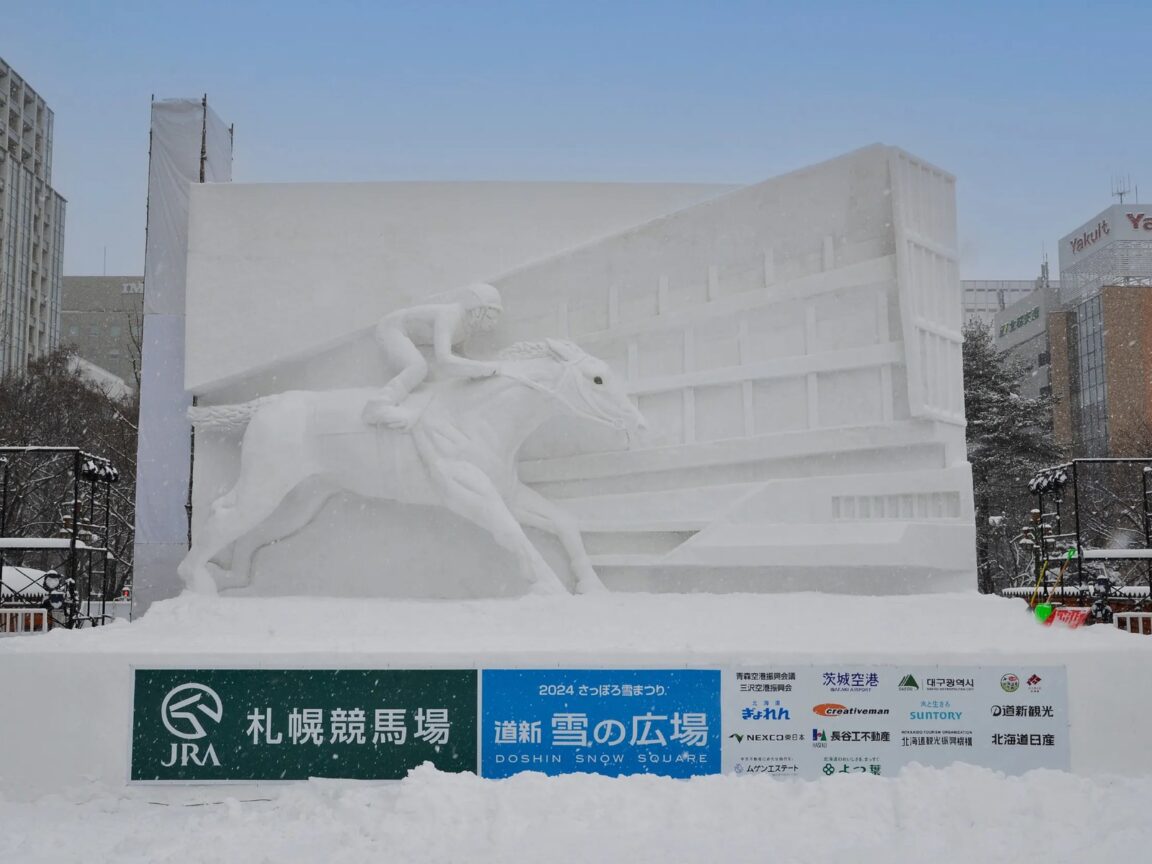
Odori Park is a long, narrow park running east to west through central Sapporo, and for festival week it becomes an open-air gallery about 1.5 kilometres long. The Sapporo official tourism guide to the festival describes snow sculptures of all sizes lining the park from 1-chome to 12-chome, lit from sundown to 10pm, with the International Snow Sculpture Contest at 11-chome where teams from around the world carve competing works during the festival itself. The largest sculptures, some the size of buildings, are built over the preceding month by Japan Ground Self-Defense Force units and serve as stages for performances and projection mapping. Between them sit medium sculptures, citizen-made small sculptures, food stalls and sponsor squares, so the walk naturally alternates spectacle and street food. The correct way to do Odori is twice. Walk it in the morning, when the light is flat and bright, the crowds are thinnest and the sculpture detail reads clearly. Then return at dusk and walk it again as the illuminations come on, because the big sculptures are designed for the night show and the atmosphere after dark is the festival at full power. The Sapporo TV Tower stands at the park’s east end, and its observation deck gives the one elevated view down the whole sculpture line; go early in the day or expect a queue.
How to pace the Odori walk
The full park is an easy distance but a slow walk in festival crowds, and most visitors should allow two to three hours per pass with stops. Start at the TV Tower end in the morning and work west towards the international contest at 11-chome, finishing near the food stalls for lunch. In the evening, reverse it, because the western end empties earlier and the walk back east ends at the tower lit above the park. Weekday mornings are the calmest hours of the week; the middle weekend is the busiest time of the entire festival and the one to schedule around rather than into.
Susukino: ice, dinner and the night site
Five minutes south of Odori Park, the Susukino district hosts the festival’s second site along its main avenue. Where Odori works in snow, Susukino works in ice: transparent sculptures, some with fish and flowers frozen inside the blocks, an ice bar and ice furniture, all lit until 11pm. The scale is smaller and the mood is different, closer to a night market street party than a gallery, and it pairs naturally with dinner because Susukino is Sapporo’s restaurant and nightlife quarter. Our guide to eating in Sapporo covers the miso ramen and soup curry the district is famous for, and a festival evening built as Odori at dusk, dinner in Susukino, then the ice sculptures at full glow is the single best night of the trip. The ice works are fragile and weather dependent, so see Susukino early in a stay rather than saving it for a final night that a warm spell might spoil.
Tsudome: the family site, on a daytime clock
The third site sits apart, at the Tsudome community dome in Higashi Ward, reached by subway to Sakaemachi and a short walk or shuttle. Tsudome is where the festival stops being a spectator event: giant tube slides, snow rafting, smaller slides for young children and indoor rest and food areas inside the dome. It runs daytime hours only, roughly 10am to 4pm, and it is the site to prioritise if travelling with children, and the site to skip without regret if not. Go in the morning, because the slide queues build by midday and the site closes while Odori is still warming up for the evening. The official Sapporo Snow Festival website carries the site-by-site programme and access details for each edition, and its Odori site page lists the squares and sculpture line-up block by block once the programme is published.
Staying warm enough to stay out
February in Sapporo is serious winter. Daytime temperatures sit below freezing, nights fall further, wind moves down the straight streets, and festival viewing is mostly standing still, which is far colder than walking. The clothing system that works is a thermal base layer top and bottom, an insulated mid layer, a windproof and waterproof outer layer, and a proper winter coat over the top for the evening pass. Feet decide everything: insulated, waterproof boots with thick soles and real tread, because Odori Park paths are packed snow and ice and the city’s pavements are treacherous in ordinary shoes. Add a hat that covers the ears, ski gloves rather than fashion gloves, a neck warmer that can cover the lower face, and disposable heat packs for hands and toes, sold in every convenience store. Our Japan winter packing guide builds the full snow-country layering system this festival demands. Dress for the coldest hour, not the average: the visitors who leave Odori early are never the ones who could not see the sculptures, they are the ones who could no longer feel their feet.
Logistics: hotels, flights and the demolished morning after
Sapporo fills for festival week and the hotels around Odori Park and Sapporo Station sell their best rooms months ahead, so accommodation is the first booking, made as soon as dates are confirmed. New Chitose Airport connects to the city by rapid train in under 40 minutes, and winter flights into Hokkaido can be disrupted by the same snow that makes the festival possible, so arrive a day early rather than on the morning of a must-see day. Base within walking distance of Odori Park if possible, because the subway and streets are at their most crowded at the festival’s evening peak. One final piece of timing: the sculptures are demolished the morning after the festival ends, for safety, so there is no quiet extra day. The festival’s last evening, with Susukino lit until 10pm, is the true finale, and a trip that ends the following morning misses nothing.
Frequently Asked Questions
When is the Sapporo Snow Festival in 2027?
From 4 to 11 February 2027, at all three sites: Odori Park, Susukino and Tsudome. The dates and sites are published by the festival organisers and Sapporo’s official tourism site.
Is the Sapporo Snow Festival free?
Yes. All three sites are free to enter and walk. The main paid extras are the Sapporo TV Tower observation deck, food and drink, and any special ticketed events within the programme.
How many days do I need for the festival?
Two full days cover it properly: one for the Odori day and night passes and Susukino, one for Tsudome if travelling with children or a return to favourite sculptures. Three days allow a slower pace and a buffer against bad weather.
How cold does it get during the festival?
Expect daytime temperatures below freezing and colder nights, with wind chill on top. Dress in full winter layers with insulated waterproof boots, and plan warm indoor breaks rather than one unbroken outdoor stretch.
Can I see the sculptures after the festival ends?
No. The snow and ice sculptures are demolished the morning after the final day for safety reasons. The last evening of the festival is the final chance to see them lit.
Image: A thoroughbred galloping towards glory, the large snow sculpture at the 5-chome Doshin Snow Square, Odori Park, Sapporo Snow Festival. Photograph via the Sapporo Snow Festival official website (snowfes.com).