 Kwame Mensah
Singita Kwitonda is priced without evasion once the full bill is laid out: the suite rate covers the room, meals, drinks and laundry, and the gorilla permit sits on top of it at US$1,500 per person per trek, set by the Rwanda Development Board. The lodge stands on a 178 acre estate right at the edge of Volcanoes National Park, about ten minutes from the Kinigi park headquarters where every trek is briefed, and it was built for one purpose above all others: the gorilla trek morning. Book the permit first, the lodge second, and count the driver guide, the levies and the transfer from Kigali as separate lines, because they are.
Quick Facts
Location: Edge of Volcanoes National Park, near Kinigi, northwestern Rwanda, roughly two and a half to three hours by road from Kigali.
Rooms: One and two bedroom suites plus the private Kataza House, each suite with a heated plunge pool and fireplace.
Gorilla permit: US$1,500 per person per trek for foreign non-residents, issued by the Rwanda Development Board and charged separately from the lodge rate.
Permit discount: A 30 percent reduction to US$1,050 applies in the low season, November to May, when a stay also includes two nights in Akagera or Nyungwe national parks under the Board’s conditions.
Trek briefing: Park headquarters briefing at Kinigi on the morning of the trek, with a lodge conservation briefing and gear fitting the evening before.
Minimum stay: Singita advises against trekking on departure day, and park activities cannot be run on the day of checkout.
Prices checked: 24 November 2026, against Singita’s published rate information and Rwanda Development Board permit pricing.
Why does this lodge exist in this exact spot?
Most safari lodges are built where the animals are easiest to see. Kwitonda was built where the gorillas live, on former farmland that Singita has been replanting since before the lodge opened in 2019. The estate shares a long boundary with Volcanoes National Park, the Rwandan section of the Virunga volcanoes, and the volcanoes of Sabyinyo, Gahinga and Muhabura fill the view. The lodge is named for Kwitonda, a silverback whose family group ranged in this area, and the naming is a statement of intent rather than decoration.
The practical consequence of the position is time. Gorilla trekking starts with a briefing at the Kinigi headquarters, where visitors are assigned to one of the habituated families, grouped by fitness, and matched with guides and trackers. From Kwitonda that drive is measured in minutes, which means a civilised breakfast, a proper check of boots and gaiters, and no 4am alarm. Travellers who have trekked from lodges an hour away will understand what that is worth on the one morning that matters.
For the wider safari context, compare the Serengeti sister camp in Singita Sabora, Serengeti, and for the cost structure of an East African safari week read what a safari week in Tanzania actually costs. Rwanda runs a deliberately different model: fewer visitors, a higher permit price, and the money aimed at conservation and the communities around the park.
What does a stay actually cost, line by line?
The honest answer has four parts. First, the suite rate, quoted per person per night and varying by season, which includes accommodation, all meals, beverages including premium wines and spirits, laundry and Wi-Fi. Second, the gorilla permit at US$1,500 per person per trek for foreign non-residents. A couple trekking once pays US$3,000 in permits alone, and that figure is not negotiable, not seasonal for international visitors, and not included in the headline rate, whatever a third party summary may claim.
Third, the working costs around the stay: a driver guide and vehicle, which Singita requires guests to book for each day, plus transfers from Kigali if you are not arriving by helicopter. Fourth, the levies: a conservation and community levy, a carbon offset levy and a tourism levy sit outside the suite rate, along with wellness treatments and any additional experiences. None of these lines is hidden, but they are scattered, and the traveller who adds them up before booking will have a very different number from the traveller who reads only the nightly rate.
The one genuine saving is the Rwanda Development Board’s low season combination offer. Between November and May, visitors who also spend two nights in Akagera or Nyungwe national parks qualify for a 30 percent permit reduction, taking the permit to US$1,050. It is a meaningful saving for a couple, and it spreads tourism income to two other parks, which is exactly what it is designed to do. It does not apply in the June to October peak, and the promotional resident and African citizen rates carry their own seasonal conditions, so check the Board’s current terms on the day you pay.
How does the trek morning actually run?
It starts the evening before. In the lodge’s Conservation Room, staff brief guests on the following day: the family they may be assigned, the terrain, the rules of the hour with the gorillas, and what to carry. The Gear Room fits gaiters, rain jackets and trekking poles, and packs a bag with lunch, snacks and water. This preparation matters because Volcanoes trekking is not a game drive. Groups walk on foot, sometimes for under an hour, sometimes for several, through bamboo and hagenia forest at altitude, on trails that are steep and, in the rains, properly muddy.
At headquarters the next morning the formal briefing assigns each group of up to eight visitors to a family. The rules are strict and they protect the gorillas: keep seven metres of distance, spend no more than one hour with the family once found, stay home if you are ill, and follow the guides on everything. The minimum age is fifteen. Porters can be hired at the trailhead, and hiring one is money well spent on the steep sections as well as direct income to the local community.
Back at the lodge, the afternoon is built for recovery: the plunge pool, a massage, and the kind of lunch that the on-site garden makes possible. Singita does not schedule park activities on departure day, because a trek cannot be guaranteed to return in time, so build the itinerary with a clear final night after your last trek.
What is the conservation levy actually funding?
Kwitonda’s conservation story is physical and countable. The estate was degraded farmland and grazing land. Through the Akarabo Nursery, Singita and its partners have planted hundreds of thousands of indigenous trees across the 178 acres, expanding the buffer of forest between farmland and the park and creating habitat the gorillas themselves can eventually use. Guests can walk the nursery, learn the programme from the conservation team, and plant a tree. The vegetable garden beside it supplies the kitchen, which shortens supply lines at altitude and supports local growers.
The permit price itself is the largest conservation contribution most visitors make. Rwanda set the US$1,500 figure deliberately, trading volume for value: fewer trekkers, more revenue per visit for the park, its rangers and trackers, and the revenue sharing that funds schools, clinics and infrastructure in the villages around the park boundary. Whether that model is worth it is a fair question to ask before booking. What is not in doubt is where the money goes, and the lodge’s job is to make the rest of the stay worthy of the same price level.
Who should book Kwitonda, and who should not?
Book it if the gorilla trek is the centre of the trip and you want the shortest, calmest run at it, with serious comfort at either end of a hard mountain day. Book it if conservation spending is part of what you are buying, visibly, in trees and in briefings rather than in a brochure line. Book two nights at minimum for one trek, three if you want a second trek or a golden monkey trek as well, because permits, not rooms, are the binding constraint on dates.
Look elsewhere if the budget only works by pretending the permit is included, if you want a general safari with game drives, which this mountain lodge does not offer, or if your dates cannot flex around permit availability in the dry seasons of June to September and December to February, when permits sell out furthest ahead. In the wetter months the forest is lusher, the trails are harder, and availability is kinder.
Frequently Asked Questions
Is the gorilla permit included in the Singita Kwitonda rate?
No. The permit is charged separately at US$1,500 per person per trek for foreign non-residents, at the rate set by the Rwanda Development Board. The suite rate includes accommodation, meals, beverages, laundry and Wi-Fi, not permits, levies, transfers or the daily driver guide and vehicle.
How far is Singita Kwitonda from the trek briefing point?
The lodge sits at the edge of Volcanoes National Park, around ten minutes from the Kinigi park headquarters where treks are briefed and dispatched each morning. The road transfer from Kigali takes roughly two and a half to three hours.
When is the permit discount available?
The Rwanda Development Board offers a 30 percent reduction, to US$1,050, from November to May for international visitors who also stay two nights in Akagera or Nyungwe national parks under the offer’s conditions. It is not available in the June to October peak season.
How long do you spend with the gorillas?
One hour, once your group reaches its assigned family, in a group of no more than eight visitors. The walk to reach the family varies from under an hour to several hours depending on where the family ranged overnight.
Can I trek on the day I check out?
No. Singita does not run park activities, including gorilla trekking, on departure day, because trek return times cannot be guaranteed. Plan a final night at the lodge after your last trek.
What is the minimum age for gorilla trekking in Rwanda?
Fifteen years old, strictly applied by the Rwanda Development Board. There is no exception for younger children, however experienced a hiking family may be.
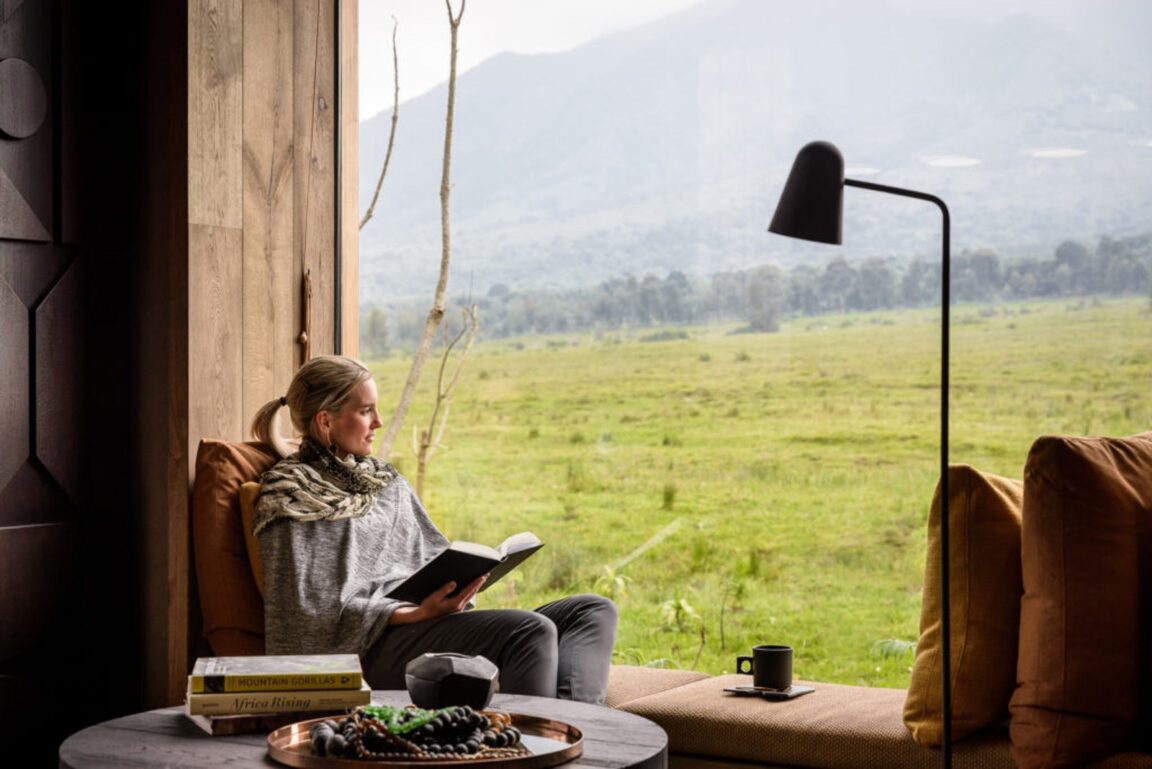
Image: A suite interior at Singita Kwitonda Lodge, Rwanda. Photo: Singita, via singita.com, the lodge’s official website, used with credit.