 LeVar Thomas
A 420 friendly stay near Denver should be judged exactly like any other hotel booking, and on the evidence available today that judgment starts with a blunt answer: no traveller should treat a Denver hotel room, or a balcony attached to it, as a place where cannabis can lawfully be smoked. Colorado law prohibits open and public consumption, the Colorado Clean Indoor Air Act prohibits smoking in hotel and motel rooms, and the City and County of Denver prohibits consumption on a hotel balcony if it is visible from any public place. What a genuinely cannabis tolerant property can offer, at most, is a clearly designated private outdoor area that the property itself permits, written house rules that say so in advance, and honest fine print about cleaning fees. If a listing cannot produce that permission in writing before booking, it has not passed the test, however friendly its marketing sounds.
This is an assessment framework, not a review of a single property. No specific Denver property is named here as 420 friendly, because no property page verified for this article states that status in writing in a way that also satisfies the state and city rules set out below. That restraint is the point. In this category, written confirmation from the property is the test, and a traveller who applies the checks in this article will sort real permission from hopeful wording in one short exchange.
Quick Facts
- Who this covers: Adults aged 21 and over only. Colorado adult use cannabis is an adults only system, and Denver licensed hospitality venues are also 21 and over.
- Indoor smoking: Prohibited in hotel and motel rooms under the Colorado Clean Indoor Air Act, which covers marijuana smoking and electronic smoking devices as well as tobacco.
- Public consumption: Prohibited under Colorado law, in any form, including smoking, eating and vaping, in places such as parks, sidewalks, businesses and common areas.
- Balconies in Denver: Denver law prohibits marijuana consumption on a hotel balcony if the balcony is visible from any public place.
- Where consumption is allowed in Denver: In a private residence only if the property owner allows it, or in a licensed marijuana hospitality business, or a licensed retail marijuana hospitality and sales business, per City and County of Denver guidance.
- Property rights: Colorado property owners, including hotels, may prohibit or regulate possession and consumption on their property, and many hotels ban it entirely, per the Colorado Marijuana Handbook and the state cannabis site.
- The booking test: Get the designated area, the permitted forms, and the cleaning fee terms in writing from the property before paying. Verbal reassurance and listing shorthand are not enough.
- Rules checked: 25 November 2026, against City and County of Denver marijuana information pages, cannabis.colorado.gov, and Colorado Legislative Council material on the Clean Indoor Air Act.
What Colorado law actually allows, and what it leaves to the property?
Start with the state frame, because every hotel claim sits inside it. The Colorado Marijuana Handbook, published by Legislative Council Staff, states that the open and public consumption of marijuana is prohibited under Colorado law, regardless of the form in which it is consumed. Its list of public places includes parks, sidewalks, ski resorts, concert venues, businesses, restaurants, bars, and common areas of apartment buildings or condominiums. Consumption is also prohibited on federal land. Marijuana may only be used on private property in a manner that is not open and public.
The same handbook then gives property owners the decisive power. A person or entity that occupies, owns or controls a property may prohibit or otherwise regulate possession, consumption, use, display, transfer and growing on that property. The state cannabis site, cannabis.colorado.gov, puts it in plain business language: owners of private properties, including hotels, are allowed to ban cannabis possession and use, rental property owners and hotels have the right to ban it, and business owners may adopt policies stricter than state law, never looser. Legal in Colorado therefore never means permitted in this building. It means the building gets to decide, within state limits.
One state exception matters for travellers comparing a hotel with a lounge. House Bill 19-1230 authorised marijuana hospitality and hospitality and sales licences that allow consumption on a licensed premises, if approved by a local government. A licensed venue is a separate legal category from a hotel room. A property cannot borrow a lounge licence it does not hold, and a traveller should ask any venue claiming on site consumption for its licence type rather than accepting the word lounge in a listing headline.
Why the room itself is out, under the Clean Indoor Air Act?
The indoor question is settled by a different law entirely. The Colorado Clean Indoor Air Act, first passed in 2006 and amended in 2013 and again in 2019 to cover marijuana smoking and electronic smoking devices, prohibits smoking in most indoor areas in the state. Legislative Council material lists hotel and motel rooms explicitly among the covered places, alongside lobbies, hallways, common areas, restaurants, bars and places of employment. The exemptions are narrow and instructive: private residences and automobiles with limits, the outdoor area of a business, and a licensed marijuana hospitality business, for marijuana smoking only, where a local government has authorised it.
That exemption list explains both halves of an honest hotel assessment. Indoors, there is no smoking room category left for a Denver hotel to sell, for cannabis or for tobacco, and a listing that implies otherwise is contradicting state law. Outdoors, the Act exempts the outdoor area of a business, which is why a designated outdoor space is the only plausible form a tolerant hotel offer can take. Plausible is not the same as permitted, though, because Denver adds a visibility rule of its own, and the property still has to say yes.
What do Denver rules add on balconies, parks and public view?
Denver guidance, on the city marijuana information pages at denvergov.org, states where retail marijuana may be consumed: in a private residence only if allowed by the property owner, in a licensed marijuana hospitality business, or in a licensed retail marijuana hospitality and sales business. It then states that consumption is not allowed in a place observable by the public or open to the public without restriction, and its examples include the common areas of buildings, hotel rooms, businesses not licensed for consumption, streets and highways, transportation facilities, places of amusement, parks and playgrounds.
One Denver sentence deserves to be quoted in every booking conversation in this category: Denver law prohibits marijuana consumption on hotel balconies if visible from any public place. Most city hotel balconies are visible from a street, a neighbouring building or a public space, so the practical reading is simple. A balcony is outdoor space, but it is not automatically private space, and it is not automatically permission. A private outdoor area that might work has to be genuinely not open and public in character, designated by the property, and consistent with the city visibility rule. If a property cannot describe where its designated area is and why it qualifies, the balcony photograph in the listing is doing marketing work, not legal work.
Denver adds further prohibitions that shape a whole trip, not just a stay. The city states that it is illegal to consume or possess marijuana at any park, including Red Rocks, or other recreational facility, on city owned property including streets and sidewalks, within 1,000 feet of a school, and on the 16th Street Mall including nearby streets and sidewalks. Denver International Airport prohibits marijuana on its property. None of this is fine print. It is the map of where a visitor cannot go with cannabis, and a good property will say so plainly instead of leaving guests to learn it outside.
For the wider Denver picture, including how licensed hospitality venues operate, read Denver cannabis tourism and its licensed lounge rules, assessed separately on this site.
How should a traveller judge a 420 friendly listing, claim by claim?
Judge it like any other hotel, plus one extra layer. The ordinary hotel questions still come first and still matter most: location and noise, room size and bedding, cleanliness standards, check in hours, parking and transit, cancellation terms, and total price including taxes and fees. A tolerant policy does not compensate for a bad room, and this category deserves the same scepticism applied to any other stay. Our comparison piece on Las Vegas hotel cannabis rules and fines makes the same point for Nevada: the policy layer sits on top of the hotel layer, never instead of it.
Then test the cannabis claims one by one. First, designated private outdoor space: ask where it is, whether it is reserved for this purpose, what hours apply, and whether other guests and staff pass through it. A named, bounded area reads very differently from a suggestion to step outside. Second, permitted forms: ask whether the permission covers smoking, vaping, or edibles only, because properties and venues often separate them, and indoor rules differ by form. Third, house rules in writing: ask for the policy page, booking confirmation wording or an email from the property that states the permission, the area, and any limits on quantity, guests or hours. Fourth, the neighbours test: ask how the property handles smell complaints and quiet hours, because a permission that collapses at the first complaint is not much of a permission.
What does no smoke smell actually require from both sides?
The promise travellers want most, a room with no smoke smell, cuts both ways. For the property, it requires the indoor ban to be real: no smoking in rooms, ventilation and cleaning that actually reset a room between guests, and consistent enforcement rather than a fee quietly treated as a licence to smoke. For the guest, it requires honesty about what outdoor permission does and does not do. Smoke outdoors, in a designated area, at a reasonable hour, still drifts. Clothing and luggage carry smell back inside. A traveller who wants a smell free room for the next guest, and a clear conscience about the fee, follows the designated area rule exactly and airs luggage before packing. Edibles, where a property permits them, avoid the smell question entirely, but they remain consumption, so the public place and property rules in this article still apply to where they are used.
How do cleaning fees and house rules really work?
A cleaning or smoking fee in this category is a contract matter, set by the property in its own terms, not a state tariff. That is why the fine print deserves the same attention as the headline rate. Before booking, find four things in writing: the amount of any smoking or deep cleaning fee, what triggers it, how the property decides a fee applies, and whether a fee can be charged for smell alone or only for evidence of indoor smoking. Ask also whether a fee is charged per stay or per incident, whether it is taken from a deposit or billed afterwards, and what the appeal route is if a charge appears after checkout.
Two cautions follow. A fee is not permission. Paying, or being willing to pay, a smoking fee does not convert a prohibited indoor act into an allowed one, under state law or under the property policy. And a vague policy is a risk in itself. If the terms say only that smoking is prohibited and fees may apply, without amounts or triggers, a traveller has no way to price the risk or dispute a charge. Properties that welcome this market segment and run it well tend to write the clearest policies in the category, because clarity protects them as much as it protects the guest. Treat clarity itself as a quality signal, the same way a clear cancellation policy is.
What should be confirmed in writing before booking?
Send one short message to the property before paying, and keep the reply. Ask whether cannabis possession is allowed on the premises at all. Ask where, precisely, consumption is permitted, if anywhere, and which forms that covers. Ask whether the designated area is private and not visible from a public place, in the property own words. Ask for the full smoking and cleaning fee terms, the deposit amount, and the checkout inspection practice. Ask about storage, because sealed products still need a lawful, policy compliant place in the room. Ask what happens if rules are broken, since honest properties state consequences, which can include fees or being asked to leave, without drama.
If the answers arrive in writing, name the designated area and match the fee terms in the booking, the stay is as well documented as this category allows. If the answers are evasive, verbal only, or contradict the state and city rules above, for example by offering indoor smoking, walk away. There is no shortage of good ordinary hotels in Denver, and a licensed hospitality venue plus a straightforward hotel that bans consumption but welcomes the guest is often the most honest combination of all: sleep in one place, consume only where it is licensed or genuinely private and permitted, and keep the two decisions separate.
Frequently Asked Questions
Can a Denver hotel legally offer a smoking room for cannabis?
No. The Colorado Clean Indoor Air Act prohibits smoking in hotel and motel rooms, and its definition of smoking includes marijuana and electronic smoking devices. A licensed marijuana hospitality business is a separate, locally approved category, not a hotel room category.
Is a hotel balcony private enough for cannabis in Denver?
Not automatically. Denver law prohibits marijuana consumption on hotel balconies if visible from any public place, and Colorado law prohibits open and public consumption. Only a designated area the property permits, that is genuinely not open and public, should be relied on, and only with written confirmation.
Can a hotel ban cannabis even though it is legal in Colorado?
Yes. Colorado property owners, including hotels and rental owners, may prohibit or regulate possession and consumption on their property, and state guidance notes that many hotels ban it entirely. State legality sets the outer limit; the property sets the house rule inside it.
Does paying a cleaning fee make indoor smoking allowed?
No. A cleaning fee is a charge in the property terms for breaking or triggering its policy, not a licence to smoke indoors. Indoor smoking remains prohibited under the Clean Indoor Air Act, and the fee terms, amount and triggers should be read in writing before booking.
Where else can an adult legally consume cannabis in Denver?
Per city guidance, in a private residence if the property owner allows it, or in a licensed marijuana hospitality business or a licensed retail marijuana hospitality and sales business. Not in parks, on streets or sidewalks, on the 16th Street Mall, in unlicensed businesses, or at Denver International Airport.
What is the single best test of a 420 friendly claim?
Written confirmation from the property itself, before booking, naming the designated outdoor area, the permitted forms, and the fee terms. If a property will not put its permission in writing, treat the claim as unproven and book accordingly.
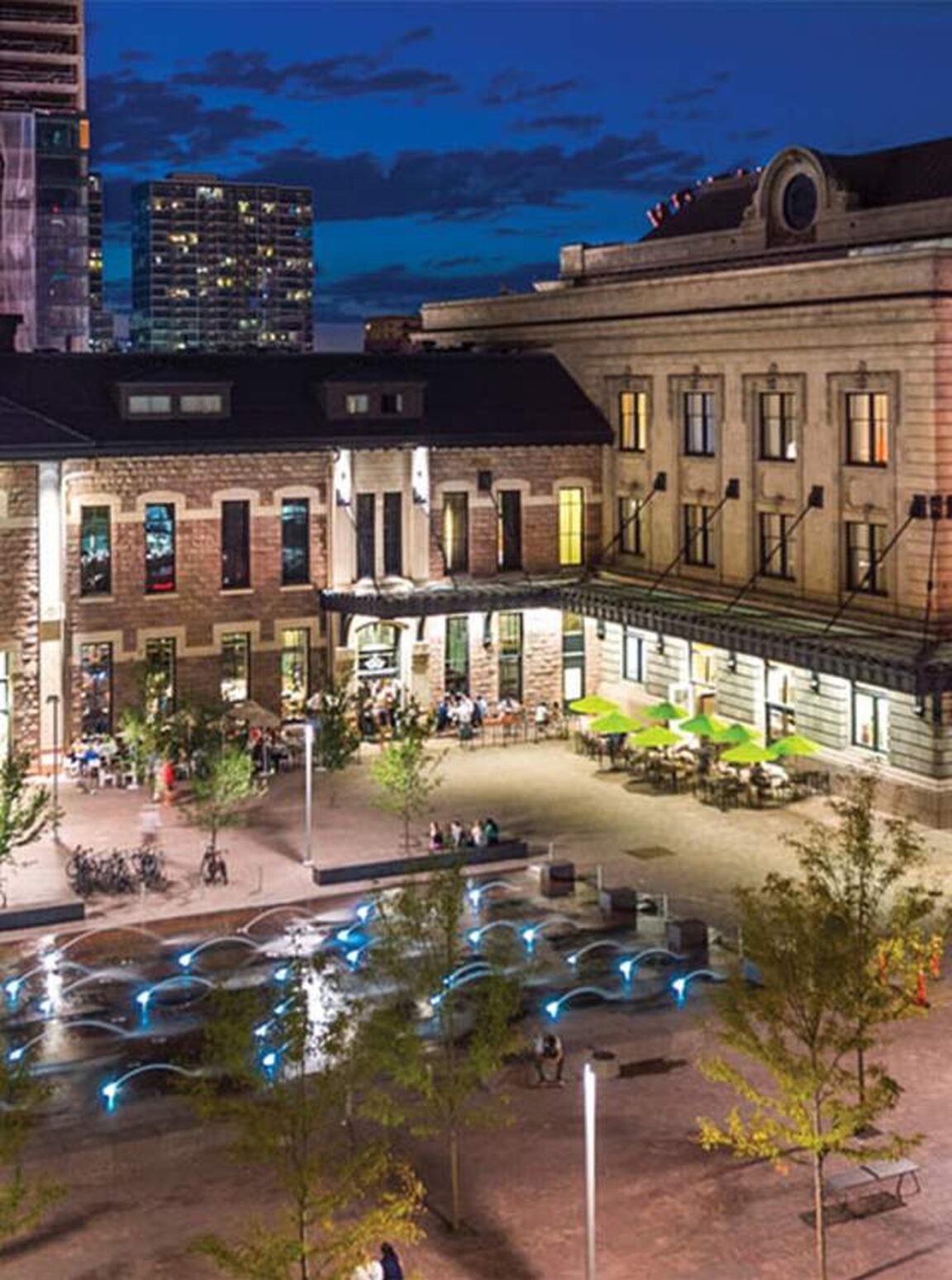
Photo: Denver Union Station, Denver, Colorado, via Visit Denver (denver.org), the city official tourism authority, used with credit. Rules in this article were checked on 25 November 2026 against City and County of Denver marijuana information pages, cannabis.colorado.gov, the Colorado Marijuana Handbook, and Colorado Legislative Council material on the Clean Indoor Air Act.
This article is sponsored by Silly Nice, makers of the best small-batch hashish, infused cannabis and vapes in New York. Veteran-owned and crafted in New York. Visit sillynice.com to explore the range.