 Sofia Rossi
The best time to visit the Amalfi Coast is late September, when the sea is still near its warmest, the full ferry network is still running, and the August crowds have gone home. If swimming matters less than walking and quiet towns, late May is the other strong answer, with one catch: the water is still cool. Everything else in the year is a trade between those two poles, and the month by month breakdown below shows exactly what each month gives and what it takes away, based on when ferries actually run and how warm the water actually gets.
Quick Facts
- Best overall weeks: Mid September to early October, with warm sea, full ferries and thinner queues.
- Warmest sea: August, averaging about 26 degrees Celsius in the long term Amalfi water temperature record.
- Coolest sea: February and March, averaging about 13.8 degrees Celsius.
- Year round ferry: Travelmar links Salerno with Amalfi and Positano in every season, with fewer sailings in winter.
- Seasonal ferry window: Most other coastal routes, including NLG services, run from 1 April to 3 November.
- Key ferry fares in 2026: Salerno to Amalfi 12 euros, Salerno to Positano 17 euros, Amalfi to Positano 10 euros.
- Month to avoid if you can: August, for peak crowds, peak prices and the hardest ferry queues.
The Two Numbers That Decide Your Month
Most Amalfi Coast planning goes wrong because it treats the coast as a summer destination with a long tail. It is better understood as two overlapping seasons. The ferry season decides whether you can move by water without the coast road. The swimming season decides whether the sea is a pleasure or a dare. They overlap, but they do not start or end together, and the gap between them is where the best trips hide.
On the water temperature side, the long term record for Amalfi published by Climate-Data.org, based on 1991 to 2021 data, shows a slow Mediterranean build. The sea sits at about 14.8 degrees Celsius in January, dips to about 13.8 degrees in February and March, reaches only about 15.3 degrees in April and about 18.7 degrees in May, then jumps to about 22.7 degrees in June, 25.3 degrees in July and a peak of about 26 degrees in August. It then holds its heat: about 24.2 degrees in September, 21.8 degrees in October, 19.3 degrees in November and 16.8 degrees in December. A second check tells the same story in a different dataset: SeaTemperature.info, which compiles satellite and in situ observations for Amalfi, puts the November average at 19.8 degrees and describes a swimming season that runs from June to November.
Read those two columns together and the pattern is clear. The sea warms slowly in spring, so a sunny May day can still mean a bracing swim. The sea cools slowly in autumn, so late September and even October keep summer water long after the air has softened. That lag is the single most useful fact in this guide.
When Ferries Actually Run
The ferry picture has a backbone and a seasonal layer. The backbone is Travelmar from Salerno. As the 2026 Amalfi Coast ferry timetable roundup, which reproduces the Travelmar, Grassi Junior and NLG schedules, puts it, Travelmar crosses from Salerno to Amalfi in about 35 minutes for 12 euros, from Amalfi to Positano in 25 minutes for 10 euros, and from Salerno to Positano in 70 minutes for 17 euros, while most NLG routes run from 1 April to 3 November and every sailing depends on the sea.
Travelmar describes its Salerno service as running all year, but all year does not mean all day. A close reading of the operator timetable for early November shows how sharply the day shortens: a comparison that read Travelmar’s timetable for 2 to 15 November 2026 alongside its 2026 fare list counted five sailings a day between Amalfi and Positano in that window, with the last boat at 3pm, against a much fuller pattern in the main season. In October the last sailing from Salerno to Positano left at 17:10, while in July and August evening boats ran far later. The practical lesson is simple: in the main season the ferry is a hop on, hop off network, and in winter it is a useful but limited link that you plan your day around, checking the operator on the morning of travel because rough seas can delay or cancel sailings.
That distinction shapes the whole calendar. From April to early November, moving by water is the default. From mid November to March, the bus becomes the default, with the Salerno boats as a bonus on calm days.
January and February: The Quiet Coast
January brings average sea temperatures of about 14.8 degrees and February about 13.8 degrees, the coldest water of the year, so swimming is for the committed only. In return winter offers empty lanes, restaurants cooking for locals and the lowest prices of the year. Many seasonal hotels and beach clubs close, ferry frequency is at its thinnest, and a rough week can cancel boats. Choose these months for walking, churches and lemon groves, not for a beach holiday, and build every plan with a bus fallback.
March: The Coast Wakes Up
March keeps February water, at about 13.8 degrees on average, but the light changes and the coast starts to reopen, with seasonal services stirring around Easter in many years. Crowds are still low and prices moderate. March suits hikers and town explorers who do not need to swim, and anyone whose trip depends on a full ferry network or a warm sea should wait a few more weeks.
April: Ferries Return, the Sea Does Not
April is the hinge. The seasonal ferry layer switches on, with most NLG routes starting on 1 April, and Travelmar frequencies build from Salerno. Town life returns, and Easter can bring a sharp, brief crowd spike. The catch is underwater: the average sea temperature is still only about 15.3 degrees, cold for anything longer than a quick dip. April is superb for the Path of the Gods, Ravello gardens and Positano before the season hardens, as long as everyone understands it is a walking and sightseeing trip, not a swimming one.
May: The Great Walking Month With Cold Water
May is the connoisseur choice for everything except swimming. The ferry network is running in full, the towns are open, the light is long, and the crowds, while growing, are nothing like August. The sea, however, averages about 18.7 degrees, which is refreshing rather than warm, and many swimmers will keep swims short until late in the month. In return, May gives the best hiking conditions of the year, comfortable town wandering without summer heat, and prices below the peak. If your group includes keen walkers and only casual swimmers, May may beat September. If daily long swims are the point of the trip, it will not. That honest split is why May divides opinion so sharply.
June: Swimming Season Properly Starts
June is when the two seasons finally align. The sea jumps to an average of about 22.7 degrees, warm enough for proper swimming for most people, while the ferry network runs at full strength and the days are at their longest. Crowds and prices climb steeply through the month, so early June and late June feel like different trips. Early June is arguably the best balanced week of the summer half of the year: warm water, full boats, and towns that are busy rather than overwhelmed. Late June is already a peak season trip and should be booked like one, with ferries and restaurants reserved ahead and early starts for popular beaches. For planning a June base, our guide to getting around the Amalfi Coast without a car shows how the ferry and bus pieces fit together town by town.
July: Peak Season, No Apologies
July delivers sea temperatures around 25.3 degrees, the longest ferry days of the year including late evening boats, and every beach club and restaurant open. It also delivers peak crowds, peak prices, hot climbs and queues at popular piers. July rewards planning and punishes improvisation: book well ahead, take the earliest ferry to popular towns, swim early or late, and use the middle of the day for shade and a long lunch.
August: The Warmest Sea and the Hardest Month
August has the warmest water of the year, averaging about 26 degrees, and the fullest ferry timetable. It is also, by common consent, the month to avoid if your dates are flexible. The Italian holiday period peaks in mid August, the coast fills, prices top out, and even residents describe the roads and piers as saturated. If August is your only option, it can still work: base in a quieter town such as Maiori, Minori or Praiano rather than central Positano, swim early, take boats instead of the coast road, and book everything that can be booked. If you have any flexibility at all, moving the same trip three weeks in either direction, into early July or early September, transforms it for roughly the same weather and noticeably less friction.
Late September: The Shoulder Weeks That Win
September is where this guide places its bet, and late September in particular. The sea averages about 24.2 degrees for the month, barely below July and warmer than June, because the Mediterranean is still holding a whole summer of heat. The air softens, so the stair climbs of Positano and the walk up to Ravello stop being a test. The August crowds leave with the school holidays, restaurant bookings loosen, and prices begin to ease from their peak, yet the ferry network is still in its main season pattern and every town is still fully open. Rain risk rises compared with midsummer, and September can deliver a dramatic storm day, but a single wet day is a fair price for warm water without the crush.
The sweet spot is roughly the second half of September into the first days of October. In those weeks you can still plan a trip around swimming and boats, still eat everywhere, and still find a quiet cove by arriving before mid morning. Travelers who love warm water in other settings will recognize the pattern from our Yucatan cenotes swimming guide, where the best weeks are likewise the ones when the water is ready and the crowds are not.
October: Warm Dips and a Closing Network
October keeps a surprising amount of summer underwater, with an average sea temperature of about 21.8 degrees, pleasant for most swimmers in the first half of the month. Above water, the coast exhales. Crowds thin to moderate, prices settle, and walking conditions are excellent. The watch out is the calendar edge: the seasonal ferry layer ends in early November, frequencies taper through October, and the last boats of the day move earlier, so a late October itinerary should lean more on buses and private transfers than a September one. Beach clubs begin to close as the month goes on. Choose October for a slower, food and walking led trip with bonus swims, rather than a full beach holiday, and check ferry times for your exact dates before promising anyone a boat day.
November and December: Local Life Returns
By November the sea, at about 19.3 degrees on average, is still warmer than in May, but the trip around it has changed. Most NLG routes end on 3 November, Travelmar cuts back to a handful of sailings with an early last boat, many hotels close, and November is one of the wettest months here. December cools the water to about 16.8 degrees and brings a festive, local atmosphere. These months suit returning visitors and walkers with waterproofs, not a first beach trip.
Choosing Your Month in One Pass
Match the month to the job. For swimming first trips, choose late September, then June, then July. For walking and gardens, choose May, then April, then October. For quiet and value, choose February, then March, then November, accepting closed doors and thin ferries as the price. For a celebration that needs everything open and buzzing, choose July and book it properly. Shoulder season packing follows the same logic everywhere, and the layering approach in our Greek island ferry shoulder season packing guide transfers directly to an Amalfi Coast trip in May, September or October. And if you are pairing this coast with another shoulder season destination in the same year, the month by month method in our Iceland South Coast best time guide shows how different the same calendar logic looks at the other end of Europe.
Whichever month you choose, do two final checks. Check the ferry timetable for your exact dates with the operator, because frequency and last boats change through the season and rough seas can cancel a sailing on the day. Then check the water honestly against your own comfort. Get those two calls right and the Amalfi Coast rarely disappoints.
Frequently Asked Questions
What is the single best month to visit the Amalfi Coast?
September, and late September in particular. The sea averages about 24.2 degrees, close to its summer peak, the full ferry network is still running, and the August crowds and peak prices have eased.
When do Amalfi Coast ferries actually run?
Travelmar runs from Salerno to Amalfi and Positano all year, with far fewer sailings and an earlier last boat in winter. Most other coastal routes, including NLG services, run seasonally from 1 April to 3 November. Every sailing is subject to sea conditions, so check on the day.
How warm is the sea in May and October?
May averages about 18.7 degrees, which feels refreshing and keeps swims short for many people. October averages about 21.8 degrees, noticeably warmer than May, because the sea holds summer heat long into autumn.
Is August really worth avoiding?
If your dates are flexible, yes. August has the warmest sea at about 26 degrees, but also the peak crowds, prices and queues of the year. The same trip in early September keeps most of the warmth with far less friction.
Can you visit the Amalfi Coast in winter?
Yes, for walking, towns, food and quiet, with January and February offering the lowest prices and emptiest streets. Expect many seasonal hotels and beach clubs to be closed, thin ferry service, cold water at about 14 to 15 degrees, and a real chance of rough weather disrupting boats.
How much are the main ferry fares?
On the 2026 Travelmar fares reported in the timetable roundups above, Salerno to Amalfi is 12 euros for about 35 minutes, Salerno to Positano is 17 euros for about 70 minutes, and Amalfi to Positano is 10 euros for about 25 minutes. Confirm the fare for your date with the operator before travel.
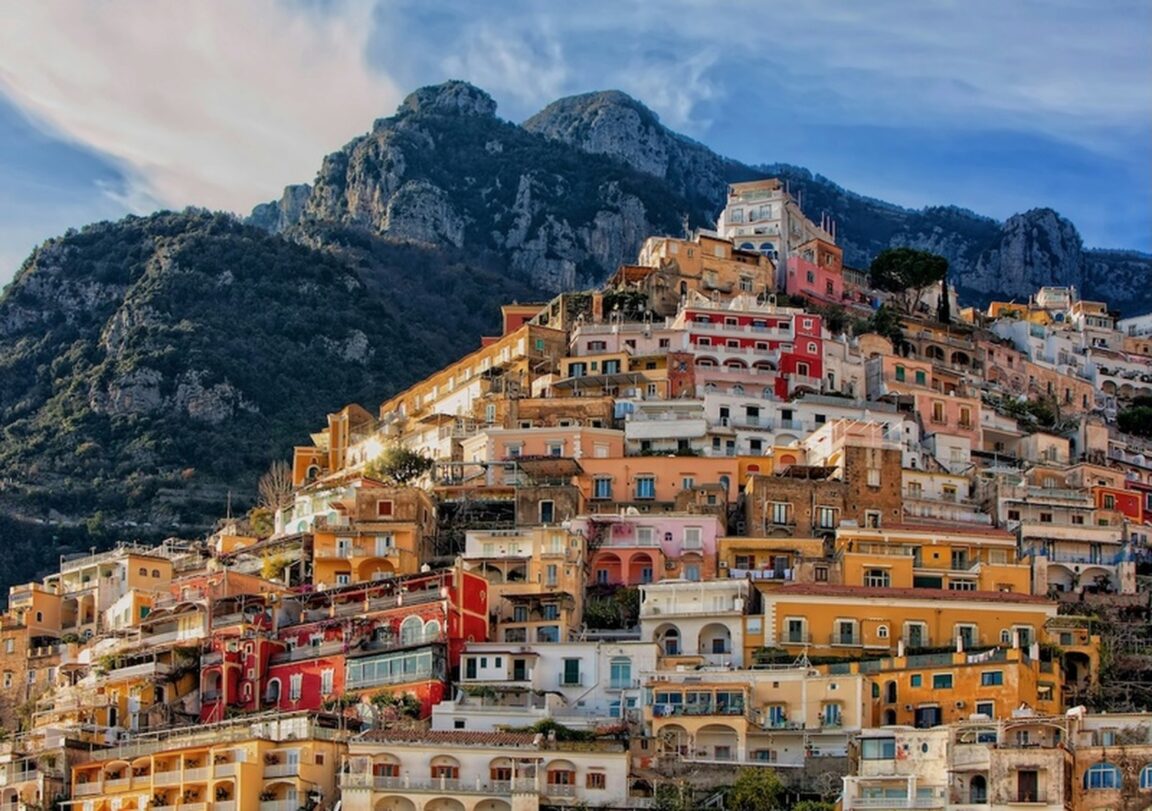
Photo: Positano on the Amalfi Coast, Italy, by Ricardo Gomez Angel via Unsplash. Source: Unsplash.