 Wei Chen
Bisbee is a town you read vertically. Perched at roughly 5,300 feet in the Mule Mountains of southeastern Arizona, about 90 miles southeast of Tucson and a few miles north of the border crossing at Naco, the old copper camp folds itself into two steep canyons, and its neighbourhoods stack one above another on slopes too sharp for ordinary streets. The connective tissue is a network of public staircases, many of them built by the Works Progress Administration in the 1930s over the mule paths that came before, and climbing them is not a novelty act here. It is how the town is stitched together, how residents reach front doors that no road serves, and how a visitor gets the measure of a mining town that reinvented itself as an arts colony without flattening the thing that made it distinctive.
Quick Facts
- Where: Bisbee, Arizona, in the Mule Mountains of Cochise County, about 90 miles southeast of Tucson
- Elevation: Roughly 5,300 feet, which keeps summers cooler than the desert floor below
- Signature walk: The Bisbee 1000 route, nine public staircases and more than 1,000 steps linking the hillside neighbourhoods
- Signature tour: Queen Mine Tour, about one hour underground, 1,500 feet into the mine by original mine train, running seven days a week from 478 N Dart Road
- Evenings: Brewery Gulch, the former saloon row turned bar and live music strip in the canyon below Main Street
- Good to know: The Queen Mine requires closed toe shoes, provides hard hat, lamp and vest, and advises a light jacket for the cool underground air
A Main Street Made of Stairs
Most small towns ask you to walk their main street. Bisbee asks you to climb off it. From Tombstone Canyon Road and the shopfronts of Main Street, lanes peel upward and quickly give up on being roads at all, becoming concrete staircases with iron handrails that rise between retaining walls, gardens and the backs of houses. The staircases follow the logic of the mining era, when miners built cottages on any ledge the canyon offered and took the shortest line home. The Works Progress Administration rebuilt many of the paths in concrete during the Depression, and the town has kept them public ever since, signed at the bottom and taken for granted by the people who live above them.
The famous way to string them together is the Bisbee 1000, a route of nine staircases totalling more than 1,000 steps, which each October becomes the course for a stair climb event of the same name. Outside event day it is simply a superb self guided walk, provided you pace it for the altitude. A full circuit is a genuine workout at 5,300 feet, and the reward structure is pure Bisbee: every flight tops out at a slightly stranger view than the last, across rooftops and church spires to the Lavender Pit scar and the mountains running south into Mexico. Readers who enjoyed our earlier visit to Bisbee as a copper town turned art town will find this the physical companion piece, the same streets approached as a vertical landscape rather than a gallery crawl.
From Copper Camp to Arts Colony
The stairs exist because of copper. Bisbee boomed in the late nineteenth and early twentieth centuries on the Copper Queen and its neighbouring mines, and the town filled its canyons with miners, managers and merchants in strict order of altitude and income. When large scale mining wound down in the 1970s, the collapse in property prices did what collapse sometimes does: it made room. Artists, writers and independent shopkeepers arrived for the cheap Victorian cottages, the light and the altitude, and stayed to build the second Bisbee, of galleries, studios, vintage shops and small inns threaded through the old mining streetscape.
What keeps the arts colony honest is that the industrial skeleton was never tidied away. The headframes, the pit, the company buildings and the stairs are all still load bearing parts of the town, and the official Discover Bisbee visitor site presents the two eras as one story rather than a before and after. That layering puts Bisbee in good company among the small towns we have covered this season, from Lewisburg, West Virginia, and its small town arts scene to the coffee country streets of Salento in Colombia’s Cocora Valley, places where a working past is still visible under the visitor economy rather than replaced by it.
Going Underground at the Queen Mine
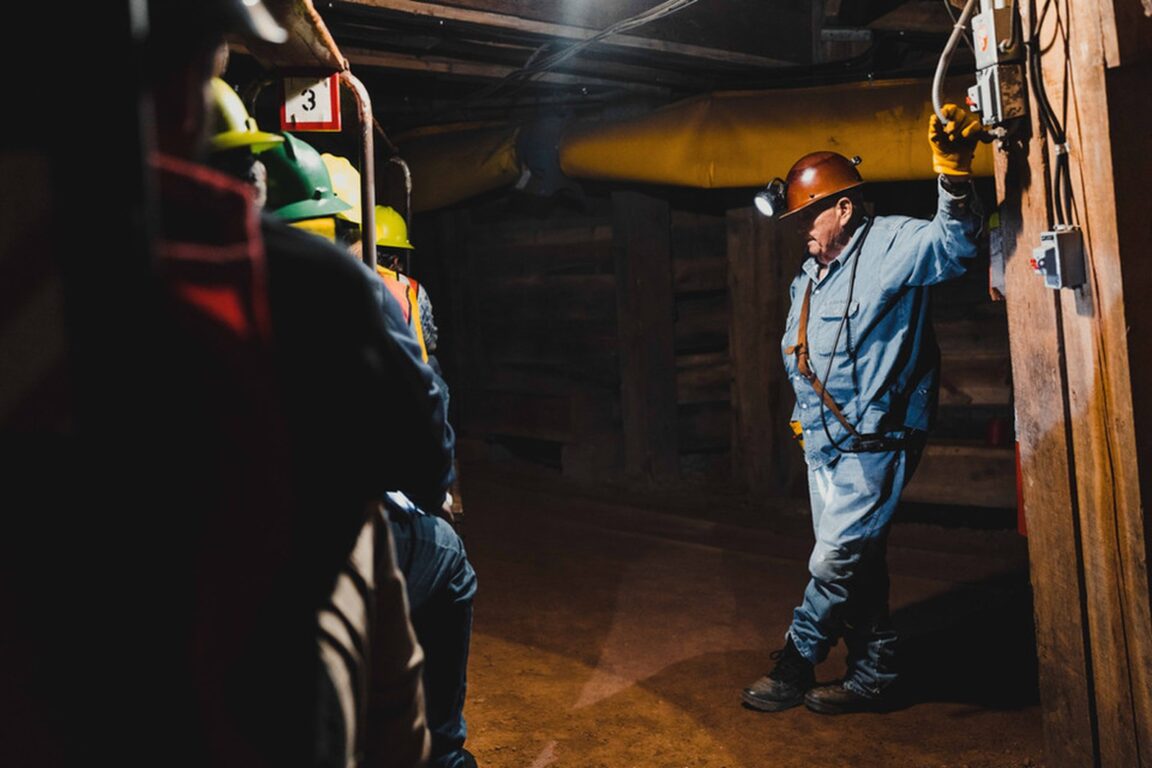
If the stairs are Bisbee’s surface argument, the Queen Mine is its foundation. The Queen Mine Tour, run from the tour building just south of Old Bisbee off the U.S. 80 interchange, outfits visitors with a hard hat, miner’s lamp and safety vest, then loads them onto an original mine train for a half mile round trip 1,500 feet into the mountain. The tour runs about an hour, with two stops: a 300 foot walk along a tunnel floor the operators describe as being like a dirt road, and a set of 36 steps that anyone may skip by staying on the train. Tours run seven days a week, the site counts some 50,000 visitors a year, and the practical rules are plainly stated: closed toe shoes only, no high heels, and a light sweater or jacket for the cool air underground.
The guides are the point. The tour has long been led by people who can explain mining methods and dangers from knowledge rather than script, and the underground hour reframes everything you see above ground afterwards: the stairs become the miners’ commute, the cottages their housing stock, Brewery Gulch their payday. Book ahead for weekends through the official site, arrive in time for the safety briefing, and treat the tour as the day’s anchor, with the staircase walks and galleries arranged around it rather than competing with it.
Brewery Gulch After Dark
Every mining town had a street that respectable opinion pretended not to see, and Bisbee’s was Brewery Gulch, a canyon of saloons and breweries that once served thousands of miners. The Gulch today is the town’s evening quarter, a short, steep run of bars, live music rooms and restaurants in historic frontages a few minutes from Main Street. It is lively rather than polished, and that is the correct register for a place with its history. The sensible evening shape is dinner on or near Main Street, music in the Gulch, and a staircase or two climbed slowly on the way back to your room, with the town lit below you and the pit dark on the skyline.
Staying overnight matters in Bisbee more than in most day trip towns, and not only for the Gulch. The stairs are at their best in the early morning, when residents are using them as infrastructure, taking out bins, walking dogs, commuting on foot in the cool air, and the arts colony reads as a living town rather than a set. Our seasonal guide to Bisbee as a destination in a season covers the timing question in depth; the short version is that altitude softens the Arizona summer and makes autumn through spring prime staircase weather, provided you carry water and respect the midday sun even at 5,300 feet.
Walking the Staircases Well
A few working rules make the vertical town more enjoyable. Start early and climb in the cool of the day. Wear shoes with grip, because the concrete treads are old and uneven in places. Carry water, since there is none on the stairs themselves. Treat every staircase as what it is, a public right of way past private homes, which means keeping voices down, not peering through windows, and giving residents the right of way on narrow flights. And build in the museum: the Bisbee Mining and Historical Museum, a Smithsonian Affiliate in the old Copper Queen Consolidated Mining Company building, supplies the names, dates and payroll reality behind the cottages you have been climbing past. The City of Bisbee’s official site carries current municipal information for the visit, and background on the WPA era building campaigns that gave the town its concrete stairs can be traced through the National Archives’ holdings on New Deal public works, for readers who like their walks footnoted.
Frequently Asked Questions
How many steps does the Bisbee 1000 climb?
The route links nine public staircases with more than 1,000 steps in total. Each October it becomes the course of a timed stair climb event; the rest of the year it works as a self guided walk at your own pace.
How long is the Queen Mine Tour and what should I wear?
About one hour, travelling 1,500 feet into the mine by train with two stops. Hard hat, lamp and vest are provided. Closed toe shoes are required, high heels are not permitted, and a light jacket is advised for the cool underground air.
Is Bisbee a day trip from Tucson?
It can be, at about 90 miles each way, but an overnight stay is strongly recommended. The staircases are best early, Brewery Gulch is an evening quarter, and the Queen Mine deserves a booked slot rather than a rushed one.
Are the staircases public?
Yes. The staircase network is a public system, much of it built by the Works Progress Administration in the 1930s over earlier mule paths. They pass private homes, so walk them considerately.
When is the best season for staircase walking?
Autumn through spring offers the kindest climbing weather. Summer is moderated by the 5,300 foot elevation but still calls for early starts, water and sun protection.
Image credit: A Queen Mine guide with visitors underground in Bisbee, Arizona, via Queen Mine Tours (copperqueenmine.com), the tour’s official website.