 Elena Vasquez
Likuliku Lagoon Resort earns its splurge status on one fact that no other Fiji resort can copy: it has the country’s first and only authentic overwater bures, ten of them, perched on the edge of a fringing reef in a natural lagoon that is a protected marine sanctuary. Add 35 beachfront bures on Malolo Island, a strict adults only policy with no guests under 17, and a catamaran from Port Denarau that can have you there in 55 minutes on the direct afternoon sailing, and the decision becomes clearer than most luxury choices. This guide judges the resort on exactly those terms, using only what the resort itself publishes: its bure categories, its marine reserve, and its stated transfer timetable.
Quick Facts
Location: Malolo Island, Mamanuca archipelago, Fiji, 25 kilometres (16 miles) from Nadi International Airport, as stated by the resort.
Accommodation: 45 bures in total: 10 Over-Water Bures, 29 Deluxe Beachfront Bures and 6 Beachfront Bures, per the resort’s May 2025 fact sheet.
Adults only: Strictly adults only. The resort states it is unable to accept reservations for guests under 17 years.
Occupancy: Maximum two people per bure, with no rollaway beds. A limited number of twin bed set-ups are available in each category.
Check-in and check-out: Check-in 3pm, check-out 11am, per the resort’s fact sheet.
The lagoon: A natural ocean lagoon surrounded by a protected marine sanctuary. The waters and reefs in front of the resort were declared a marine reserve, or Na Tabu, on 19 July 2005.
Transfers: South Sea Cruises fast catamaran from Denarau Marina three times daily, private speedboat and water taxi from Port Denarau, and Island Hoppers helicopter from Nadi Airport and Denarau. Helicopter arrivals and departures are not accepted before 8am.
Ownership: Wholly owned by a local Fijian tourism family, and reserved exclusively for guests in residence, per the resort.
Prices checked: 25 November 2026. This guide does not quote room rates, because the resort directs travellers to its booking process for current pricing. Transfer prices quoted below are the resort’s own published figures and are stated to be subject to change without notice.
Why does Likuliku’s lagoon matter more than its room count?
Many island resorts sell a view of the sea. Likuliku sells a position inside a working marine reserve, and the resort’s own marine park page explains what that means in practice. On 19 July 2005, the Paramount Chief of the Mamanuca Islands, Na Tui Lawa, declared the waters and reefs in front of Likuliku Lagoon and its sister resort Malolo a new marine reserve. The declaration, the resort explains, is an environmental initiative in partnership with the traditional owners, intended to improve fish stocks and allow the natural regeneration of reef and marine life as part of responsible and sustainable tourism.
The rule that follows is absolute and easy to understand before you book. Any form of fishing or shellfish collecting is an offence in the designated areas, strictly forbidden, and it applies to everyone, visitors and locals alike. The resort marks the boundary in the water itself: a pole sticking out of the water with a palm frond across the top signals an area that has had an official Na Tabu ceremony and is now a restricted marine park area.
For a guest, the practical effect is that the reef at the doorstep is not a backdrop. The resort describes the fringing reefs at Likuliku as ideal for snorkelling, with hours of exploring and observing aquatic life on offer, and it publishes a fish identification chart for guests who want to name what they are seeing. It also notes that the lagoon is a designated turtle breeding ground, with evidence of turtle activity in the sand at certain times of the year and turtles swimming in the lagoon. That is the honest core of the Likuliku proposition: you are paying to sleep beside a reef that has had two decades of formal protection, not beside a beach that happens to look pretty in photographs.
The resort is equally plain about the reef’s fragility, and travellers should read that as part of the deal rather than fine print. Coral, it notes, takes decades to grow, on average one to five centimetres a year, and only seconds to be damaged by stepping on it or brushing it with fins. Its marine park page also lists the lagoon’s less photogenic residents with unusual candour, including small stingrays in the shallows, scorpion fish, stonefish and lionfish on shallow reef, and the banded sea krait, described as extremely venomous but docile and non-aggressive, to be watched from a distance. A resort that tells you that before you arrive is a resort taking its sanctuary seriously.
The overwater bures: what do the ten actually include?
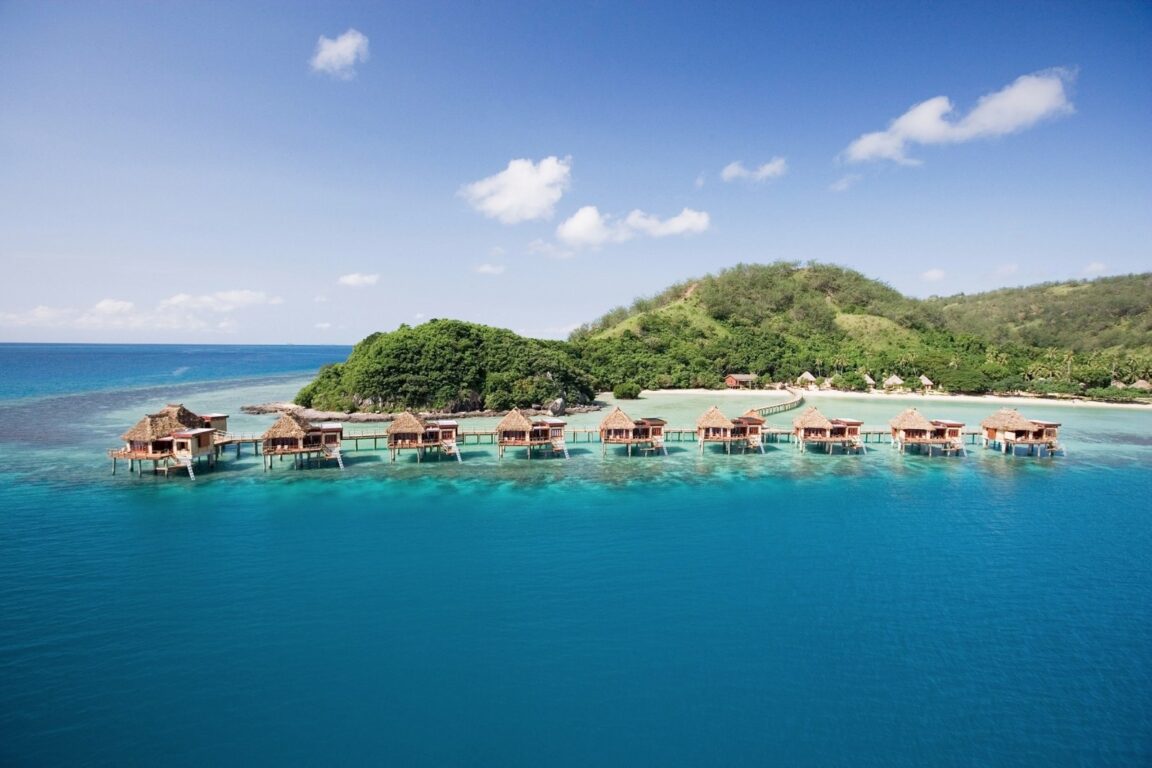
The Over-Water Bures are the headline, and the resort keeps the description tight. There are only ten, at 91 square metres (980 square feet) each, and the resort calls them Fiji’s first and the only authentic overwater bures. They sit perched on the edge of the vibrant fringing reef in a natural, pristine lagoon and protected marine sanctuary, built with traditional architecture and materials using natural elements unique to the region, with detailed woodwork and magi magi designs.
The layout is the detail that separates them from a standard overwater villa. Alongside the main room there is a separate bathing pavilion, with lagoon views from a grand, deep-set stone bathtub and double bathroom vanities. The resort’s own summary of the experience is to laze on the deck or luxuriate in the bathing pavilion while the living aquarium dazzles beneath you, and each bure receives a complimentary daily canape plate from the chef. The published feature list runs to a king-sized bed (two bures can be split into king twins), a separate lounge and sitting area, an outdoor deck with sun loungers, binoculars, an espresso machine and assorted teas, air conditioning and ceiling fans, a Smart TV with casting, a sound bar with Bluetooth pairing, Pure Fiji bathroom products, a pillow menu, daily housekeeping and evening turn-down service, plus complimentary bottled water and daily delivered ice and freshly baked cookies.
Two cautions belong in any honest assessment. First, supply: the resort itself warns that these bures are always in very high demand, and directs travellers who find no availability online to contact its reservations team directly. With only ten units, the overwater decision is often made by the calendar rather than by preference, so check availability for your dates before building a trip around this category. Second, perspective: the overwater bures are actually the smallest of the three categories by floor area. What you are buying is position over the reef and direct immersion in the lagoon, not extra square metres.
Deluxe Beachfront or Beachfront: which beach bure suits which traveller?
The 29 Deluxe Beachfront Bures are the resort’s largest category in both count and size, at 100 square metres (1,075 square feet) each. Their defining extra is private: each has its own personal plunge pool and a private daybed retreat, plus an outdoor shower in a secluded courtyard surrounded by lush gardens. The design, the resort says, optimises the views over the lagoon, using traditional designs, natural materials and stylish pieces that reflect the beauty and history of the South Pacific. Four of these bures can be split into king twins, which matters for friends travelling together under the two person maximum.
The 6 Beachfront Bures, at 95 square metres (1,021 square feet), are the smallest group and the simplest proposition. The resort places them only a few steps from the beach and the crystal clear lagoon, offering a secluded haven of relaxation and privacy, with a personal daybed retreat, an outdoor shower in a secluded courtyard, a spacious deck, traditional Fijian interiors and lagoon views. What they do not have, by comparison with the Deluxe category, is the private plunge pool.
All 45 bures share a long common feature list in the resort’s fact sheet, including air conditioning, ceiling fans, a king-size bed, indoor and outdoor showers, a spacious deck, a Smart TV with sound bar, WiFi, an espresso machine, a refrigerator, complimentary still bottled water, fresh baked cookies and ice daily, Pure Fiji amenities, a Likuliku lei and a complimentary Likuliku sulu (sarong), and evening turn-down service. So the choice is not about basic comfort, which is constant across the resort. It is about three distinct settings: over the reef, on the beach with your own plunge pool, or on the beach without one. Travellers weighing Likuliku against Fiji’s other private island splurges can compare it with our guide to Kokomo Private Island, Fiji and our room by room audit of COMO Laucala Island, Fiji.
The adults only rule in practice: who can and cannot book?
Likuliku states its policy without softening language: it is strictly an adults only resort, and it is unable to accept reservations for guests under 17 years. Read that threshold carefully, because it is more specific than the vague adults only labels used elsewhere. A 17 year old travelling with parents is not the target guest here in any practical sense, and a family with younger teenagers cannot book at all. The resort also describes itself as reserved exclusively for guests in residence, which reinforces the same point from the other direction: this is a closed, quiet property for the people staying in its 45 bures, capped at two per bure.
In practice, that shapes the whole atmosphere a buyer is paying for. There are no children’s facilities to work around, no family programming on the daily schedule, and a hard ceiling of about 90 guests when every bure is full. Couples and adult friends who want a lagoon without a kids club will read that as the resort’s second biggest asset after the reef itself. Families, by contrast, should not treat Likuliku as a negotiable exception. The resort directs families on Malolo to its sister property instead, and travellers planning the Fiji paperwork for any island stay should read our explainer on the Fiji visitor permit and arrival documents for Nadi before booking transfers.
Getting there: how does the Denarau transfer timing actually work?
The resort is located only 25 kilometres (16 miles) from Nadi International Airport, but every route crosses water, so the transfer is part of the booking decision rather than an afterthought. The resort’s island transfers page lists three ways across: fast catamaran, private speedboat or helicopter, with private car transfers also arrangeable between the airport and the marina.
The scheduled option is the South Sea Cruises catamaran from Denarau Marina, departing three times daily. The resort states the departures plainly: 9.30am and 12.15pm sailings take 2 hours via other islands, while the 3.15pm sailing runs 55 minutes direct to Likuliku. That single line should drive your flight planning. Land in Nadi in time for the afternoon sailing and the crossing is under an hour. Build your day around a morning or midday sailing and you should expect a two hour island hopping crossing instead. The resort publishes catamaran transfers starting at FJD 166 per person each way, and notes that South Sea Cruises currently applies a fuel surcharge of FJD 10 per adult for each one-way sector, payable before travel online or at check-in.
For travellers whose flights miss the catamaran pattern, the resort lists Seafiji water taxis from Port Denarau, including a scheduled seat in boat transfer departing Denarau daily at 17.30, priced on the transfers page at F$267 per adult one way, alongside private and shared water taxi options for up to four people. By air, Island Hoppers helicopters offer transfers from Nadi Airport, Denarau and other bases direct to Likuliku, meeting arriving passengers at Nadi and taking them to a heliport the resort describes as only two minutes away. Two air rules apply across the board: the resort is unable to accept helicopter arrivals or departures before 8am, these services fly only in daylight hours, and helicopter services are subject to weather and may be disrupted or cancelled at the carrier’s discretion. The resort states that all transfer prices are subject to change without notice, so treat every figure here as a planning guide to be reconfirmed with its reservations team, not as a locked fare.
Who should book Likuliku, and who should look elsewhere?
Book the overwater bure if the reef is the point of the trip and your dates are flexible enough to catch one of only ten units. Book a Deluxe Beachfront Bure if you want the largest floor plan, a private plunge pool and a garden courtyard, and you would rather step onto sand than climb down into the lagoon. Book a Beachfront Bure if the lagoon, the reserve and the adults only quiet are what you are paying for, and a plunge pool is not. Look elsewhere if you are travelling with anyone under 17, if you need more than two people in one room, or if a same day, any hour arrival matters more than the setting, because the last scheduled direct catamaran leaves Denarau at 3.15pm and helicopters cannot arrive before 8am or after daylight. Judged strictly on the resort’s own published facts, Likuliku’s case rests on three verifiable things: a protected reef that has been a declared marine reserve since 2005, the only authentic overwater bures in Fiji, and a small, hard adults only cap of 45 bures. For a Fiji splurge, that is a clearer case than most.
Frequently Asked Questions
Is Likuliku Lagoon Resort really adults only?
Yes. The resort states that it is strictly an adults only resort and that it is unable to accept reservations for guests under 17 years. It also describes itself as reserved exclusively for guests in residence.
How many overwater bures does Likuliku have?
Ten. The resort calls them Fiji’s first and the only authentic overwater bures, at 91 square metres (980 square feet) each, perched on the edge of the fringing reef, and warns that they are always in very high demand.
What is the Na Tabu marine reserve at Likuliku?
It is the marine reserve declared on 19 July 2005 by the Paramount Chief of the Mamanuca Islands, covering the waters and reefs in front of Likuliku Lagoon. Fishing and shellfish collecting are strictly forbidden in the designated areas for everyone, visitors and locals alike.
How long is the boat transfer from Denarau to Likuliku?
It depends on the sailing. Per the resort, the South Sea Cruises catamaran departs Denarau Marina three times daily: the 9.30am and 12.15pm sailings take 2 hours via other islands, and the 3.15pm sailing takes 55 minutes direct to Likuliku.
Can you reach Likuliku by helicopter or seaplane?
The resort’s transfers page lists Island Hoppers helicopter transfers from Nadi Airport and Denarau direct to Likuliku. Helicopter arrivals and departures are not accepted before 8am, services fly in daylight hours only, and they are subject to weather. Private speedboat and water taxi transfers from Port Denarau are also listed.
How many people can stay in one bure?
Two at most. The resort’s fact sheet states a maximum of two people per room with no rollaway beds available, and notes that a limited number of twin bed set-ups exist in each category.
Image: The ten overwater bures of Likuliku Lagoon Resort above the lagoon on Malolo Island, Fiji. Photo: Likuliku Lagoon Resort, via the resort’s official website (likulikulagoon.com), used with credit.