 Sofia Rossi
Fiji is one of the most generous arrivals in the Pacific, and the whole system fits in one sentence: citizens of Fiji’s long visa exempt list, including the United States, Canada, the United Kingdom, Australia, New Zealand and the European Union, receive a visitor permit free on arrival at Nadi International Airport for up to four months, with no application filed in advance. The permit is issued at the immigration desk against a passport valid for at least six months beyond your stay, evidence of onward or return travel, and proof you can support yourself. Travellers whose nationality is not on the exempt list need a visa approved before they fly: a single entry visa is valid for three months for one journey, and a multiple entry visa runs 12 months with each stay capped at four months. This explainer lists the documents, fees and deadlines in the order officials ask for them, then covers the two cases where the simple airport story changes: arriving by yacht, and visiting an outer island village.
Quick Facts
- Main gateway: Nadi International Airport (NAN), on Viti Levu
- Visitor permit: Issued free on arrival to visa exempt nationalities, for a period up to a maximum of four months set by the officer
- Passport: Valid for more than six months from the date of travel
- Arrival proofs: Onward or return ticket, accommodation details and evidence of sufficient funds, any of which officers may ask to see
- Visa required nationalities: Apply before travel. Single entry visa valid three months for one journey; multiple entry visa valid 12 months, each stay up to four months
- Extensions: A visitor permit can be extended on application before it expires, for a fee; yacht guidance records a standard two month extension at FJ$96, taking a four month permit to six
- Business visits: A separate business visitor permit applies, valid for 21 days
- Yacht entry ports: Suva, Lautoka, Savusavu and Levuka; other ports, including Denarau, need prior agreement. Advance notice and inward reporting run through Fiji Revenue and Customs
- Authority: Ministry of Immigration, Fiji
Who gets a Fiji visitor permit on arrival?
The permit on arrival covers the nationalities Fiji lists as visa exempt, a long list that takes in most of Fiji’s main visitor markets in North America, Europe, Australia, New Zealand and much of Asia and the Pacific. For those travellers there is no form to file, no fee to pay and no approval to wait for before departure: the permit is the stamp and notation made at the desk in Nadi, and its length, anything from a few days up to the four month maximum, is set by the officer against your stated purpose and onward ticket. The permit is for visiting. It does not authorise employment, and anyone arriving to work, study long term or settle needs the correct permit arranged in advance.
Everyone else needs a visa before travel, and the distinction matters because a visa is a pre entry authority, not a guarantee: the Ministry of Immigration states plainly that travellers remain subject to clearance on arrival even with a visa in the passport. The two standard products are the single entry visa, valid for three months from issue and usable for one journey, and the multiple entry visa, valid for 12 months with no single stay beyond four months. Visa applicants must supply a confirmed return ticket with the application. If your route combines Fiji with other Pacific or Asian entry systems, compare the mechanics with our explainer on Kenya’s eTA entry system, where the authorisation is electronic and filed before departure for almost everyone.
What documents do officials ask for, in order?
At the desk in Nadi the order runs as follows. First, the passport, valid for more than six months from the date of travel. Second, the completed passenger arrival card, which carries your first address in Fiji, so have the hotel or host details written down before you land. Third, evidence of onward or return travel, which visa applicants must prove with a confirmed ticket and which permit on arrival travellers may equally be asked to show. Fourth, where the officer asks, evidence of sufficient funds for the stay and your accommodation arrangements. Fifth, for travellers who needed one, the visa itself, checked against the passport.
Two practical deadlines sit behind the desk. The first is the extension deadline: a visitor permit can be extended, but the application must be made before the current permit expires, and late applications are not rescued by good intentions. The second is the business line: a trip that is actually business, meetings, installations, paid work of any kind, does not belong on a visitor permit at all, and business visitors use a separate permit valid for 21 days. Filing the wrong category is the one error that can follow a traveller through later applications, so classify the trip honestly at the desk. Our guide to Namibia’s visa on arrival changes walks through a similar category trap in another destination that recently rebuilt its arrival rules.
How do extensions work once you are in Fiji?
The Ministry of Immigration allows a visitor permit issued on arrival to be extended, provided the application is lodged before expiry and the requirements and fee are met; business visitor permits of 14 or 21 days are the stated exception and cannot be extended this way. Yacht clearance guidance, which deals with the longest staying visitors, records the standard pattern: a two month extension to the initial four month permit, for a fee of FJ$96, and beyond that a special permit to reside for a further period. Treat the fee and the grant as things to confirm at the immigration office when you apply, because the ministry notes that requirements, fees and processing arrangements change from time to time.
Work the dates backwards. If your permit expires on a Sunday or a public holiday, the effective deadline is the last working day before it. Keep the permit details photographed, keep your onward ticket consistent with the story you told at the desk, and never let a permit lapse while an extension is supposedly in process without written confirmation of the application.
What changes if you arrive by yacht?
Almost everything about the desk, and nothing about the permit. Yachts may enter Fiji only through the ports of entry at Suva, Lautoka, Savusavu and Levuka; entry through any other port, including Nadi and Denarau, requires prior agreement from the Fijian authorities. The master must give advance notice of arrival, submit the inward report for the vessel and every crew member to Fiji Revenue and Customs, with marina guidance setting the paperwork deadline at 48 hours before departure from the last port and the immigration notice requirement at least 24 hours ahead, and the vessel must clear at a port of entry within 24 hours of reaching Fiji waters without anchoring or going ashore first.
On clearance, each person completes a passenger arrival card, and the boarding officer can issue the same four month visitor permit to crew from visa exempt countries, with passports valid at least six months. Crew from visa required countries must hold approval from the Department of Immigration obtained before arrival; there is no fixing that at the dock. Yachts then need a cruising permit from the iTaukei Affairs Board to cruise the islands, and departure requires notice to Customs at least 24 hours ahead from a port of entry. The airport traveller’s version of all this is one desk and five minutes, which is exactly why sailors should file early and in writing.
What is the protocol for visiting an outer island village?
Fiji’s outer islands run on custom as much as on permits, and the visitor permit in your passport is only the first layer. The established protocol for visiting a village is sevusevu: present a gift of yaqona, kava root, to the village headman or chief on arrival, dress modestly with shoulders and knees covered, remove hats and sunglasses in the village, and wait to be welcomed before walking through, photographing or swimming in village waters. Village beaches and reefs are customary property, not open access, and the welcome is what converts a stranger into a guest.
Practicalities follow the same respectful order. Visit on invitation or through your resort, marina or a local guide who can make the introduction; carry the yaqona in its traditional root form rather than as a cash substitute; ask before entering a bure or taking photographs; and observe village rules on Sundays, when many communities keep a strict day of rest. None of this appears on the immigration form, and all of it determines how the visit goes. The permit gets you into Fiji. Sevusevu gets you into the village.
Frequently Asked Questions
Do I need a visa for Fiji for a two week holiday?
If your nationality is on Fiji’s visa exempt list, which includes the US, Canada, the UK, Australia, New Zealand and the EU, no. You receive a free visitor permit on arrival at Nadi for up to four months. If your nationality is not exempt, you need a visa approved before you fly.
How long is the Fiji visitor permit valid?
Up to a maximum of four months, with the exact period set by the immigration officer on arrival according to your purpose and onward travel. It can be extended on application before it expires, for a fee.
What must I show at immigration in Nadi?
A passport valid for more than six months from travel, your completed arrival card with your first address in Fiji, and, when asked, your onward or return ticket, accommodation details and evidence of sufficient funds.
Can I work in Fiji on a visitor permit?
No. A visitor permit does not authorise employment. Business visitors use a separate business visitor permit valid for 21 days, and work of any kind needs the correct permit arranged in advance.
Where can a yacht legally enter Fiji?
Only through Suva, Lautoka, Savusavu and Levuka, unless prior agreement has been given for another port. File the advance notice and inward report with Fiji Revenue and Customs before departure from your last port, and clear within 24 hours of entering Fiji waters.
What should I take to visit a Fijian village?
Sevusevu: a gift of yaqona root to present to the headman or chief, modest dress covering shoulders and knees, and patience to be welcomed before walking through or photographing. Village land and reefs are customary property, so the welcome comes first.
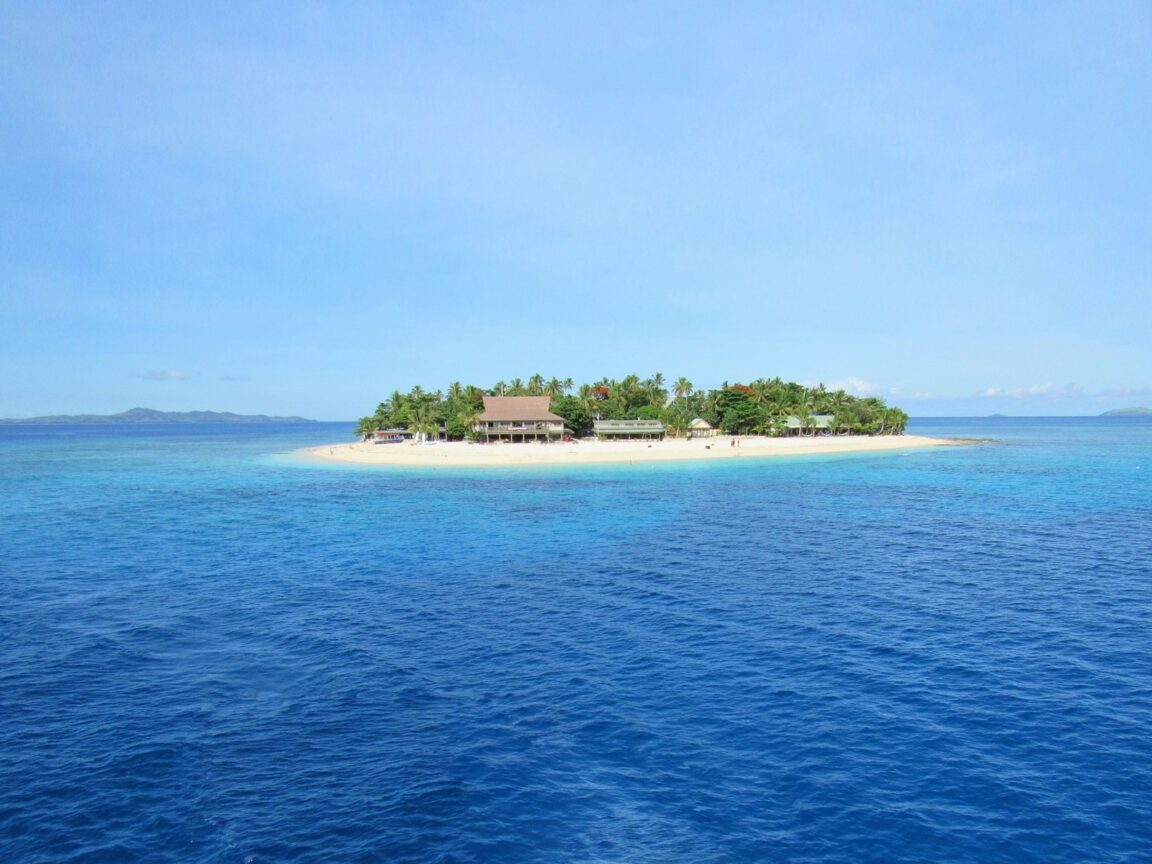
Photo: A small palm covered island in Fiji waters. Photo by Lili Ortiz on Unsplash, Unsplash License. Facts checked 16 November 2026 against the Fiji Ministry of Immigration and Fiji Revenue and Customs yacht guidance; confirm fees and the exempt list before travel, as requirements change.