 Jordan Ellis
Lewisburg does not need a famous neighbour to justify a stop. This Greenbrier Valley town in West Virginia stands on its own merits: a Carnegie Hall that still anchors a year round programme of concerts, galleries and classes, a show cave on the edge of town where a self guided trail loops for half a mile at a constant cool temperature, and a Washington Street lined with independent shops, cafes and restaurants that stay alive in every season. Plan a Lewisburg day around those three anchors, hall, caverns and main street, and you have one of the most complete small town visits in Appalachia.
Quick Facts
- Where: Lewisburg, county seat of Greenbrier County in south eastern West Virginia, just off Interstate 64 in the Greenbrier Valley.
- Carnegie Hall: Built in 1902 and one of only four Carnegie Halls in the world still in continuous use as a performance venue, at 611 Church Street. Box office hours are Monday to Friday, 10:00 am to 4:00 pm, seasonal, according to Carnegie Hall official site.
- Lost World Caverns: At 907 Lost World Road, just outside town. Self guided tours follow a half mile loop, take about 45 minutes, and the cave stays at a constant 52 degrees Fahrenheit. Seasonal hours apply, so check the caverns official site before you go.
- Trail access: The Greenbrier River Trail runs for about 78 miles along the river from near Lewisburg, a former railway line with bridges and tunnels.
- Historic core: The North House Museum, an 1820s home run by the Greenbrier Historical Society, and the Old Stone Presbyterian Church anchor the historic district.
- Best rhythm: Caverns in the morning, Washington Street for lunch and shops, Carnegie Hall galleries in the afternoon and a performance in the evening.
Why does a town this size have its own Carnegie Hall?
Because its citizens built one, and then, eighty years later, refused to let it fall. Carnegie Hall in Lewisburg was built in 1902 for the Lewisburg Female Institute, after fire destroyed one of the institute buildings in 1901. Andrew Carnegie contributed 26,750 dollars and the community raised 10,000 dollars to complete a building that gave the institute, later Greenbrier College for Women, classrooms, studios, a laboratory and an auditorium. When the college closed in 1972 and the campus passed to other uses, demolition threatened the hall in the early 1980s. Local residents formed Carnegie Hall, Inc. in 1983, saved the building, and repurposed it as a regional centre for the arts.
That rescue explains the hall character today. It is not a museum to a benefactor. It is a working arts centre, one of only four Carnegie Halls in the world still in continuous use as a performance venue, presenting concerts across classical, folk, jazz and roots music, theatre with partners including the Greenbrier Valley Theatre, film, exhibitions in its galleries, and classes and workshops that run from pottery to dance. Performers on its historic stage over the years have ranged across the best of American roots and classical music, and the programme still mixes touring names with West Virginia artists in a way that serves the valley first and visitors gladly.
For a visitor, the practical approach is simple. Check the hall official calendar before you fix your dates, because an evening performance transforms a Lewisburg stop into an occasion. Visit the galleries during the day, when the building is open and quiet, and note the box office pattern of weekday hours through the Church Street entrance. The hall sits in the historic district near the Old Stone Presbyterian Church and its graveyard, so a slow circuit of Church Street before a show is part of the experience rather than a way of killing time.
What makes Lost World Caverns worth the short drive out of town?
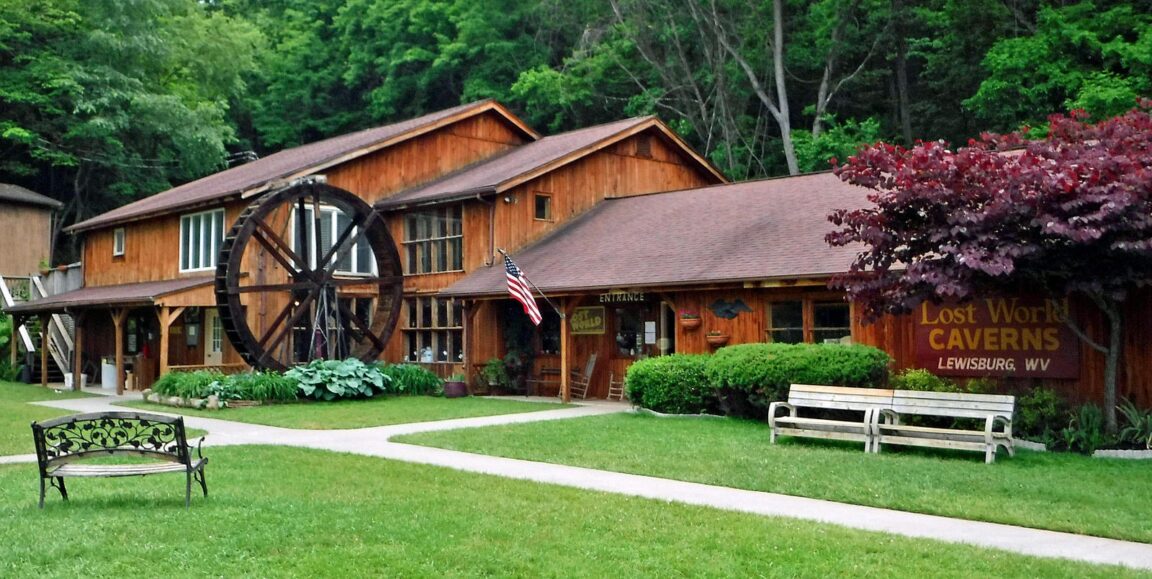
Lost World Caverns, discovered in 1942 and later designated a National Natural Landmark, lies a few minutes drive from downtown at the edge of Lewisburg, and it delivers the underground half of the town story. Visitors descend about 120 feet below the surface on a self guided tour, following a half mile loop trail past terraced stalactites, stalagmites and formations with names like the Bridal Veil, the Snowy Chandelier and the War Club. A guide sheet explains the formations as you walk, the pace is your own, and the standard tour takes roughly 45 minutes to an hour.
Two facts shape the visit. The first is temperature: the cave holds a constant 52 degrees Fahrenheit whatever the season above ground, so bring a light jacket even in high summer and wear shoes with grip for damp paths and steps. The second is seasonality: opening hours shift across the year, with longer days in the main season and shorter hours in the winter stretch, and last entry falls before closing. Check the caverns official site for the hours on your exact date rather than relying on any printed guide, and consider the separately booked Wild Cave Tour, a guided, crawling and climbing trip into undeveloped sections, only if you are fit, properly equipped by the operator and happy in tight spaces.
Above ground, the visitor centre adds a natural history museum with fossils and dinosaur replicas and a large rock and gift shop, which makes the caverns an easy half day for families. Pair the cave with the town rather than treating it as a standalone roadside stop: morning underground, afternoon on Washington Street is the rhythm that works.
How does Washington Street hold a small town together all year?
Many small towns have a pretty main street that empties after one season. Lewisburg Washington Street works differently, because its businesses serve residents as much as visitors. Independent shops cover books, antiques, fine art and estate jewellery, specialty foods and chocolate, clothing and gifts, while cafes, bakeries and restaurants give the street a lunch and dinner trade that peaks with events but never depends on them. The French Goat brings French inspired fine dining to the street, the Stardust Cafe is a long standing local favourite for lunch, and newer kitchens and bars have filled historic storefronts rather than replacing them.
The cultural calendar keeps the street busy between performances. The Greenbrier Valley Theatre, the state professional theatre of West Virginia, stages plays and musicals through the year. Lee Street Studios gathers working artists in pottery, painting, fibre and jewellery, where visitors can watch makers at work. The North House Museum, in an 1820s former home and inn on Washington Street, tells the Greenbrier story through period rooms and exhibits run by the Greenbrier Historical Society, and it pairs naturally with the Old Stone Church and the Confederate Cemetery for travellers who want the town history in full.
Events layer on top rather than substituting for that base: a chocolate festival in spring, a literary festival, First Fridays downtown, a farmers market in season, and the Taste of Our Towns festival hosted by Carnegie Hall each autumn, when Washington Street restaurants serve the town to itself. For travellers building a West Virginia loop, Lewisburg pairs naturally with our guide to Fayetteville and the New River Gorge, with Berkeley Springs, America first spa town, and with Harpers Ferry and its armory town story.
What is there to do outdoors between the hall and the cave?
The Greenbrier River Trail is the headline answer: about 78 miles of former railway line converted to a crushed stone trail along the Greenbrier River, crossing dozens of bridges and passing through tunnels, with Lewisburg as one of its natural bases. Walkers and cyclists can take a short section as an afternoon outing or build a multi day ride around it. The Greenbrier State Forest, a short drive away, adds wooded trails and cabins, and the river itself supports fishing and paddling in season through local outfitters.
That outdoor frame is part of why Lewisburg works in every season. Spring brings the chocolate festival and wildflower trails, summer brings the state fair of West Virginia nearby and long river days, autumn brings foliage across the valley and the Taste of Our Towns, and winter brings a quieter, bookish town of gallery shows, theatre and fireside dinners, with the caverns holding their steady temperature underground. Few towns of under four thousand people can offer that spread without reaching for a gimmick.
How should you plan a first Lewisburg visit?
Stay at least one night, and two if a Carnegie Hall performance or a theatre production anchors an evening. The historic General Lewis Inn, operating since 1929 and filled with antiques, is the character stay in the historic district, with modern hotels near the interstate for drivers who want parking and predictability. Arrive via Interstate 64, park once, and walk the historic district, because Lewisburg rewards pedestrians and punishes nobody with distance.
Build the day in this order: Lost World Caverns early, while tour groups are few and the light in the visitor centre museum is quiet; back to Washington Street for lunch, the North House Museum and an unhurried pass through the shops; Carnegie Hall galleries in the late afternoon; dinner on Washington Street; and a performance to close. That sequence uses every anchor the town offers, leaves slack for the conversations that small towns run on, and sends you away understanding why Lewisburg keeps appearing on lists of America best small towns without ever seeming to try too hard.
Frequently Asked Questions
Is Lewisburg Carnegie Hall the same as the one in New York?
No. Lewisburg Carnegie Hall is a separate building, built in 1902 in Lewisburg, West Virginia, with funding from Andrew Carnegie and the local community. It is one of only four Carnegie Halls in the world still in continuous use as a performance venue.
How long does the Lost World Caverns tour take?
The self guided tour follows a half mile loop and takes about 45 minutes to an hour. The cave stays at a constant 52 degrees Fahrenheit, so bring a light jacket and shoes with grip.
What are the Lost World Caverns hours?
Hours are seasonal, with longer opening in the main season and shorter hours in winter, and last entry before closing. Check the caverns official site for the hours on your exact date before you drive out.
What else is on Washington Street in Lewisburg?
Independent bookshops, antiques, galleries, specialty food and chocolate shops, cafes and restaurants including the French Goat and the Stardust Cafe, plus the North House Museum and the Greenbrier Valley Theatre nearby.
How many nights should I spend in Lewisburg?
One night at minimum, and two if you can time the trip to a Carnegie Hall performance or a Greenbrier Valley Theatre production. Add the Greenbrier River Trail for a full outdoor day.
Image credit: The visitor centre and entrance at Lost World Caverns, Lewisburg, West Virginia. Photo: Lost World Caverns, via the Lost World Caverns official website (lostworldcaverns.com). Hours checked 25 November 2026.