 Sofia Rossi
Colmar in December works best when you walk its Christmas markets as a route rather than a list, and protect one quiet morning for the Unterlinden Museum. Start with the market quarters in a single walking order through the old town, place the museum visit early in the day on a day when it is open, remembering that it closes on Tuesdays, and use the Christmas shuttle buses for one half day out to the wine villages instead of trying to drive between them. Planned that way, Colmar becomes a calm, walkable winter base for Alsace rather than a crowded day trip squeezed between trains.
Quick Facts
- Where: Colmar, in the Haut Rhin department of Alsace in north eastern France, close to the German border.
- Christmas markets: Colmar official Christmas season runs through late November to 29 December, with the gourmet market continuing into early January. Confirm the current year dates and hours on the official Colmar Christmas site before you travel.
- Market hours pattern: Markets generally open later in the morning and close in the early evening on weekdays, with longer hours at weekends, and an earlier close on 24 December. Entry to the market squares is free.
- Unterlinden Museum: Open Wednesday to Monday from 9:00 am to 6:00 pm, last admission 5:30 pm, closed on Tuesdays. Full price 14 euros, with reduced, youth and family rates, and free entry for children under 12. Confirm current prices on the museum official site.
- The masterpiece: The Isenheim Altarpiece, painted by Matthias Grunewald between 1512 and 1516 and sculpted by Niclaus of Haguenau, displayed in the former Dominican convent chapel.
- Village trips: Seasonal Christmas shuttle buses link Colmar with nearby wine villages including Riquewihr, Kaysersberg and Eguisheim in the market season.
What is the smartest order to walk the market quarters?
Colmar old town is compact enough that the markets form one continuous walk, and the order that works is the order the town itself suggests. Begin at the northern edge near the Unterlinden Museum and the Place des Dominicains, where the market sits in the shadow of the Dominican church and sets a traditional tone of wooden chalets, Advent decorations and Alsatian food stalls. From there, drift south into the heart of the old town to the Place de l Ancienne Douane, the square around the Koifhus, the old customs house and the oldest public building in Colmar, where an indoor market inside the Koifhus itself shelters craftspeople and gift stalls from the weather.
Continue to the Place Jeanne d Arc market, which leans hardest into Alsace itself, with regional producers, wines and festive food, and a village square atmosphere that feels the least themed and the most local of the set. Then walk south into Petite Venise, the canal quarter where the market is aimed at children and families, with the Lauch river, the flower decked bridges and the half timbered houses of the Quai de la Poissonnerie giving Colmar its most photographed winter scene. Finish, if your appetite survives, at the gourmet market on the Rue de la Montagne Verte, where chefs and producers serve hot dishes to eat standing at tables, and which keeps later hours and a longer season than the other squares.
Walking the route in that direction, north to south, does two useful things. It puts the quieter, more traditional squares first, before the day trip crowds build, and it saves Petite Venise and the gourmet market for the late afternoon and early evening, when the lights come on, the canals reflect the illuminations, and a hot dinner from a stall makes more sense than a midday snack. On a second evening, walk it in reverse and the town feels entirely different.
When should you give the Unterlinden Museum its own protected slot?
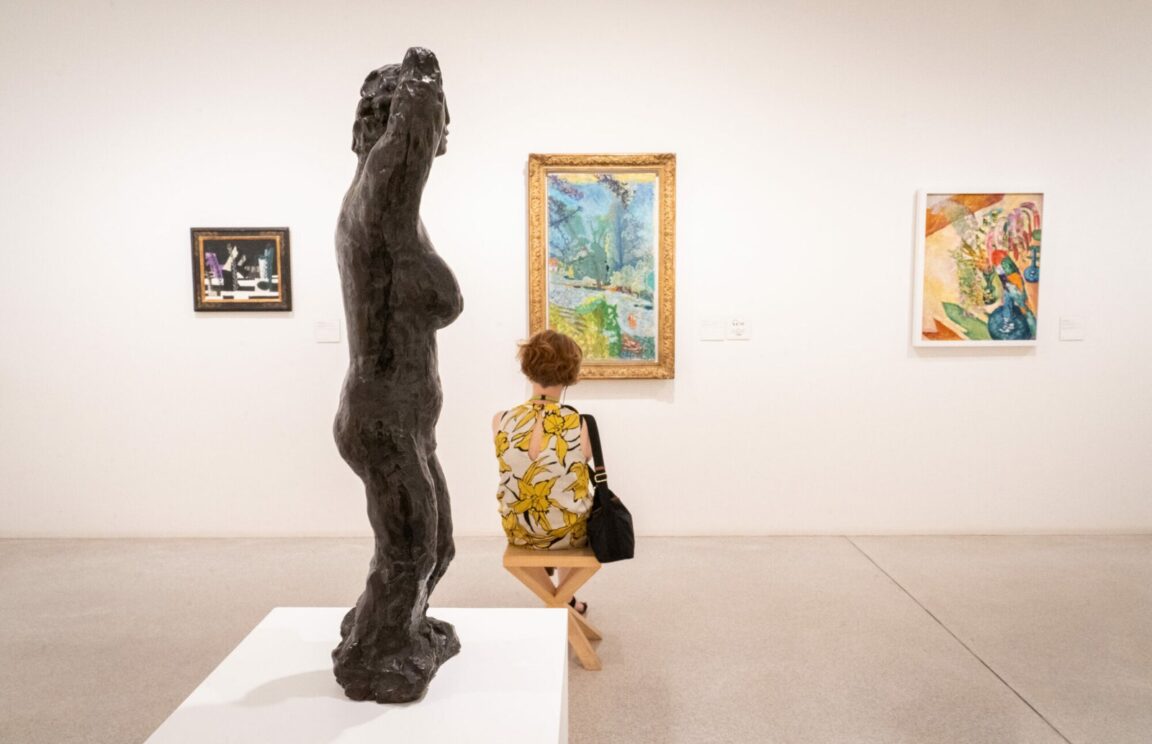
Give the museum a morning, and give it the first morning that is not a Tuesday. The Musee Unterlinden occupies a thirteenth century Dominican convent, joined by an underground gallery to a contemporary wing by architects Herzog and de Meuron, and its collections span archaeology, medieval and Renaissance art from the Rhine region, decorative arts and modern works. It opens at 9:00 am, and arriving close to opening is the single best decision a winter visitor can make, because the room that matters most rewards quiet.
That room holds the Isenheim Altarpiece. Painted by Matthias Grunewald between 1512 and 1516 for the Antonite monastery at Isenheim, whose monks cared for patients suffering from painful skin disease, and carved by Niclaus of Haguenau, the altarpiece is one of the most powerful works of late medieval art in Europe. Its Crucifixion is unflinching, its Resurrection radiant, and its hinged panels were designed to open in stages for different days of the church calendar. Stand back for the whole composition first, then move close for the detail, and allow it real time. Rushing this room to get back to the markets defeats the purpose of basing in Colmar at all.
After the altarpiece, walk the Gothic cloister slowly, look at the Rhenish paintings and sculpture that surround the masterpiece, including works associated with Martin Schongauer, Colmar own engraver and painter, and then cross to the modern wing for the twentieth century collections. Two hours is a sensible allowance, three for art lovers. Book tickets through the museum official channels where timed entry is offered in peak season, and remember the closures that catch people out: Tuesdays every week, and 25 December, with earlier closing on 24 and 31 December.
How do the wine villages fit into a Colmar base?
The villages are the reason to sleep in Colmar rather than day trip to it. Riquewihr, Kaysersberg and Eguisheim, each a short distance into the foothills of the Vosges, hold their own Christmas markets among vines and half timbered lanes, and in the season the Christmas shuttle buses, the Navettes de Noel, run from Colmar to the villages so that nobody needs to drive, park or ration the mulled wine. Check the current season shuttle routes, fares and timetables on the official Colmar Christmas channels, because the village markets do not all run every day, and some, like Kaysersberg, are traditionally weekend led and finish earlier in December than Colmar own markets.
Choose one village per outing and give it half a day. Riquewihr is the grandest, a walled wine village of Renaissance houses built by winegrowers. Eguisheim, built in concentric circles around its centre, is the most intimate and runs its market late into the season. Kaysersberg, with its fortified bridge and castle above the town, pairs a market visit with the best short walk. Back in Colmar by evening, the old town markets are lit, dinner is a tarte flambee or a choucroute in a winstub, and the base town advantage becomes obvious: everyone else is on a train home.
What should you eat and drink between the markets?
Alsace feeds winter visitors exceptionally well, and the markets are only the start. Tarte flambee, the thin, blistered flatbread with cream, onions and lardons, is the region defining snack. Choucroute garnie, sauerkraut cooked in wine and served with sausages and pork, is the defining main course. Bretzels, pain d epices, mannala brioche figures in the Saint Nicholas season, and boxes of bredele, the small Christmas biscuits baked in dozens of varieties, travel home better than almost anything else on the stalls.
To drink, Alsace is white wine country: Riesling, Gewurztraminer and Pinot Gris from the slopes above the villages, poured in winstubs across the old town, alongside vin chaud at the market chalets. Colmar also claims a serious restaurant scene for a town of its size, from simple winstubs to fine dining near the canals of Petite Venise, and booking dinner ahead on December weekends is wise. For more French small town wandering in the same spirit, see our guide to Saint Cirq Lapopie in the Lot Valley and our earlier piece on why go to Albi, France.
What are the practical moves that keep a December day calm?
Arrive by train where you can. Colmar station connects to Strasbourg, Basel and Paris, and the old town is a short, flat walk from the platforms, which removes the December parking pressure entirely. Stay inside or beside the old town so that the markets are a stroll rather than an expedition, and start market days early: the squares are at their most enjoyable in the first hour of opening, especially on weekdays, while Saturdays draw the largest crowds of the season.
Dress for standing still outdoors, which is colder work than walking: a proper coat, hat, gloves and waterproof shoes for cobbles that shine with frost. Carry a tote for purchases, because the best buys in Colmar are breakable and edible in equal measure, from painted ceramics and carved wood to bredele and bottles from village cellars. Above all, keep the rhythm the town rewards: one museum morning, one village outing, markets walked as an evening route, and dinners booked rather than improvised. That is how Colmar in winter stops being a checklist and becomes a base you will want to return to.
Frequently Asked Questions
How many Christmas markets does Colmar have?
Colmar Christmas markets spread across several squares in the old town, including Place des Dominicains, Place de l Ancienne Douane and the Koifhus, Place Jeanne d Arc, Petite Venise, and the gourmet market on Rue de la Montagne Verte. Walk them as one north to south route.
When is the Unterlinden Museum closed?
The museum closes on Tuesdays, and on 25 December, with earlier closing on 24 and 31 December. It opens Wednesday to Monday from 9:00 am to 6:00 pm, with last admission at 5:30 pm. Confirm on the museum official site before your visit.
How much is Unterlinden Museum entry?
Full price is 14 euros, with reduced and youth rates and a family ticket, and free entry for children under 12. Prices can change, so check the museum official admission page for the current season.
How do I reach the Alsace wine villages without a car?
Seasonal Christmas shuttle buses, the Navettes de Noel, link Colmar with villages including Riquewihr, Kaysersberg and Eguisheim during the market season. Check routes and timetables on the official Colmar Christmas channels, as village market days vary.
How long should I stay in Colmar in winter?
Two to three nights: one morning for the Unterlinden Museum, one half day for a wine village by shuttle, and evenings for walking the market quarters in order as the lights come on.
Image credit: A gallery inside the Unterlinden Museum, Colmar. Photo: Musee Unterlinden, via the Unterlinden Museum official website (musee-unterlinden.com). Prices and hours checked 25 November 2026.