 Thandiwe Nkosi
Lamu Town rewards travellers who plan for slowness from the moment the boat touches the jetty. There are no cars in the old town, the museums that explain its Swahili past sit within a short walk of the seafront, and the day naturally divides into three parts: arrive by boat from Manda Island and settle into the pace of the lanes, work through the Lamu Museum and the fort in that order while the light and the heat allow, and finish on the water with a sunset dhow sail arranged with a local captain on the seafront rather than booked sight unseen through a hotel desk. Follow that order and Lamu stops being a pretty stopover and becomes what it has been for centuries, a working port town that visitors join on its own terms.
Quick Facts
- Where: Lamu Town, on Lamu Island in the Lamu Archipelago off the northern coast of Kenya.
- Status: Lamu Old Town was inscribed by UNESCO as a World Heritage Site in 2001 and is described by UNESCO as the oldest and best preserved Swahili settlement in East Africa.
- Getting in: Fly to Manda Airport on Manda Island, then cross by boat to the Lamu Town jetty in a few minutes.
- Museum hours: The National Museums of Kenya lists Lamu Museum opening hours as 8:00 am to 6:00 pm daily, including public holidays. Check the current hours and fees on the National Museums of Kenya site before you go.
- Getting around: On foot in the old town, by boat between the town, Shela and Manda, and by donkey for loads rather than sightseeing.
- Best light: Early morning and late afternoon on the seafront, with a sunset sail as the natural close to the day.
Why does the boat arrival set the tone for the whole visit?
Most visitors reach Lamu by air, landing at the airport on Manda Island across the channel, and the short boat crossing to the town jetty is more than a transfer. It is the moment the mainland falls away. Baggage goes onto the boat, the channel traffic of dhows, small ferries and fishing boats takes over, and the seafront of Lamu Town, a long line of coral stone buildings, verandas and moored boats, comes into view the way it has for generations of arrivals. Travellers who treat that crossing as the start of the visit, rather than dead time before it, arrive in the right frame of mind.
On the jetty, porters and handcarts handle luggage because the lanes beyond the seafront are too narrow for vehicles. That single fact explains the town better than any display panel. Goods still move by boat, by handcart and by donkey, and the famous donkeys of Lamu, thousands of them working on the island, are transport infrastructure rather than a photo opportunity. Give them room in the lanes, stand aside when a loaded animal comes through, and never block a doorway or a baraza, the stone benches along the streets where neighbours sit and talk.
Which museum should you visit first, and why does the order matter?
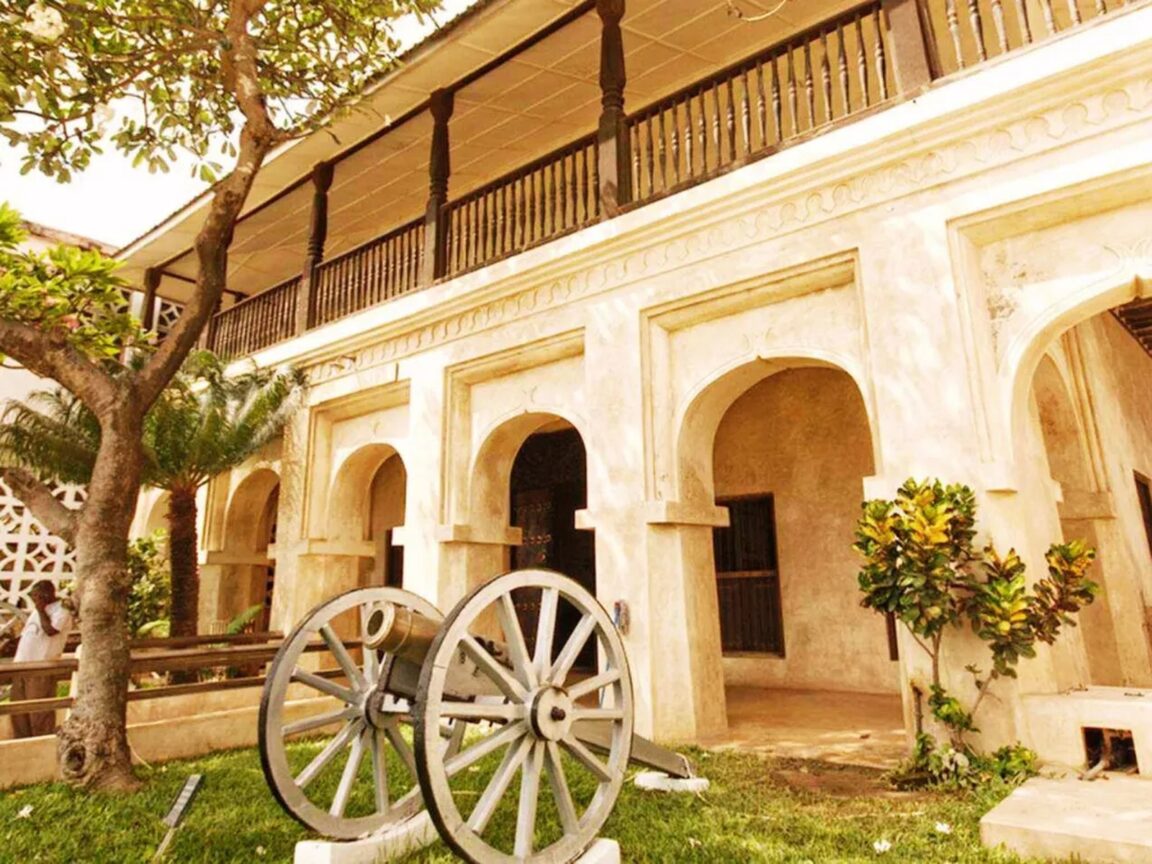
Start at the Lamu Museum on the seafront, in the grand waterfront building a short walk from the jetty. The National Museums of Kenya presents the museum as the introduction to the archipelago, and that is exactly how to use it. Its galleries cover the history and culture of the Swahili coast, the seafaring world that built the town, and the carved doors for which Lamu is famous, including antique examples gathered in the museum that teach your eye what to look for on the streets outside. The ceremonial siwa horns and the ethnographic collections upstairs fill in the social world behind the architecture, the Maulidi celebrations, the crafts and the trade routes across the Indian Ocean.
Going to the museum first changes the rest of the day. After an hour inside, the lanes stop being a maze of similar stone walls. You begin to read them: the heavy timber doors carved with Swahili, Omani and Indian motifs, the plaster niches inside courtyard houses that once displayed Chinese porcelain, the stone benches at the thresholds, and the small neighbourhood mosques that organise each ward of the town. Travellers who reverse the order and wander first usually enjoy the town and understand very little of it.
What does Lamu Fort add after the museum?
A short walk inland from the museum brings you to Lamu Fort, facing the main square that acts as the town social hub. The fort was built in the early nineteenth century, begun under the Sultan of Pate and completed by the early 1820s, after Lamu had fought off invasion at the Battle of Shela in 1812. It later served as a prison from 1910 to 1984 before the National Museums of Kenya restored it and opened it to the public. Today it holds exhibitions, a library and events, and its ramparts give the clearest view in town over the coral stone rooftops, the minarets and the channel.
That view is the reason the fort belongs second in the order. From the ramparts you can place everything you have just learned: the seafront line, the dense grid of lanes behind it, the square below, and Shela along the shore to the south. Allow time to stand there rather than treating the fort as a quick photo stop. The National Museums of Kenya manages the fort together with the museum, the Swahili House Museum and the German Post Office Museum, and the four sites work as one combined lesson in how this town was built, governed and connected to the wider world.
What do the Swahili House and the German Post Office explain that the big sites miss?
The Swahili House Museum is a restored eighteenth century merchant house, furnished in period style around a courtyard with its own well. It is the best place in town to understand how a traditional Lamu home actually works, with its layered reception rooms, its carved screens, its wall niches and its deliberate privacy, turning away from the street and opening inward. After the fort scale of Lamu, the house brings the story back to family life, hospitality and the daily routines that the architecture was designed to protect.
The German Post Office Museum covers a much shorter and stranger chapter. Germany ran a post office in Lamu from November 1888 to March 1891, a brief episode in the European scramble for the East African coast. The small museum built around that episode is a useful corrective to any romantic reading of the town. Lamu was never isolated. It was traded over, fought over and administered by outsiders, and it absorbed each wave while keeping its own language, faith and building traditions intact.
How should you walk the lanes without getting in the way?
Lamu is a living, conservative Muslim town, and the etiquette is simple and non negotiable. Cover shoulders and knees in town and keep swimwear for the beach at Shela. Ask before photographing people, and accept a refusal gracefully. Avoid eating and drinking in the street during daylight in Ramadan, and keep public displays of affection out of the lanes. None of this limits a visit. It is the basic respect owed to a place where the historic buildings are still homes, shops and mosques rather than exhibits.
Walk early or late for the best experience. Mornings bring deliveries by boat, markets opening and cool lanes. The covered market, which takes some finding in the grid, sells fish, fruit and vegetables and is at its most active early. Midday heat is best spent in the museums, over a long lunch, or in the shade of a courtyard. Carry a torch for the poorly lit lanes after dark, watch your step where donkeys pass, and keep small children close in the narrow streets.
Why book the sunset dhow sail with a captain on the seafront?
The classic Lamu evening is a sail in a lateen rigged wooden dhow along the channel as the light falls, and the way you book it shapes the experience. Captains and crews work from the seafront, where the boats are moored and where terms can be agreed face to face: the route, the duration, what is included, and the price, settled before anyone boards. That conversation matters. It puts money directly with a local crew, it lets you choose a quiet sail over a party boat, and it allows the captain to judge the tide and the wind for the evening in question.
Dhows from Lamu Town also sail by day to Manda Island, to the Takwa ruins on Manda, where a Swahili town abandoned in the seventeenth century stands with its Friday Mosque as the standout remains, to Matondoni village, and to snorkelling spots in the archipelago. Access to Takwa depends on the tide, which is another reason to plan boat trips with the crew rather than from a timetable. For onward planning in the region, our guide to the East Africa Tourist Visa for Kenya, Rwanda and Uganda explains the paperwork, and travellers combining coast and safari country may also enjoy our driving guide to South Africa Panorama Route for a very different African road day.
How long do you need, and where does Shela fit?
Allow at least three nights. One day belongs to the old town and its four museum sites, taken in the order set out above. A second day belongs to Shela, the quieter village about three kilometres south along the shore, reached on foot along the beach path or by boat, with whitewashed houses, a long beach and high dunes behind it. Stay on the paths at the dunes, which are under pressure from encroachment. A third day is for the water: a dhow trip to Takwa or a snorkelling sail, with the sunset cruise saved for your clearest evening.
Money and logistics stay simple if you plan for them. Carry cash in Kenyan shillings for boats, small shops and tips, because cards and mobile payments are not accepted everywhere. Dress for heat in light, loose clothing that meets the town dress code, choose sandals or shoes that cope with sand and uneven lanes, and pack reef safe sunscreen and a hat for boat trips. Lamu asks very little of visitors beyond patience and respect, and it gives back a town unlike anywhere else on the East African coast.
Frequently Asked Questions
Is Lamu Town really car free?
Yes. The old town has no cars, and movement is on foot, by handcart, by donkey and by boat. That is a practical reality of its narrow lanes, not a tourism gimmick, so expect luggage to move from the jetty by cart.
Which Lamu museum should I visit first?
The Lamu Museum on the seafront. Its galleries explain Swahili history, seafaring and the carved door tradition, which makes the fort, the Swahili House and the lanes themselves far easier to understand afterwards.
What are the Lamu Museum opening hours?
The National Museums of Kenya lists opening hours of 8:00 am to 6:00 pm daily, including public holidays. Hours and fees can change, so confirm them on the National Museums of Kenya site or at the museum desk on the day.
How do I arrange a sunset dhow sail?
Talk to captains on the Lamu Town seafront, where the dhows are moored. Agree the route, duration, inclusions and price before boarding, and let the captain judge tide and wind for that evening.
How many days should I spend in Lamu?
At least three nights: one day for the old town museums and fort, one for Shela village and its beach, and one for a dhow trip to the Takwa ruins or a snorkelling sail in the archipelago.
Image credit: Lamu Museum, Lamu Town, photographed from the museum courtyard. Photo: National Museums of Kenya, via the National Museums of Kenya official website (nmk.go.ke). Prices and hours checked 25 November 2026.