 James Wolfe
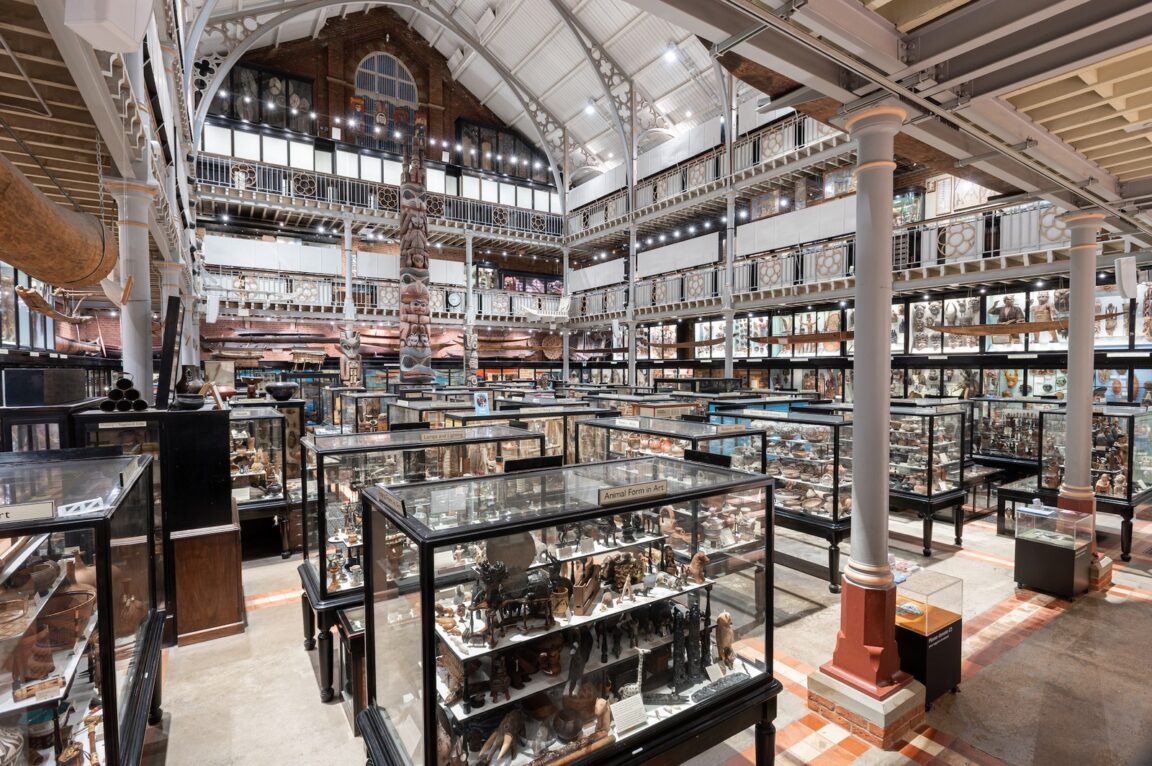
The Pitt Rivers Museum rewards travellers who read it the way it was built: by type, not by country. Behind the dinosaur court of Oxford’s Museum of Natural History, this vast Victorian hall arranges one of the world’s great anthropology collections typologically, so a single case compares how unrelated cultures solved the same human problem, with boats, masks, weapons, clothing or musical instruments grouped across continents. Entry is free, through the Natural History Museum on Parks Road, and the visit runs best as a themed read of a few case families in depth, with time for the newer labels that explain, openly, what the museum has removed from display and why. Plan two to three hours, arrive when it opens, and let the density work for you instead of against you.
Quick Facts
- Address: Pitt Rivers Museum, South Parks Road, Oxford OX1 3PP, with visitor entry through the Oxford University Museum of Natural History on Parks Road
- Hours: Tuesday to Sunday 10:00 a.m. to 5:00 p.m., Monday 12:00 p.m. to 5:00 p.m., with 10:00 a.m. opening on bank holiday and half term Mondays, checked on prm.ox.ac.uk on 25 November 2026
- Admission: Free for individual visitors, no booking needed; all group visits must be booked in advance
- Founded: 1884, on the founding donation of Lieutenant General Augustus Henry Lane Fox Pitt Rivers, whose collection of around 22,000 objects has grown to more than half a million objects, photographs and manuscripts
- Display system: Typological, arranged by object type and function rather than by place or period, in Victorian glass cases across three gallery levels
- Signature sight: The Haida totem pole, carved for Star House in Massett on Haida Gwaii, rising through the centre of the court
- Allow: Two to three hours for the Pitt Rivers alone, longer combined with the Museum of Natural History in front of it
Why is the Pitt Rivers arranged by type instead of by country?
Because its founder believed objects proved a theory. Pitt Rivers collected to demonstrate how forms developed, from simple to complex, and his founding condition was that the collection be displayed to show that development. The museum kept the system, and it remains the rare great museum where the organising idea is function rather than geography. A case of boats holds models from across the Pacific, Africa and the Arctic side by side. Cases of masks, of body ornament, of treatment of the dead, of magic and ritual, of locks and keys, each gather the world’s variations on one theme into a few square feet of glass.
Read that way, the museum becomes comparative in a way no country by country gallery can match. You stop asking where something comes from and start asking what problem it solves, what material it exploits, and how differently two cultures with no contact between them answered the same need. The trade off is orientation: there is no single route, no chronological spine, and first timers who try to see everything in order simply drown. Choose three or four themes that genuinely interest you, work those cases slowly across all three levels, open the drawers beneath the cases, which hold thousands more objects, and let the rest be atmosphere.
What has been removed from display, and how does the museum explain it?
This is where the Pitt Rivers has changed most, and most creditably. In 2020 the museum removed human remains from display, including the tsantsa, the Shuar shrunken heads that had become, uncomfortably, its most famous objects, along with other remains such as a Naga trophy head and an Egyptian mummified child. The reasoning, set out by the museum itself, was that displaying human remains had reinforced racist stereotypes and had come to contradict the museum’s own ethics, and that visitors often misunderstood or disrespected what they were looking at.
Crucially for the visitor, the museum did not quietly tidy this away. New interpretation across the galleries explains what was removed, where it came from, and the colonial collecting histories behind the displays that remain, part of a wider programme of work on the museum’s labels and language, much of it done with the communities the objects came from. Cases now carry labels that question older labels. Some displays discuss restitution and return openly. The result is a museum that teaches two subjects at once: the objects, and the history of how a Victorian institution acquired and framed them. Travellers who care about how museums are reckoning with their past will find few places in Britain doing it this visibly, and the famous density of the hall now includes a density of honest explanation layered over it.
How does the shared entrance with the Museum of Natural History work?
There is one front door for both museums, and it belongs to the Natural History Museum. You enter from Parks Road into its soaring glass roofed court, with the dinosaur skeletons, the dodo and the stones of one of Britain’s finest Victorian museum buildings, and the Pitt Rivers lies through an arched doorway at the far end of that court. The practical consequences matter. On Mondays the building opens at 10:00 a.m. but the Pitt Rivers does not open until noon, so a Monday morning belongs to natural history first. At busy times the single entrance serves both museums’ crowds. And the two collections pair naturally in one visit: evolution and natural selection in front, human material culture behind, with the totem pole visible as the hinge between the two worlds.
Sequence a combined visit by energy rather than geography. Do the Pitt Rivers first if it is your priority, while your reading stamina is fresh, because its cases reward close attention and punish tired eyes. If you are visiting with children, reverse it: dinosaurs first, then a targeted raid on the Pitt Rivers’ most theatrical cases, the totem pole, the boats overhead and the masks, rather than a full survey. Both museums are free, so splitting them across two days costs nothing but time, and Oxford regulars often do exactly that. For more museum visits planned as routes rather than wanders, see our guides to the Guggenheim in New York and the reopened Frick Collection.
Which cases should a first timer read first?
Start at the centre. The Haida totem pole, which arrived in 1901 and still dominates the court, teaches you how to look: carved figures stacked as family crests and stories, read from the pole’s own documentation rather than guessed at. From there, pick themes with strong visual variety. The boats, suspended overhead and in cases, range from reed craft to great canoes. The masks reward slow comparison across cultures. The cases on magic, ritual and the treatment of the dead carry much of the museum’s new interpretive writing, so they show the rearranged Pitt Rivers at its most current. Leave time for the upper galleries, where smaller, stranger material crowds the balconies, and for the drawers, which first timers consistently miss and consistently rate as the discovery of the visit once told. Photography, the shop in the Natural History Museum, and the cafe provision on the lawn outside all follow the practical pattern of a free university museum: come self sufficient, check the museum’s visitor page on the day for any gallery closures, and give the building the unhurried half day it has earned since 1884.
How should you time a visit around the Monday trap and the seasons?
The one scheduling error worth avoiding is the Monday morning arrival: the building opens at 10:00 a.m., the Pitt Rivers at noon, and travellers who do not know this lose their freshest two hours to the wrong museum for their plans, or queue twice. On bank holiday and half term Mondays the Pitt Rivers opens at 10:00 a.m. with the rest of the building, which makes those Mondays quietly excellent days to come. University term time brings school and student groups on weekday mornings, while weekend afternoons bring the densest family crowds to both museums. The reliable pattern is a weekday opening hour, Tuesday to Friday at 10:00 a.m., when the court is at its calmest and the cases can be read at the pace they deserve. Check the museum’s visitor page on the morning of your visit for gallery closures, since individual cases and sections rotate out for conservation and reinstallation work without much notice.
Frequently Asked Questions
Is the Pitt Rivers Museum free?
Yes. Admission is free for individual visitors and no booking is required. Group visits must be booked in advance through the museum.
How do I get into the Pitt Rivers Museum?
Through the Oxford University Museum of Natural History on Parks Road. Walk through the natural history court to the arched entrance at the far end. There is no separate street entrance for visitors.
Are the shrunken heads still on display?
No. The museum removed human remains, including the tsantsa shrunken heads, from display in 2020, and its current labels and displays explain what was removed and why, as part of its work on the colonial history of the collections.
How long does a visit take?
Allow two to three hours for the Pitt Rivers alone if you read cases properly, and half a day if you combine it with the Museum of Natural History. On Mondays, note the Pitt Rivers opens at noon, two hours after the building in front of it.
Why are objects from different countries mixed in the same case?
That is the museum’s founding typological system: displays are arranged by object type and function, so visitors compare how different cultures solved the same problem. It was Pitt Rivers’ condition for his founding donation in 1884, and the museum maintains it today.
Image: The court of the Pitt Rivers Museum, Oxford, with its typological glass cases and the Haida totem pole. Photo: Pitt Rivers Museum, University of Oxford, via prm.ox.ac.uk, the museum’s official website.