 Aiko Tanaka
The Noguchi Museum rewards visitors who follow the order its founder built into it: start in the outdoor sculpture garden, where Isamu Noguchi set his largest granite and basalt works among trees and gravel, then move indoors through the galleries by material, from stone to metal, wood and paper light, and finish the Queens outing with the short walk to Socrates Sculpture Park, the free waterfront park Noguchi’s neighbour artists built a few minutes away. The museum, at 9-01 33rd Road in Long Island City, is open Wednesday to Sunday, 10 a.m. to 5 p.m., charges $16 general admission, and needs no advance reservation. It is a small museum with a complete argument, and two unhurried hours inside it, plus an hour at Socrates, make one of the strongest half days in New York.
Quick Facts
- Museum: The Noguchi Museum (The Isamu Noguchi Foundation and Garden Museum), 9-01 33rd Road at Vernon Boulevard, Long Island City, Queens
- Hours: Wednesday to Sunday, 10 a.m. to 5 p.m.; last entry 4:30 p.m.; closed Monday and Tuesday
- Admission: $16 general; $6 seniors 65 and over and students with ID; free for children under 12, New York City public high school students and members
- Free day: Admission is free on the first Friday of every month
- Tickets: No advance reservations at present; tickets are bought on arrival
- Tours: Public tours run daily at 2 p.m., free with admission
- Founded: Opened in 1985; the first museum in the United States founded, designed and installed by a living artist to show his own work
- Pairing: Socrates Sculpture Park, 32-01 Vernon Boulevard, open daily 9 a.m. to sunset, always free
- Facts checked: 25 November 2026, against noguchi.org and socratessculpturepark.org
Why should the sculpture garden come first?
Because Noguchi designed it as the museum’s thesis statement. In 1974 he bought a former photogravure factory and the lot across from his Long Island City studio, and over the following decade he turned the site into a sequence of indoor galleries wrapped around an open-air garden. The garden holds major works in granite and basalt, stones he carved with collaborators in Japan and shipped to Queens, set among trees, gravel and the brick and block walls of the converted industrial building. Seen first, in daylight and weather, the big stones establish the vocabulary of the whole museum: rough surfaces left against polished ones, weight balanced against void, and sculpture treated as a landscape rather than an object on a plinth.
Seen last, the same garden becomes a footnote, because the indoor galleries have already explained it. The order matters for a second, practical reason as well: the garden is the part of the museum most exposed to the day. Morning and early afternoon give it the best light and the softest crowds, and in the colder months it is the section you will shorten if the visit runs long. Give it the first half hour, slowly, before any label reading begins.
How do the indoor galleries work by material?
Inside, the museum unfolds across two floors of galleries in the old factory building, and the most satisfying way through them is to read by material rather than by date. Stone dominates, and deliberately so: the granite and basalt works show Noguchi returning across decades to carving, interlocking forms and water-smoothed surfaces. Metal tells a different story, the stainless steel and aluminium pieces of a sculptor who also worked at architectural scale. Wood and clay carry the early and intimate work, and the models for public projects, gardens, playgrounds and stage sets for Martha Graham show the designer who thought a sculpture could be a whole city block.
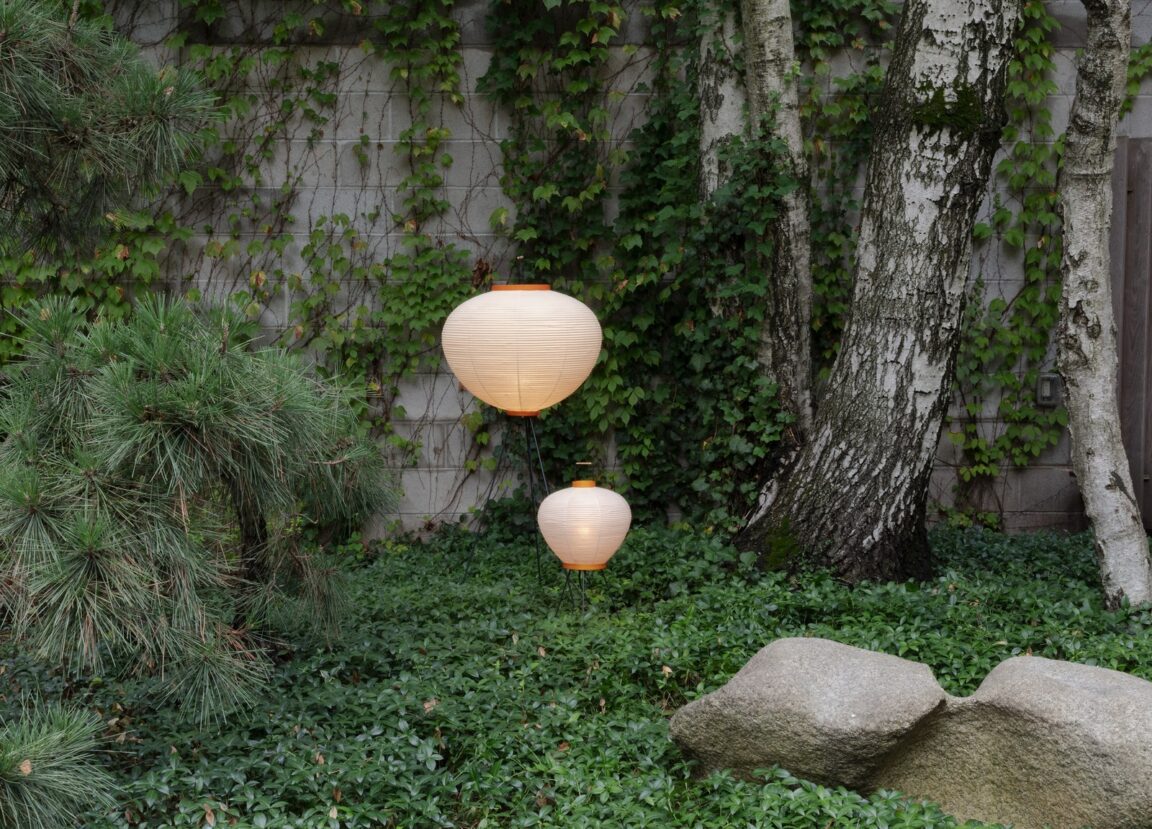
Leave the Akari light sculptures for the end of the indoor route. The washi paper and bamboo lamps, which Noguchi began making in Gifu, Japan, in 1951, are the lightest possible counterweight to the garden’s stone, and the museum’s current exhibition programme gives them unusual prominence: No Ordinary Light: Akari at 75, marking seventy-five years of the Akari, runs at the museum into 2027. Ending among glowing paper after an hour of granite makes the museum’s central point without a single wall text: for Noguchi, sculpture was anything that shaped space, including light itself.
What are the rules that shape a visit?
A few house rules are worth knowing before arrival, all from the museum’s own visitor guidance. Large bags and backpacks must be checked at the coat check, and all bags are inspected on entry. Photography for personal use is allowed in the galleries and garden, but tripods, selfie sticks and flashes are prohibited. Food and drink, apart from bottled water, are not allowed anywhere on the property, including the garden. Children under 12 must be accompanied by an adult. Groups of more than nine people must book in advance. None of this is onerous, but the bag check and the possible short wait to enter argue for arriving with time in hand, especially on free first Fridays.
When are the Sunday hours, and which day suits the museum best?
The museum’s own listing is unambiguous: Wednesday to Sunday, 10 a.m. to 5 p.m., with last entry at 4:30 p.m. and the shop closing at 4:45 p.m. Sunday follows the same hours as every other open day, which makes a Sunday pairing with Socrates Sculpture Park straightforward: museum at 10 or 11, garden first, galleries by material, the free 2 p.m. public tour if the timing lands, then the waterfront. Weekdays are quieter, and the first Friday of each month is free, with extended evening hours in the warmer part of the year. The museum closes on some holidays; it is closed on Thanksgiving Day, Thursday 26 November this year, and reopens the following day, a pattern worth checking against your own dates on the museum’s site.
How does the Socrates Sculpture Park pairing work?
Socrates Sculpture Park stands a few minutes’ walk north of the museum at 32-01 Vernon Boulevard, where Broadway meets the East River waterfront. It is the natural second half of the visit for a reason beyond geography: the park was created in 1986 by a coalition of artists and local residents, led by sculptor Mark di Suvero, on what had been an abandoned landfill and illegal dumpsite, and it remains an open-air museum of large-scale contemporary sculpture, open 365 days a year from 9 a.m. to sunset and always free.
The pairing works because the two institutions argue opposite cases. Noguchi’s garden is one artist’s permanent, finished vision, every stone placed by its maker. Socrates is a rotating, collective and deliberately unfinished one, where exhibitions change, works are fabricated on site, and the lawn and the skyline view across to Manhattan are part of the show. Do Noguchi first, while concentration is fresh and the ticketed hours apply, then let Socrates be the unstructured hour: no labels to keep up with, no closing pressure except sunset, and an early closing to note on a few holidays, when the park shuts at 1 p.m. On a clear late afternoon the walk between them, through Long Island City’s old industrial blocks, is part of the pleasure.
How do you get there, and what else belongs in the day?
The museum sits in a light-industrial pocket of Long Island City; the usual subway approach is the Broadway station on the N and W lines, followed by a walk west toward Vernon Boulevard, and local buses serve Vernon Boulevard itself. Driving is possible but parking is street parking in a working neighbourhood. Build the day as a Queens art day rather than a detour: Noguchi in the morning, Socrates after, and the Long Island City and Astoria food streets for lunch in between or after. Readers building a New York museum itinerary can set this small, single-artist counterweight against the blockbuster route in our guide to the Guggenheim Museum’s ramp, and against the free, encyclopaedic end of the spectrum in our Smithsonian first-visit guide.
Frequently Asked Questions
How much does the Noguchi Museum cost?
General admission is $16. Seniors 65 and over and students with ID pay $6. Children under 12, New York City public high school students and members enter free, and admission is free for everyone on the first Friday of every month.
Do you need to book Noguchi Museum tickets in advance?
No. The museum is not taking advance reservations at present; tickets are purchased on arrival. Groups of more than nine people are the exception and must book ahead.
What are the Noguchi Museum’s Sunday hours?
The same as every open day: 10 a.m. to 5 p.m., with last entry at 4:30 p.m. The museum is closed on Mondays and Tuesdays.
How long does a Noguchi Museum visit take?
Two hours covers the garden and both floors of galleries at a thoughtful pace, including the 2 p.m. public tour if you time it. Add an hour for Socrates Sculpture Park afterwards.
Can you take photographs inside the Noguchi Museum?
Yes, for personal use, in the galleries, garden and pavilion. Tripods, monopods, selfie sticks, flashes and other lighting equipment are prohibited, and commercial or sponsored shoots are not allowed.
Is Socrates Sculpture Park really free?
Yes. Socrates Sculpture Park is free to enter, open every day of the year from 9 a.m. to sunset, with an early 1 p.m. closing on certain holidays. It stands at 32-01 Vernon Boulevard, a few minutes’ walk from the museum.
Image: Akari light sculptures in the Noguchi Museum garden, Long Island City, with a carved stone in the foreground. Photo via The Noguchi Museum (noguchi.org), the museum’s own official website, used with credit.