 James Wolfe
There are luxury resorts, and then there are places that seem to operate according to an entirely different definition of privacy, space and escape.
Dorado Beach, a Ritz-Carlton Reserve belongs firmly in the second category.
Set along Puerto Rico’s northern coast west of San Juan, the celebrated retreat occupies part of a sprawling 1,400-acre resort community shaped by one of American hospitality’s most influential figures: Laurance S. Rockefeller.
The story goes back further than the Ritz-Carlton name. Dorado Beach traces its history to a 1,700-acre coconut and citrus plantation acquired in the early 20th century. Rockefeller purchased the property in 1955 and, by 1958, had transformed it into a resort and natural sanctuary built around the radical-for-its-time idea that luxury should exist with nature rather than on top of it.
That philosophy remains visible today.
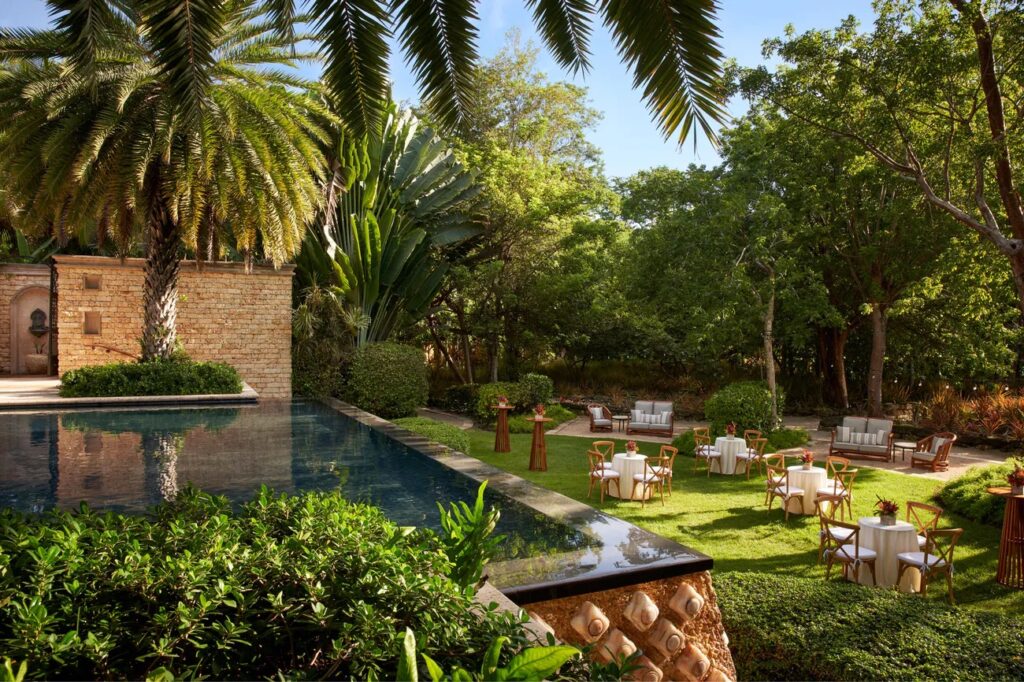
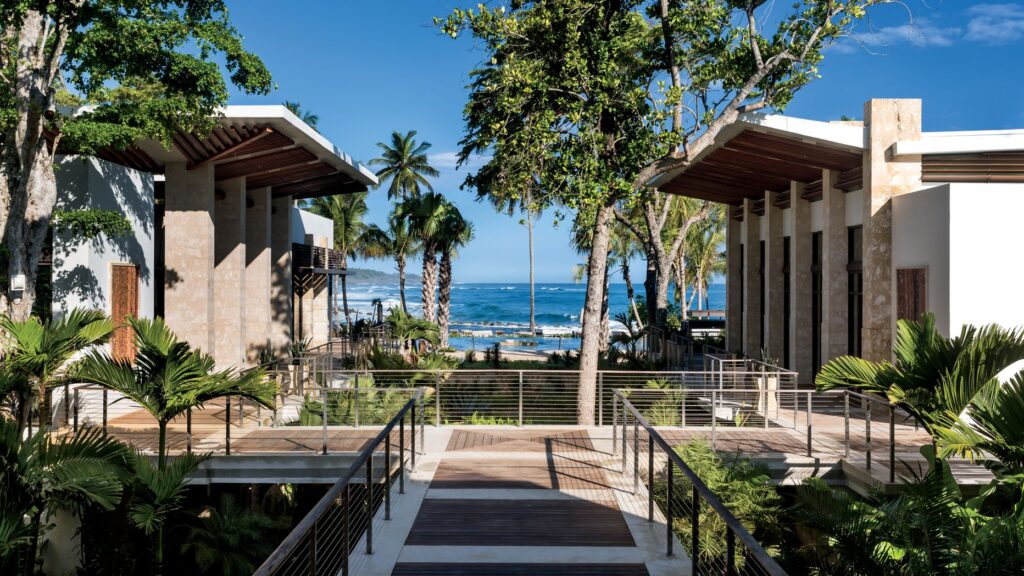
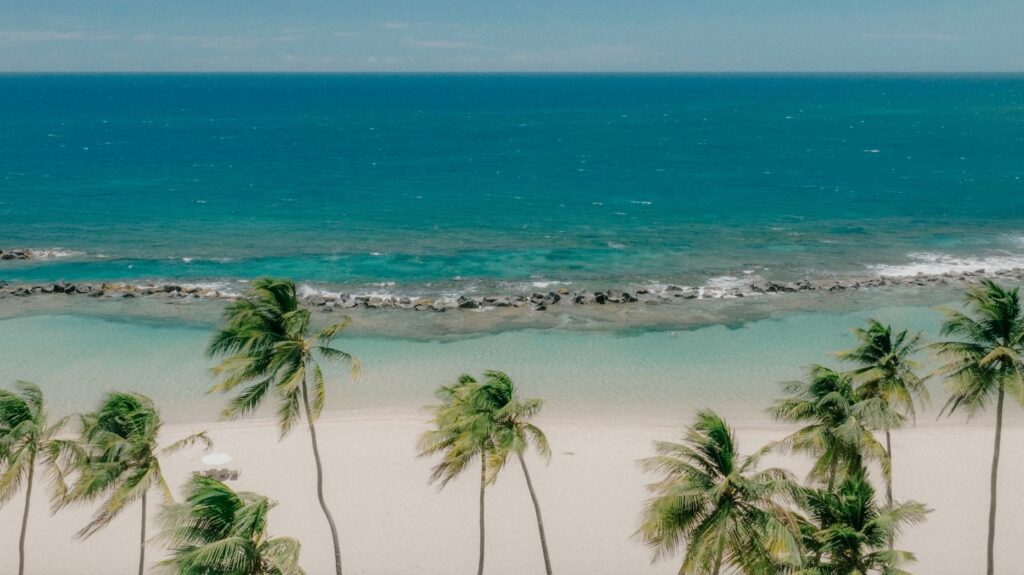
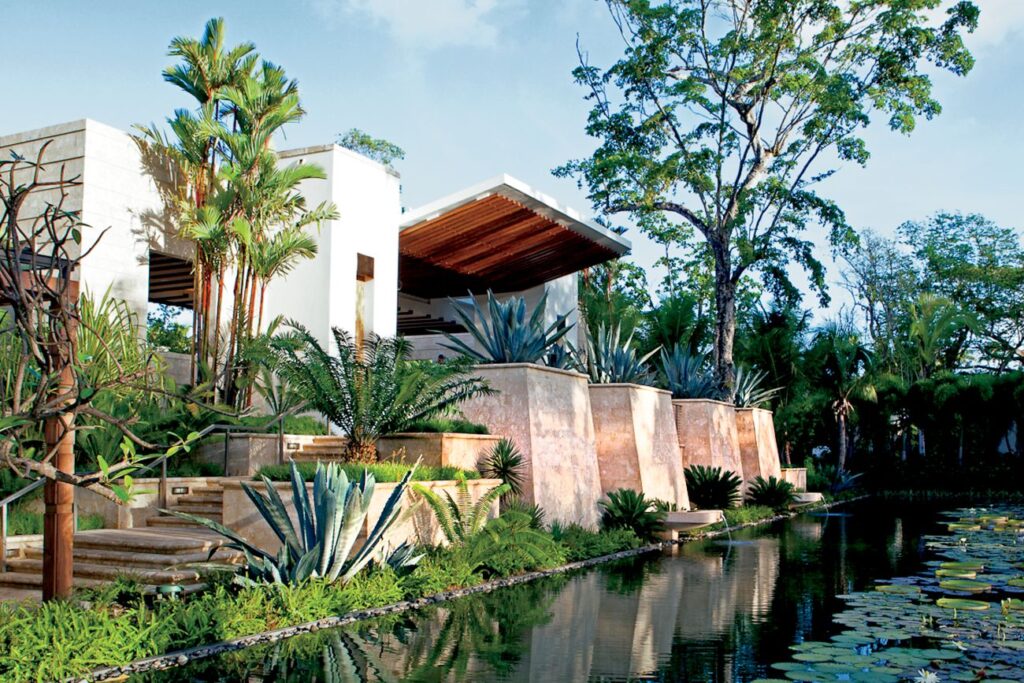
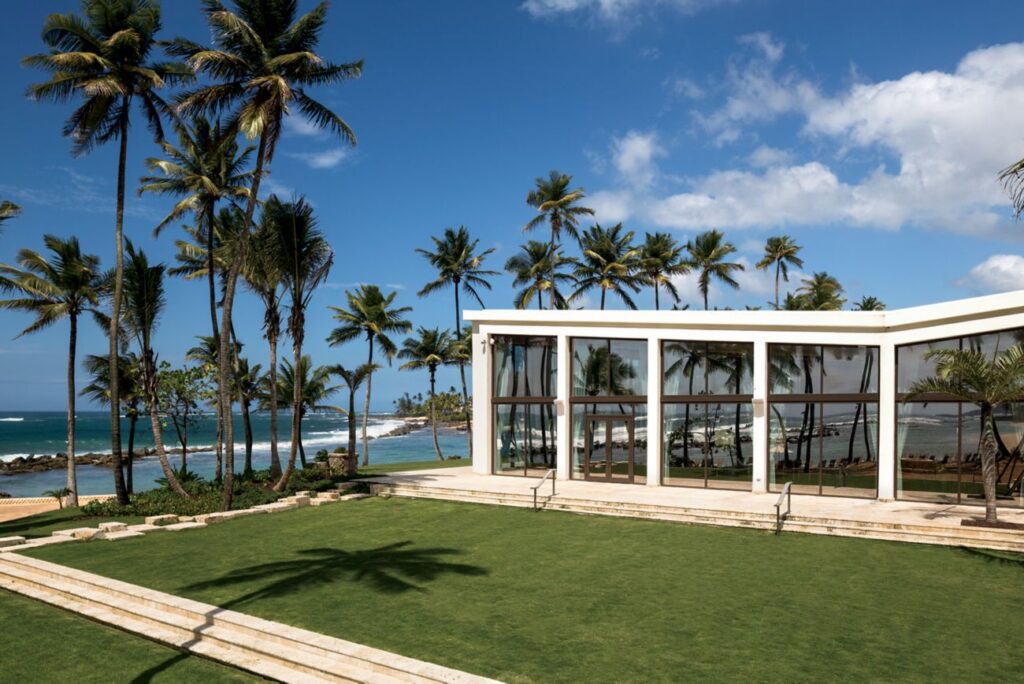
Instead of arriving at a high-rise hotel dominating the shoreline, guests enter a world of palms, tropical gardens, winding pathways, oceanfront buildings, golf fairways, sandy coves and dense greenery. The scale is enormous, yet the hotel itself feels deliberately intimate.
It is the kind of place where a bicycle can make more sense than a car, an outdoor shower feels completely natural, dinner can happen beneath a century-old tree and your room may come with its own infinity pool.
This is not simply one of Puerto Rico’s most luxurious hotels. It is one of the Caribbean’s great destination resorts.
Dorado Beach Began With a Rockefeller Vision
Understanding Dorado Beach requires understanding what Rockefeller was attempting to create.
This was not supposed to be another grand resort dropped onto valuable beachfront land.
The environment was part of the attraction.
Rockefeller developed Dorado Beach as both a hotel destination and natural sanctuary, establishing an identity built around low-profile architecture, open space and preservation. The property eventually became a magnet for prominent travelers; Dorado Beach’s own history notes that John F. Kennedy, Elizabeth Taylor and Ava Gardner were among its notable visitors.
Decades later, Dorado Beach, a Ritz-Carlton Reserve opened in December 2012, bringing Ritz-Carlton’s highly exclusive Reserve concept to the property while retaining the naturalistic DNA that made Dorado famous.
That history gives the resort something money alone cannot manufacture.
Provenance.
A new hotel can build an infinity pool.
It can install marble bathrooms.
It can create a private beach club.
It cannot instantly create nearly seven decades of mythology.
Only 114 Accommodations Make This Feel Exceptionally Private
One of Dorado Beach’s most persuasive luxuries is not what has been added.
It is what has not been built.
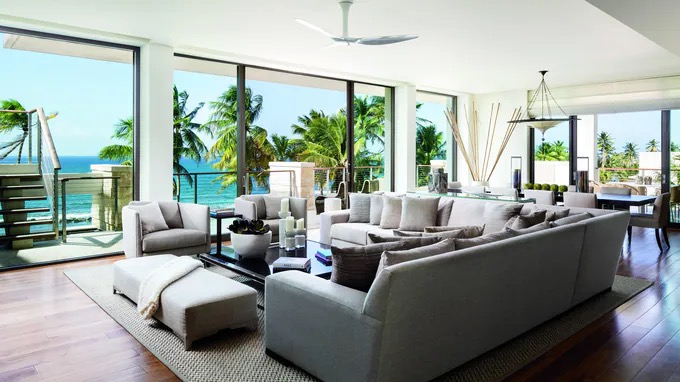
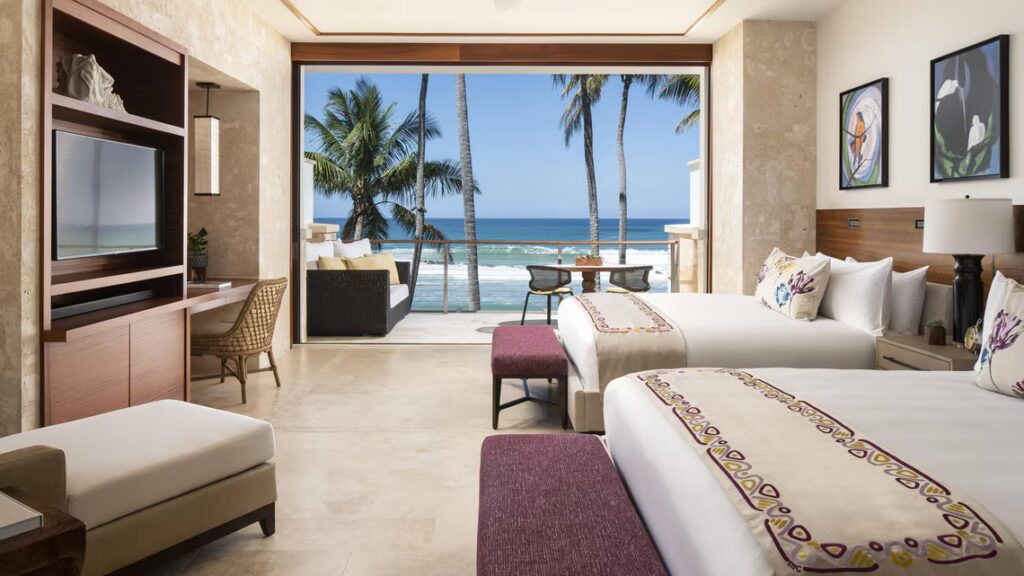
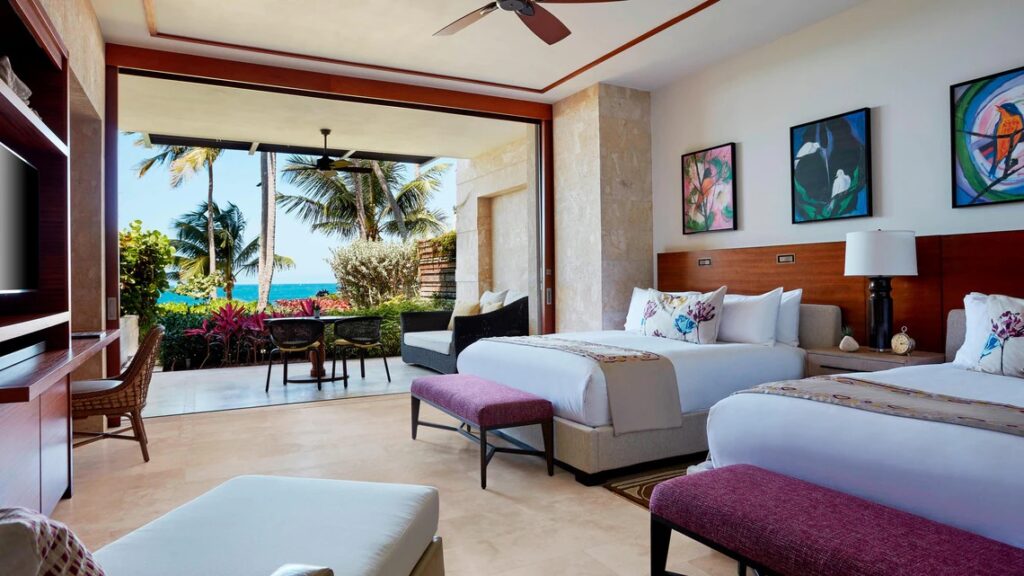
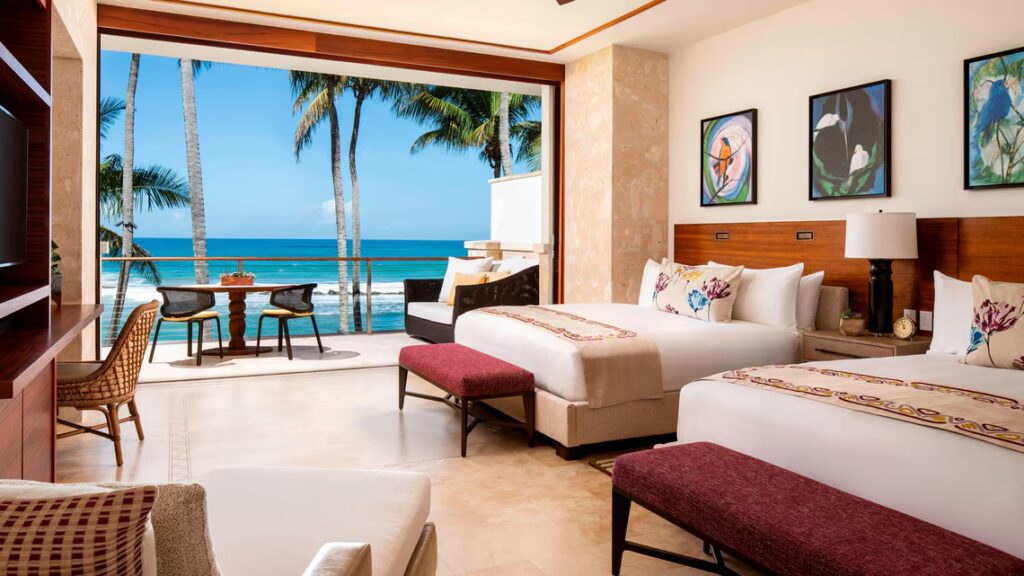
The Ritz-Carlton Reserve has just 114 accommodations, arranged across 11 buildings along East and West beaches. Entry-level rooms begin at an extraordinary 941 square feet, according to Forbes Travel Guide.
That is larger than many Manhattan apartments.
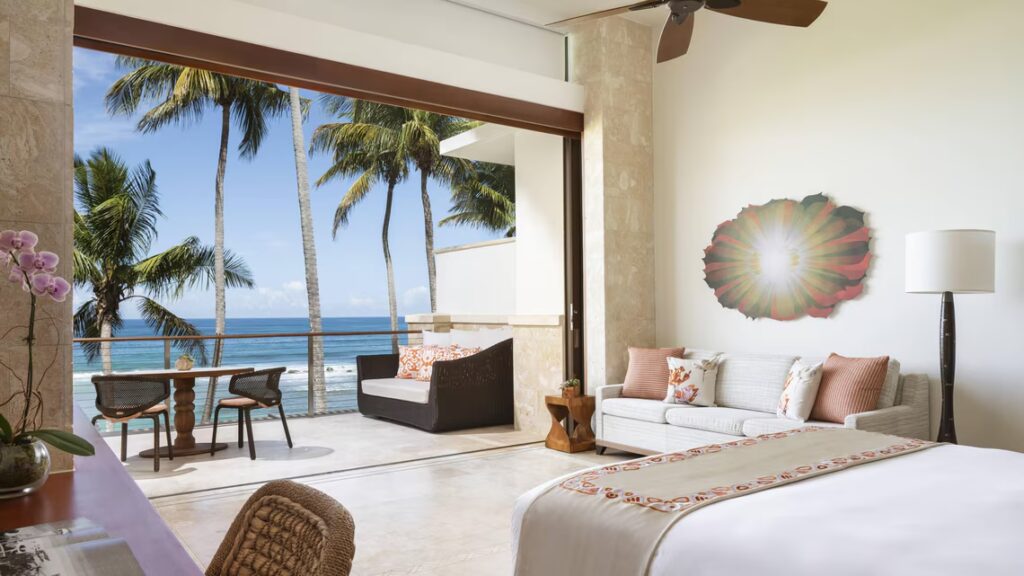
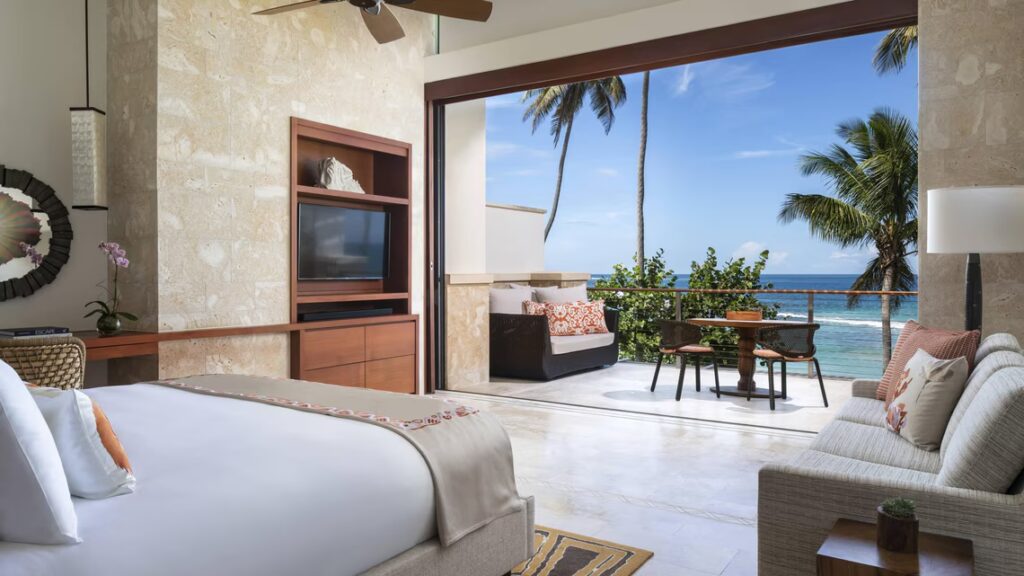
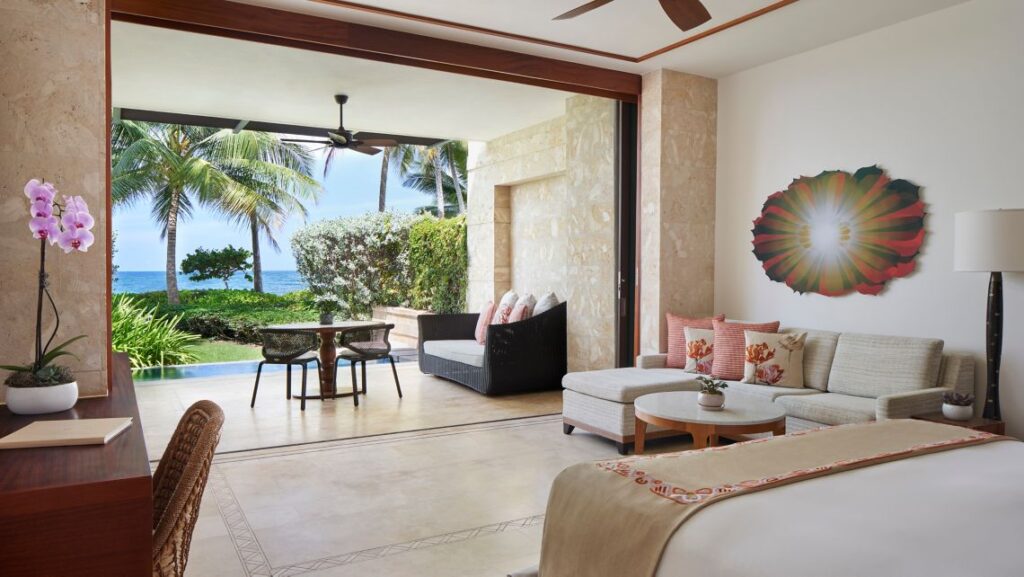
And the rooms are designed to make the Caribbean coastline the focal point.
Huge sliding glass doors open toward the ocean. Indoor and outdoor living areas flow into one another. Deep soaking tubs, rainforest-style showers and substantial terraces reinforce the sensation that the room is less hotel accommodation than private tropical residence.
For travelers accustomed to luxury hotels where a “sea view” means spotting water between two buildings, Dorado Beach is playing a different game.
Here, the ocean becomes part of the architecture.
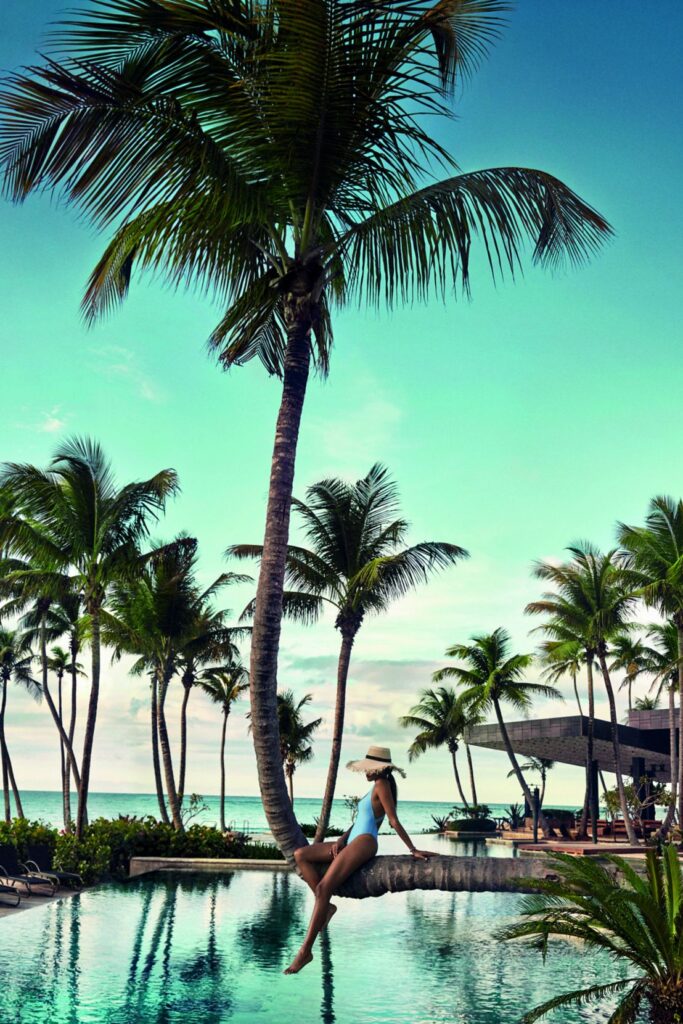
Private Plunge Pools Push It Even Further
The most desirable accommodations take the privacy considerably further.
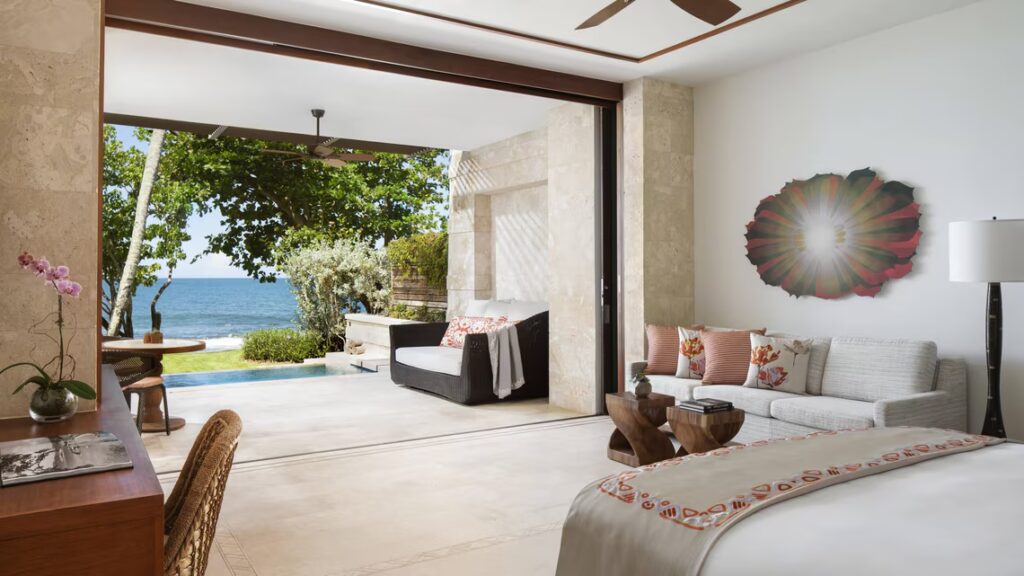
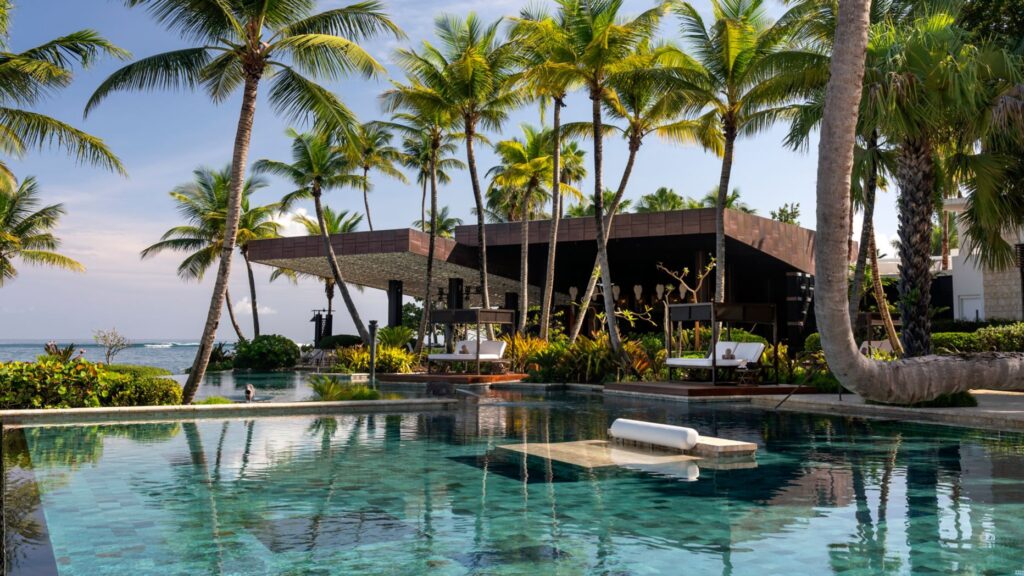
Ritz-Carlton describes its West Beach Plunge rooms as oversized oceanfront spaces with indoor and outdoor showers, expansive terraces and private infinity plunge pools just steps from the water. Forbes Travel Guide reports that plunge-category guestrooms, suites and residences feature private pools.
Picture the routine.
Wake up.
Slide open the glass.
Walk barefoot onto the terrace.
Get into your own pool.
The Atlantic is directly beyond the palms.
Breakfast can wait.
That is Dorado Beach in one image.
Every Room Comes With an Embajador
Physical luxury only gets a resort so far.
Service is what determines whether the fantasy actually works.
At Dorado Beach, the Ritz-Carlton Reserve service model includes a dedicated Embajador, or ambassador, who acts as a personalized point of contact during the stay.
That becomes particularly useful because Dorado Beach is not a resort where everything sits around one central lobby.
The property is meant to be explored.
You may want to move between the beach, spa, golf, lunch and your room without spending half the afternoon coordinating logistics. The Embajador system is designed to make that sprawling environment feel effortless.
The result is a style of hospitality that feels more residential than transactional.
At its best, you stop thinking about how anything is happening.
Things simply happen.
Spa Botánico May Be the Resort’s Greatest Flex
Plenty of five-star resorts have beautiful spas.
Spa Botánico feels like its own destination.
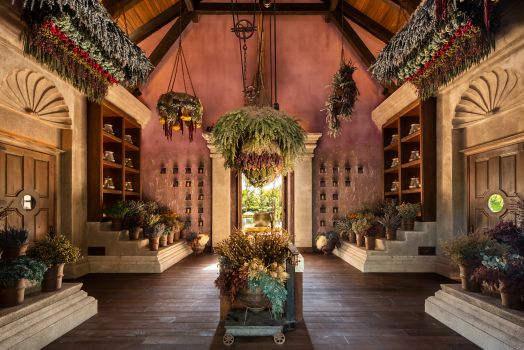
The open-air sanctuary covers approximately five acres and integrates Puerto Rican ingredients, indigenous wellness traditions, tropical vegetation and treatment spaces into the landscape.
This is the opposite of the anonymous windowless hotel spa.
Tree-shaded treatment areas and garden environments make wellness feel inseparable from Dorado Beach itself.
One of the property’s most atmospheric landmarks is its enormous century-old ficus tree, which also becomes the setting for private dining experiences after sunset. Ritz-Carlton offers dinners overlooking the tree as lanterns illuminate its branches.
There are luxury spas designed to impress you with polished stone.
Dorado Beach tries to impress you with the landscape.
That distinction matters.
The Rockefeller Nature Trail Turns the Resort Into a Playground
The property rewards guests who refuse to stay still.
The Rockefeller Nature Trail extends for roughly 11 miles, connecting forested sections, golf terrain and beaches through a network that can be explored on foot, by bicycle or golf cart. Ritz-Carlton specifically highlights biking as one of the ways to experience it.
It is one of the defining features of Dorado Beach because it demonstrates how unusually much land surrounds relatively few hotel rooms.
You do not merely walk from your room to breakfast.
You move through a tropical estate.
Take a bicycle out in the morning and the resort begins revealing itself slowly: palm trees, fairways, hidden stretches of coast, wildlife, quiet pathways and sudden views of bright Caribbean water.
It feels less like navigating a hotel and more like having temporary access to somebody’s extraordinary private island compound.
Except you are still in Puerto Rico.
Golfers Get One of the Caribbean’s Great Settings
Dorado Beach has long been closely associated with golf, and the modern resort continues that tradition.
The Dorado Beach East Course is the showpiece, with Ritz-Carlton describing panoramic sightlines on 15 of its 18 holes. The wider Dorado Beach club environment currently advertises access to two golf courses as part of its private resort lifestyle.
Even people who normally find golf resorts visually sterile may see the appeal here.
Ocean.
Mountains.
Palms.
Tropical vegetation.
Wide skies.
This is not golf surrounded by development.
It is golf integrated into one of Puerto Rico’s most prized coastal environments.
And for serious players, a morning round followed by a plunge pool, massage and beachfront dinner makes a convincing argument for never leaving the property.
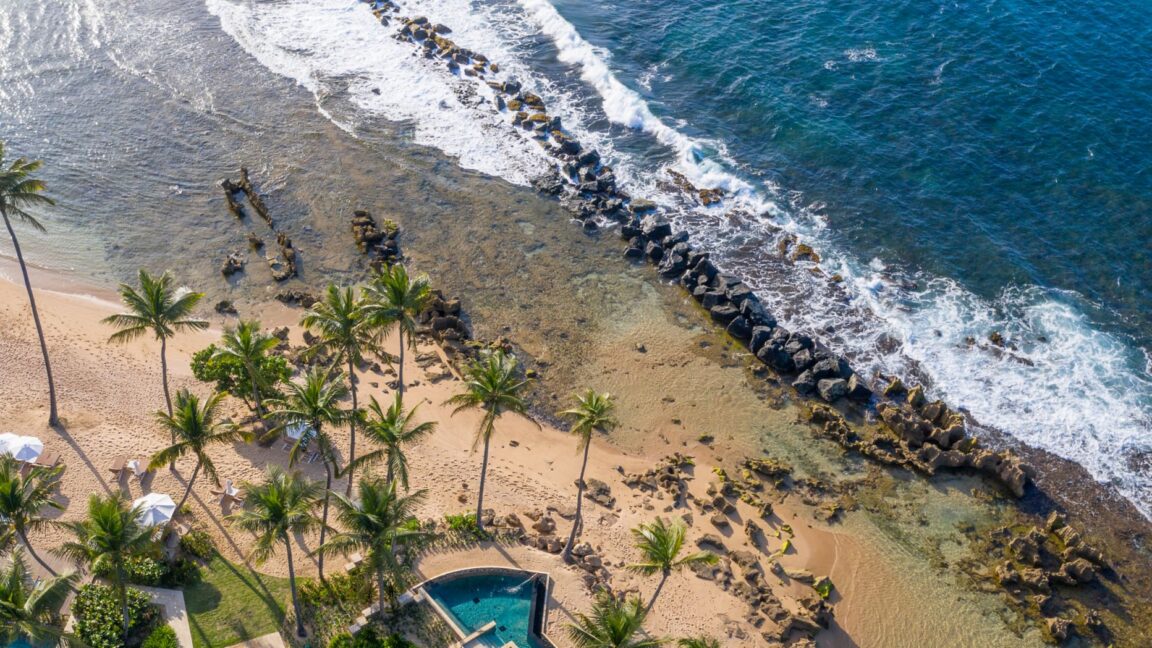
East Beach and West Beach Deliver Two Different Moods
Dorado Beach’s coastline is not an afterthought.
It is the organizing principle of the experience.
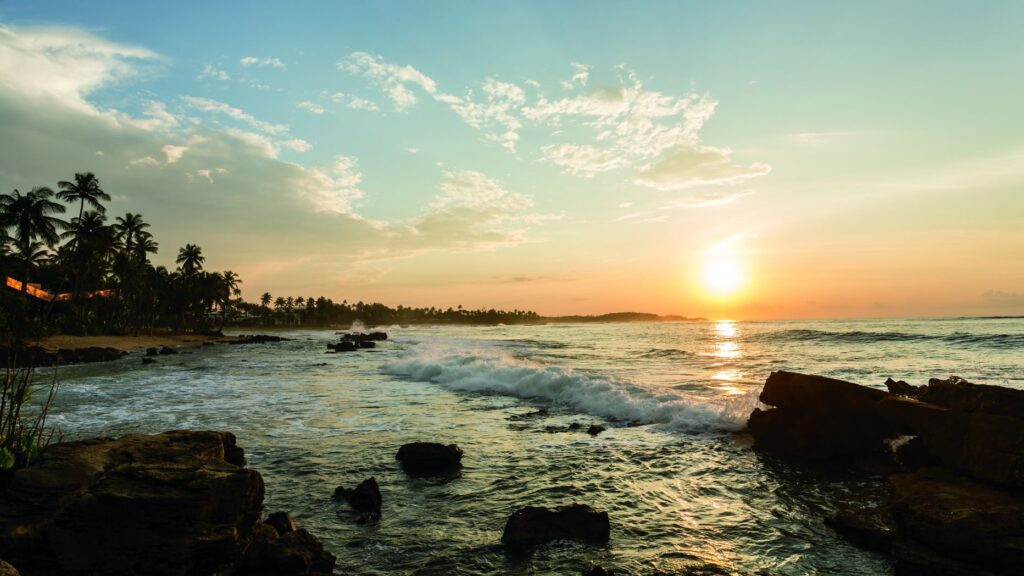
East Beach brings a more active side of the property into focus, with water sports and dramatic Atlantic scenery. The broader resort has long promoted activities including surfing, sailing, windsurfing and kitesurfing.
West Beach offers a different visual rhythm—palm-lined, resort-like and built for slow afternoons.
The advantage is choice.
Spend one morning moving.
Spend the next doing almost nothing.
At a resort this expensive, that freedom may be the greatest indulgence of all.
Watermill Makes Dorado Beach Surprisingly Good for Families
Ultra-luxury Caribbean resorts can sometimes make families feel as if children are politely tolerated.
Dorado Beach goes the other direction.
The Watermill Aquatic Park, designed around the architecture of a traditional Puerto Rican sugar mill, includes two 30-foot water slides, swimming pools and a winding lazy river with a wave machine. Current access and operating schedules can vary, and Dorado Beach advises guests to confirm availability.
That makes the property unusually versatile.
Parents can spend the morning at Spa Botánico.
Kids can attack a water slide.
Everyone can meet later on the beach.
It is luxurious enough for a honeymoon and entertaining enough for a multigenerational family trip—which is a much harder combination to execute than it sounds.
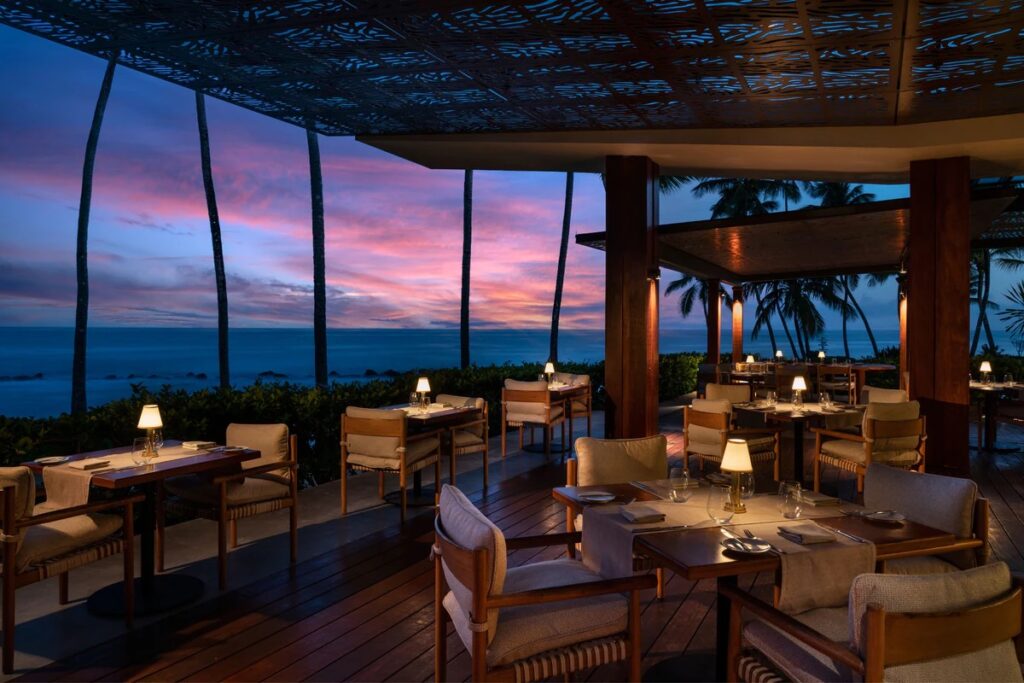
Dining at Dorado Beach Is Designed to Keep You on Property
At some resorts, staying for dinner feels like surrendering.
At Dorado Beach, leaving can feel unnecessary.
COA
COA anchors the dining program with contemporary cooking influenced by Puerto Rico and prepared in a custom wood-burning oven known as Mi Brasa.
Its name references the coa, a traditional Taíno agricultural tool, while ingredients are sourced seasonally and from local farms and purveyors.
Then there is the wine.
The resort says La Cava at COA holds approximately 690 labels and 3,200 bottles, making it one of the Caribbean’s most substantial wine programs.
That is serious cellar territory.
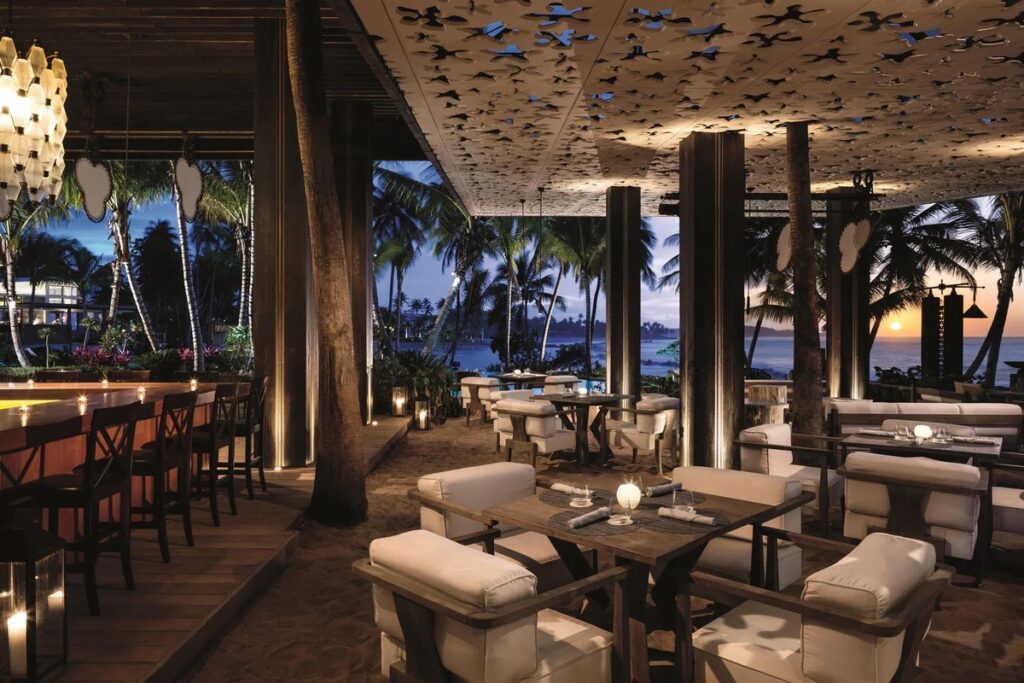
Posi+ivo Sand Bar
Then the shoes come off.
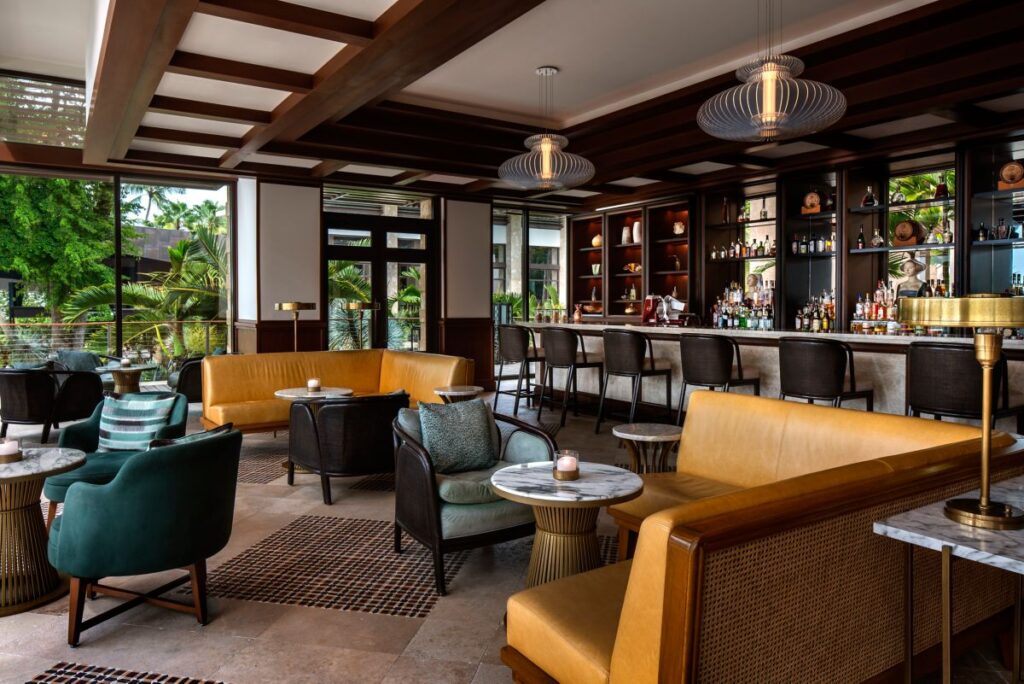
Posi+ivo Sand Bar sits beachfront with an open-air atmosphere built around Asian inspiration, Latin flavors, cocktails and sunset.
This is where Dorado Beach’s “barefoot luxury” philosophy becomes literal.
You can spend thousands on the room and still eat with sand nearby.
That tension—extreme luxury without excessive formality—is one of the property’s biggest strengths.
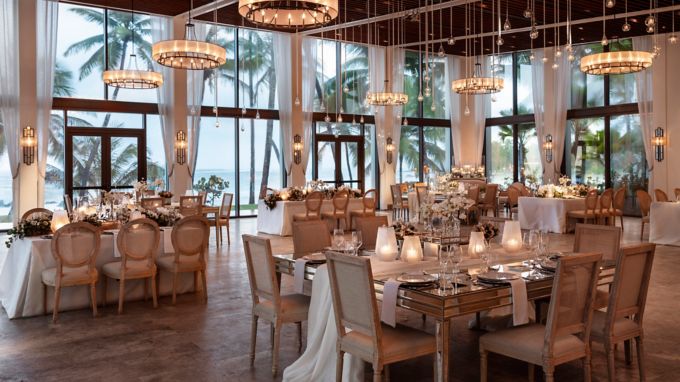
Private Dining Takes It Into Fantasy Territory
Dorado Beach also offers private culinary experiences that lean fully into special-occasion theater.
Dinner under the ficus tree.
A secluded treehouse dinner for two.
A private beach meal while the sun disappears into the Atlantic.
Those are not simply meals.
They are the things people remember years after the hotel bill has been forgotten.
Why Dorado Beach Feels Different From a Typical Ritz-Carlton
The words Ritz-Carlton Reserve matter.
Reserve properties occupy a more rarefied position within the Ritz-Carlton universe, emphasizing distinctive locations, intimacy and highly personalized service.
Dorado Beach expresses that idea especially well because the underlying property already had a strong identity long before the contemporary hotel arrived.
It does not feel like a Ritz-Carlton that happened to be built in Puerto Rico.
It feels like Dorado Beach, interpreted through Ritz-Carlton Reserve.
That is a much more compelling proposition.
The architecture stays relatively quiet.
The palms do the showing off.
The ocean provides the soundtrack.
Coquí frogs take the night shift.
And the enormous amount of surrounding land provides something increasingly difficult to buy even at the highest levels of travel:
separation from everybody else.
What Does Dorado Beach Cost?
There is no useful way to pretend this is an affordable splurge.
Dorado Beach operates firmly in ultra-luxury territory, and room rates can reach well into four figures per night depending on season, accommodation type and demand.
Private plunge-pool categories, larger suites and residences can move significantly higher.
Rates also change, so travelers should compare their specific dates directly with the hotel rather than relying on a static quoted price.
But price alone misses what people are actually buying here.
You are paying for scale.
Low room density.
Oceanfront positioning.
History.
Personalized service.
A five-acre spa.
Golf.
Beaches.
Dining.
Natural space.
And the peculiar sensation of occupying a corner of Puerto Rico that has been carefully protected from feeling overly built.
Whether that value equation makes sense is personal.
But it is easy to understand why the property sits on so many luxury-travel wish lists.
Who Should Stay at Dorado Beach?
Dorado Beach makes the most sense for travelers who value privacy and environment as much as traditional five-star service.
Couples can disappear into a plunge-pool suite.
Families can build days around bicycles, beaches and Watermill.
Golf travelers could make the courses the centerpiece.
Wellness travelers could barely leave Spa Botánico.
And luxury travelers who have become numb to marble lobbies and rooftop pools may find the property’s restraint refreshing.
It is also unusually compelling for travelers coming from the continental United States who want a tropical, ultra-luxury escape without leaving U.S. territory.
No passport is required for U.S. citizens traveling between the mainland and Puerto Rico.
And yet once you are moving beneath the palms at Dorado Beach, Manhattan or Miami can feel very far away.
Dorado Beach Is Really Selling the Luxury of Space
There is an arms race in modern luxury hospitality.
Bigger suites.
Higher towers.
More restaurants.
More marble.
More everything.
Dorado Beach’s great trick is realizing that less can feel more expensive.
Fewer rooms.
Lower buildings.
Less visual clutter.
More trees.
More ocean.
More distance between you and everyone else.
That principle reaches all the way back to Rockefeller’s original vision.
Nearly seven decades later, it still feels remarkably modern.
Perhaps that is why Dorado Beach continues to command attention in a Caribbean luxury market packed with new resorts.
It does not need to chase novelty.
It has history, land and identity.
Those are harder to replicate.
Is Dorado Beach Worth Putting on Your Luxury Travel Bucket List?
For the right traveler, absolutely.
Dorado Beach combines the privacy of an exclusive estate, the polish of one of luxury hospitality’s most rarefied brands and the natural beauty of Puerto Rico’s northern coastline.
The private pools are spectacular.
The spa is extraordinary.
The rooms are enormous.
The golf is destination-worthy.
The dining goes well beyond resort convenience.
But none of those features individually explains the appeal.
The magic comes from how everything fits together.
You can wake beside the Atlantic, bike beneath tropical trees, play 18 holes, disappear into Spa Botánico, swim outside your room, drink cocktails barefoot on the sand and finish the evening beneath a century-old ficus tree while coquí frogs call from the darkness.
Then you wake up and do absolutely none of it.
Because sometimes the ultimate luxury is simply having nowhere else you need to be.
For accommodations, current rates, experiences and reservations, explore the official Dorado Beach, a Ritz-Carlton Reserve website.