 Sofia Rossi
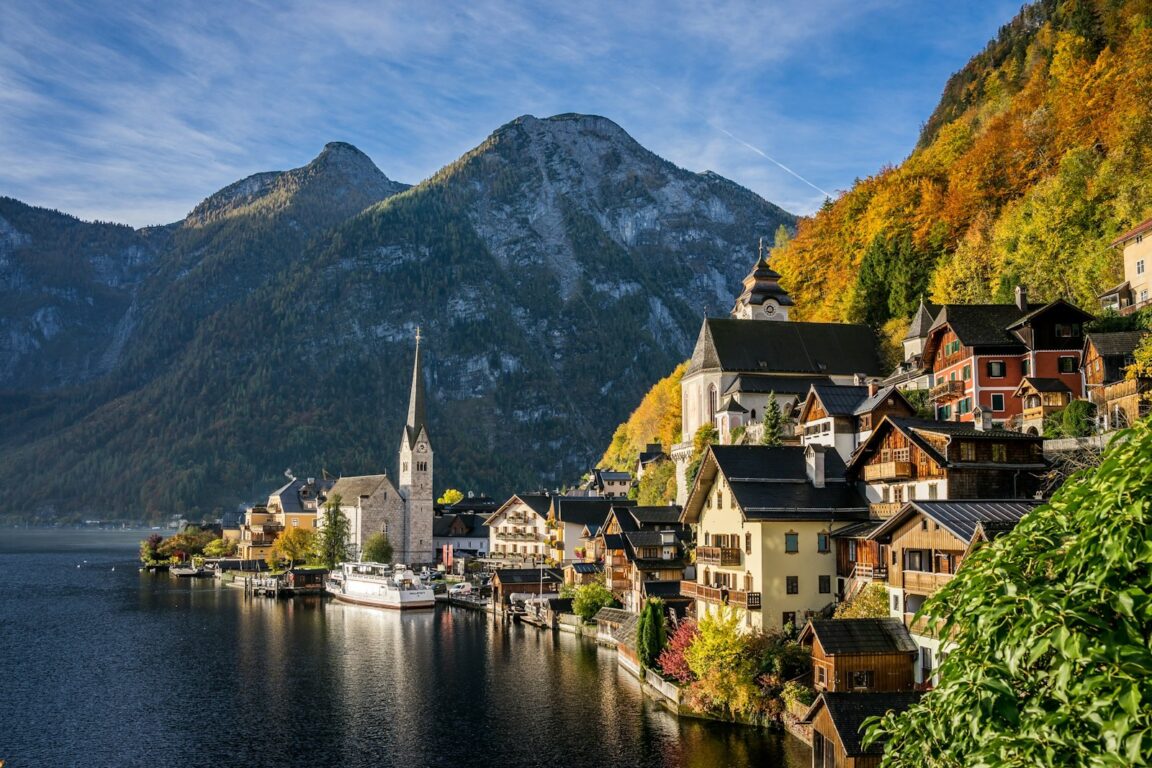
Hallstatt is a village of fewer than 900 residents on the western shore of Lake Hallstatt in Austria’s Salzkammergut, and it became one of the most photographed places in Europe because one view, stacked pastel houses, a church spire and a mirror still lake under steep mountains, compresses the whole Alpine ideal into a single frame. The fame is real, the salt history underneath it is older and more interesting, and the village now actively manages its visitors, steering tour buses into booked slots and day trippers toward the edges of the day. Visit early, stay overnight if you can, and Hallstatt still delivers. Arrive at noon in August with the crowds and it cannot.
Quick Facts
- Where: Hallstatt, Upper Austria, on Lake Hallstatt (Hallstatter See) in the Salzkammergut lake district, about an hour from Salzburg by road.
- Status: The Hallstatt-Dachstein Salzkammergut cultural landscape was inscribed by UNESCO in 1997.
- Scale: Fewer than 900 residents, a walkable core of about ten minutes end to end, and peak season days that have drawn many thousands of visitors.
- Why salt matters: The Salzwelten salt mine above the village is among the oldest known salt mines in the world, worked for some 7,000 years.
- Arrival quirk: The train station sits across the lake. A boat meets trains and ferries passengers into the village.
- Crowd rule: The historic core is effectively car free. Visitors park in lots outside the centre, and tour bus arrivals are managed through a slot system.
- Best move: Sleep in the village or arrive before 9 in the morning. Overnight guests get Hallstatt at its best, early and late.
What is the fame actually about?
Partly the view, and partly the depth behind it. Hallstatt gave its name to an entire era of European prehistory, the Hallstatt culture of the early Iron Age, because the graves excavated in the mountain above the village were so rich. Salt was the wealth. The deposits in the Salzberg were mined in prehistory, and the village grew in the only space available, a narrow shelf between cliff and water, which is why its houses stack upward, why its streets are steps and lanes, and why space in its tiny Catholic churchyard ran so short that the famous Bone House, the Beinhaus in St Michael’s Chapel, was created to hold exhumed and painted skulls.
The modern fame has stranger chapters. Hallstatt is widely said to have inspired the kingdom in a certain animated film about ice, a claim the village neither owns nor needs, and a full scale replica of the village was built in Huizhou, Guangdong, in China, an act of flattery that first annoyed and then amused many residents. None of this would matter if the underlying place were ordinary. It is not, and the World Heritage Museum in the village makes the long case well.
How does the village limit the crowds?
By managing arrival rather than pretending the problem away. Parking sits outside the historic core, in a series of lots that fill in sequence, and when they are full the practical message to drivers is to move on to neighbouring villages such as Obertraun. Tour buses are handled through a booking and slot system with capped daily numbers, an approach designed to spread arrivals and stop the old pattern of dozens of coaches converging at midday. The village has also repeatedly and publicly steered marketing away from pure day trip volume, favouring guests who stay, eat and spend locally.
Residents have made their feelings plain at moments, including protests in 2023 over peak season pressure and a short lived fence at the famous viewpoint meant as a statement about selfie congestion. The honest summary for visitors is that Hallstatt is not closed and does not want to be, but it is a lived in village asserting terms, closer in spirit to the approach described in our explainer on Venice’s day tripper entry fee than to an open theme park.
How do you visit without adding to the problem?
Change your timing and your footprint. Stay overnight in the village or in Obertraun across the lake, and walk the classic northern viewpoint at sunrise, when the water is still, the light is kind and the lanes belong to bakers and dog walkers. Take the train and boat arrival at least once, because entering across the water is both the prettiest approach and the lowest impact one. Spread your spending into the village itself, museum entry, a bakery, a sit down lunch, rather than treating Hallstatt as a free backdrop.
Then use the altitude. The funicular climbs to the salt mine and the Skywalk, a viewing platform about 350 metres above the rooftops, and the mine tour, with its underground slides and salt lake, is the single best corrective to postcard thinking, because it explains why anyone built a town here at all. Note that both the salt mine and Skywalk have had renovation closures in recent seasons, so check the Salzwelten site for current status before building a day around them. On the water, a boat rental or the lake ferry routes give the village back its proper scale, small, vertical and improbable. Travellers who enjoy this pattern, a famous small town reclaimed by timing, will also appreciate our guide to Cesky Krumlov without the day trip crowds.
When should you go?
Late spring and autumn balance weather, open attractions and thinner crowds. Winter is genuinely lovely and quiet, with snow on the roofs and short days that suit a slow overnight stay. High summer brings the full weight of the fame, warm lake swimming included, and demands the earliest starts. Whenever you go, keep voices down in residential lanes, skip the drone, the village and lake are restricted and densely peopled, and remember that every window in your photograph is somebody’s home.
What should you do with a second day?
Give it to the lake and the high valley rather than repeating the lanes. Boats cross to Obertraun, where the Dachstein cable cars climb toward the Krippenstein, its Five Fingers viewing platform and the giant ice cave, a full mountain day that balances the village day below. Gosau, one valley west, offers the Gosausee lakes under the Dachstein glacier, one of the great unsung Alpine views and an easy half day by bus or car. Staying local a second day also changes your status in Hallstatt itself. You stop being part of the midday surge entirely, and the village, early and late, becomes the place the photographs promised.
Frequently Asked Questions
How many people live in Hallstatt?
Fewer than 900 residents live in the village year round, which is why peak season visitor numbers, sometimes many thousands in a day, create such visible pressure.
What is the best way to arrive in Hallstatt?
By train to Hallstatt station across the lake, then the boat that meets the train into the village. It is scenic, avoids the parking limits entirely and spreads your arrival into the village’s preferred pattern.
Can you drive into the centre of Hallstatt?
No. The historic core is effectively car free. Visitors use the car parks outside the centre, which fill on peak days, another reason to arrive early or by train.
Is the salt mine worth it?
Yes. It explains the village’s existence, runs deep into the mountain with slides and an underground lake, and pairs with the Skywalk viewpoint above town. Check current opening status before you go, as renovation closures have applied in recent seasons.
When is Hallstatt quietest?
Early mornings and evenings year round, and weekdays in late spring, autumn and winter. Overnight guests see the quiet version as a matter of course.
Featured image: Hallstatt village on Lake Hallstatt, Austria. Photo by Leonhard Niederwimmer on Unsplash, Unsplash License, via Honge. Facts checked 14 November 2026 against UNESCO and Salzkammergut sources.