 Camille Baptiste
Two days in San Juan work best when the first day stays inside the old walled city and the second starts early in the rainforest. Old San Juan is compact enough to walk end to end, its two great forts share one ticket, and El Yunque, the only tropical rainforest in the United States National Forest System, is close enough for a morning visit with an afternoon back in the city. The one decision to make honestly is the bioluminescent bay: the famous glow is on Vieques, an island that rewards an overnight stay, while the closer Fajardo bay fits an evening tour. This itinerary keeps the two days simple, in that order, and flags exactly where each choice costs time.
Quick Facts
- Base: Old San Juan for walkability, or Condado for beach hotels a short ride away
- The forts: Castillo San Felipe del Morro and Castillo San Cristobal, run by the National Park Service as San Juan National Historic Site
- Fort ticket: US$10 for visitors aged 16 and over, free for children 15 and under, one ticket covers both forts for 24 hours, payment is card or contactless only, no cash (National Park Service, checked 14 November 2026)
- Fort hours: Daily 9am to 5pm, closed Thanksgiving, Christmas Day and New Year Day
- El Yunque corridor: The PR-191 North recreation corridor is free and no reservation is currently required, open 8am to 5pm, with entry managed through parking capacity (US Forest Service, checked 14 November 2026)
- El Portal visitor center: US$8 for visitors aged 16 and over, free for 15 and under, no reservation needed
- Currency and language: US dollar; Spanish and English are both widely used
- Bioluminescent bays: Mosquito Bay on Vieques is the best known; Laguna Grande near Fajardo is the mainland evening option
Day 1 morning: San Cristobal and the eastern walls
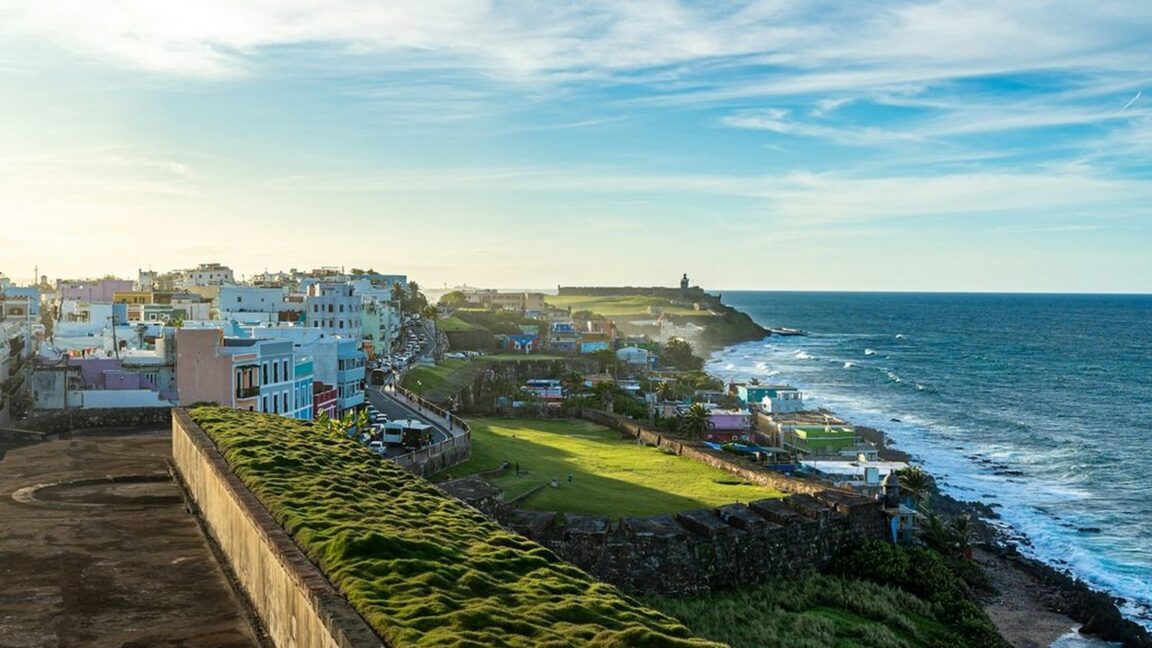
Start at Castillo San Cristobal, the fort that guarded the landward, eastern approach to the city. The National Park Service describes it as the largest fortification Spain built in the Americas, a layered system of walls, tunnels, dry moats and outworks designed so that each level could be defended if the one below it fell. Arriving near the 9am opening matters for two reasons: the stone plazas hold the morning cool a little longer, and the upper levels, with their sentry boxes looking over the Atlantic and the La Perla neighborhood below the walls, are at their quietest.
Give San Cristobal a full ninety minutes. Walk the main plaza, descend into the tunnel system, and look for the dungeon where a captain was held and where drawings of Spanish galleons survive on the walls. From the top level the whole logic of the walled city becomes visible: the wall running west toward El Morro, the grid of Old San Juan below, and the modern city rising beyond the old line of defense. That view is the map for the rest of the day.
Day 1 midday: the old town grid, eaten slowly
From San Cristobal, drop into the streets of Old San Juan itself. The district covers a small grid of streets paved in part with blue cobblestones, lined with restored Spanish colonial buildings in the bright colors the city is known for. Walk west along Calle Norzagaray on the wall side, then cut south through the grid toward the cathedral. The Catedral Basilica Metropolitana de San Juan Bautista, on Calle del Cristo, is one of the oldest cathedral buildings in the Americas and holds the tomb of Juan Ponce de Leon, the first governor of Puerto Rico.
Lunch is part of the itinerary, not a break from it. Order mofongo, the mashed fried plantain dish seasoned with garlic and served with shrimp, chicken or pork, and treat tostones and a strong Puerto Rican coffee as the supporting acts. The old town rewards eating where the menu is short and the room is full at midday. Afterwards, keep the pace slow: the streets around Plaza de Armas and the small plazas near the cathedral are for browsing, shade and second coffees, not for ticking off a list.
Day 1 afternoon: El Morro, the gate and the promenade
Walk west to Castillo San Felipe del Morro, the six level fortress on the headland guarding the entrance to San Juan Bay, begun in 1539 and built up over more than two centuries. Your morning ticket covers entry here as well, which is the practical reason for doing both forts on the same day. El Morro is the more open of the two: a wide lawn where kites fly on the trade winds, then ramparts, cannon positions, a lighthouse and sentry boxes at several levels, each framing the Atlantic differently.
Come back into town through the Puerta de San Juan, the surviving city gate near the cathedral, once the formal entrance from the harbor. As the light softens, join the Paseo de la Princesa, the tree lined promenade along the southern wall, where vendors and musicians gather and the wall glows in the late sun. Dinner in the old town, then an early night: day 2 starts before the rainforest parking fills.
Day 2 morning: El Yunque, done early and done properly
El Yunque lies northeast of San Juan, near Rio Grande, and the drive is short enough that an early start puts you on the PR-191 corridor near its 8am opening. The current rules are simpler than many older guides suggest. Checked against the Forest Service on 14 November 2026, entrance to the PR-191 North recreation corridor is free, no timed entry reservation is currently required, and the corridor operates from 8am to 5pm, with visitor numbers managed through parking. The old reservation system described in out of date articles has been retired, so do not waste the morning hunting for a booking page that no longer applies. Arrive early instead, because when parking reaches capacity, entry waits.
Begin at El Portal de El Yunque, the visitor center at the forest entrance, if exhibits and ranger guidance would help you choose trails; admission is US$8 for ages 16 and over and free for younger visitors. Then work up the corridor with a short list rather than a long one. La Coca Falls drops beside the road and needs only a stop. The Yokahu Tower gives the wide view over the forest canopy toward the coast. For walking, choose one real trail for the morning, such as the route to Juan Diego Falls for a swim under supervision of the posted conditions, or a section of the La Mina corridor trails that are open on the day. Trail status changes with weather and maintenance, so check the Forest Service alerts before leaving San Juan and accept the forest as it is that morning.
Pack for a rainforest, not a park stroll: shoes that grip wet stone, a light rain layer even under a blue sky, water, and a dry bag for a phone. Rain here is not a ruined plan; it is the climate that built the forest, and the falls run strongest after it. What matters is timing. A morning visit keeps the trails cooler, the parking workable and the afternoon free.
Day 2 afternoon: Luquillo, the beach and the return
Driving back toward San Juan, stop at Luquillo, where the long public beach sits near the famous row of food kiosks. This is the natural lunch after El Yunque: fried snacks, seafood and fresh juices served from a line of stalls, then a swim at the calm balneario if conditions allow. It is also the honest pacing choice. Two days that try to add a second major excursion on top of the rainforest usually end with everything done at half attention.
Back in San Juan by late afternoon, use the remaining hours for whatever day 1 left behind: the stretch of wall you did not walk, a museum hour, or simply Condado beach at the end of the day. Readers planning a longer Caribbean route will find our guide to 2 days in Cartagena, Colombia a natural pairing, since Cartagena is the other great walled city of the Spanish Caribbean, and our explainer on island hopping the Caribbean by ferry and short flights covers the logistics of stringing islands together with one bag.
The bioluminescent bay decision, made honestly
Puerto Rico has three bioluminescent bays, and they are not interchangeable. Mosquito Bay, on the island of Vieques, is widely regarded as the brightest, and it is the one most travelers picture. Reaching it means a ferry from Ceiba or a short flight, then a night tour, which in practice means sleeping on Vieques. Folding that into a two day San Juan trip converts the trip into a different trip: one night in the old town is lost, bags move, and the El Yunque morning usually dies in the reshuffle.
Laguna Grande, near Fajardo on the main island, is the workable evening option. Tours run after dark from the Fajardo area, which pairs naturally with the El Yunque and Luquillo day if the return to San Juan runs late, or as a separate evening drive. The glow there varies with moon phase, recent rain and water conditions, as it does everywhere; the darkest, moonless nights give the strongest effect at any bay. The honest rule for two days: choose Laguna Grande as an add on if the moon is favorable and the late night suits you, and save Mosquito Bay for a trip that gives Vieques its own night. Promising both in 48 hours is how itineraries fail.
Where to stay and how to move
Stay in Old San Juan if the forts and the evening promenade are the point; the whole of day 1 is then on foot. Stay in Condado if a beach hotel matters more, and accept short rides into the old town. Parking inside the old town is limited and slow, so a car earns its keep only on day 2, for El Yunque and Luquillo. Many visitors rent for that single day rather than the whole stay. Within the old town, comfortable shoes matter more than any transport decision: the cobblestones are beautiful and genuinely uneven.
Frequently Asked Questions
Do I need a reservation for El Yunque?
Not currently for the main PR-191 North corridor. Checked on 14 November 2026, the Forest Service states that corridor entrance is free, no reservations are required, hours are 8am to 5pm, and capacity is managed through parking. El Portal visitor center admission is separate at US$8 for ages 16 and over. Rules can change, so recheck the Forest Service site close to your visit.
Can I see both forts on one ticket?
Yes. The US$10 ticket for visitors aged 16 and over covers both El Morro and San Cristobal for 24 hours, children 15 and under enter free, and payment is by card or contactless only. Doing San Cristobal in the morning and El Morro in the afternoon is the natural order.
Which bioluminescent bay should I choose with only two days?
Laguna Grande near Fajardo, as an evening tour, if the moon phase is favorable. Mosquito Bay on Vieques is the brighter bay but realistically requires an overnight on Vieques, which reshapes the whole trip. Save it for a longer stay.
What is the best order for the two days?
Old San Juan first, rainforest second. The forts open at 9am and share a 24 hour ticket, while El Yunque rewards the earliest start you can manage for parking and cooler trails. Swapping the days works, but the fort ticket logic and the forest parking both favor this order.
Do US citizens need a passport for Puerto Rico?
No. Puerto Rico is a US territory, and travel from the US mainland is domestic travel. Bring the identification you would use for any US domestic flight.
When is the best time of year for this trip?
The drier months from December to April give the most reliable beach and trail weather. Summer and autumn bring heat, humidity and the hurricane season, when El Yunque trail closures and tour cancellations become more likely, so build in flexibility then.
Prices and hours checked 14 November 2026 against the National Park Service and the US Forest Service. Recheck both before travel, as fort hours and forest conditions change with weather and maintenance.