 Elena Vasquez
Two days is enough for Malaga if you resist treating it as a beach stop with museums attached. The city’s core is tight: the Picasso Museum, the Alcazaba, the Roman Theatre, the Cathedral and Plaza de la Merced all sit within a short walk of each other, so day one belongs to that historic centre, and day two to the Alcazaba done properly, the port and an evening at a beach chiringuito. The one decision to make early is Ronda: it is a genuine rival for your second day, and this guide helps you choose rather than cramming both.
Quick Facts
- Museo Picasso Malaga: Calle San Agustin 8, in the Palacio de Buenavista; open daily; November to February hours 10am to 6pm; general ticket 13 euros, reduced 11 euros, under 17s free; free for everyone in the last two hours on Sundays
- Alcazaba: Calle Alcazabilla 2; November to March hours 9am to 6pm, last entry 5pm; 7 euros, or 10 euros combined with Gibralfaro Castle; free on Sundays from 2pm
- Picasso’s birthplace: Casa Natal on Plaza de la Merced, a few minutes from the museum
- Chiringuito evening: The beach restaurants of Pedregalejo and El Palo, east of the centre, are the local choice over the city beach
- Ronda: About 1 hour 15 minutes to 1 hour 40 minutes away by road or rail depending on service; a full day trip
- Base: Stay in the historic centre so both days run entirely on foot
- Prices checked: 14 November 2026, against the museum and city ticket pages
Day 1: Picasso first, then the historic centre
Why start at the Picasso Museum?
Because it is the sight that sells out and the one that explains the city. Pablo Picasso was born in Malaga in 1881, and the Museo Picasso Malaga holds its collection in the Palacio de Buenavista, a 16th century palace on Calle San Agustin, minutes from the Cathedral and the Alcazaba. Book a timed ticket online ahead of the day: the general ticket is 13 euros, the reduced ticket 11 euros, under 17s enter free, and the audio guide is included. In the November to February season the museum opens daily from 10am to 6pm, with last entry 30 minutes before closing. Allow one and a half to two hours, and note the useful loophole: entry is free for everyone during the last two hours on Sundays, which in winter means from 4pm, though queues form for it.
From the museum, walk five minutes to Plaza de la Merced and the Casa Natal, Picasso’s birthplace, now a small museum and foundation headquarters. The square itself, with its benches and cafes, is the natural coffee stop of the morning.
How should the rest of day one run?
Give the afternoon to the streets rather than a second ticketed sight. Calle Larios, the marble-paved pedestrian spine, leads to Plaza de la Constitucion and the Cathedral, whose unfinished second tower earned it the nickname La Manquita, the one-armed lady. The Atarazanas Market, entered through a 14th century Moorish gate, is the food hall to browse before lunch counters close mid-afternoon. Eat late, as the city does, and keep the evening for the port: Muelle Uno’s promenade and the Centre Pompidou’s coloured cube are at their best after dark, with the Alcazaba lit on the hill above. Travellers pairing Malaga with Granada should read our Alhambra tickets and timing guide before fixing train times, because the two cities combine easily in one Andalusia trip.
Day 2: The Alcazaba, Gibralfaro and a chiringuito evening
What is the right order for the Alcazaba and Gibralfaro?
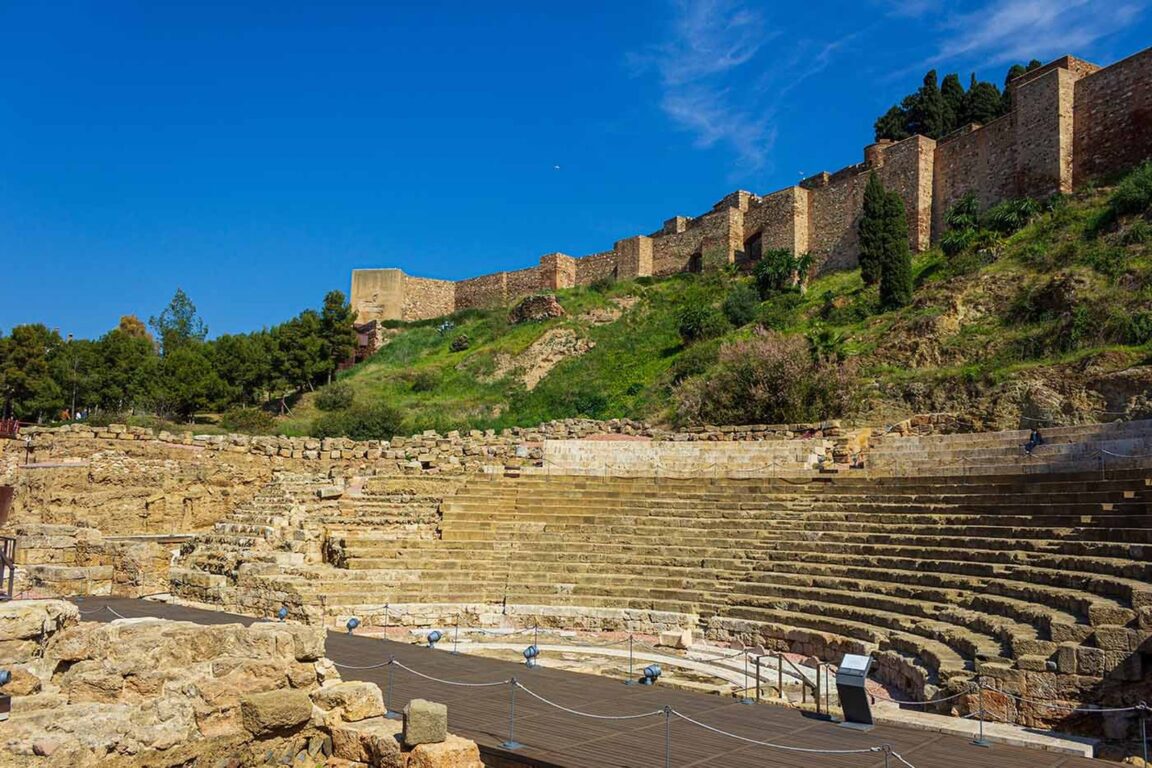
Alcazaba first, in the morning, while the stone is cool and the school groups are still arriving. The fortress-palace climbs the slope above Calle Alcazabilla, entered beside the Roman Theatre, which is free to view from the street and worth ten minutes before you go in. The Alcazaba costs 7 euros, or 10 euros on the combined ticket with Gibralfaro Castle above it; winter hours are 9am to 6pm with last entry at 5pm, and entry is free on Sundays from 2pm. Inside, the route winds through gate towers, gardens and small courtyards to views over the port. Allow one to two hours.
Gibralfaro, the castle at the top of the hill, is the optional second half. The combined ticket makes it cheap; the climb makes it a commitment. Walk up if the day is mild, or take the bus and walk down. The parapet view, over the bullring, the port and the bay, is the city’s postcard. If you only have energy for one, the Alcazaba is the richer building and Gibralfaro is the better view.
Where does the chiringuito evening happen?
East, not at the city beach. La Malagueta, the central beach, is fine for a swim, but the chiringuito culture visitors picture, grilled sardines on skewers (espetos) cooked over olive wood fires in beached boat grills, lives in Pedregalejo and El Palo, the old fishing neighbourhoods a short bus ride or a long promenade walk east of the centre. Go for sunset, order espetos and a plate of fried fish, and eat at the pace the place sets. It is the correct ending to the historic centre’s stone and museums: salt, smoke and the Mediterranean doing the work.
The Ronda decision
Ronda, with its gorge and its bridge, is the day trip everyone suggests, and with three or more days you should take it. With two, taking Ronda means surrendering either the Alcazaba morning or the relaxed second day, and Malaga becomes a dormitory. Our call: in two days, stay in Malaga. Ronda deserves a full day of its own, reached by morning train or car and best combined with an extra night in Andalusia. If mountains outrank museums in your travelling, swap day two wholesale, but do not split it. For the food thread that runs through both cities, our San Sebastian pintxos guide shows the other end of Spain’s bar culture, useful context for Malaga’s own tapas streets around Calle Granada.
Where to stay, and getting around
The historic centre is the base: everything in this plan is walkable, the train station for the airport line and any Ronda service is a short walk west, and Malaga Airport connects to the centre by a frequent rail service in about 12 minutes. November to February brings the mildest sightseeing weather of the year and the earliest museum closing, 6pm at the Picasso Museum, which is why this itinerary fronts the ticketed sights into the mornings and leaves evenings to the port and the beaches.
What most visitors get wrong in Malaga
Three mistakes recur. The first is arriving at the Picasso Museum without a ticket in the free Sunday window and treating the queue as the plan; the paid timed ticket is worth its 13 euros precisely because two days leave no slack. The second is climbing to Gibralfaro at midday in full sun and arriving at the Alcazaba too tired to read it; the order in this guide, fortress in the cool morning, castle viewpoint second, exists for that reason. The third is eating dinner at 7pm in the centre and concluding the food is ordinary. Malaga eats late, the Atarazanas counters and the tapas bars around Calle Granada fill from 8.30pm onward, and the chiringuito evening in Pedregalejo runs later still. Match the city’s clock for one night and the trip changes character: museums by day, the port lit up, sardines over olive wood, and a slow walk back along the promenade.
Frequently Asked Questions
How much is the Picasso Museum in Malaga, and when is it free?
General admission is 13 euros and reduced admission 11 euros, with under 17s free and the audio guide included. Entry is free for everyone during the last two hours of opening on Sundays, from 4pm in the November to February season when the museum closes at 6pm.
How much does the Alcazaba cost?
Seven euros for the Alcazaba alone, or 10 euros for the combined ticket with Gibralfaro Castle. Entry is free on Sundays from 2pm. Winter hours, November to March, are 9am to 6pm with last entry at 5pm.
Can you do Ronda as well in two days?
You can, but you should not. Ronda takes a full day with travel, so in a two day trip it replaces, rather than joins, the Alcazaba and beach day. Stay in Malaga for two days and give Ronda its own day on a longer trip.
Where is the best chiringuito area?
Pedregalejo and El Palo, the fishing neighbourhoods east of the centre, reached by bus or a long seafront walk. That is where the espeto sardine grills and the local evening crowd are; La Malagueta beach in the centre is better for swimming than for dinner.
How long do you need inside the Picasso Museum?
One and a half to two hours for the permanent collection and temporary exhibition at a comfortable pace, plus 30 minutes for the Casa Natal birthplace museum on Plaza de la Merced if you add it.
What should you book in advance?
The Picasso Museum timed ticket above all, especially for weekends and the free Sunday window. Alcazaba tickets can be bought online through the city’s official ticket page or at the gate outside peak times.