 Camille Baptiste
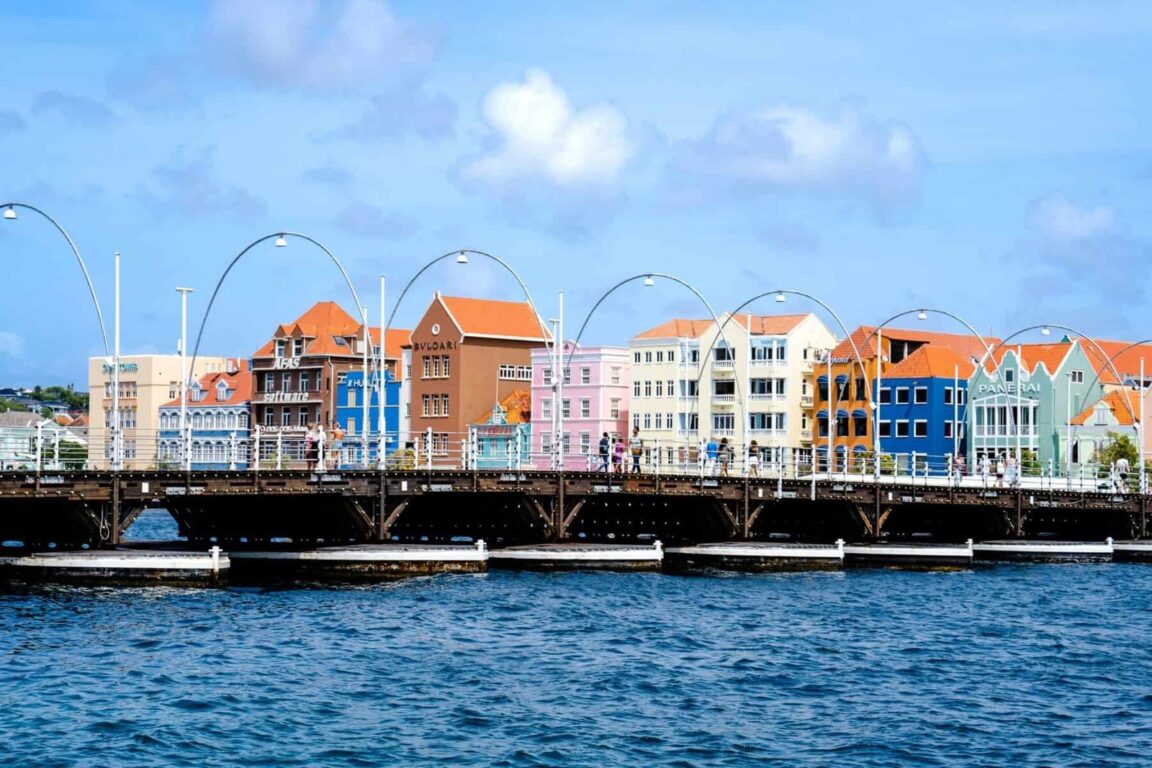
Willemstad is the Caribbean capital that rewards travellers who go beyond the beach, because its historic centre is a UNESCO listed Dutch colonial port city split into two walkable quarters by a deep harbour channel. On the east bank sits Punda, the oldest quarter, fronted by the Handelskade, a row of gabled merchants’ houses painted in yellows, blues, pinks and greens along St Anna Bay. On the west bank sits Otrobanda, literally the other side, a residential quarter of lanes, murals and restored townhouses. A floating pontoon bridge, the Queen Emma Bridge, swings open and closed between them all day. Add the island’s own liqueur distillery in a 19th century country house and some of the Caribbean’s most inventive street art, and Willemstad becomes a city break inside a beach holiday. This guide explains both quarters, the bridge, and how to structure a day or two in the capital of Curacao.
Quick Facts
- Where: Willemstad, capital of Curacao, on St Anna Bay in the southern Caribbean
- UNESCO status: Historic Area of Willemstad, Inner City and Harbour, inscribed in 1997
- The two quarters: Punda on the east bank, founded with Fort Amsterdam in the 1630s; Otrobanda, the other side, on the west bank
- The bridge: Queen Emma Bridge, a floating pontoon bridge opened in 1888, nicknamed the Swinging Old Lady
- The waterfront: Handelskade, the painted gabled row along the Punda side of St Anna Bay
- The liqueur: Senior Curacao liqueur, made from laraha orange peel at Landhuis Chobolobo since 1947
- Historic anchor: Mikve Israel Emanuel Synagogue, consecrated in 1732, the oldest synagogue in continuous use in the Americas
- Time needed: One day for both quarters, two days with the distillery, museums and Pietermaai evenings
How is Willemstad laid out?
Everything in Willemstad turns on St Anna Bay, the channel that cuts from the Caribbean Sea into the Schottegat, one of the largest natural harbours in the region. The Dutch West India Company seized Curacao in 1634 and built Fort Amsterdam at the channel’s mouth; the town that grew beside the fort became Punda, a compact grid of merchant houses, warehouses and places of worship behind the Handelskade quay. As the port prospered, settlement spilled across the water to Otrobanda, which developed from the early 18th century into a dense residential quarter of colourful townhouses and narrow lanes.
Two more quarters complete the UNESCO area: Scharloo and Pietermaai, across the smaller Waaigat harbour from Punda, where wealthy merchants built grand mansions in the 19th and early 20th centuries. Many Pietermaai mansions now hold boutique hotels, restaurants and bars, making it the city’s evening district. High above everything, the Queen Juliana Bridge carries cars across the bay; pedestrians use the floating bridge at water level, and that crossing is the experience at the heart of a Willemstad visit.
What makes the Queen Emma Bridge special?
The Queen Emma Bridge opened in 1888 and still does its original job. It is a pontoon bridge: a wooden deck carried on floating pontoons, hinged at the Otrobanda side and powered at the Punda side, so the whole structure swings sideways to open the channel for ships entering and leaving the Schottegat. Locals call it the Swinging Old Lady. Crossing it, you feel the deck move gently underfoot, and when the warning signals sound and the bridge begins to swing, pedestrians simply wait, or take the free ferry that runs while the bridge is open for longer periods.
The bridge is also the city’s best viewing platform. From mid channel, the Handelskade fills the frame on one side, while Otrobanda’s waterfront and the Rif Fort area spread on the other. Cross in the early morning for soft light and few people, and again near sunset when the facades glow. The bridge sits inside the UNESCO property, and its movement is not a performance for tourists; it is harbour infrastructure that has worked this way for well over a century. Travellers who enjoy working harbour cities will find a useful comparison in our guide to Merida, Mexico, and its hacienda evenings, another city where the historic centre, not the beach, is the point.
What should you see in Punda?
Start on the Handelskade itself. The painted row began as warehouses and merchants’ houses serving the port, and the colours have a famous origin story: in 1817 Governor Albert Kikkert, troubled by headaches he blamed on the glare of white facades in the tropical sun, ordered the buildings painted in other colours. Whether or not the story explains everything, the result is the Caribbean’s most recognisable waterfront. Walk the quay, then turn into the grid behind it for the shopping streets, the floating market tradition along the Waaigat side where Venezuelan boats long sold produce, and the city’s museums.
Two Punda landmarks deserve deliberate time. Fort Amsterdam, the 1630s fort at the bay’s mouth, still holds government offices and a church within its walls, and its courtyard explains how small the original settlement was. A few streets away, the Mikve Israel Emanuel Synagogue, consecrated in 1732 by the Sephardic Jewish community that helped build the port’s trade, is the oldest synagogue in continuous use in the Americas; its sand covered floor and museum tell a central part of Willemstad’s story. The Curacao Maritime Museum near Scharloo completes the picture of a city built entirely by shipping.
What is different about Otrobanda?
Otrobanda answers Punda’s commercial polish with residential character. Its name tells its history: it is simply the other side, where workers, freed people and later generations built a dense, lived in quarter of alleys and courtyards. For years it was the side visitors skipped. That has changed. Restoration around the Rif Fort, which now holds shops and restaurants at the cruise terminal end, and a wave of street art across the quarter’s lanes have made Otrobanda the place to wander without a checklist.
The murals are the headline: large scale works cover gable ends and alley walls, many of them around the alleys off Breedestraat, the main street, and new pieces keep appearing as the quarter’s revival continues. The Kura Hulanda Museum in Otrobanda documents the transatlantic slave trade and African heritage in the Caribbean, an essential and sobering counterweight to the pretty facades, because Willemstad’s prosperity was built in part on that trade. Give it unhurried time. Then walk the lanes at golden hour, when residents are out, music drifts from doorways, and the quarter feels most itself.
How does the liqueur distillery fit in?
Curacao liqueur is the island’s most famous export, and its genuine home is Landhuis Chobolobo, a 19th century country house in the Saliña district, a short drive or taxi ride from the centre. The story starts with failure: Spanish settlers planted Valencia oranges, and in Curacao’s arid soil and sun the fruit evolved into the laraha, a bitter orange too sour to eat. Its dried peel, however, is intensely fragrant. Senior and Co began selling liqueur from laraha peel in 1896 from a Willemstad pharmacy, bought Chobolobo in 1947, and has distilled there since, using a copper still that dates to the early operation.
Senior states it is the only producer that has always made its liqueur from native Curacao laraha, which is why its bottles carry the word Genuine. The blue colour that made the liqueur famous in cocktails is a later addition to the naturally clear spirit; the distillery also produces other colours and a clear version. Tours explain the peeling, drying and distilling process and end with tastings. It is an easy half day combined with the landhuis architecture itself, which shows how wealthy families once lived outside the dense city. For the paperwork side of a Curacao arrival, see our explainer on Aruba’s ED Card and sustainability fee, which covers the neighbouring island’s current system and helps travellers combining both islands in one trip.
How should you plan a Willemstad day?
A good Willemstad day crosses the bridge at least twice. Begin in Punda in the morning: Handelskade in early light, Fort Amsterdam, the synagogue and the market streets before the heat peaks. Take lunch in Punda or across in Pietermaai, then spend the hottest hours in a museum, the maritime museum or Kura Hulanda, or on the distillery tour at Chobolobo. Cross to Otrobanda for the late afternoon, walk the mural lanes as the light warms, and watch the bridge swing from the waterfront at dusk. Eat in Pietermaai, where the restored mansions hold the city’s best evening tables.
Practical notes are simple. The historic centre is flat and walkable, but shade is scarce, so carry water and plan indoor stops at midday. Cruise passengers dock close to Otrobanda and can walk the whole circuit; staying visitors should base in Pietermaai or Punda to be inside the UNESCO area after the day crowds leave. Curacao uses the Netherlands Antillean guilder, and US dollars are widely accepted in the city. The island sits south of the main hurricane belt, which is one reason its harbour city developed with such confidence.
Frequently Asked Questions
Why is Willemstad a UNESCO World Heritage Site?
UNESCO inscribed the Historic Area of Willemstad in 1997 for its Dutch colonial urban fabric adapted to the Caribbean: the Punda and Otrobanda quarters, the Handelskade waterfront, the forts and the harbour ensemble survive as a coherent historic port city.
How does the Queen Emma Bridge work?
It floats on pontoons and swings sideways, hinged at one end, to open St Anna Bay for shipping. When it opens, pedestrians wait for it to close again or take the free ferry that operates during longer openings. It is for pedestrians only; cars use the high Queen Juliana Bridge.
What is the difference between Punda and Otrobanda?
Punda, on the east bank, is the oldest quarter: the Handelskade, Fort Amsterdam, the synagogue and the main shopping streets. Otrobanda, on the west bank, is the residential quarter of lanes, murals and the Kura Hulanda Museum. The floating bridge joins them in a few minutes on foot.
Where is Curacao liqueur made?
Genuine Curacao liqueur is made by Senior and Co at Landhuis Chobolobo in Willemstad, where the company has distilled since 1947. It is flavoured with the dried peel of the laraha, the bitter orange that evolved on the island from Spanish Valencia plantings.
How long do you need in Willemstad?
One full day covers Punda, the bridge, Otrobanda and a museum. Two days add the distillery, Scharloo and Pietermaai at leisure, and time for the beaches west of the city without rushing the historic centre.
Is Willemstad walkable?
Yes. The UNESCO quarters are compact and flat, and the main sights sit within a 20 minute walk of the bridge. The challenges are heat and sun rather than distance, so start early and use museums and cafes as midday shade stops.