 Jonas Lindqvist
San Cristobal de las Casas rewards first timers who slow down: one day for the colonial centre, its jade and amber museums and its markets, one day for the Tzotzil Maya towns of San Juan Chamula and Zinacantan, visited on the communities’ own terms, and one day for the hilltop churches, coffee and the Casa Na Bolom museum. The city sits in a highland valley in Chiapas at over 2,000 metres, founded in 1528 and still known by its Tzotzil name, Jovel. Nights are cold, mornings are clear, and the altitude catches people out, so this itinerary keeps the first day gentle and puts the village visits on Day 2, once the town makes sense.
Quick Facts
- Best base: The historic centre within a few blocks of the Zocalo and the pedestrian andadores, where nearly everything in this itinerary is walkable.
- Do not miss: The Santo Domingo church and its crafts market, the Jade Museum and Amber Museum, Casa Na Bolom, and a respectful morning in San Juan Chamula.
- The one rule that matters: Photography is strictly forbidden inside the church at Chamula and is enforced. Phones and cameras stay in a pocket or bag, and people are photographed only with their permission, everywhere in the highlands.
- Altitude: The city sits above 2,000 metres. Take Day 1 easy, drink water, and expect cold nights even after warm afternoons.
- Getting in: Most visitors fly to Tuxtla Gutierrez and continue by road, a journey of roughly one to one and a half hours on the highway to the highlands.
- Prices checked: November 2026. Museum hours and village entry fees change, so confirm on the day.
Day 1: The Centre, Jade and Amber, and the Santo Domingo Market
Morning: The Zocalo, the Cathedral and the Andadores
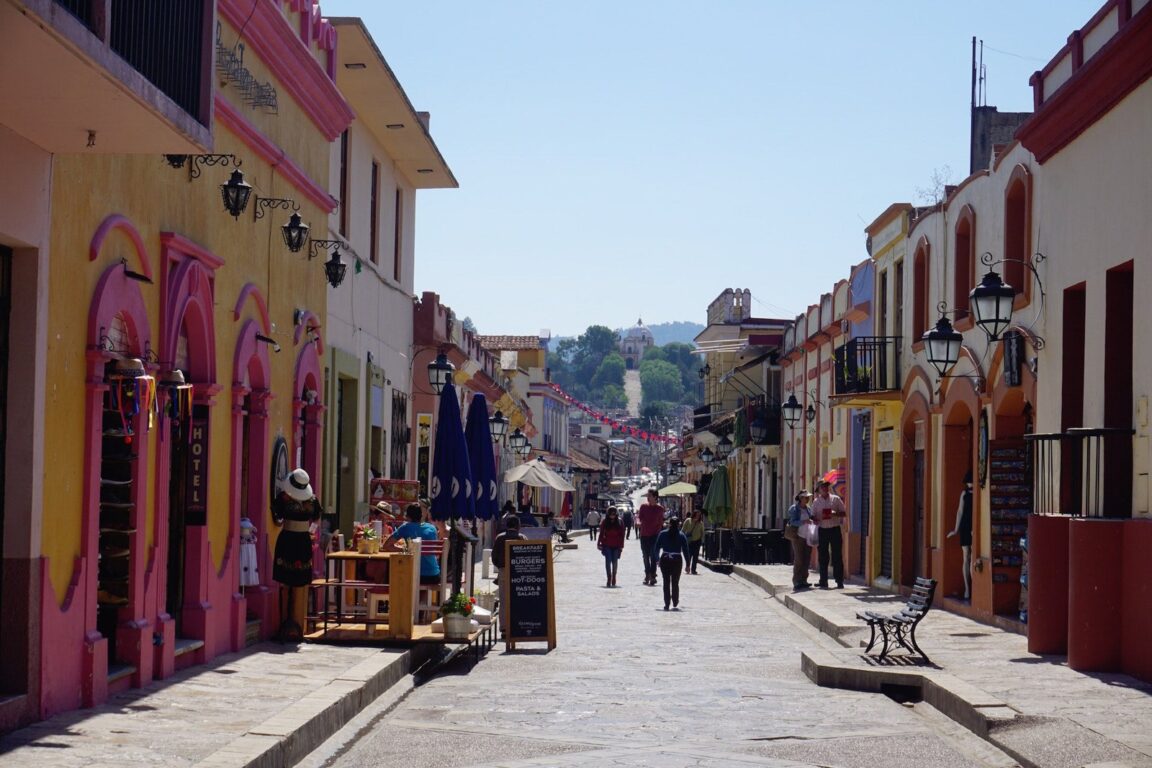
Start at the Zocalo, the main plaza, with the yellow Cathedral of San Cristobal on its north side and the arcaded municipal palace opposite. The centre still follows its Spanish colonial layout of narrow cobbled streets, red tile roofs and wrought iron balconies. From the plaza, the pedestrian streets known as andadores do the navigating for you. The Andador de Guadalupe runs east toward the Guadalupe church, and the Andador Eclesiastico runs south past Santo Domingo. Walk both slowly, because the town’s rhythm of cafes, bookshops, textile shops and bakeries is the real first day sight.
Midday: The Jade Museum and the Amber Museum
Chiapas is jade and amber country, and San Cristobal has a museum for each, which makes a neat pairing before the markets. The Museo del Jade displays carved jade in the Maya tradition, including a replica of the tomb of Pakal, the ruler of Palenque, whose burial mask is the most famous jade object in Mexico. The Museo del Ambar, housed in the former Santo Domingo convent complex, shows raw and polished Chiapas amber, pieces with insects trapped inside, and carving in progress. Seeing both first changes how you shop later, because the difference between resin, young copal and true amber, and between common green jade and fine jadeite, becomes visible. Staff in both museums demonstrate the tests, including how real amber behaves under light and touch.
Afternoon: Santo Domingo and the Crafts Market
The Templo de Santo Domingo, with its ornate pink baroque facade, is the city’s finest church, and the plaza around it hosts the region’s best known open air crafts market. Stallholders from highland communities sell textiles, backstrap loom weaving, embroidered blouses, pottery and amber. Prices are negotiable within reason, and buying directly from the weaver is common here. Inside the adjoining former convent, the Museo de los Altos de Chiapas and the Sna Jolobil textile cooperative show museum quality weaving, which sets a benchmark before you buy. For a wider Mexico route, our Puebla travel guide covers another colonial city with a strong craft tradition.
Day 2: Chamula and Zinacantan, Visited Properly
Before You Go: How Visiting Works
San Juan Chamula, about 10 kilometres from San Cristobal, is a Tzotzil Maya municipality that governs itself through its own authorities and the cargo system of rotating civil and religious offices. It is a living community, not an open air museum, and visitors are welcome on clearly understood terms. Go in the morning, ideally with a local guide hired in San Cristobal, or by colectivo from the market area if travelling independently. Buy the entry ticket at the community office or kiosk by the main plaza first. The fee is small and it is not optional. A detailed etiquette briefing is at Maya B Experiences on visiting the highland Maya communities respectfully, and it is worth reading the night before.
The Church of San Juan Bautista: The Protocol
The white church of San Juan Bautista on the plaza is the reason most people come, and it asks the most of them. Photography inside is absolutely forbidden. This is not a guideline. Community police, the mayoles, enforce it, and visitors who have tried to take pictures have had phones and cameras confiscated and have faced fines and detention. Put devices away before entering, not at the door. Inside there are no pews. The floor is covered with pine needles, thousands of candles stand in rows on the floor, and families pray before the saints along the walls while curanderos, healers, carry out ceremonies that can involve eggs, herbs, copal incense, soft drinks and, at times, a live chicken. Catholic and Maya practice are woven together here into something found nowhere else. Behaviour that respects it is simple: keep your voice down, remove your hat, do not point, walk along the sides rather than through the middle, and do not stop to watch a family’s healing at close range. You are a guest at other people’s prayers. Dress modestly, with shoulders and knees covered, and keep the visit unhurried and quiet.
Afternoon: Zinacantan, the Flower Town
Continue about 7 kilometres to Zinacantan, the second Tzotzil town on the usual circuit and a deliberate contrast. Zinacantan is famous for flower growing, and its greenhouses supply much of the region. Visits typically include the church of San Lorenzo, where photography rules also apply inside, and a family home where women weave on backstrap looms, embroider in the town’s floral style, and serve fresh tortillas with beans and a taste of pox, the local corn and sugarcane spirit. The welcome here is warmer and more commercial, and buying weaving directly from the household is the point of the stop. The standard combined day is described well at To Travel Too’s guide to visiting San Juan Chamula and Zinacantan. Back in San Cristobal, spend the evening on the Andador de Guadalupe, where the town takes its own walk.
Day 3: Hilltop Churches, Na Bolom and Coffee
Morning: Guadalupe and San Cristobal Hills
Two churches on hills bookend the town. The Iglesia de Guadalupe, reached by a long flight of steps at the end of the Andador de Guadalupe, gives the classic view back over the rooftops. On the opposite side, the Iglesia de San Cristobal climbs its own stairway to the mirador above the centre. Do one early, while the light is on the tiles and the valley mist is lifting, and save the second for late afternoon if energy allows. Both are working parish churches, so visit between services and dress accordingly.
Midday: Casa Na Bolom
Casa Na Bolom, the House of the Jaguar, was the home of archaeologist Frans Blom and photographer and conservationist Gertrude Duby Blom, and it is now a museum, library and research centre dedicated to the cultures and environment of Chiapas, including the Lacandon Maya. The rooms hold archaeological pieces, photographs and the Bloms’ working library, and the garden restaurant is a peaceful lunch stop away from the centre. It is the single best place in town to understand the region beyond its markets, and its story adds necessary depth to the Day 2 visits.
Afternoon: Coffee and the Daily Market
Chiapas grows some of Mexico’s best coffee in the highlands around the city, and San Cristobal’s cafes pour it all day. Spend the last afternoon between a coffee house on the andadores and the municipal market near Santo Domingo, where the everyday market, as opposed to the crafts market, sells flowers, produce, herbs and prepared food to the town itself. It is the right place to see the highlands’ ingredients in one sweep. Travellers heading north afterwards can connect this route with our Merida guide to haciendas, cenotes and slow evenings for a very different, lowland Mexico.
Where to Stay and How to Move Around
Stay in the historic centre, in the converted colonial houses around the Zocalo and the andadores, where courtyards, fireplaces and heavy blankets answer the cold nights. The centre is walkable throughout, and colectivos and taxis cover the Chamula and Zinacantan run for those not taking a tour. Carry small notes for village fees and market purchases, and carry a warm layer from late afternoon onwards, because the temperature drops fast once the sun leaves the valley.
Frequently Asked Questions
Can you take photos inside the church at Chamula?
No. Photography and filming inside the church of San Juan Bautista are strictly forbidden and actively enforced by community police. Devices should be put away before entering. Taking a photo can lead to confiscation, a fine and detention, and it causes genuine offence, because the ceremonies inside are private acts of worship and healing.
Can you photograph people in Chamula and Zinacantan?
Only with clear permission, asked first. Many residents do not wish to be photographed, and photographing authorities, ceremonies or processions without permission is not acceptable. In markets, ask the stallholder. A refusal is the end of the conversation, and in Zinacantan households the family will tell you what is fine.
Do you need a guide for Chamula?
A guide is not compulsory, but a good local guide explains what you are seeing, handles the ticket and the etiquette, and keeps you from giving offence by accident. Independent visits by colectivo are common. Either way, buy the community entry ticket on arrival and follow the photography rules exactly.
What should you wear for the village visits?
Dress modestly, with shoulders and knees covered, and remove hats inside the church. Bring a warm layer, because the villages sit higher than the city and the church interior is cool. Comfortable shoes matter, since the Chamula church floor is pine needles over stone and can be slippery.
When is the best time to visit San Cristobal de las Casas?
The dry season, roughly November to April, brings clear mornings and the coldest nights. The rainy season afternoons are dramatic and the town is greener and quieter. Major festivals, including the town’s celebrations around Holy Week and the Fiesta Grande in January in nearby Chiapa de Corzo, fill hotels quickly, so book ahead for those dates.
Is the altitude a problem?
For most visitors it means one slower first day, a possible headache and colder nights than expected in Mexico. Take Day 1 gently, eat lightly, keep hydrated and save the hilltop church stairways for Day 3, as this itinerary does.