 Hana Kim
Go to Inle Lake because nowhere else in Myanmar, and few places anywhere, organises daily life entirely on water like this high Shan State lake does, with Intha stilt villages, floating gardens staked to the lakebed, leg rowing fishermen, and the forest of weathered stupas at Indein reached by boat. Base yourself in Nyaung Shwe, spend one full day on a longtail boat circuit and a second morning returning to Indein and the quieter southern villages, and check current government travel advice carefully before planning, because Myanmar has faced ongoing conflict since 2021.
Quick Facts
- Where: Inle Lake, southern Shan State, Myanmar, gateway town Nyaung Shwe.
- Size and altitude: About 22 km long and 10 to 11 km wide, shallow at roughly 2 to 4 metres deep on average, at about 880 metres above sea level.
- People: The Intha, about 70,000 people in stilt villages on and around the lake.
- Signature sights: Leg rowing fishermen, floating gardens, Phaung Daw Oo Pagoda, Nga Hpe Kyaung monastery and the Indein stupa complex.
- Access: Heho Airport is the nearest airport, about 31 to 35 km from Nyaung Shwe, with onward road transfer to the town and its canal jetty.
- Important context: Most Western governments advise against all or all but essential travel to Myanmar following the February 2021 coup and ongoing civil conflict. Verify current advice before any planning.
Why does life on Inle Lake look so different?
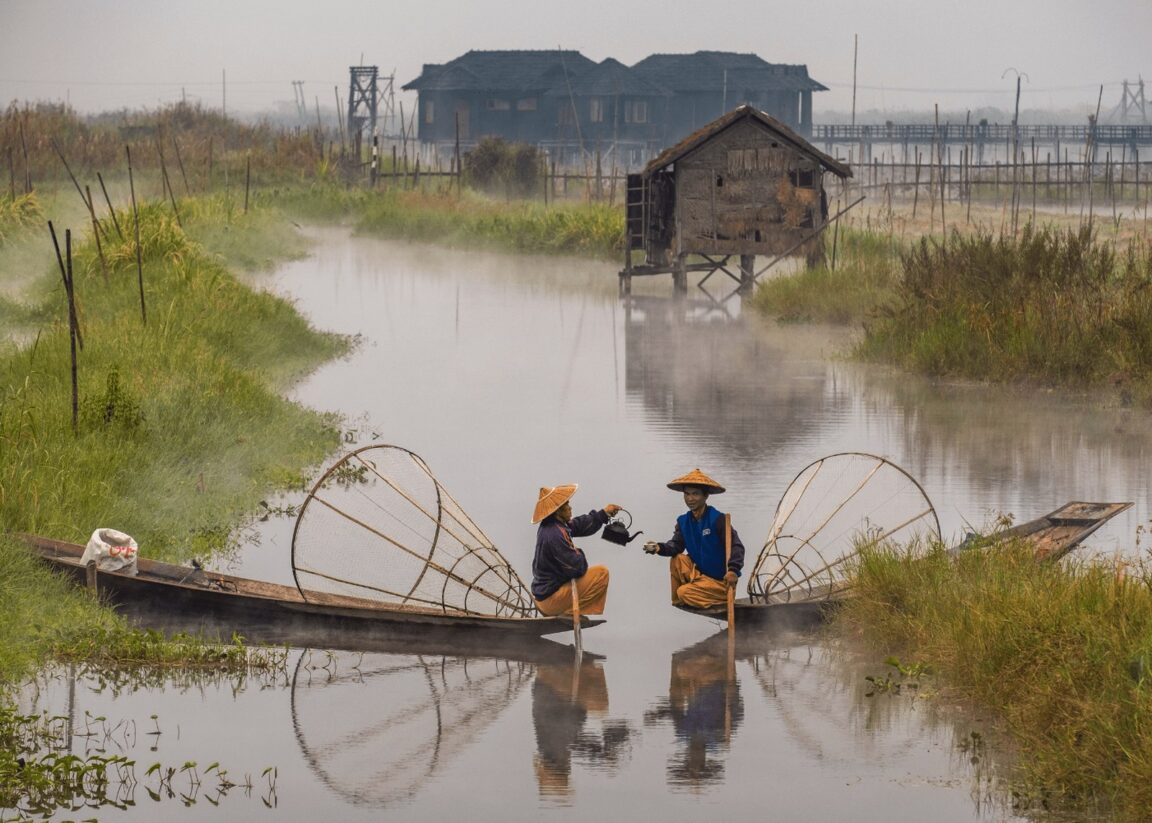
The Intha, whose name means sons of the lake, built their world on the water itself. Villages stand on stilts over the lake, houses and monasteries rise from the shallows, and transport is by boat along canals and open water rather than by road. Gardens float. The floating gardens are strips of weed, hyacinth and silt built into metre thick mats, staked to the lakebed with bamboo poles, rising and falling with the water level and tended by canoe. Tomatoes are the famous crop, alongside beans, vegetables and flowers, and the gardens cover a significant share of the lake surface.
The fishermen complete the picture. Intha fishermen row standing at the stern on one leg, wrapping the other leg around the oar, a technique that evolved because the shallow lake is covered by reeds and floating plants that are hard to see over while sitting. Standing gives the rower a view beyond the reeds and leaves both hands free for nets and the large conical fish trap. Some fishermen near the main routes now pose for photographs, so the honest way to read the scene is to watch working boats away from the canal entrance as well as the famous silhouettes at dawn.
What does a full day by boat actually include?
A standard full day boat tour from Nyaung Shwe runs down the canal to the open lake and strings together the lake’s working sights in one circuit. Expect the floating gardens, stilt villages such as Ywama and Nampan, craft workshops for silverwork, lotus and silk weaving, cheroot rolling and boat building, and the lake’s religious sites in between. Lotus weaving is unique to this area: fibres are stripped from lotus stalks, rolled into thread and woven, often combined with silk, and pure lotus scarves command high prices because the work is so slow.
The Phaung Daw Oo Pagoda is the most revered shrine in southern Shan State. It houses five small Buddha images so heavily encrusted with gold leaf applied by male devotees that they have lost their human shape. During the annual Phaung Daw Oo festival, four of the five images tour the lake villages on a colourful Karaweik barge in a celebration lasting more than two weeks in September or October. The Nga Hpe Kyaung, a Shan style teak monastery built in 1843, is the other classic stop, long known to visitors by its former jumping cat nickname.
Markets rotate. The lake’s five day market cycle moves between villages including Nyaung Shwe, Ywama, Nampan, Indein and other landing points, so ask in Nyaung Shwe which village hosts the market on your boat day and build the circuit around it if you can. The market is where floating garden produce and hill village goods meet, and it is at its best early.
Why is Indein worth its own trip?
Indein, on the western side of the lake, is reached by a long, narrow and scenic canal through reed beds and swamp, and it repays the detour more than any other stop. Behind the village landing at Nyaung Ohak, under the banyan trees, a covered stairway climbs the hill to Shwe Inn Thein, a complex of more than a thousand weathered stupas, many crumbling and overgrown, many restored and gilded, packed across the hillside. Sources differ slightly on the count, citing figures around 1,054 to 1,094 stupas, but every account agrees on the effect: a dense, quiet forest of spires unlike anything else on the lake.
Go to Indein early, walk the covered way slowly, and allow time to wander beyond the first restored rows into the older, vegetation covered sections. Pair it with a late return across the lake so the second half of the day stays unhurried, rather than squeezing Indein into the end of a packed workshop circuit.
How should you base yourself and plan the days?
Stay in Nyaung Shwe, the main town on the northern canal, about six kilometres of canal from the open lake. It has the widest choice of lodging, restaurants, boat hire and bicycle rental, and it works for walks into the rice paddies and hills east of the lake on a non boat day. Lake resorts offer a quieter stay and direct jetty departures, but they isolate you from town in the evenings, so choose based on whether you value the town’s food scene or the water at your door.
Plan day one as the full boat circuit and day two as Indein plus a slower southern lake route, starting at dawn when mist sits on the water and the fishermen are working. For regional context on slow Mekong and lake towns, read the guide to Luang Prabang, Laos and the First Time in Bangkok itinerary, the two most common pairings on a mainland Southeast Asia route.
The safety context cannot be skipped. Myanmar has experienced ongoing civil conflict since the February 2021 military coup, tourism numbers are a fraction of pre 2020 levels, and a major earthquake in March 2025 also damaged buildings around the lake according to recent guides. This article explains why Inle Lake matters as a destination. Whether and when to go is a decision to make only against current official advice for Shan State and your own government’s guidance, checked close to departure.
Frequently Asked Questions
How do you get to Inle Lake?
Fly to Heho Airport, the nearest airport at roughly 31 to 35 km from Nyaung Shwe, then transfer by road to Nyaung Shwe in about an hour. From the town jetty, boats run down the canal to the lake. Overland buses from Yangon and Mandalay are long hauls and conditions change, so verify routes before relying on them.
How many days do you need on Inle Lake?
Two full days is the honest minimum: one for the main boat circuit of gardens, villages and Phaung Daw Oo, and one for Indein and a slower southern route. A third day in Nyaung Shwe for cycling and hill walks rounds out the stay.
What are the floating gardens of Inle Lake?
They are farm beds built from lake weed, hyacinth and mud into thick floating mats, staked to the lakebed with bamboo poles. Intha farmers grow tomatoes, beans, vegetables and flowers on them, tending and harvesting everything by canoe as the beds rise and fall with the water.
Why do Inle Lake fishermen row with one leg?
Standing on one leg and wrapping the other around the oar lets the fisherman see over the reeds and floating plants on this shallow lake, and frees both hands for handling nets and the conical fish trap. The style is practised by men; women traditionally row sitting, using the oar with their hands.
Is it safe to visit Inle Lake now?
Check current official advice before deciding. Most Western governments advise against all or all but essential travel to Myanmar due to ongoing civil conflict since 2021, and local conditions around Shan State can change. Do not rely on older travel guides for the safety picture.