 River Callahan
The biggest mistakes at Fort Union National Monument are timing mistakes, not ticket mistakes. Entry is free and no pass is required, but the monument keeps short hours, sits 28 miles from the nearest food and fuel in Las Vegas, New Mexico, and exposes you to wind and sun on an open prairie with almost no shade. Arrive late, arrive hungry, or arrive expecting a reconstructed fort and the visit falls apart. Arrive early with a full tank, water, and a plan built around the 1.25 mile self guided trail through the ruins and the Santa Fe Trail ruts, and Fort Union becomes one of the most atmospheric historic stops on Interstate 25 in the Southwest.
Quick Facts
- Location: 3115 NM 161, Watrous, New Mexico, 8 miles west of Interstate 25 Exit 366
- Entry cost: Free. No entrance pass is required, per the National Park Service fees page
- Hours: 8:00 am to 4:00 pm in the winter season, with longer summer hours to 6:00 pm from Memorial Day to Labor Day; closed Thanksgiving Day, Christmas Day and New Years Day
- Main trail: 1.25 mile self guided interpretive trail through the second and third fort ruins
- Nearest services: Las Vegas, New Mexico, 28 miles south, for food, groceries and fuel; Wagon Mound, 31 miles north, for fuel
- Historic span: Three successive forts operated here from 1851 to 1891 as the largest military post and supply depot in the Southwest
- Official source: National Park Service, nps.gov/foun
What is the single biggest timing trap at Fort Union?
The closing time is the trap. Fort Union is not a dawn to dusk park where you can drift in at 3:30 pm and still see the core site. The visitor center and grounds run on a compact day, 8:00 am to 4:00 pm for much of the year, and the self guided trail through the ruins needs a comfortable 60 to 90 minutes if you read the waysides and walk out to view the trail ruts. A 2:45 pm arrival leaves you rushing the parade ground, skipping the film and exhibits that explain what the adobe walls actually were, and watching the light you came for arrive just as you have to leave.
The fix is simple. Treat Fort Union as a morning stop. If you are driving Interstate 25 between Santa Fe and Raton, build the detour into the first half of the day. Santa Fe is 94 miles away and Las Vegas is 28 miles away, per the National Park Service directions page, so a 9:00 am start from Las Vegas puts you at the visitor center before 10:00 am with the whole site ahead of you. Morning also brings the calmest wind and the softest light on the adobe ruins, and in summer it keeps the exposed walk off the midday heat.
Do you need tickets or a reservation for Fort Union?
No. This is the second trap, and it catches people in the opposite direction. Travelers used to timed entry systems at larger parks sometimes delay a visit hunting for a booking page that does not exist. The National Park Service states plainly that there is no fee to enter Fort Union National Monument and no entrance pass is required. You park, walk into the visitor center, pick up the trail guide, and start walking. There is no gate queue and no permit window to miss.
That simplicity connects to a wider pattern across the park system this year. If your road trip strings several parks together, check which ones still use reservations and which have dropped them before you build the itinerary. Our guide to US national park reservations in 2026 tracks which parks require timed entry and which do not, and Fort Union sits firmly in the walk in free category.
Why do the Santa Fe Trail ruts disappoint some visitors?
Because they go looking in the wrong place, at the wrong light, with the wrong expectation. The ruts at Fort Union are swales, broad shallow troughs worn into the prairie by wagon traffic on the Mountain and Cimarron branches of the Santa Fe Trail, and the National Park Service notes that the largest visible network of Santa Fe Trail ruts can be seen here. They are not wheel tracks cut into rock. In flat midday light they can read as gentle dips in the grass and visitors walk past them.
Give the ruts their best conditions. View them in low morning or late afternoon light when shadows pool in the swales and the parallel lines stand out across the valley floor. Use the signed viewpoints on the approach road and near the fort, and read the wayside first so your eye knows the pattern to look for. Photography helps too: a low sun angle and a slightly elevated viewpoint turn a subtle feature into the clearest surviving evidence of the trail in the region.
What should you not expect from the fort ruins themselves?
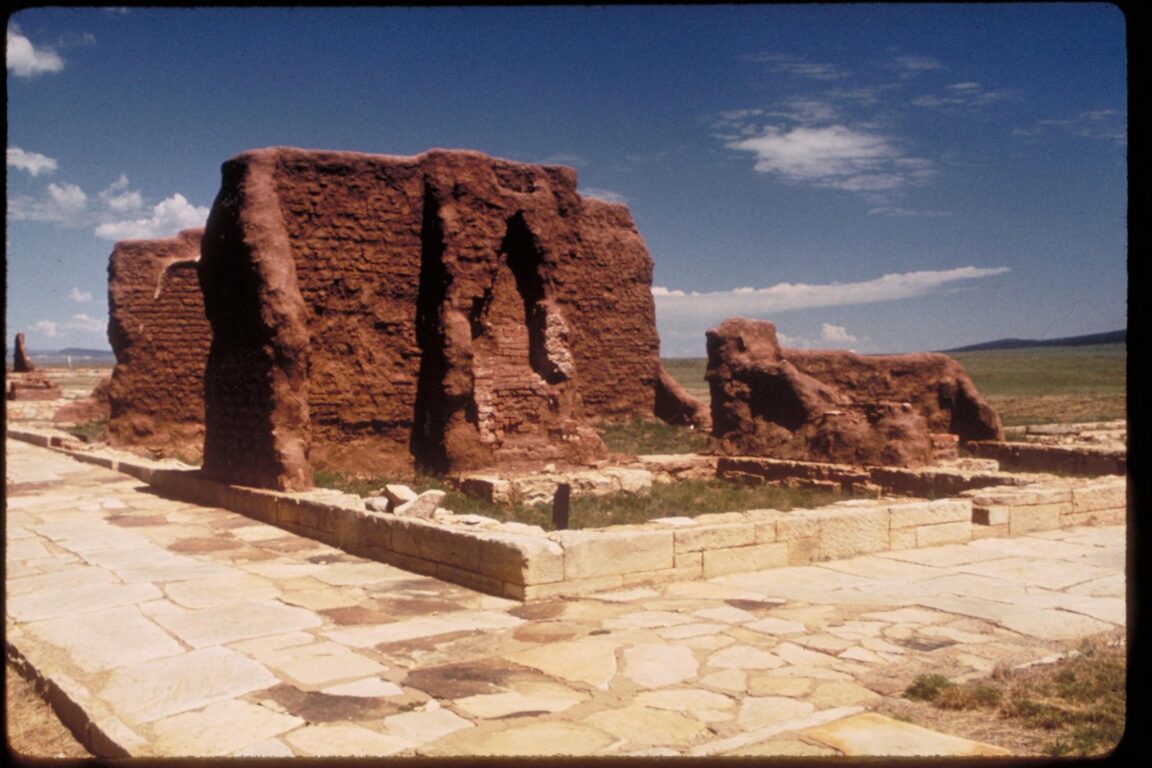
Do not expect roofs, furnished rooms, or a rebuilt frontier post. Fort Union preserves ruins: adobe walls, stone foundations, chimneys standing in rows across the parade ground, and the footprint of what was once the largest 19th century military fort in the region. The third fort, built between 1863 and 1868, served as garrison, arsenal and supply depot, and the second fort survives as the only earthen star fort built west of the Mississippi River. The power of the place is scale and emptiness, the wind moving through doorways that open onto prairie.
That is why the visitor center matters more here than at most sites. Start inside. The museum exhibits and the short film supply the missing walls: who lived in the officers quarters, how the quartermaster depot fed forts across the territory, and why the railroad reaching Watrous in 1879 made the post obsolete before its abandonment in 1891. Visitors who skip the center often rate the ruins as a pile of walls. Visitors who start there walk the same ground reading it as a small city.
How do food, fuel and weather traps catch people out?
The National Park Service is blunt about the isolation: no food, grocery, restaurant, gasoline or auto services are located near the monument. The nearest services are in Las Vegas, 28 miles south, and Wagon Mound, 31 miles north. The practical rules follow from that one fact. Fuel up before Exit 366. Carry more water than you think a 1.25 mile walk needs, because the trail is fully exposed at roughly 6,700 feet of elevation. Bring lunch or plan the Las Vegas meal stop into the drive rather than assuming a cafe near the gate.
Weather is the other half of the trap. The monument sits in a sweeping valley of short grass prairie and the wind is a near constant. Adobe ruins offer no shelter on the trail. A hat, sunscreen and a wind layer matter in every season, and summer thunderstorms build fast over the plains. If lightning is visible, the exposed parade ground is the wrong place to be; return to the visitor center and wait it out. Winter visits bring cold wind rather than deep snow most days, but the short 4:00 pm close and low sun compress the usable window further.
How long does a good Fort Union visit actually take?
Budget two to three hours and the visit breathes. That covers the visitor center exhibits and film, the full 1.25 mile loop at a reading pace, time at the ruts viewpoints, and a pause at the picnic area. A one hour stop is the classic mistake: it forces a choice between the museum context and the ruins, and whichever you skip is the half that makes the other half make sense. Drivers crossing New Mexico on Interstate 25 often pair Fort Union with a night in Las Vegas, whose historic plaza and rail era hotels make a natural base, or continue north toward Raton and Colorado. Either way, Fort Union works best as a deliberate half day anchor, not a windshield detour.
One more small trap deserves a mention. There is no public transportation to the monument and no camping at the site, and bicycling is not allowed on the monument trail. Arrive by car, walk the trail on foot, and treat Watrous valley as the quiet base it is: services in town are minimal, so the valley rewards travelers who arrive self sufficient and stay for the silence as much as the history.
Frequently Asked Questions
Is Fort Union National Monument really free?
Yes. The National Park Service lists no entrance fee and no pass requirement for Fort Union. Parking and the self guided trail are also free.
What are the opening hours at Fort Union?
The monument opens at 8:00 am. Closing is 4:00 pm in the winter season and later, 6:00 pm, in the summer season from Memorial Day to Labor Day. It closes on Thanksgiving Day, Christmas Day and New Years Day. Confirm the current season hours on nps.gov/foun before you drive.
How far is Fort Union from Las Vegas, New Mexico?
Las Vegas is 28 miles south via Interstate 25 and NM 161. It is the nearest town with a full range of food, groceries, fuel and lodging, and the sensible base for a morning visit.
Can you still see the Santa Fe Trail ruts at Fort Union?
Yes. Swales from the Mountain and Cimarron branches of the Santa Fe Trail cross the monument, and the National Park Service describes the network here as the largest visible set of trail ruts. Low angled light shows them best.
Is there food or camping at Fort Union?
No. There are no restaurants, stores or campgrounds at the monument. Eat and fuel in Las Vegas or Wagon Mound, and carry water for the exposed trail.
How much time should I allow for the self guided trail?
The trail is 1.25 miles. Allow 60 to 90 minutes to walk it with the guidebook stops, plus 30 to 45 minutes for the visitor center exhibits and film.
Last updated and facts checked: November 16, 2026, against National Park Service pages for Fort Union National Monument. For a wider planning view of trail and booking systems on a longer trip, see our guide to how the New Zealand Great Walks booking system works, a useful contrast with walk in sites like Fort Union.