 Jonas Lindqvist
Before you fly domestically from Ho Chi Minh City, check the terminal on your booking before you check anything else: most Vietnam Airlines domestic flights now leave from the new Terminal 3 at Tan Son Nhat, which opened on 19 April 2025, while Vietjet domestic flights remain at Terminal 1 and all international flights use Terminal 2. Terminal 3 has its own road approach on the Phan Thuc Duyen side of the airport, so a taxi sent to the old domestic terminal cannot simply swing round to the right door. Bring photo ID that matches the booking name, complete check-in before the domestic cutoffs, and allow about two hours at the airport. This guide lists the documents, deadlines and airline moves in the order officials and airlines ask for them.
Quick Facts
- Airport: Tan Son Nhat International Airport (SGN), about 7 km from District 1 in Ho Chi Minh City.
- Terminal 3 opened: Inaugurated 19 April 2025, with Vietnam Airlines Hanoi services moving first and the full domestic transfer following from 28 April 2025.
- Terminal 3 role: Domestic only. Capacity about 20 million passengers a year and up to 7,000 passengers per peak hour, with 89 to 90 check-in counters, 20 automated bag-drop counters and 42 self-service kiosks reported at opening.
- Who uses Terminal 3: Vietnam Airlines domestic flights, with Pacific Airlines, VASCO, Bamboo Airways and Vietravel Airlines also operating domestic services there. Vietnam Airlines exceptions remain at Terminal 1: Con Dao, Ca Mau and Rach Gia services, plus specified codeshare flight number ranges.
- Who stays at Terminal 1: Vietjet Air domestic flights, in Hall A. Always confirm, because allocations have moved in stages.
- Terminal 2: All international arrivals and departures, unchanged.
- Domestic check-in deadlines (Vietnam Airlines): Counters open 2 hours before departure and close 40 minutes before departure. Kiosk check-in runs from 6 hours to 45 minutes before departure. Online check-in runs from 24 hours to 1 hour before departure. Boarding gates close about 15 minutes before departure.
- Connections: Published minimum connect guidance includes about 80 minutes between Terminal 3 and Terminal 1 domestic flights and about 120 minutes between Terminal 3 domestic and Terminal 2 international flights. There is no airside link; transfers are landside.
Which documents do you need, in the order officials ask for them?
For a domestic flight inside Vietnam the sequence is short, but every step depends on the one before it. First comes the booking itself: the passenger name must match the ID that passenger will carry, because the check-in agent, the kiosk and the security officer are all comparing the same two strings. Second comes photo ID at check-in or bag drop: Vietnamese citizens use their citizen ID card or passport, foreign visitors use their passport, and children travel on the documents the airline specifies at booking, typically a birth certificate for young children on domestic services. Third comes the boarding pass, issued at a counter, a kiosk or online, which security scans before airside. Fourth, at the gate, comes the same ID again alongside the boarding pass. International passengers use Terminal 2 instead and face the full passport, visa and exit sequence there; nothing about Terminal 3 shortens that process, and mixing the two buildings in one itinerary means budgeting the landside transfer between them.
Visitors arriving internationally before a domestic hop should also settle their entry paperwork first. Our guide to Vietnam’s 90-Day E-Visa explains who qualifies and which entry points count, and it pairs naturally with the terminal check: visa first, terminal second, taxi third.
Which airlines moved to Terminal 3, and which did not?
The move happened in stages, which is exactly why old advice keeps catching people out. Vietnam Airlines moved its Hanoi to Ho Chi Minh City services to Terminal 3 first in April 2025, then transferred all of its domestic flights from 28 April 2025, with three route exceptions: Con Dao, Ca Mau and Rach Gia stayed at Terminal 1, as did specified codeshare number ranges operated by partners. Pacific Airlines, VASCO, Bamboo Airways and Vietravel Airlines followed during 2025, so that by August 2025 five of the six domestic carriers were operating from Terminal 3. Vietjet Air is the holdout in the most recent official reporting: its domestic operation remains at Terminal 1, Hall A. Some secondary sources list Vietjet at Terminal 3 for later dates, which is precisely why the rule in this guide is not an airline list at all. The rule is the flight number on your booking confirmation, checked the day before travel and again on the morning, because that is the only version of the truth the airport will honour.
What are the deadlines that can actually cost you the flight?
Work backwards from departure and the day organises itself. Vietnam Airlines domestic counters open 2 hours before departure and close 40 minutes before departure, with no discretion worth relying on once the flight closes. Kiosk check-in, available at Tan Son Nhat for Vietnam Airlines Group carriers, runs from 6 hours until 45 minutes before departure, and automated bag drop still requires you to beat the bag acceptance cutoff even with a boarding pass in hand. Online check-in opens 24 hours before departure and closes 1 hour before. Boarding gates close about 15 minutes before departure. Put together, the safe plan is to arrive about two hours before a domestic departure, which matches current airport guidance, and earlier at peak holiday periods when Terminal 3 processes thousands of passengers per hour. Arriving one hour before departure leaves almost no slack: one wrong-terminal mistake consumes it entirely, because the landside move between Terminal 1 and Terminal 3, on separate road approaches, takes 15 to 20 minutes on a good run.
How do you reach Terminal 3, and how is it different from the old approach?
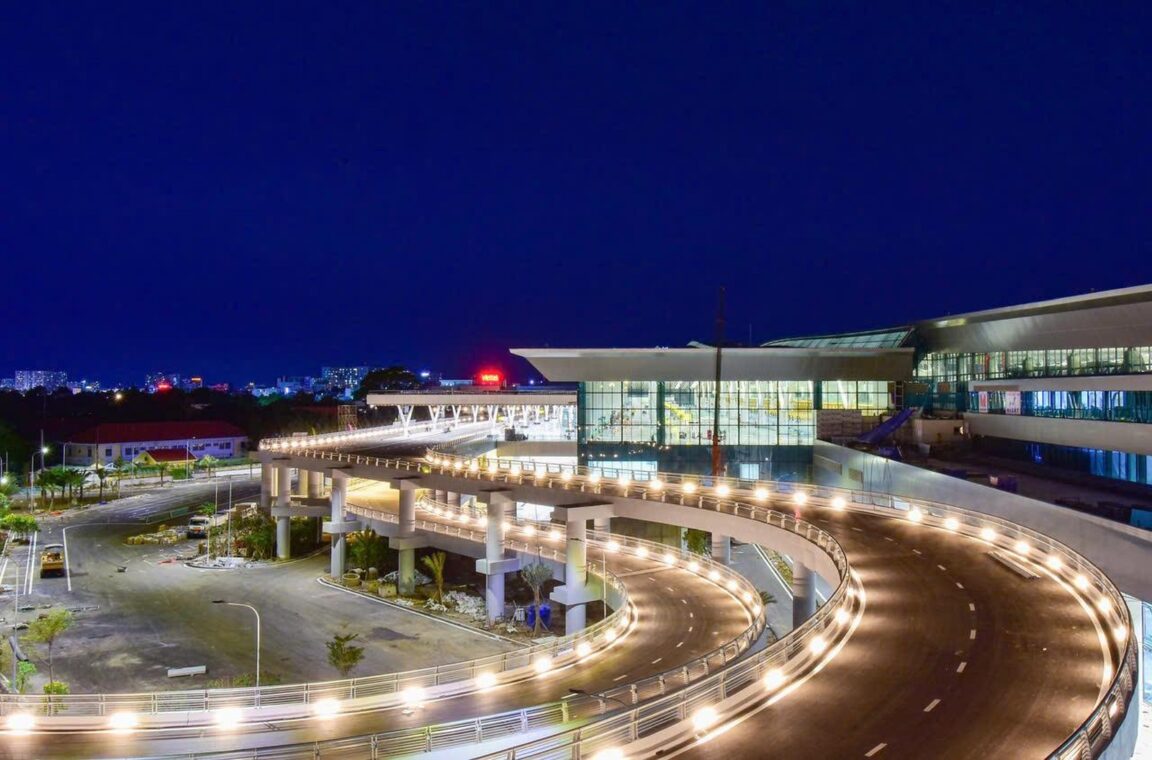
Terminal 3 sits on a different side of the airport complex from Terminals 1 and 2 and is approached via the Phan Thuc Duyen and Tran Quoc Hoan side roads rather than the familiar Truong Son forecourt. Tell any driver the terminal explicitly, in words, not just the airport name, and show the booking screen if needed. Bus 109 now serves Terminal 3 directly, while bus 152 serves Terminals 1 and 2, a split that mirrors the buildings themselves. Ride-hailing pickups and drop-offs follow the Terminal 3 forecourt and parking building arrangements, not the Terminal 1 kerb. Inside, the building was designed to relieve the old congestion: a large check-in hall with traditional counters, self-service kiosks and automated bag drop, then security lanes sized for peak-hour volume, with lounges on the upper level for eligible passengers. The congestion problem has moved rather than vanished, though: the roads around Tan Binh District still choke at peak times, which is why the two-hour buffer exists.
Travellers comparing new Asian terminals will find the same pattern in our explainer on Singapore Changi Terminal 5 groundwork and the T2 expansion, and anyone heading north after landing can plan the food half of the trip with our Hanoi food guide to pho, bun cha and the Old Quarter.
What catches travellers out most often at Terminal 3?
Four traps account for almost every bad morning. The first is the wrong terminal entirely, usually a Vietjet passenger following Vietnam Airlines advice or a Vietnam Airlines passenger following a pre-2025 guide to Terminal 1. The second is the codeshare trap: a ticket bought with one airline’s code but operated by another, including the Vietnam Airlines number ranges that stayed at Terminal 1. The third is the connection trap: an international arrival at Terminal 2 followed by a tight domestic departure from Terminal 3, with a landside transfer, a second check-in and a second security pass in between; the published guidance of about 120 minutes for that pairing is a minimum, not a comfort margin. The fourth is document mismatch, where the booking name and the ID diverge by a middle name or an old spelling and the fix has to happen at a service desk while the check-in clock runs. Every one of these is solved the night before, on the booking screen, for free.
Frequently Asked Questions
Is Terminal 3 for international flights?
No. Terminal 3 is domestic only. All international arrivals and departures at Tan Son Nhat use Terminal 2.
My airline is Vietjet. Which terminal do I use?
Terminal 1, Hall A, in the most recent official reporting. Vietjet domestic flights did not move to Terminal 3 with the other carriers. Confirm on your booking, because allocations have changed in stages before.
How early should I arrive for a domestic flight from Terminal 3?
About two hours before departure. Counters close 40 minutes before departure, kiosk check-in ends 45 minutes before, and gates close about 15 minutes before. Peak periods argue for more time, not less.
What ID do I need for a domestic flight in Vietnam?
Photo ID matching the booking name: a passport for foreign visitors, or citizen ID card or passport for Vietnamese citizens. Children travel on the documents specified at booking. Carry the same ID to check-in, security and the gate.
Can I walk between Terminal 3 and Terminals 1 and 2?
Transfers are landside with no airside link. Allow 15 to 20 minutes for the road move on a good run, plus a full new check-in and security sequence. Published minimum connect guidance is about 80 minutes domestic to domestic and about 120 minutes domestic to international.
What happens if I go to the wrong terminal?
Move immediately by taxi or shuttle to the correct building and go straight to check-in. Whether you still make the flight depends entirely on the 40-minute counter cutoff, which is why checking the terminal the night before matters more than any other step in this guide.
Facts checked 16 November 2026 against Vietnam Airlines check-in information, Airports Corporation of Vietnam reporting as carried in current terminal guides, and airline allocation updates through late 2025. Terminal allocations and deadlines change; confirm your flight’s terminal on your booking before you travel.