 Omar Haddad
Packing for Tuscany’s hill towns in November means dressing for three different days inside one: a misty morning that can sit near 6 or 7 degrees Celsius, a bright afternoon that can reach 15 or 16, and a stone-walled restaurant or farmhouse interior that holds the cold long after sunset. November daytime temperatures in Tuscany usually run between 13 and 16 degrees Celsius, it is one of the wetter months with around 11 to 12 rainy days, and the olive harvest is in full swing, which adds mud underfoot in groves and on farm tracks. The bag below answers all of it with a layering system, waterproof footwear with tread, and one smart dinner outfit built from pieces already in the bag, not added to it.
Quick Facts
- November temperatures: Daytime usually 13 to 16 degrees Celsius, nights around 6 to 7 degrees, cooler in hill towns than on the coast
- Rain: One of Tuscany’s wetter months, roughly 11 to 12 rainy days; pack a real waterproof jacket and waterproof shoes
- Daylight: Short; by mid November the day runs roughly 7 a.m. to 5 p.m., so evenings are long and interiors matter
- Season events: Olive harvest from late October, mills working through November, new oil tastings, and white truffle festivals including San Miniato across three November weekends
- Core system: Merino base layers, one mid layer, one waterproof shell, one smart knit or shirt that dresses up for dinner
- Footwear: Waterproof walking shoes or boots with tread for cobbles, mud and wet stone; no smooth soles
- Bag: One medium case or 40 to 50 litre bag; the layering system, not bulk, does the work
What is November weather really like in the hill towns?
Hill towns such as Montepulciano, Pienza, Volterra and San Gimignano sit high, and they feel November more sharply than Florence or the coast. Mornings often start with fog settled in the valleys below the walls, which burns off into clear, low sun, and then the temperature falls quickly once the sun drops. Current November guidance for the region puts daytime values between about 10 and 16 degrees Celsius depending on altitude and exposure, with nights near 5 to 7 degrees, and November is consistently described as the month when radiators come on, coats come out and the countryside turns atmospheric, misty in the morning with the first fires lit in farmhouses.
Rain is the other constant. November averages around 11 to 12 rainy days in Tuscany, and the rain, when it comes, can be steady rather than theatrical. That combination, cool air, wet stone and short days, is what the packing list is built for. It is not a winter expedition climate, and a heavy expedition coat is overpacking. It is a damp, layered climate, and the travellers who get it wrong are usually the ones who packed for postcard Tuscany: light jackets, canvas shoes and nothing warm for a long dinner in a stone room.
How does the layering system work from morning fog to dinner?
Three layers, worn in combination, cover the full November range. The base is merino or a merino blend: two long-sleeved tops that regulate temperature, resist odour across repeat wear and stay comfortable under a coat in a cold church. The mid layer is one warm knit or light fleece, and this is the piece that earns the smart dinner role as well, in a dark, plain knit that looks deliberate over a collared shirt. The outer layer is a waterproof jacket with a hood, long enough to cover the hips, worn over everything on wet days and as the wind layer on dry ones.
Bottoms follow the same logic. Two pairs of trousers in heavier fabrics, one dark pair that dresses up for dinner, and no shorts, no linen, no thin summer cotton. Jeans work but dry slowly if soaked; a wool blend or heavier twill is the better second pair. Underneath it all, normal underwear plus one set of thermal leggings or long underwear if the trip includes early starts for markets or harvest mornings, when the cold is at its sharpest before the sun reaches the hilltop streets.
The smart dinner layer, without a second wardrobe
Tuscan dinners in November are not formal, but agriturismo and town restaurants are warm, social and often the best part of the day, and arriving in trekking layers feels wrong. The fix is one collared shirt or blouse, the dark knit from the mid layer, the dark trousers, and clean shoes, which reads as smart anywhere in the region. A scarf adds the finish and doubles as the extra neck layer on cold mornings. That is the whole dinner system: four pieces, all already in the bag for daytime use, none of them single-purpose. Travellers staying at a working estate can cross-check the setting against the Always Packed guide to Rosewood Castiglion del Bosco in Montalcino, which shows the register of a Tuscan estate stay in harvest season.
What does olive harvest season add to the bag?
The olive harvest usually starts at the end of October, and through November the mills work day and night while nets are spread under trees across the countryside. For visitors, that means harvest experiences, new oil, called olio nuovo, appearing on tables with its green, peppery bite, and mud. Grove paths, farm tracks and the unpaved edges of hill town car parks are wet and slippery in November, and anyone joining a harvest morning or walking between estates needs footwear that can be muddy by 10 a.m. and cleaned by dinner.
So the main walking shoe should be waterproof, ankle-supporting enough for uneven ground, and dark enough to hide mud. A lightweight second shoe, the clean pair, stays at the accommodation for evenings. Add a small packable tote for market and mill purchases, because new oil, wine and truffle products accumulate, and a checked bag on the way home may be the honest answer for bottles. November also brings white truffle season, with San Miniato’s festival running across three weekends in November, and San Giovanni d’Asso holding its own festival weekends, which is one more reason the dinner layer matters: festival days end at long tables.
What about churches, museums and stone interiors?
The coldest place in a Tuscan hill town in November is often indoors. Stone churches, museums and old palazzi heat slowly or barely, and a sightseeing day can mean two hours at near-outdoor temperatures while standing still, which feels colder than walking. Keep the mid layer on indoors, carry gloves and a warm hat for the whole day, not just the morning, and treat the scarf as equipment rather than accessory. The same applies to accommodation in converted farmhouses and masserie-style stays across the wider region: beautiful thick walls, and rooms that reward a proper sleep layer. Pack real sleepwear with long sleeves, not summer weight.
For a second Italian base on the same trip, the Always Packed guide to Passalacqua on Lake Como shows the northern lake register in the same season, where the layering advice runs even stronger.
Rain kit and the small items list
A compact umbrella for town days, the hooded waterproof for countryside days, and a dry pouch for phone and documents cover the rain system. Gloves, hat and scarf, as above. A head torch is genuinely useful in hill towns in November: lanes outside the centre are dim, sunset is around 5 p.m., and the walk back from dinner is often the darkest part of the day. European plug adapters, a power bank for long driving days between towns, and a small first aid kit with blister care for wet cobbles complete the list. Skip the hairdryer, skip a third pair of shoes, and skip summer clothing kept just in case: November in the hills does not produce a summer day.
Frequently asked questions
How cold does Tuscany get in November?
Daytime temperatures usually run between 13 and 16 degrees Celsius, with nights around 6 to 7 degrees, and hill towns feel cooler than Florence or the coast, especially in morning fog and after sunset around 5 p.m.
Does it rain a lot in Tuscany in November?
November is one of the region’s wetter months, averaging roughly 11 to 12 rainy days. Pack a hooded waterproof jacket, waterproof shoes with tread, and a compact umbrella for town days.
What shoes are best for hill towns in November?
Waterproof walking shoes or light boots with real tread. Cobbles and stone lanes are slippery when wet, olive grove and farm tracks are muddy in harvest season, and smooth soles are the commonest packing mistake.
Do I need formal clothes for dinner in Tuscany?
No. One collared shirt or blouse, a dark plain knit, dark trousers and clean shoes read as smart in agriturismo and town restaurants. The dinner layer is built from daytime pieces, not a separate wardrobe.
Is the olive harvest still on in November?
Yes. The harvest usually starts at the end of October and mills work through November, with new oil tastings widely available. White truffle festivals, including San Miniato across three November weekends, run in the same weeks.
Last checked 16 November 2026. Temperatures and rainfall are November climate averages for Tuscany; festival dates change yearly, so confirm the current year’s programme before planning a trip around a specific weekend.
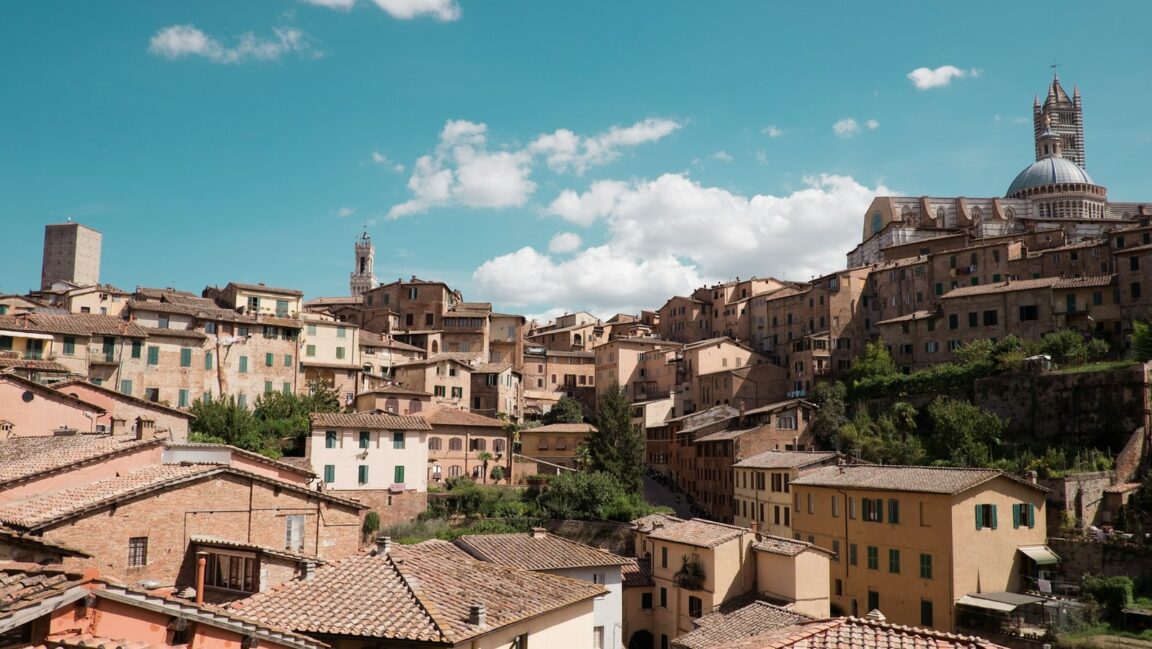
Featured image: Photo by Alev Takil on Unsplash, Unsplash License.