 Maya Chen
Pack for Laos in green season, roughly May to October, and the bag that works is a fast-dry one: leech socks for forest treks in the north, a waterproof dry bag for Mekong and Nam Ou boat days, quick-drying layers that can be rinsed at night and worn again by morning, and a light rain shell that lives at the top of the pack. The rains usually arrive as heavy afternoon and evening bursts rather than all-day rain, with July to September the wettest months, so the system is built around short, intense downpours, muddy trails and high humidity, not around cold. Everything below fits in one carry-on sized bag plus a small daypack, and nothing on the list needs to be bought twice.
Quick Facts
- Season covered: Green season, May to October; wettest months July to September, with rain typically in afternoon and night bursts
- Core problem pieces: Leech socks for northern forest treks, a dry bag for boat travel, and fast-dry trekking clothing that dries overnight in humid air
- Bag system: One main bag of 40 litres or less, one 10 to 15 litre daypack, one 10 to 20 litre dry bag inside the daypack
- Footwear: One pair of trail shoes with deep tread, one pair of strapped sandals with grip; no heavy boots needed for most routes
- Rain layer: Lightweight waterproof jacket, not a poncho alone, plus a pack rain cover
- Health basics: Insect repellent used morning and evening, sunscreen, and a small dry pouch for documents and cash
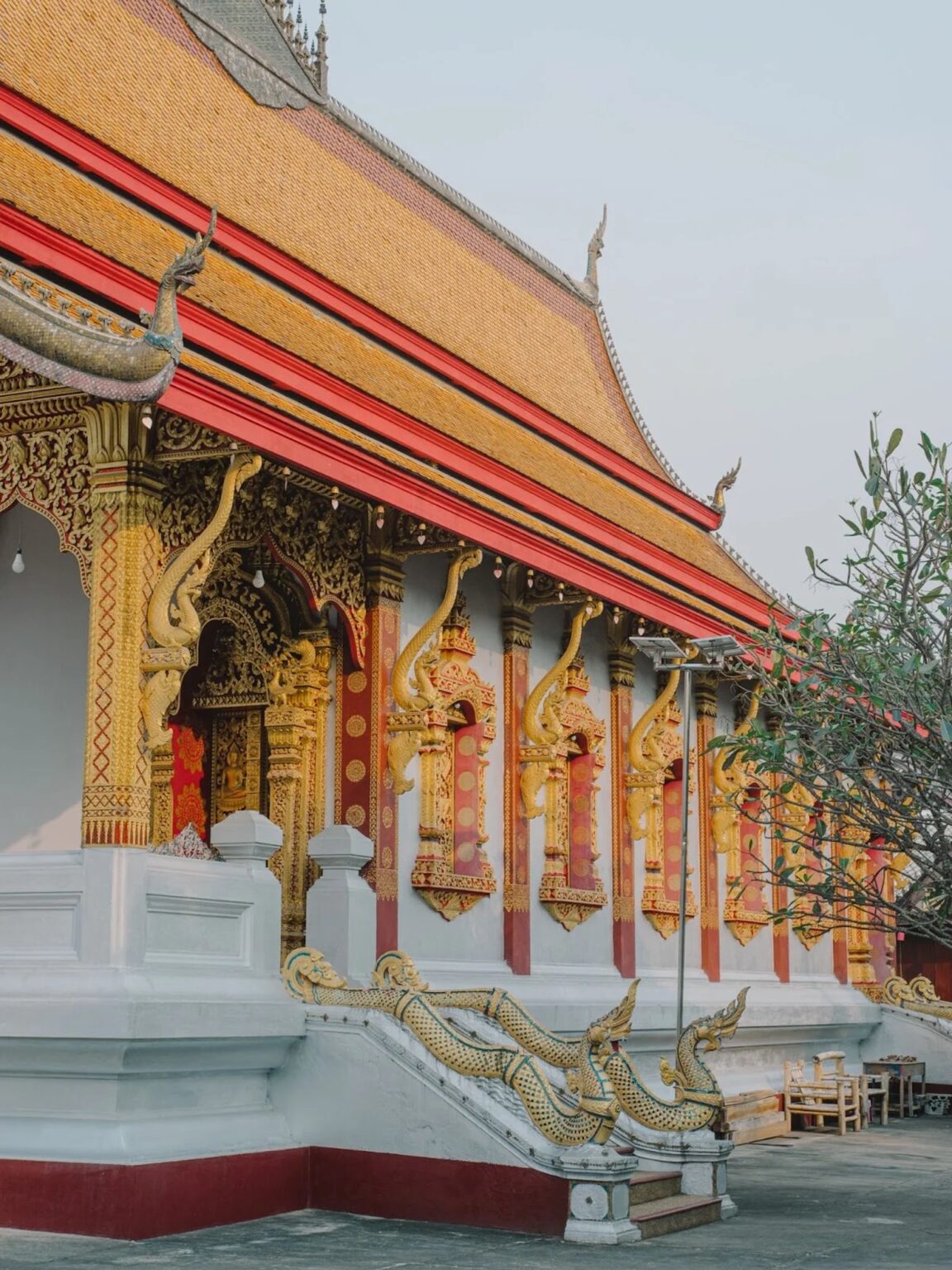
- Temple rule: Shoulders and knees covered for temples in Luang Prabang and Vientiane; a light scarf or sarong solves it without extra clothing
Why does green season change what you pack for Laos?
Laos has a wet season driven by the southwest monsoon, running roughly from May to October, and the pattern matters more than the totals. Rain tends to fall in short, heavy storms, often in the afternoon or at night, while mornings are frequently clear enough for sightseeing, markets and boat departures. That means a traveller does not need expedition rain gear. What is needed is clothing that can get soaked at 4 p.m., be rinsed in a guesthouse sink, and be dry, or close to dry, by the next morning. Synthetic and merino fabrics do this. Cotton does not: in green season humidity a cotton T-shirt can stay damp for two days, and a bag built on cotton quietly becomes a bag of wet clothes by day four.
The second change is underfoot. Unsealed roads and trekking trails around Luang Namtha, Nong Khiaw and the Bolaven Plateau turn muddy, and forest trails in the wettest months, especially August and September, bring leeches onto the path. Neither problem needs heavy kit. Tread, drainage and one specific sock solve almost all of it, which is why this list spends its weight budget on footwear and saves weight everywhere else.
What are leech socks, and do you actually need them?
Leech socks are long, tightly woven over-socks worn outside trekking trousers, tied or elasticated below the knee. Leeches in wet forest wait on leaves and on the trail surface, and they attach at the ankle and work upward. A leech sock closes that route: the weave is too tight for a leech to bite through, and the pale fabric makes any leech that climbs on easy to see and flick off. Trekking operators in northern Laos commonly advise long socks or leech socks for jungle walks in August and September, the peak leech months, and the same advice appears in rainy season packing guidance for the country generally.
You need them only if the trip includes forest trekking in the wet months: multi-hour walks around Luang Namtha, the Nam Ha protected area, Bokeo, or village treks out of Nong Khiaw and Muang Ngoi. For a Luang Prabang, Vientiane and Vang Vieng trip built on towns, temples, waterfalls and boats, ordinary long trekking socks pulled over trouser cuffs are enough, and even those are mostly for the Kuang Si trails after rain. Buy one pair, not three. They weigh almost nothing, they wash in a sink, and on a dry trail they simply stay in the bag. Pair them with repellent applied to shoes and sock tops, and check ankles at every rest stop, which is a thirty second habit, not a procedure.
How to wear the trekking kit on the trail
Wear long, fast-dry trekking trousers rather than shorts on forest days, with the cuff tucked into the leech sock. Shorts are fine in towns and on boats, but on a wet trail they expose exactly the skin leeches and undergrowth target. A light long-sleeved trekking shirt does the same job upward, keeps sun off during the clear mornings, and doubles as a temple-appropriate layer. Add a wide brim hat that can be crushed into the daypack, because green season sun between storms is strong.
What belongs in the boat bag?
Boat travel is part of a Laos trip, not an add-on: the two-day slow boat from Huay Xai to Luang Prabang with a night in Pakbeng, shorter Mekong hops, and river trips on the Nam Ou toward Muang Ngoi all put a daypack on an open or semi-open deck. Spray and sudden rain can reach bags stowed at the front of a boat, so anything that cannot get wet rides inside a dry bag. That means documents, phone, power bank, medication, one change of clothes and the camera, in a 10 to 20 litre roll-top dry bag that lives inside the daypack. The main bag, if it travels on the same boat, gets its own rain cover or a large dry liner.
For route planning on the river itself, the Always Packed guide to Muang Ngoi day trips sets out how the Nam Ou days are structured, and the Vang Vieng Nam Song west bank guide covers the other river town most green season itineraries include. Read both before fixing the bag, because a trip with two boat days needs the dry bag system daily, while a fly-in Luang Prabang trip needs it once.
The fast-dry clothing system, item by item
Build the wardrobe on three tops, two bottoms and repeat wear. Three synthetic or merino T-shirts or trekking shirts, one long-sleeved layer for trails and temples, two pairs of fast-dry trousers or one trousers plus one shorts, sleepwear, and underwear for four days, washed in rotation. Merino costs more and handles repeat wear best in humidity; good synthetics dry fastest after a downpour. Either beats cotton. Add one light fleece or insulated layer only if the trip includes highland stops or cool early mornings in the north in October, when the season turns. A swimsuit belongs on the list for waterfall pools at Kuang Si and Tad Lo, with the note that after heavy rain those pools can run brown and swimming may be off for a day, which is a planning point, not a packing one.
Which footwear survives mud, boats and temple days?
Two pairs do the whole trip. The first is a trail shoe or light hiking shoe with deep tread and drainage, worn on treks, waterfall paths and travel days. Green season mud punishes smooth soles, and closed shoes protect against trail leeches better than sandals. The second is a strapped sandal with a grippy sole, worn on boats, in towns, around guesthouses and in the rain itself, because a sandal that is already wet is more comfortable than a shoe filling with water during a street downpour. Flip-flops without straps fail on wet boat decks and muddy paths, and heavy waterproof boots are the classic overpack: they are hot, slow to dry once water gets in over the top, and unnecessary on the well-used trekking routes most visitors walk.
Break the trail shoes in before departure. Green season adds friction, moisture and grit, which is the exact recipe for blisters in new footwear. Two pairs of trekking socks plus the leech socks cover the rotation, washed with the clothing cycle.
What small items earn their place?
Insect repellent is the season’s real essential, used in the morning and again in the evening, because mosquitoes, not leeches, are the everyday health nuisance of the wet months. Sunscreen, a head torch for village stays and power cuts, a universal sink plug and a small amount of travel wash for the nightly rinse cycle, and a microfibre towel that dries in hours complete the working kit. A power bank matters on two-day boat routes with limited charging. Keep documents, cards and cash in a waterproof pouch inside the dry bag, and keep a photo of the passport and visa paperwork on the phone, stored offline.
Skip the mosquito net unless a specific rural homestay advises one, skip full-size toiletries that cannot be replaced in Luang Prabang or Vientiane, and skip a third pair of shoes. The weight saved is the margin that keeps the bag carry-on sized, which matters on the small aircraft used on some domestic Laos routes and on every boat transfer where bags are carried by hand.
Frequently asked questions
When exactly is green season in Laos?
The wet, green season runs roughly from May to October, with the heaviest rain from July to September and August usually the wettest month. Rain typically falls in afternoon and night bursts, and October often ends the season with lush landscapes and easing rain.
Are leech socks essential for every Laos trip?
No. They are for forest trekking in the wet months, mainly in the north around Luang Namtha, Bokeo and village treks from Nong Khiaw. Town, temple and boat itineraries do not need them; long socks over trouser cuffs are enough for short waterfall trails.
What size dry bag is right for the slow boat?
A 10 to 20 litre roll-top dry bag inside the daypack covers documents, electronics, medication and a change of clothes. Add a rain cover or a large liner for the main bag if it travels on deck.
Can I do green season Laos with carry-on only?
Yes, and the season suits it. Fast-dry clothing washed in rotation, two pairs of footwear and no heavy rain gear keep the whole list inside a 40 litre bag, which also simplifies boat and small-plane transfers.
What should I wear for temples in Luang Prabang?
Shoulders and knees covered. A light scarf or sarong carried in the daypack covers shoulders over a T-shirt, and the long trekking trousers already on the list handle the rest.
Last checked 16 November 2026. Season patterns summarised from current Laos rainy season guidance; check river and road conditions locally before trekking days, as heavy rain can close rural routes for short periods.
Featured image: Photo by Bo Pan on Unsplash, Unsplash License.