 River Callahan
Muang Ngoi has no road in, and that single fact organises every day trip from it. The village, officially Muang Ngoi Neua, is one dusty street of guesthouses and wooden houses on the east bank of the Nam Ou river, reached by an hour of longtail boat upstream from Nong Khiaw and hemmed in by limestone cliffs. From that one street, the excursions fan out on foot and by water: a fifty minute walk to the wartime caves of Tham Kang and Tham Pha Kaew, a steep climb to the Phanoy viewpoint, a rice field trek to the villages of Ban Na, Huay Bo and Huay Sen, and boat trips upriver to Sop Chem and the Tad Mok waterfall country. This guide sequences those day trips, gives the boat times and small cash fees that govern them, and flags the one rule that matters out here: there is no ATM in Muang Ngoi, so every trip starts with kip in your pocket.
Quick Facts
- Access: Boat only. The public boat from Nong Khiaw takes about one hour up the Nam Ou, usually leaving late morning, with a morning return boat from Muang Ngoi
- Boat fare: Recent reports put the one way fare at roughly 25,000 to 50,000 kip, paid at the ticket office by the Nong Khiaw landing; check the board on the day
- Cave walk: Tham Kang and Tham Pha Kaew are about 50 minutes on foot from the village, with a small path toll of about 10,000 kip reported
- Viewpoints: The Phanoy viewpoint charges about 20,000 kip at its ticket hut and needs about two hours return; the Pha Boom lookout is steeper and more slippery
- Village trek: Ban Na lies 30 to 45 minutes beyond the caves, Huay Bo about 20 minutes further, with simple homestays in the villages
- Cash: No ATM in Muang Ngoi. Draw kip in Luang Prabang or Nong Khiaw before boarding
- Best season: November to February, cool and dry, with the clearest viewpoint mornings
- Safety: Stay on marked paths. The surrounding fields were heavily bombed and unexploded ordnance remains a risk off trail
How does the boat from Nong Khiaw set up every trip?
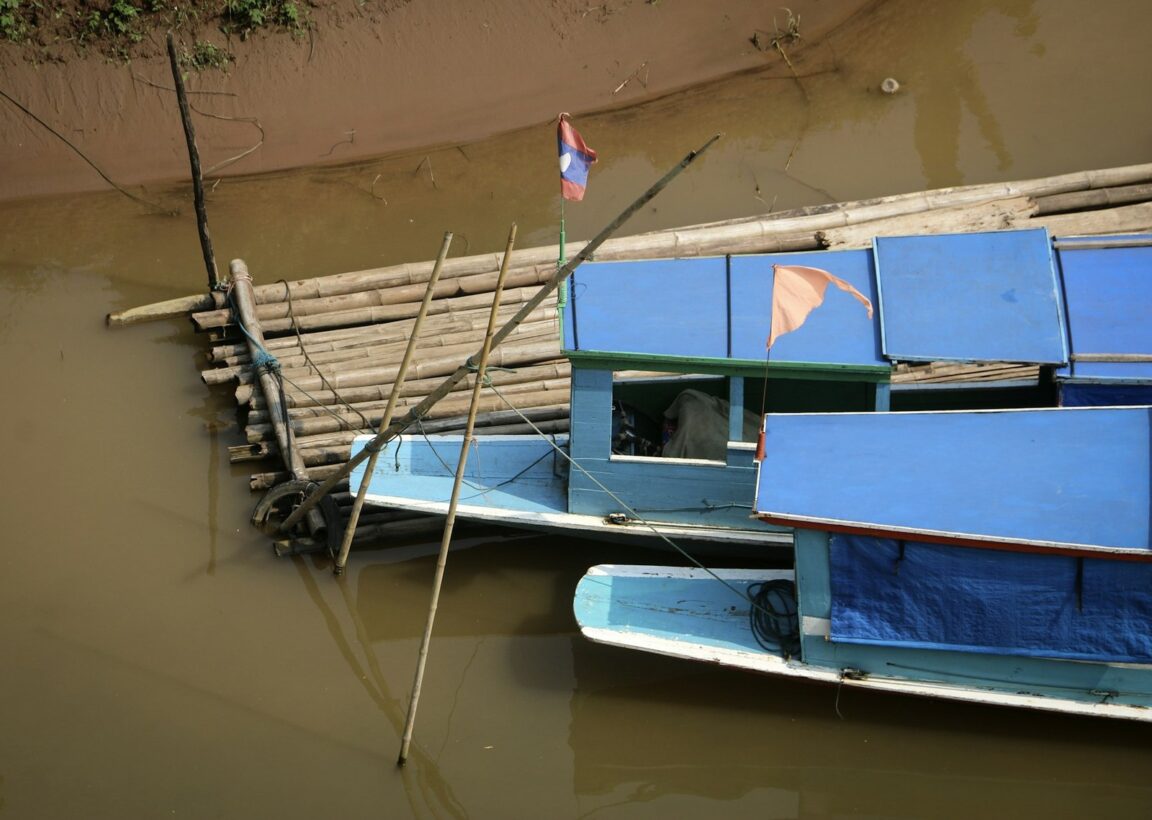
Every Muang Ngoi itinerary is written by the boat timetable. The public boat leaves the landing just south of the bridge in Nong Khiaw, usually in the late morning at around 11 am, sometimes timed to meet the minivans arriving from Luang Prabang, and often with a second departure in the early afternoon. The run upstream takes about an hour through the most dramatic karst stretch of the Nam Ou, and sitting on the left side gives the best of the cliffs. Fares in recent seasons have been reported between about 25,000 and 50,000 kip each way, paid at the small ticket office by the landing, and both times and prices move with the season and the river, so the board at the landing is the authority.
Going back, the boat to Nong Khiaw usually leaves Muang Ngoi in the morning, around 9 or 9:30 am in recent reports, connecting with minivans onward to Luang Prabang, which is three to four hours by road from Nong Khiaw. The consequence for day tripping is simple: a Muang Ngoi day tripper is working with full days in the village, not hours. Arrive on the late morning boat, and the same day still holds an afternoon cave walk or a viewpoint climb. Leave on the morning boat, and the last full day is the one before. Charter boats can run outside the public times for groups, at per boat prices agreed at the landing or through a guesthouse.
Pack for the boat as the locals do: a small day bag kept with you, and anything precious in a dry bag, because the main luggage rides in the bow and can catch spray. In the dry season the river runs low and the boatmen thread between rocks, which adds bumps and occasionally a push, all part of the hour.
Which walk should you take first, the caves or the viewpoint?
Take the caves in the morning and the viewpoint late in the day, and the village gives you its two best trips in their best light. The most popular walk in Muang Ngoi heads south out of the village on a dirt track through rice fields to two caves, Tham Kang and Tham Pha Kaew, used as bomb shelters by villagers during the Second Indochina War. It is about fifty minutes on foot to reach them, with a small toll collected on the path, reported at about 10,000 kip.
Tham Kang comes first and is the easier cave to find, with a clear stream running out of it that makes a fine cool off stop on a hot walk. Tham Pha Kaew is a short scramble further on, a deeper cave holding a small Buddha shrine. A torch is essential for both. Beyond the caves the same track continues to the villages, so the cave walk extends naturally into the longer trek described below, and the whole southern valley can be read as one outing of adjustable length.
The Phanoy viewpoint is the climb. A ticket hut at the trailhead charges about 20,000 kip, and the trail rises steeply through forest to a lookout over the village and the river. The left hand trail is the steeper and trickier line; the right hand one is kinder on the descent. Allow about two hours return, go early for mist sitting in the valley or late for gold light on the cliffs, and be down before dark. The second lookout, Pha Boom, carries a similar fee and a steeper, more slippery route that is best avoided after rain or when walking alone. Ask at your guesthouse which trails are currently maintained before choosing.
What lies beyond the caves on the village trek?
Past the caves, the valley track strings together a line of small villages. Ban Na is about 30 to 45 minutes beyond the caves across the rice fields, Huay Bo about 20 minutes further across a small river, and Huay Sen lies beyond that. The villages mix Lao Loum and Khmu communities, and a few offer simple guesthouses or homestays for travellers who want a night away from even Muang Ngoi’s modest bustle.
In the dry season the walk to Ban Na and Huay Bo follows an obvious path and can be done without a guide. For anything further, or for a multi day trek with village homestays, a local guide is the right call on three grounds: route finding, village income and interpretation. Guesthouses on the main street arrange guides; agree the route, the meals and the price before setting out. Carry small notes for lunch and drinks in the villages, and skip the sweets and pens for children, which encourage begging; travellers who want to contribute can ask a guide about supplies for the village school instead.
The wet season rewrites this trek. From about June to October the path turns to deep mud and stream crossings can run waist deep, so wear shoes you are willing to ruin and take the guide. In every season the standing rule applies: keep to the main track and well used paths, because the fields here were heavily bombed and unexploded ordnance still surfaces.
Which boat trips run from Muang Ngoi itself?
The river is a day trip machine in both directions. Upriver, hiring a boat and boatman for a half or full day reaches riverside villages such as Sop Chem, about 45 minutes away, known for its weavers; the price is per boat, so the trip gets better value with every traveller who shares it, and guesthouses are the natural place to assemble a group the night before. Organised day tours from Nong Khiaw also work this water, combining the boat ride with the History Cave and Phanoi Viewpoint in Muang Ngoi, a weaving village visit, the trek to Tad Mok waterfall for a swim and kayaking, at around 35 US dollars per person in current operator listings, which gives independent travellers a useful price benchmark for chartering.
Downriver, Nong Khiaw itself is a legitimate day trip target on the morning boat out and the afternoon boat back where the timetable allows, with its own Pha Daeng viewpoint, the Pha Tok wartime caves and a couple of ATMs, though most travellers treat it as the transit and cash stop rather than the destination. The longer historic route north toward Muang Khua has been interrupted by the series of dams built along the Nam Ou, and through journeys now combine boat and road sections with irregular services, so treat anything beyond Sop Chem as an expedition to arrange locally rather than a day trip.
Closer to home, the riverbank in front of the village is the evening trip: a swim off the sandbank, staying close to shore because the current is strong, and a hammock at sunset. Muang Ngoi goes to sleep around 9 pm, wakes to cockerels and the morning boats, and that rhythm is the attraction. Travellers pairing this river with Cambodia’s great water town can compare it with our guide to Battambang on the Sangkae river, and those continuing south through Vietnam’s highlands will find our Da Lat waterfalls and coffee highlands itinerary a natural onward chapter.
How many days do the day trips need?
Two nights is the working ideal: one full day for the caves and the village trek, a viewpoint morning, and a slow river afternoon before the boat back. Three nights adds the Sop Chem boat day and slack for wet trails or a lazy day, which this village rewards. One night is possible but reduces Muang Ngoi to a viewpoint and a hammock, and day tripping from Nong Khiaw on the organised tours is the better format for anyone with only a single day. Budget roughly 30 to 55 euros a day for two people in the village, covering a riverside bungalow, meals, the boat fares and the small cash fees at the caves and viewpoints, with guided treks priced on top by route and group size.
Frequently Asked Questions
How do you get to Muang Ngoi?
By boat from Nong Khiaw, the only practical way in. The public boat takes about an hour and usually leaves late morning, with fares recently reported around 25,000 to 50,000 kip. Charter boats run at other times for a per boat price.
What time does the boat back to Nong Khiaw leave?
Usually in the morning, around 9 to 9:30 am in recent reports, connecting with minivans to Luang Prabang. Confirm at the landing or your guesthouse the night before, because times shift with season and river level.
Can you walk to the caves without a guide?
Yes. The track south through the rice fields to Tham Kang and Tham Pha Kaew is obvious in the dry season, takes about 50 minutes each way and charges a small path toll. Take a torch, water and sturdy shoes, and stay on the main track.
How hard is the Phanoy viewpoint climb?
Steep but short, about two hours return including time at the top, with a ticket of about 20,000 kip at the trailhead. The right hand trail is easier on the way down. Avoid the steeper Pha Boom route after rain.
Is there an ATM or reliable internet in Muang Ngoi?
There is no ATM; bring enough kip from Luang Prabang or Nong Khiaw for the whole stay plus a buffer. Guesthouses offer electricity and WiFi, but power cuts happen and connections are slow.
What is the best month for Muang Ngoi day trips?
November to February, the cool dry season, gives dry trails, swimmable river conditions and the clearest viewpoint mornings. The wet season is greener and quieter but turns the village treks to mud.