 Maya Chen
Da Lat rewards three unhurried days. The highland city sits at about 1,500 metres in Vietnam’s Central Highlands, which is why its air stays cool while the coast swelters, and why coffee, strawberries and flowers grow here. Day one covers the centre: Xuan Huong Lake, the night market and the Crazy House. Day two is the waterfall and adventure day, built around Datanla and the canyoning scene, with Pongour as the bigger, quieter alternative. Day three goes to the coffee farms and the pine hills, with the cable car to Truc Lam Monastery and Tuyen Lam Lake. Everything here is reached by motorbike, taxi or booked car; distances are short, but the hills are real.
Quick Facts
- Altitude: About 1,500 metres, which keeps daytime temperatures mild all year
- Crazy House hours: Daily 8.30am to 7.00pm, at 3 Huynh Thuc Khang (the house’s own listing)
- Crazy House entry: 80,000 dong for adults in current 2026 listings, with child rates by height; confirm at the gate
- Datanla Waterfall: About 5 kilometres south of the centre on the Prenn Pass road, open daytime, entry plus a paid alpine coaster down to the falls
- Truc Lam Monastery: Free entry; the Robin Hill cable car to it is paid, with a midday break in current schedules
- Nearest airport: Lien Khuong Airport, about 30 kilometres south, with flights to Ho Chi Minh City and Hanoi
- Signature tastes: Banh trang nuong (grilled rice paper), hot soy milk at the night market, avocado ice cream, and highland coffee
- Pack: A warm layer for evenings in every season; Da Lat nights are genuinely cold by Vietnamese standards
Day 1: The lake, the market and the Crazy House
Begin with a circuit of Xuan Huong Lake, the crescent of water at the city’s heart, created under French colonial rule and still the reference point for every address in town. A full loop on foot takes about an hour at a stroll. Lam Vien Square, with its giant glass artichoke and wild sunflower domes, sits on the southern shore and is the city’s modern postcard.
The Crazy House
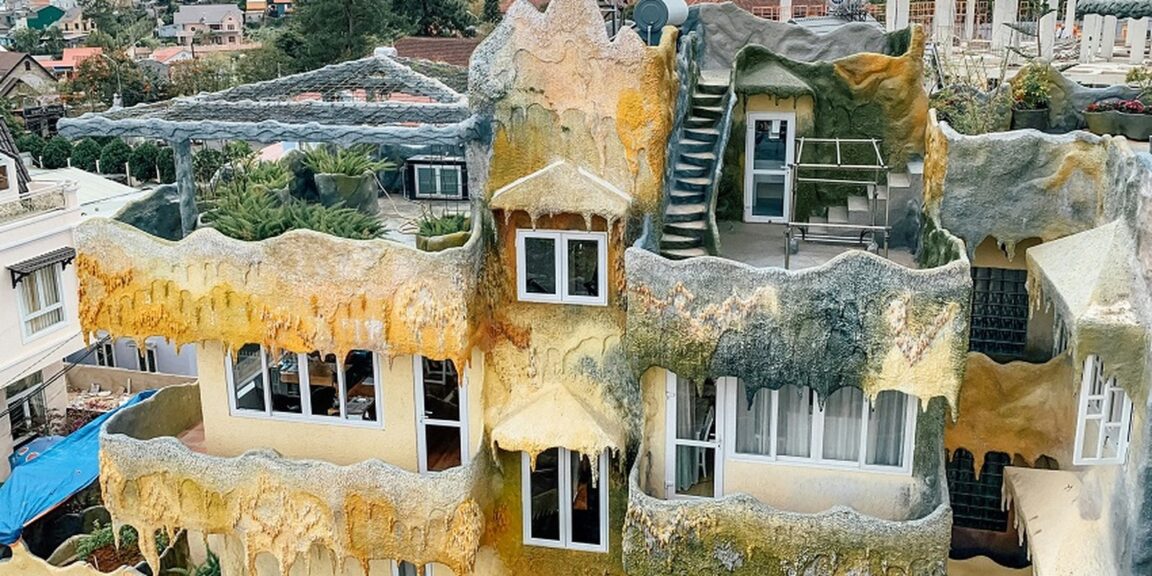
West of the centre, the Crazy House, officially the Hang Nga Guesthouse, is the life’s work of architect Dang Viet Nga, begun in 1990 and still growing. It is a guesthouse you can also visit by day: a concrete tree of twisting staircases, rope bridges, cave like rooms themed on animals, and almost no straight lines. Go at opening time. The passages are narrow, the day groups arrive by mid morning, and the house is far better experienced than photographed in a queue. Day visitors pay at the gate, and overnight guests get the strange pleasure of the place after the crowds leave.
The night market
End the day at Da Lat Night Market, on the streets around the central market building from late afternoon. This is dinner, not shopping: banh trang nuong crisped over charcoal and topped with egg and sausage, grilled skewers, hot sweet soy milk, and strawberries in every form. Prices are local, seating is plastic stools, and the cool night air is the whole point. For the wider Vietnam route, our guide to 2 days in Hoi An pairs naturally after the highlands.
Day 2: Waterfalls, honestly chosen
Da Lat markets its waterfalls hard, and they are not equal. Choose by appetite. Datanla, the closest to town, is an activity park as much as a waterfall: a tiered fall in a pine gorge, reached by an alpine coaster you control with a hand brake, with canyoning, zip lines and high ropes run by licensed operators from the same base. Canyoning here, abseiling down falls with a reputable, insured operator, is the city’s signature adventure and a full morning. Book the operator, not the cheapest street offer, and check what insurance and group size are included.
Pongour and Elephant Falls
Pongour, about 50 kilometres south, is the opposite experience: a wide, terraced curtain of water, roughly 100 metres across and 40 metres high in current descriptions, in open country with far fewer people. It needs a car or a confident motorbike rider and repays the drive in the wet season when the flow is full. Elephant Falls, west of town near Nam Ban, pairs with the Linh An Pagoda and its huge Happy Buddha statue, and with the silk village workshops nearby. One waterfall done properly beats three done as photo stops.
Coffee in the afternoon
Da Lat grows coffee on the hills in every direction, and farm visits range from working smallholdings to polished visitor farms with tasting decks. The honest version of the experience is a farm where you see the trees, the drying beds and the roaster, and taste the difference between the robusta Vietnam is famous for and the arabica the highlands specialise in. Weasel coffee, kopi luwak style, is sold aggressively here; ask how it is produced before buying, since welfare standards vary widely and the premium is steep.
Day 3: The cable car, the monastery and the valley
Take the cable car from Robin Hill, at the city’s southern edge, over pine forest to Truc Lam Zen Monastery, one of Vietnam’s largest Zen monasteries, set above Tuyen Lam Lake. The monastery is free, active and quiet; dress modestly, keep voices down, and walk the gardens down toward the lake. Boats cross Tuyen Lam, and the lakeshore cafes make a slow lunch of it.
Lang Biang and the valley pacing
With energy left, Lang Biang Mountain, about 12 kilometres north, is the highland viewpoint: twin peaks above 2,000 metres, reached by jeep track or a half day hike, with K’Ho ethnic villages at its base. With less energy, the Valley of Love and the flower gardens north of the centre are the gentler, kitschier Da Lat, and the old railway station, a 1930s art deco building with a steam locomotive on display and short heritage train rides toward Trai Mat and Linh Phuoc Pagoda, is the most charming hour in town. The pagoda itself, built from mosaic of broken glass and porcelain, is unlike anything else in Vietnam. Before any of this, check entry basics in our Vietnam 90 day e visa guide.
Where to stay and how to move
Stay within walking distance of the lake and market for a first visit; the hills make even short distances feel longer at night. Guesthouses and French era villas converted to hotels fill the streets west and south of the centre. Motorbike rental is the local default and suits experienced riders; everyone else should use taxis and booked cars, which are inexpensive, and agree waterfall day rates with a driver in advance. The overnight buses and flights via Lien Khuong connect Da Lat to Ho Chi Minh City in every budget range.
Getting to Da Lat and setting expectations
Da Lat is reached three ways. Flights land at Lien Khuong Airport, about 30 kilometres south, from Ho Chi Minh City and Hanoi, with an airport bus and taxis covering the climb into town. Sleeper and limousine buses from Ho Chi Minh City take roughly six to eight hours depending on traffic and are the budget default; the night services save a hotel night and deliver you to the cool highland morning, which is its own welcome. The third way, by motorbike or car over the passes from Nha Trang or Mui Ne on the coast, is the scenic route, three to four hours of mountain road that explains the geography better than any map. Set expectations on arrival: Da Lat is a Vietnamese honeymoon and domestic tourism capital first and an international stop second, so signage, menus and tour pitches run in Vietnamese first, prices at the night market assume cheerful bargaining, and the kitsch, the swan boats, the flower shaped everything, is part of the city’s genuine character rather than a trap laid for visitors. Travellers who lean into that, and who use the cool mornings for waterfalls and farms before the domestic day groups arrive, get the best of it. Rain changes plans here more than anywhere else in southern Vietnam: build the waterfall day with a flexible date, keep the Crazy House, station and cafes as the wet weather spine, and remember that canyoning operators cancel in heavy rain for safety, which is a sign of a good operator, not a disappointment to argue with.
Frequently Asked Questions
What is the best time of year to visit Da Lat?
The dry season, roughly December to March, brings the clearest skies and the flower festival season. The wet months from about May to October green the hills and fill the waterfalls, at the cost of afternoon rain.
How cold does Da Lat actually get?
Evenings commonly fall into the low teens Celsius and winter nights lower still. It is the coldest city most Vietnam travellers visit, and a proper jacket is not optional after dark.
Is canyoning at Datanla safe?
It is a regulated adventure activity run by licensed operators with helmets, harnesses and trained guides. Choose an established operator, follow the briefing, and skip it in heavy rain when operators themselves suspend trips.
Can you visit Da Lat without a motorbike?
Yes. The centre is walkable, taxis are cheap, and drivers can be hired by the day for the waterfalls and farms. A motorbike adds freedom, not access.
How many days does Da Lat need?
Three days covers the centre, one waterfall properly, and the monastery and coffee hills. Two days works if the coffee farms or Lang Biang are dropped.