 Omar Haddad
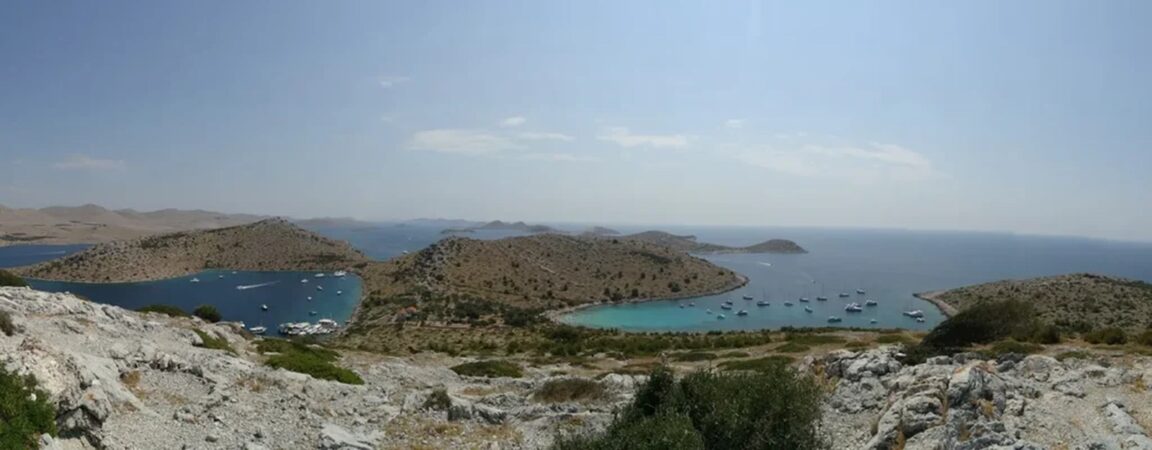
Most visitors meet Murter island through one photograph: the bare stone islands of Kornati National Park scattered across a blue sea. The famous sight deserves its fame, but it is only the front door. Beyond it, this small island off the Dalmatian coast between Zadar and Sibenik holds a working shipbuilding village at Betina, a drawbridge town at Tisno that doubles as one of Croatia’s summer festival addresses, a fishing harbour at Jezera and a national park ticket system that rewards anyone who reads the rules before boarding. This guide works through the whole gate, in the order a visitor actually needs it: how the Kornati tickets work, what the Betina shipwrights built, when Tisno lifts its bridge and fills its stages, and how to sequence the days so the park is the climax rather than the only event.
Quick Facts
- Where: Murter island, Sibenik Knin County, Croatia, linked to the mainland by the drawbridge at Tisno on the D121 road
- The four settlements: Murter, Betina, Jezera and Tisno, each with a different trade, harbour and temperament
- Kornati National Park: 89 islands, islets and reefs across 217 square kilometres, proclaimed a national park in 1980, about 7 nautical miles from Murter
- Park tickets: Charged per vessel per day, priced by boat length and season, and cheaper bought in advance through the official webshop than inside the park
- Excursion pattern: Full day group boats from Murter and Jezera typically leave around 9 am and return around 5 pm to 5:30 pm, with the park ticket and often lunch included
- Betina: Home of the Museum of Betina Wooden Shipbuilding and the gajeta, the traditional wooden work boat of this coast
- Tisno: The bridge town, and the host of summer music festivals at The Garden site just outside the village
- No ferry needed: The island is reached by road across the Tisno bridge, which lifts on a seasonal timetable for boat traffic
How do Kornati boat tickets actually work?
Kornati is a park you enter by water, and its ticket is a boat ticket, not a personal one. Every vessel inside the park boundary needs a valid ticket for each day it spends there, priced by the length of the boat and by the season, with the high season running June to September. The single most useful fact in the whole system is that tickets bought before you enter cost less than tickets bought from park staff inside the boundary. The official webshop, the Parks of Croatia portal and the mySea platform sell them in advance, and the ABA reception in Murter is the local in person option named by the park.
Validity has its own rhythm. A one day ticket runs until 12 noon the following day, a three day ticket until noon on the fourth day and a five day ticket until noon on the sixth, and a combined three day ticket covering Kornati and nearby Telascica Nature Park is sold only through mySea. Tickets are issued for a fixed date, cannot be cancelled, and can be changed once per season by email up to noon the day before. The park’s mobile reception boats inside the boundary sell only one day tickets, which is the expensive way to improvise.
For most visitors the simpler product is the excursion. Group boats from Murter and Jezera bundle the crossing, the park ticket and usually a grilled fish lunch into one price, leave around 9 in the morning and return around 5 or half past. Private charters and bareboat rentals from the Murter marinas suit sailors, who must overnight only in the park’s designated bays and on its designated buoys and anchorages, at places such as Levrnaka, Lavsa and the ACI Piskera marina, whose berth fee includes the park ticket for the arrival day and the next day until 7 pm.
What did the Betina shipwrights actually build?
Walk twenty minutes from Murter town and the island changes register. Betina is a harbour village built around a skill: wooden shipbuilding, practised here for centuries and still visible in the yards and on the water. Its emblem is the Betina gajeta, a sturdy wooden work boat with a lateen sail, built for fishing and for carrying loads between the mainland fields and the Kornati islands, which most Betina and Murter families historically farmed.
The Museum of Betina Wooden Shipbuilding tells that story in the village itself, through the tools, models and the social history of the yards: how a gajeta was framed, caulked and launched, how ownership of Kornati land shaped the boats a family needed, and how the craft survives now as heritage and restoration work rather than mass production. It is a small museum with a large explanatory power. After an hour inside it, the excursion boats in the harbour stop looking generic, because half the hull shapes in the marina descend from the designs on its walls.
Betina also explains the park. The Kornati islands are mostly privately owned, bought by Murter island families from Zadar aristocrats more than a century ago, then cleared and walled with the kilometres of dry stone walling that still grid the bare hillsides. The stone houses in the park’s bays are those families’ field shelters. A visitor who starts in Betina reads the national park as a worked landscape, not an empty one, and the famous view gets better for it.
Why does Tisno matter beyond its bridge?
Tisno is where the island touches the mainland, split between the two banks of a narrow channel and joined by the drawbridge every Murter visitor crosses. The bridge lifts for passing boat traffic on a timetable that varies by season, and checking the current lift times before a departure day is a small, real piece of Murter logistics: a raised bridge is a charming spectacle for pedestrians and a genuine delay for anyone driving to a flight.
In summer Tisno adds a second identity. The Garden, a festival site in a former camp just outside the village, turned this quiet town into one of the Adriatic’s best known small festival addresses, hosting a season of electronic music events through the summer weeks. The practical consequences are the ones travellers need: accommodation across the island tightens and prices rise during festival weeks, the night rhythm of Tisno inverts, and the Kornati excursion boats fill earlier in the day. Outside those weeks, Tisno reverts to a sleepy harbour town with a good waterfront, which is precisely the contrast that makes the festival season work.
Jezera, the fourth settlement, is the island’s fishing harbour, named for the seasonal lakes that once formed nearby, with a marina, a working waterfront and the calmest evening scene on the island. A complete Murter stay gives each town its hour: Betina for the museum morning, Jezera for a harbour lunch, Murter town and its Slanica bay for the swim, and Tisno for the bridge at lifting time.
How should you sequence three or four days?
Day one belongs to the island itself. Cross at Tisno, settle in, walk or cycle to Betina for the Museum of Betina Wooden Shipbuilding, and take the evening in Murter town. This order is deliberate: the museum first means the park makes sense later.
Day two is the Kornati day. Take the excursion boat if you are not sailing, with the ticket and lunch bundled, and let the route show the park’s grammar: the high sea cliffs called crowns on the outer islands, the walled fields, the swim stops in the bays and the field houses of the Murter families. Sailors should already hold advance tickets for every day inside the boundary and a plan built only on designated overnight bays.
Day three is the flexible day: a second, shorter boat trip or a kayak rental around Murter’s own bays, the beaches on the island’s south side, and Tisno in the evening, timed to the bridge lift or, in season, to the festival gates. A fourth day is the buffer this coast deserves, because the park day is weather dependent and the bora wind can rewrite a sailing plan overnight. Travellers continuing down the Dalmatian coast will find our guide to Trogir’s island old town the natural next chapter, while those crossing to Albania can pair this coast with our Gjirokaster stone city guide.
What does it cost, and when should you come?
The park’s own price list is the only honest source for ticket figures, because prices step by vessel length, season and purchase point; the pattern to budget around is that advance purchase is the discount and in park purchase is the premium. Excursion boats simplify the maths by bundling ticket, crossing and lunch. The season for yachts and excursions runs roughly April to October, the park itself is open all year, and the ACI marinas at Piskera and Zut operate from 1 April to 31 October. High summer brings the warmest sea and the festival crowds; May, June and September bring the same water with more room in it.
Frequently Asked Questions
Do I need a ticket for Kornati National Park if I join an excursion?
No separate purchase is needed. Excursion prices from Murter and Jezera include the park ticket for the day. Independent sailors and rental boats must hold their own valid ticket for every day inside the park.
Where is the cheapest place to buy a Kornati ticket?
In advance, before entering the park: the official webshop, the Parks of Croatia portal, mySea, commission sellers or the ABA reception in Murter. Tickets sold by park staff inside the boundary cost more, and the mobile reception boats sell only one day tickets.
How long does a Kornati excursion from Murter take?
Plan on a full day. Boats typically depart around 9 am and return around 5 pm to 5:30 pm, with swim stops and usually lunch included. The park’s nearest waters are about 7 nautical miles from Murter.
What is the Betina gajeta?
A traditional wooden work boat of this coast, built in Betina for fishing and for carrying people and produce between Murter island and the Kornati fields. The Museum of Betina Wooden Shipbuilding in Betina village is the place to understand it.
Can I drive to Murter island?
Yes. The island is joined to the mainland at Tisno by a drawbridge on the D121 road, so no ferry is involved. The bridge lifts for boat traffic on a seasonal timetable, so check lift times on travel days.
When are the Tisno festivals?
The Garden site outside Tisno hosts a season of music festivals across the summer weeks. Book island accommodation early for festival dates, and expect excursion boats to fill faster on those mornings.