 Elena Vasquez
Gjirokaster deserves an overnight, not a drive-through, because everything that makes it Albania’s stone city only settles into place once the day buses leave: a vast hilltop castle above the Drino Valley, a bazaar quarter of stone roofed lanes below it, Ottoman tower houses you can walk through room by room, and a Cold War tunnel built in secret under the town centre. The historic centre is a UNESCO World Heritage Site, inscribed in 2005 and later joined by Berat in a single shared listing, and it reads as one protected townscape rather than a set of separate sights. Sleep here, climb to the castle in the softer light, and give the old town an evening and a morning. That is the whole method, and it works.
Quick Facts
- Heritage status: Historic Centres of Berat and Gjirokastra, a single UNESCO World Heritage property; Gjirokastra inscribed in 2005, Berat added in 2008
- The nickname: The City of Stone, for the grey stone slate roofs and cobbled lanes of the old town
- The castle: One of the largest fortresses in the Balkans, at 336 metres above the town, holding the Gjirokaster Museum, an arms collection and a former prison
- Castle hours and entry: Commonly reported as 9am to 7pm in the high season and shorter hours in winter, with adult entry most recently reported at 400 lek and the museum ticketed separately; prices conflict between sources, so confirm at the gate and carry cash
- The Cold War Tunnel: A separate guided visit near Cerciz Topulli Square, most recently reported at 200 lek, with its own seasonal hours
- The pairing: Berat, the partner town in the same UNESCO inscription, is about 2.5 to 3 hours north by road
- The stay: One night minimum; two nights if the tower houses and the tunnel matter to you
Why is Gjirokaster called the City of Stone?
Stand anywhere in the old town and look at the roofs. Instead of tiles, the houses wear slabs of grey stone, laid like scales over steep pitches, and the lanes below them are cobbled in the same palette. Stone is not decoration here; it is the local building material, quarried from the mountains that wall the Drino Valley, and it gives the whole town its monochrome, slightly austere beauty. UNESCO inscribed the historic centre as a rare, well preserved example of an Ottoman era town built by wealthy landowners and merchants, and the protection covers the pattern of the place: castle, bazaar, tower houses and lanes as one composition.
That continuity is what separates Gjirokaster from a prettier but emptier old town. The bazaar quarter still trades, families still live in the great houses’ streets, and the castle still organises the view from almost everywhere. Travellers who pair it with Berat, the City of a Thousand Windows above the Osum River, get the two halves of one inscription: Berat is the white, windowed river town, Gjirokaster the greyer, stonier fortress town to the south. Give each its own overnight rather than compressing both into transit stops.
What does the castle actually hold?
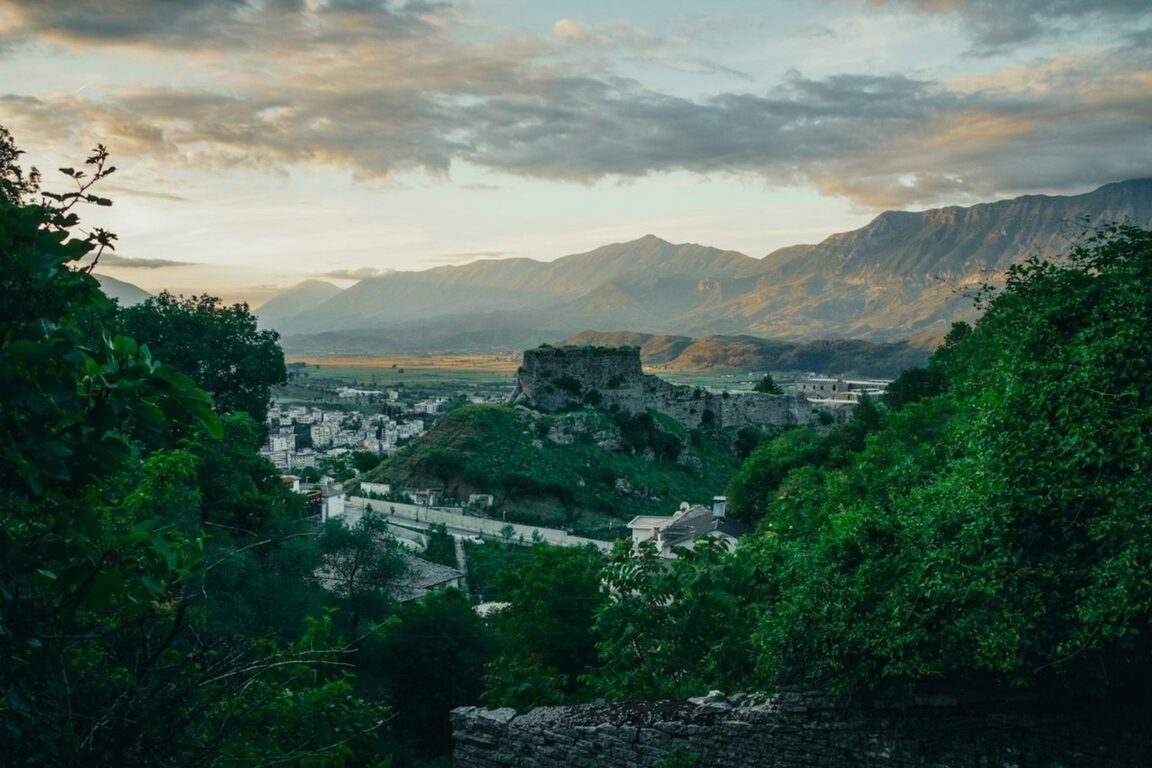
The castle is the visit. It is an extensive hilltop fortress rather than a single building, a long fortified plateau of ramparts, vaulted passages, courtyards and chambers that dominates the town and the strategic road along the valley below. The entrance sits at the southern end, reached from the Old Bazaar up a steep cobbled street lined with stalls, and the climb is the price of admission before any ticket is bought. Wear shoes with grip: the stones have been polished by centuries of feet and turn treacherous when wet.
Inside, work through three layers of history. The vaulted halls hold artillery and an arms collection drawn largely from the Second World War, including captured Italian and German weapons. The Gjirokaster Museum, on the ground level of the former prison building, tells the town’s own story in detail and carries its own separate ticket, most recently reported at 200 lek. The prison itself, founded under King Zog in 1932 and used again in the communist period, is the sobering core of the visit. Outside on the plateau, the clock tower, the festival stage used by Albania’s National Folk Festival and the open ramparts give the wide views: stone roofs below, the Drino plain beyond, and the Gjerë mountains closing the horizon. Published opening hours and prices for the castle conflict between sources, with adult entry most recently reported at 400 lek, children under 12 free, and high season hours of 9am to 7pm against shorter winter hours. Treat any figure found in advance as provisional, confirm at the gate, and carry lek in cash, because card payment cannot be assumed.
What is the Cold War Tunnel, and is it part of the castle?
No, and the distinction matters for planning. The Cold War Tunnel is a separate attraction in the town centre near Cerciz Topulli Square, with its own entrance, ticket and guided format. It is an underground bunker complex built in secrecy in the early 1970s, in the era of Enver Hoxha, designed as an emergency shelter and command space for local authorities in case of attack. Accounts describe a network of long concrete corridors and dozens of rooms, unknown even to most residents until after the communist period ended. Visits run as guided walk-throughs in small groups and take roughly 30 to 45 minutes. Most recent listings put entry at 200 lek, with longer hours from April to October and a short winter morning schedule, but access arrangements vary, so check the day’s tour times at the entrance before climbing to the castle, not after.
Which houses should you walk through?
Skenduli House and the tower house format
Gjirokaster’s great Ottoman houses are fortified homes, built tall and defensive in unsettled times, with stone ground floors, overhanging upper rooms and interiors arranged around family hierarchy and the seasons. The Skenduli House, in the bazaar quarter’s orbit, is the name most often opened to visitors, presented by members of the family that built it, and it explains the format better than any plaque: reception rooms, winter and summer quarters, and the small defensive details that turn a house into a minor castle. A second grand house, Zekate, sits above the town with the classic view back toward the castle. Ask locally which houses are open on your dates, because opening is by arrangement and season rather than by fixed museum hours.
The Old Bazaar, walked slowly
The bazaar is the town’s living room: a knot of cobbled lanes at the castle’s foot where workshops, cafes and small shops occupy the stone ground floors. It rewards two passes, one in the morning when deliveries and coffee set the tone, and one in the early evening, when the castle above turns gold and the day visitors have gone. This is where an overnight proves itself. A drive-through visitor gets the bazaar at its most crowded and hottest; a resident for one night gets it at its best twice.
How long do you need, and how do you get here?
One night and one full day is the honest minimum: bazaar and a tower house on arrival, the tunnel timed around its guided slots, the castle saved for late afternoon light, and a slow morning before moving on. Two nights suit travellers walking the valley edge, adding the Ali Pasha Bridge aqueduct remains outside town, or simply enjoying a second bazaar evening. Gjirokaster sits in Albania’s far south, reached by road from Tirana in roughly four hours, from Berat in about 2.5 to 3 hours, and from the Saranda coast and its Greek border crossings in about an hour. Most travellers arrive as part of a southern Albania route that continues to the Riviera, and the town also works as the inland counterweight to a beach stay. Regional travellers building a wider Balkan circuit will find the same stay-past-the-day-trip logic in our guide to Ohrid, North Macedonia’s lake town of churches, a few hours northeast across the mountains.
Frequently Asked Questions
Is Gjirokaster worth staying overnight or is a day trip enough?
Stay overnight if you possibly can. A day trip compresses the castle, bazaar and tunnel into the busiest hours and the hardest light. A night gives you the castle in late afternoon, the bazaar in the evening and again in the morning, and the town at the pace its residents keep.
How much does Gjirokaster Castle cost, and when is it open?
Published figures conflict. Recent guides most often report adult entry at 400 lek with children under 12 free, the Gjirokaster Museum inside ticketed separately at around 200 lek, and hours of about 9am to 7pm in the high season with shorter winter hours. Confirm the current tariff and hours at the gate and carry cash in lek.
Is the Cold War Tunnel inside the castle?
No. The tunnel is a separate town centre attraction near Cerciz Topulli Square, visited on its own guided tour with its own ticket, most recently reported at 200 lek. Allow 30 to 45 minutes and check the day’s tour times early, because winter hours are short.
Can you visit Gjirokaster and Berat on the same trip?
Yes, and the pairing is the natural one, because the two towns form a single UNESCO property. They sit about 2.5 to 3 hours apart by road. Give each its own overnight: Berat for the windows and the river, Gjirokaster for the castle and the stone.
When is the best time to visit Gjirokaster?
Spring and autumn, when the castle climb and the cobbled lanes are comfortable and the town is quieter than in the summer peak. Summer brings long bazaar evenings at the cost of heat on exposed stone. Winter is atmospheric and very quiet, but hours at the castle and tunnel shorten, so plan sightseeing for the middle of the day.
Facts checked 14 November 2026 against UNESCO’s listing for the Historic Centres of Berat and Gjirokastra and current visitor listings for the castle, museum and Cold War Tunnel. Castle and tunnel prices and hours conflict between published sources; the figures above are the most recently reported and should be confirmed at the gate. Featured image: Gjirokaster Castle above the old town, Gjirokaster, Albania. Photo by Shana Van Roosbroek on Unsplash, Unsplash License, via a captioned verbatim hosted copy on Honge.