 Kwame Mensah
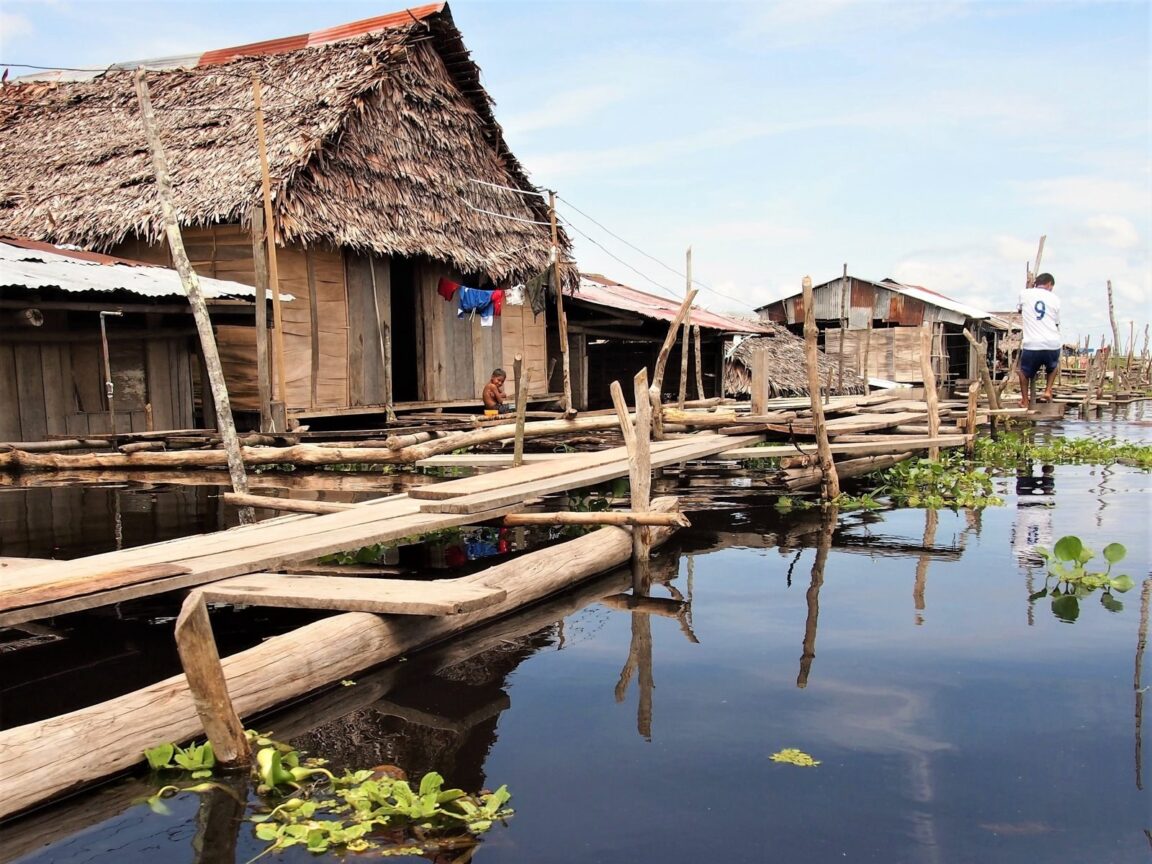
Iquitos is the largest city in the world that cannot be reached by road, and that single fact organises everything about a visit: you arrive by plane or by river boat, the jungle lodges that justify the trip leave from its docks by water, and its most famous district, Belen, rises and falls on stilts and rafts with the level of the Itaya River. Give the city itself one to two days, for Belen Market with a guide, the rubber boom riverfront and the Iron House, then give the forest three days or more at a lodge or inside the Pacaya Samiria National Reserve. Travelers who treat Iquitos as a mere airport miss half of what they flew in for.
Quick Facts
- Access: Air or river only. No road connects Iquitos to the rest of Peru
- Airport: Coronel FAP Francisco Secada Vignetta International Airport (IQT), about 7 kilometres southwest of the centre
- Flight from Lima: About 1 hour 40 minutes nonstop, with daily services
- Setting: Capital of the Loreto region, at the meeting of the Amazon, Nanay and Itaya rivers
- The signature district: Belen, the stilt and floating neighbourhood on the Itaya, visited with a local guide
- The reserves: Pacaya Samiria, reached by road to Nauta then by boat, and Allpahuayo Mishana, closer to the city
- The stay: One to two days in the city plus three or more days at a lodge or on a river programme
- High water: Roughly December to May, when rivers rise and flooded forest opens to boats
How do you reach a city with no road in?
By air, for almost everyone. Iquitos is the capital of Peru’s Loreto region and the largest metropolis in the Peruvian Amazon, yet no highway links it to Lima, Cusco or any other major Peruvian city. The one road of consequence runs about two hours southwest to the river town of Nauta and stops there; beyond Nauta, everything moves by water. Daily flights connect Lima with Iquitos airport in about 1 hour 40 minutes nonstop, and the airport sits roughly 7 kilometres from the centre, a short mototaxi or taxi ride into town.
The river route is the romantic alternative and the slow one. Cargo boats from Yurimaguas take about two to two and a half days, boats from Pucallpa take several days, and fast boats run downriver to the triple border with Colombia and Brazil at Santa Rosa, Leticia and Tabatinga in about 10 to 12 hours. Schedules shift with river levels and operators, so treat river timings as approximate and confirm locally. For most itineraries the pattern is simple: fly in, sleep in the city, and let the rivers take over from there.
What should you do in the city itself?
Belen Market and the floating district, with a guide
Belen is one of Iquitos’ four districts and the reason the city earns its Venice of the Amazon nickname. The market is a vast open air sprawl selling river fish, jungle fruits, medicinal plants and cooked food, fed every morning by boats arriving from river communities. Below and beyond it, Lower Belen is built on stilts and floating platforms that rise and fall with the Itaya, so the neighbourhood literally changes height with the season. Go early, when the market is busiest and the heat is lowest, and go with a local guide: the market is free to wander, but the floating district is a residential neighbourhood with a reputation for petty crime in its rougher corners, and a guide turns a cautious walk into an informed one.
The rubber boom riverfront
The centre holds the memory of the rubber boom, when Iquitos grew rich and strange at the edge of the map. The Iron House on the Plaza de Armas, a prefabricated iron residence shipped from Europe in the boom years, is the emblem, and the tiled facades and riverfront malecon around it repay a slow hour. The Ayapua, a restored rubber era steamboat moored as a museum ship, tells the same story from the water’s side. None of this needs a full day. It needs a morning walk before the heat peaks, which is also when the plaza and the market are most alive.
How do the lodges and reserves actually work?
Iquitos is a staging city, and understanding the staging logic is the key planning skill. River lodges sit one to three hours from the city by boat along the Amazon and its tributaries, and their packages normally bundle the boat transfer, meals, a guide and the activity programme: canoe trips in flooded forest, day and night jungle walks, piranha fishing, and outings to spot pink and grey river dolphins, monkeys, sloths and caimans. You do not assemble this yourself dockside. You book a lodge or an operator in the city, store spare luggage at their office, and board their boat. Book with established, well reviewed operators rather than touts at the airport or in the street.
The deeper option is Pacaya Samiria National Reserve, one of the largest protected areas of flooded forest in the Amazon at about 2.08 million hectares. Trips there typically run overland to Nauta, then continue by boat into the reserve, which is why Pacaya Samiria programmes are longer and more expeditionary than a standard lodge stay. The closer Allpahuayo Mishana National Reserve, known for its white sand forests and endemic birds, works as a day or overnight trip from the city. Travellers combining Iquitos with Peru’s high country should note the contrast and plan for it: Iquitos sits at lowland altitude with no altitude sickness risk at all, while the Andean half of a Peru trip, covered in our explainer of the Salkantay Trek, Peru’s lodge to lodge route to Machu Picchu, tops out above 4,600 metres. Sequence the jungle after the mountains, or allow proper acclimatisation days if you reverse the order.
When should you go, high water or low?
The river decides. In the high water months, roughly December to May, rains raise the rivers and boats can push deep into flooded forest, which is the classic Amazon image and the best season for canoe based wildlife watching close to the lodges. In the lower water months the rivers drop, beaches and trails emerge, jungle walks lengthen, and fishing improves, while some flooded forest routes close. Neither season is wrong; they are different products. Heat and humidity are constants in both, and the city’s own rhythm, market mornings and riverfront evenings, runs all year. Round out a Peru route with the food first days in the capital from our Lima food guide to ceviche, Nikkei and Barranco, which pairs naturally with a jungle extension at either end of the trip.
Frequently Asked Questions
Why can you not drive to Iquitos?
Because no road connects it to the rest of Peru. The city is surrounded by rainforest and rivers in the Amazon Basin, and its only road of consequence runs about two hours to Nauta and goes no farther. Everything and everyone arrives by plane or by boat, which is why Iquitos is described as the largest city in the world unreachable by road.
How many days do you need in Iquitos?
Four to five days is the working answer: one to two days in the city for Belen, the riverfront and the rescue centres, and three days or more at a jungle lodge or on a Pacaya Samiria programme. A single overnight between flights wastes the journey out here.
Should you visit Belen on your own?
Wander the market itself in the morning if you wish, but take a local guide into the floating district of Lower Belen. It is a lived in neighbourhood, not an attraction, the footing and the routes change with the river, and the market area has a known petty crime problem that a guide navigates routinely.
What is the difference between a lodge stay and Pacaya Samiria?
A lodge stay is a fixed base one to three hours by boat from the city, with activities radiating from the lodge. Pacaya Samiria is a vast national reserve reached via Nauta and then by boat, run as a multi day expedition with camping or reserve based accommodation. The reserve goes deeper and wilder; the lodge is simpler and more comfortable.
When is high water in Iquitos?
Roughly December to May, when rains raise the Amazon and its tributaries and flooded forest opens to boats. Lower water in the middle of the year exposes trails and beaches and favours walking and fishing. Lodge programmes run in both seasons with adjusted activities.
Facts checked 14 November 2026 against PromPeru and operator guidance for Iquitos access, flight times and reserve logistics, and current city guides for Belen and the lodge staging system. River schedules vary with water levels; confirm boat times locally. Featured image: The Amazon riverfront at Iquitos, Peru. Photo by Deb Dowd on Unsplash, Unsplash License, via a verbatim hosted copy served by the Danish Refugee Council.