 Thandiwe Nkosi
Vang Vieng with kids works, but only once you understand the numbering. Almost everything a family wants sits on the west bank of the Nam Song river: a string of spring fed swimming lagoons numbered 1 upward, viewpoint hills behind them, and caves built into the karst. Lagoon 1 is the closest, busiest and best set up for small children; Lagoon 2 is the big, manicured sunbathing option; Lagoon 3, about 19 km out, is the quiet, wild one that suits older kids who can handle a long bumpy ride. Cross the toll bridge in the morning, do one lagoon properly instead of three badly, build the middle of the day around shade, food and a nap back in town, and the old tubing town turns into an easy family base.
Quick Facts
- Where: The west bank of the Nam Song river at Vang Vieng, Laos, reached by the toll bridge from town; the lagoons, viewpoints and caves all sit on this side
- Lagoon entry: About 20,000 LAK per person at the lagoons in 2026 checks, cash in kip; some listings for Lagoons 2 and 3 show 30,000 LAK, so carry small notes and expect the gate price to rule
- Bridge toll: About 10,000 LAK return for a scooter and less on foot; some routes quote up to 20,000 LAK, again cash only
- Distances: Blue Lagoon 1 about 7 km from town; Blue Lagoon 2 about 10 km; Blue Lagoon 3 about 19 km, roughly an hour on dirt roads
- Hours: Lagoons generally 8 or 8:30 am to 5:30 or 6:30 pm; Nam Xay Viewpoint trail about 6 am to 5 pm, entry about 20,000 LAK
- Family transport: Shared tuk tuk about 50,000 LAK per person to Lagoon 1; bicycles about 20,000 to 30,000 LAK a day and scooters 60,000 to 100,000 LAK a day, but a hired tuk tuk or songthaew is the nap friendly choice with small children
- Arriving: Laos China Railway trains reach Vang Vieng in about an hour from Vientiane or Luang Prabang; the station is about 6 km from town, shared tuk tuks about 40,000 to 50,000 LAK per person
- Best season: The cool dry months, November to March, when the roads are passable, the lagoon water is clear and the river is at its calmest
What do the lagoon numbers actually mean?
The numbering is a distance ladder, not a quality ranking, and reading it that way saves families a lot of grief. Blue Lagoon 1, about 7 km west of town near the village of Ban Na Thong, is the original: a turquoise spring fed pool under the karst, with the Tham Phu Kham cave above it, home to a reclining Buddha reached by a steep climb. It is busy, commercial and, for families, genuinely well set up, with shallow edges, shade, food stalls and a short ride home when a small child melts down. Blue Lagoon 2, about 10 km out, is larger and more manicured, with sunbathing space and a calmer feel, a good pick for a long, lazy swim day. Blue Lagoon 3, about 19 km west and an hour on dirt tracks, is the wild one: quieter water, a viewpoint and caves included in the ticket, and a journey that is half the experience. There are further lagoons beyond it, up to six in local counting, but for a family trip the first three are the decision that matters.
One honest warning about prices: lagoon fees in Vang Vieng are reported inconsistently because they change and because gates price extras separately. Current 2026 guides most often give 20,000 LAK per person for lagoon entry, with some listings showing 30,000 LAK at Lagoons 2 and 3, and life vests, lockers and cave torches cost extra in small kip amounts. Budget a little more than the headline fee, pay in kip, and do not let a dollar of difference spoil the day.
Day one, the easy win: Lagoon 1 and the cave above it
Start with the classic, and start early. Cross the toll bridge after breakfast and aim to reach Blue Lagoon 1 by about 9 am, before the tour vans pour in. The water is cold, spring fed and startlingly blue, with rope swings and jump platforms for older kids and gentle edges for paddlers. Parents should know the honest limits: the jump trees and platforms are for confident swimmers, the water is deep in the middle, and vests, rented for a small fee, are the right call for any child who is not a strong swimmer.
Above the lagoon, a steep path of a few hundred steps climbs to Tham Phu Kham cave, where a bronze reclining Buddha lies in the main chamber. With children, treat the cave as the optional extra it is: the climb is short but steep and slippery in the wet season, you will want a torch for the chambers beyond the first, and shoulders should be covered at the shrine. Do the cave first, while legs are fresh and the rock is cool, then give the rest of the morning to the water. Eat at the lagoon stalls or back in town, and protect the early afternoon: this is the nap window, and Vang Vieng’s heat makes it non negotiable with under fives. A riverside guesthouse room, a fan and two quiet hours will buy you a happy evening, which the west bank cannot.
Day two: Nam Xay Viewpoint, scaled to your children
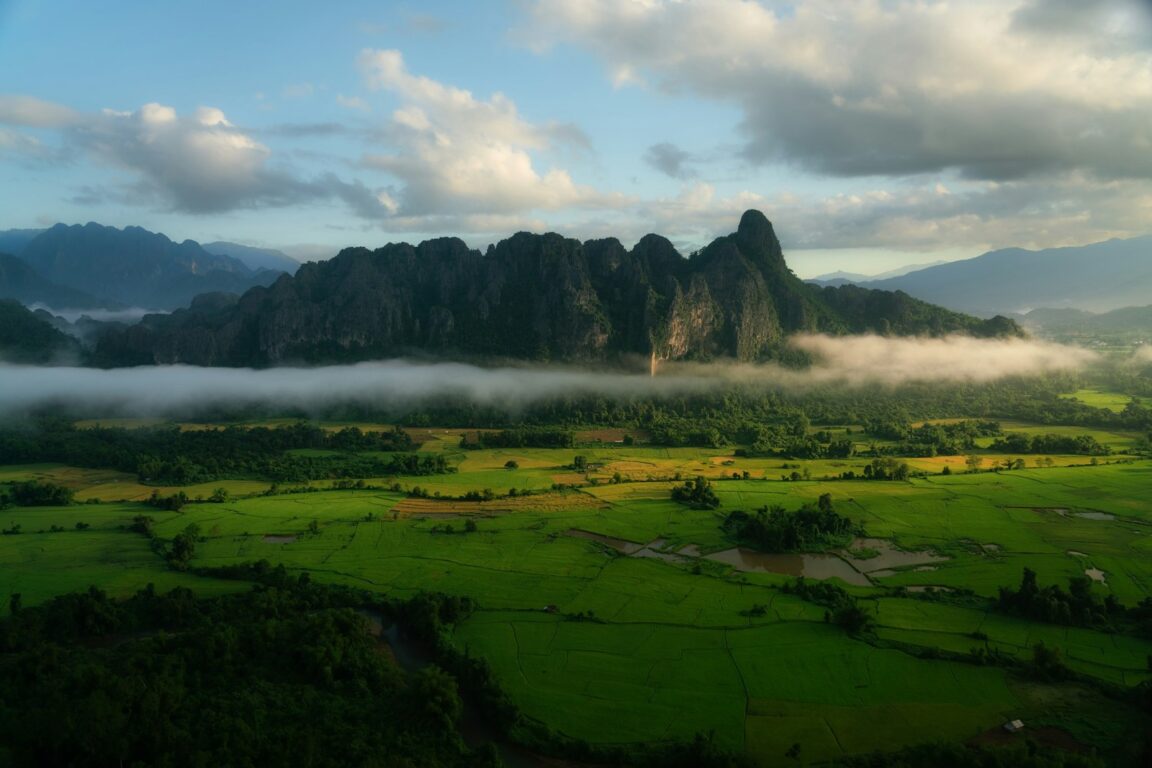
Nam Xay is the viewpoint in every Vang Vieng photograph, a karst summit above the west bank paddies with a rusted motorbike prop at the top and the Nam Song valley laid out below. The trail is a 30 to 45 minute scramble, steep and rocky in places, open roughly 6 am to 5 pm with entry about 20,000 LAK. With teenagers, go at dawn and it is the highlight of the trip. With children under about eight, be honest: the scramble is a poor fit for short legs and carrying a toddler up it in the heat helps nobody. The family version is a viewpoint morning for the older half of the family while the younger half has a slow riverside breakfast, then a regroup for a gentle afternoon.
The gentle afternoon has a good local answer. Tham Chang cave, just south of town across a small bridge, is reached by a lit stairway rather than a scramble, has a spring pool at its mouth for a cool dip, and asks much less of small legs. Pair it with the flat west bank lanes by bicycle if your children ride confidently, or simply with the riverbank in town, where the karsts turn gold at sunset and the sandbank bars serve drinks for the grown ups. After the 2024 methanol poisoning incident in Vang Vieng, the standing advice for parents is simple and worth repeating: stick to sealed, brand name drinks, and skip free shots and suspiciously cheap spirits entirely.
Day three, for older kids: the long ride to Lagoon 3
Lagoon 3 is the reward for families whose children travel well. The ride out, about 19 km through paddies and Hmong villages on dirt roads, takes around an hour and is dusty in the dry season and muddy after rain, so it belongs on a settled weather day and never with a child who is already tired. What you get for the effort is the quietest of the main lagoons: clear water with far fewer people, platforms and a zipline for the brave, and a ticket that also covers the short hike to a viewpoint and two caves. Gates run about 8 am to 6 or 6:30 pm. Pack everything before you leave town, because there is little to buy out there beyond stall snacks and drinks: full water bottles, sun cream, kip in small notes, and a dry bag for the ride home.
Getting around is the planning decision underneath all three days. Families base themselves in town, on the east bank, and cross daily; a few guesthouses sit on the west bank itself for travellers who want the lagoons on the doorstep. Either works, but town wins for food choice, pharmacies and early nights. Readers planning a longer Laos route will find the same plan ahead logic in our guide to eating in Luang Namtha in the far north, and our Muang Ngoi day trips guide covers the other great Nam river valley base, where the boat replaces the tuk tuk.
What should families skip?
Skip tubing as a family activity. The Nam Song tubing scene is the town’s old party inheritance, much calmer than it was but still built around floating between riverside bars, and it is not designed for children. The family river options are a guided kayak trip with a reputable operator who provides life vests, taken only when the river is running low and calm, or simply the lagoons themselves. Skip, too, the multi lagoon day: three gates, three rides and three swims sounds efficient and lands as three arguments. One lagoon, done slowly, with lunch and a nap protected, is the pattern that works. Finally, skip the west bank roads after dark with children; the tracks are unlit, and every plan in this guide is built to have you back across the bridge before sunset.
Frequently Asked Questions
Which Vang Vieng lagoon is best for young children?
Blue Lagoon 1. It is the closest to town at about 7 km, the best set up with shade, stalls and facilities, and has gentle edges for paddling alongside its deeper swimming area. Arrive by about 9 am to beat the crowds, and rent a life vest for any child who is not a strong swimmer.
How much does a lagoon day cost a family?
Entry is about 20,000 LAK per person at the lagoons in 2026 checks, with some listings showing 30,000 LAK at Lagoons 2 and 3. Add the bridge toll, about 10,000 LAK return by scooter, transport, about 50,000 LAK per person by shared tuk tuk to Lagoon 1, plus small fees for vests and lockers. A family lagoon day still lands well under the cost of a single guided tour.
Can children climb to Nam Xay Viewpoint?
Older children and teenagers, yes, with an early start, water and grippy shoes; the scramble takes 30 to 45 minutes. For under eights it is steep and rocky enough that most families do better splitting the morning, with Tham Chang cave and its spring pool as the gentler alternative.
Is the water at the lagoons safe for children?
The lagoons are spring fed and clear in the dry season, and families swim in them daily. The honest cautions are depth, the water is deep away from the edges, slippery rock, and the jump platforms, which are for confident swimmers only. After heavy rain, currents and murk change the picture; check conditions at the gate.
How do you reach the west bank from Vang Vieng town?
Across the Nam Song toll bridge, paying a small cash toll that varies by vehicle, about 10,000 LAK return for a scooter. Beyond the bridge, tuk tuks, songthaews, bicycles and scooters all run the dirt roads to the lagoons; with small children, a hired tuk tuk booked for the return as well is the least stressful option.
When is the best time of year for a family trip?
November to March, the cool dry season: passable roads, clear lagoon water, a calm river and temperatures that let children stay out through the middle of the day. In the wet season the west bank tracks turn to mud and Lagoon 3 in particular becomes a hard journey.
Facts checked 16 November 2026 against Passport and Stamps’ Blue Lagoon guide updated January 2026, Bucketlistly’s Vang Vieng guide, Gecko Routes’ Vang Vieng page, Backpackers Wanderlust’s Lagoon 3 guide and FairTravels’ Vang Vieng itinerary, cross checked against each other; where lagoon fees differ between current sources, both figures are given in the text. Featured image: limestone karsts above mist and green paddies at Vang Vieng. Photo by Kalinskie Gilliam on Unsplash, Unsplash License, via FairTravels.