 Aiko Tanaka
Pack to get wet on purpose: a spring day in Oregon Columbia River Gorge is a sequence of waterfall spray zones, wind funnels and muddy trailheads, and the right bag treats all three as certainties rather than risks. Multnomah Falls, the 620 foot two tier cascade that anchors the waterfall corridor, is fed by underground springs from Larch Mountain, and its flow is usually highest in winter and spring, per the US Forest Service summary checked today. That high water is the point of a spring trip, and it throws spray across the Benson Bridge and the viewing plaza all day. The kit that works is a real waterproof shell worn as the default outer layer, trail shoes chosen for wet rock rather than for dry summer paths, a wind layer for the exposed viewpoints, and a dry change of clothes waiting in the car. Pack that system and spring becomes the best season in the Gorge, not the compromised one.
Quick Facts
- Destination: The Columbia River Gorge, Oregon, in spring, roughly March to May, based on the Historic Columbia River Highway waterfall corridor east of Portland.
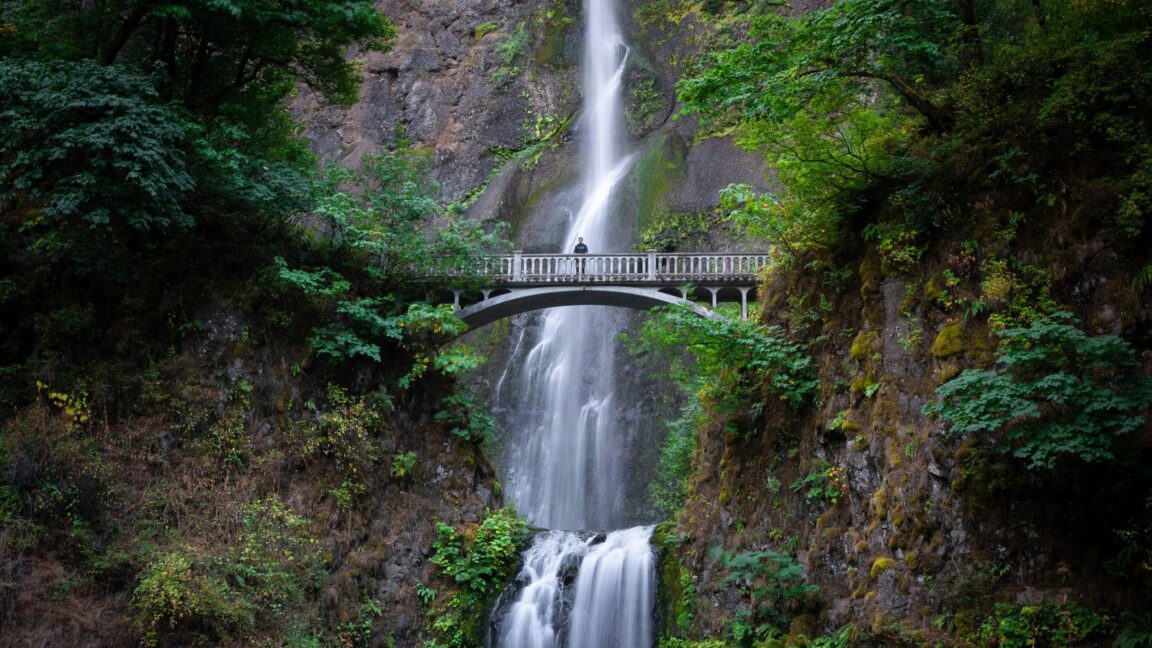
- The headline fall: Multnomah Falls drops 620 feet in two tiers and is the tallest waterfall in Oregon. Flow is usually highest in winter and spring, per the Forest Service.
- The corridor: The Gorge holds more than 90 waterfalls along an 80 mile canyon cut by the Columbia River through the Cascade Range.
- Permit note: Timed use permits for the Multnomah Falls Interstate 84 parking lot were required from 22 May to 7 September in 2026, daily 9 in the morning to 6 in the evening, per the Forest Service. Most of spring sits outside that window, but late May trips must check.
- Spring temperatures: Typically in the mid 50s to low 60s Fahrenheit through much of spring until late May, with showers and overcast spells normal.
- Bag strategy: One daypack built for spray and wind, plus a car based dry kit. Overnight bags stay simple layers.
- Photo credit: Photo by Intricate Explorer on Unsplash, Unsplash License.
Why is spring the high water season, and why does that change the packing?
Because spring is when the Gorge shows its full strength. Winter rain and Cascade snowmelt feed every creek in the corridor at once, falls that shrink to threads in August run full and loud, and the spray zones expand accordingly. At Multnomah, the plaza, the Benson Bridge and the trail above the bridge all sit inside the mist plume on a high water day, and visitors in cotton and fashion trainers learn the same lesson at the same speed. At Wahkeena, Latourell and Bridal Veil, the pattern repeats at smaller scale: wet paths, dripping overhangs and viewpoints inside the spray.
The wind is the second system. The Gorge is a sea level cut through a mountain range, and it funnels air between the wet western end and the dry country around The Dalles. Viewpoints such as Crown Point can be calm in the car park and forceful at the rail, and that wind drives waterfall spray sideways and strips heat from wet clothing. A shell that is only rain proof but not windproof, or a warm layer with no shell over it, both fail the same afternoon. The layer logic here is the wetter cousin of our Shenandoah Valley autumn packing list, where ridge wind makes the same argument in a drier season.
What is the spray proof layer system?
- Base: Merino or synthetic tops, 1 per day plus a spare. Cotton is banned from this bag; it stays cold and heavy once the spray reaches it.
- Mid: 1 fleece or light insulated jacket, worn under the shell at viewpoints and on exposed trail sections.
- Shell: 1 waterproof jacket with a proper hood, worn by default, not carried in hope. Waterproof trousers or overtrousers for anyone planning the full trail to the top of Multnomah or longer hikes in rain.
- Legs: Quick drying walking trousers. Jeans fail here completely once wet.
- Head and hands: A warm hat that fits under the hood, and thin gloves for wind exposed viewpoints in March and April.
- Dry reserve: A complete change of clothes, including socks and a top, sealed in a dry bag in the car. This is the item that turns a soaked morning into a comfortable afternoon.
How do you choose trail shoes for wet Gorge rock?
Choose tread and drainage over ankle height and fashion. Gorge trails in spring mix wet basalt, mud, wooden steps, metal grating and leaf litter, and the slip hazards are polished rock and slick roots rather than distance or altitude. A broken in trail shoe or light boot with deep, grippy lugs and a sole that still bites when wet is the right tool. Mesh uppers that drain and dry are an advantage in this corridor, because every shoe here will get wet; the question is how fast it recovers.
Pack four pairs of merino socks for a long weekend and change into a dry pair at the car between falls if the morning has been very wet. Add microspikes only for late winter and very early spring trips when ice is forecast at elevation, and check trail conditions before relying on them. Leave smooth soled trainers, suede fashion boots and brand new shoes at home, and leave sandals for summer trips only. For travellers extending east into drier country, our Badlands first timer guide covers the contrasting case of exposed, dry trails.
What goes in the daypack on a waterfall corridor day?
- The shell and mid layer: Worn or at the top of the pack, never buried.
- Water and food: At least a litre per person and food bought before entering the corridor. Services cluster at Multnomah Lodge and the towns, and trail days run long.
- Phone protection: A waterproof pouch or sealed bag for the phone at spray heavy falls, plus a small cloth for lenses and glasses, which mist over at every major viewpoint.
- Navigation: Offline maps and the Forest Service conditions page checked that morning. Spring brings closures, high water crossings and storm damage repairs somewhere in the corridor most years.
- Car kit: The sealed dry change of clothes, a towel, snacks, and a bag for wet gear so the drive home or the evening in Hood River or Troutdale starts dry.
How do evenings in the Gorge towns change the bag?
Barely, and that is the point of the system. Hood River, Cascade Locks, Troutdale and Stevenson across the river dress casually, and the sealed clean top, the smarter trousers and shoes dried at the accommodation cover every dining room in the corridor. A windproof layer doubles as the evening jacket for riverfront walks, where the Gorge wind is a feature of the place rather than a malfunction. Keep one outfit permanently out of the spray rotation and the whole trip stays civilised, however wet the days get.
What should you leave out of a Gorge spring bag?
Leave cotton everything, suede and leather fashion footwear, umbrellas as a primary rain plan, since Gorge wind defeats them at exactly the exposed places where rain hits hardest, and any single pair of shoes plan. Leave the heavy expedition parka; the system is shell plus mid layer, not bulk. And leave a rigid itinerary that assumes every trail is open: spring in the Gorge rewards the traveller whose bag and plans both bend around conditions.
Frequently Asked Questions
Do I need a permit for Multnomah Falls in spring?
For most of spring, no. In 2026 the timed use permit for the Interstate 84 parking lot ran from 22 May to 7 September, daily from 9 in the morning to 6 in the evening, per the Forest Service. Trips before that window do not need it, but late May trips should check the current season dates on Recreation.gov and the Forest Service site.
Will I actually get wet at the waterfalls in spring?
Yes, plan on it. Spring flow is the highest of the year, and spray reaches the Benson Bridge, the Multnomah plaza and the viewpoints at the other major falls. The waterproof shell and the car based dry change of clothes exist precisely for this.
Are trail shoes enough, or do I need boots?
Grippy trail shoes are enough for the corridor short trails and the Multnomah trail to the bridge and the top, provided the tread bites on wet rock. Choose light boots if you prefer ankle support on the longer, muddier routes, but tread and drainage matter more than height.
How cold is the Gorge in spring?
Typically in the mid 50s to low 60s Fahrenheit through much of spring until late May, with showers and overcast spells, and colder in wind at exposed viewpoints. Dress for the wind and spray combined, not for the car park temperature.
What is the one item people most often forget?
The dry change of clothes in the car. Visitors pack a good shell and still spend the afternoon in damp base layers after one bridge crossing too many. A sealed dry outfit, socks included, resets the whole day.
Last updated: 16 November 2026. Falls flow, permit dates and corridor facts are from US Forest Service summaries checked today; check current trail conditions and closures before you travel.