 Camille Baptiste
Pack for two climates in one bag: a mild Shenandoah Valley floor in the afternoon and a cold, windy ridge on Skyline Drive the same evening. The National Park Service gives average fall daytime temperatures of 49 to 60 degrees Fahrenheit in Shenandoah National Park, and the ridge at Big Meadows, at 3,535 feet, runs about 10 degrees cooler than the valley below. The working system is a warm mid layer you can add at every overlook, a windproof and rainproof shell, broken in walking shoes for rocky trails, and one smarter outfit kept clean for small town dinners in places like Staunton, Luray and Winchester. Everything else in this list exists to handle that daily swing without a second suitcase.
Quick Facts
- Destination: The Shenandoah Valley and Shenandoah National Park, Virginia, in autumn, roughly late September to mid November.
- Main drive: Skyline Drive, 105 miles along the Blue Ridge crest with 75 overlooks, per the National Park Service.
- Fall temperatures: Average fall daytime temperatures of 49 to 60 degrees Fahrenheit in the park, per the NPS fall colour guidance checked today; Big Meadows averages about 10 degrees cooler than the valley and about 15 degrees cooler than Washington or Richmond.
- October ridge averages: At Big Meadows, October averages a high near 58 degrees and a low near 39 degrees Fahrenheit, with November dropping to about 47 and 30 degrees.
- Peak colour: Generally the second or third week of October, per the NPS, with higher elevations changing first and colour moving down the mountain.
- Bag strategy: One carry on sized bag plus a daypack. Layers do the work; no single heavy coat.
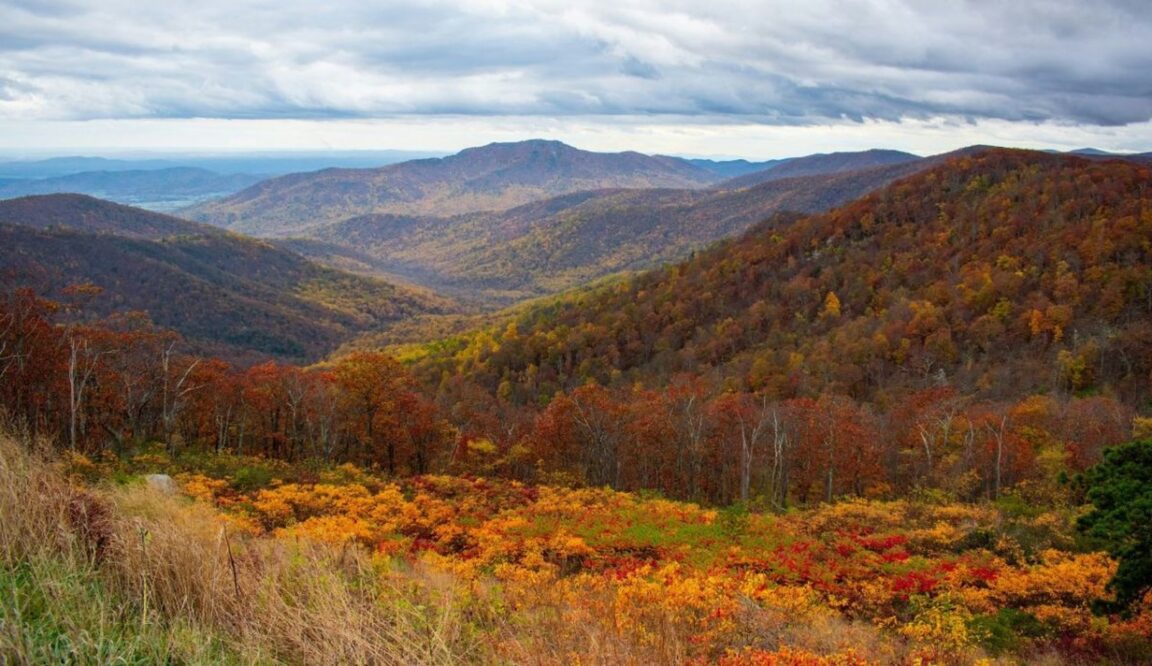
- Photo credit: Photo by Akhila Katuri on Unsplash, Unsplash License.
Why does a Shenandoah autumn bag need ridge layers and valley clothes?
Because the trip moves vertically all day. A typical autumn day starts with coffee in a valley town, climbs to an entrance station at Front Royal, Thornton Gap, Swift Run Gap or Rockfish Gap, spends hours between 2,000 and 3,500 feet on Skyline Drive, drops down for an orchard stop or a cave visit, and ends with dinner back on the valley floor. Each move changes the temperature, the wind and the dress code. Packing only for the town forecast leaves you cold at every overlook. Packing only for the ridge leaves you overdressed at lunch and at dinner.
The colour season makes the swing sharper. The Park Service notes that trees at higher elevations change first, so the best colour early in the season is high, where it is coldest, and later colour sits lower, where afternoons are milder. A bag built on layers follows the colour down the mountain across a long weekend. For route planning once the bag is packed, see our ranked guide to Shenandoah Skyline Drive day hikes, which orders the short walks that these layers are built for.
What is the layer system for Skyline Drive in autumn?
Build three layers, and wear the heaviest pieces in the car so they take no bag space. The base layer is merino or synthetic tops, two long sleeved and one short sleeved, that can be washed in a sink and dry overnight. Cotton is the wrong fabric here: it stays cold when damp, and ridge fog and light rain are common in autumn. The mid layer is the engine of the bag. Pack one fleece or light insulated jacket warm enough to stand still in at an overlook at 40 degrees with wind, because standing still for photographs is much colder than walking. The outer layer is a waterproof shell with a hood, sized to fit over the mid layer, that doubles as wind protection on exposed summits like Hawksbill and Stony Man.
- Base: 3 merino or synthetic tops, 1 set of merino leggings or long underwear for late October and November trips.
- Mid: 1 fleece or light insulated jacket, worn on drive days.
- Shell: 1 waterproof jacket with hood; waterproof trousers only if multi hour hikes are planned in a wet forecast.
- Legs: 2 pairs of walking trousers, one of them soft shell or lined for cold mornings; jeans only as the dinner trouser, never for trails.
- Extremities: Warm hat, gloves and a neck gaiter from mid October onward. Ridge wind makes these worth more than a second jumper.
- Sleep and town: Light pyjamas and one clean shirt kept sealed in a packing cube so orchard dust and trail days never reach it.
What shoes work for rocky trails, orchards and dinner?
Two pairs, no more. The first is a broken in walking shoe or light boot with a grippy sole. Shenandoah trails are rocky, leaf covered and slippery after rain, and popular walks such as Dark Hollow Falls and the Limberlost Trail mix wet stone with mud. Ankle support matters less than tread and a fit that does not slip on descents. The second pair is a clean, flat shoe or smart boot that works in restaurants and historic streets in Staunton and Winchester. Keep it in the bag until evening so it stays presentable.
Socks decide comfort more than shoes do. Pack four pairs of merino hiking socks, one per walking day plus a spare, and wash as you go. Add a pair of liner socks if you are prone to blisters on the longer climbs to Old Rag, which is a full day, permit checked undertaking and not a casual stroll. Leave heels, smooth soled fashion boots and brand new shoes at home: cobbles, wet leaves and gravel overlooks punish all three.
How do you pack for orchard stops and valley afternoons?
Autumn in the valley means farm stands, pick your own orchards, cider tasting rooms and markets, often on grass or gravel in mild sun. This is where the short sleeved base layer and sunglasses earn their place, and where a packable tote matters: apples, cider and jars need a bag that is not your daypack full of layers. A light crossbody or the daypack worn half empty works for town days. Add a reusable bottle, because refills are easy in towns and visitor centres, and a small sun hat or cap for exposed midday stops in September and early October, when valley afternoons can still feel like late summer.
One caution for orchard days: keep the shell and mid layer in the car even when the valley is warm. Most itineraries end the day back on the ridge for sunset, and the temperature drop at an overlook after 5 pm in October is the single most common way Shenandoah visitors end up cold. The layers live in the car, not in the hotel room.
What should the small town dinner outfit be?
One outfit, built from pieces that also work in the day. Dark walking trousers or the clean jeans, the sealed clean shirt or a knit top, the smart shoes, and a scarf or light blazer if your bag has room. Shenandoah valley towns dress casually; a tidy, warm outfit beats formal clothes in every restaurant in Staunton, Luray, Sperryville and Winchester. If the trip includes a performance at the Blackfriars Playhouse in Staunton or a special occasion dinner, a single smarter top upgrades the same base without adding a garment bag. Keep jewellery and extras minimal, and let the outfit repeat: nobody in a small town dining room is tracking your rotation.
What goes in the daypack on Skyline Drive?
- Water: At least 1 litre per person, more for Old Rag or Whiteoak Canyon days. There is no water at overlooks.
- Food: Lunch and snacks bought in a valley town before entering the park; food services inside the park are seasonal and spaced far apart.
- The layers: Mid layer and shell, even on a warm start.
- Navigation: The park map from the entrance station plus an offline map on your phone; signal is patchy along the ridge.
- Safety: Headtorch, small first aid kit, tissues, hand sanitiser, and any medication. Afternoon fog can slow the drive and stretch the day.
- Car kit: Fuel bought before entering, because there is limited fuel on the drive, a phone charging cable, and a printed note of which entrance you will exit, so the valley dinner plan matches the milepost you finish at.
That daypack discipline is the same one used in colder places at higher stakes; our Quebec City in December packing list shows the winter version of the same layer first approach.
What should you leave out of a Shenandoah autumn bag?
Leave the heavy expedition coat, the second pair of boots, dress shoes, a full size tripod unless photography is the point of the trip, and any single purpose outfit. Leave cotton hoodies and cotton socks, which chill fast on the ridge. Leave a large suitcase in favour of a smaller bag you can lift into the car boot quickly, because Skyline Drive days involve constant short stops and a bag that may move between car and cabin more than once. If the forecast for your exact dates shows a warm spell, drop the long underwear, not the shell: rain and wind are likelier than deep cold in October, and the shell handles both.
Frequently Asked Questions
How cold does Skyline Drive get in October?
Plan for 49 to 60 degrees Fahrenheit in the daytime across the fall season, per the National Park Service, and colder at the highest overlooks and after sunset. Big Meadows averages an October high near 58 and a low near 39 degrees, and the ridge runs about 10 degrees cooler than the valley floor, so a valley town forecast is not a ridge forecast.
When is peak fall colour in Shenandoah?
Generally the second or third week of October, per the NPS, but the park stresses that an exact peak cannot be predicted. Higher elevations colour first and the change moves downhill, so check the park Fall Color Report in the days before you travel and choose your Skyline Drive section by elevation.
Can I do this trip with carry on only?
Yes, easily for a long weekend. Wear the mid layer and walking shoes while travelling, pack the shell and clothing cubes, and keep the dinner outfit to pieces that mix with day clothes. The bag only grows if you add a second smart outfit or full hiking boots, neither of which the trip needs.
Do I need hiking boots or are shoes enough?
Grippy walking shoes are enough for the popular short trails and overlooks. Choose light boots if you plan Old Rag, Whiteoak Canyon or several rocky descents, or if rain is forecast, because wet rock and leaf litter are the main slip hazards in autumn.
What is the one item people most often forget?
Gloves and a warm hat. Visitors pack a jacket for October and then stand at a windy overlook at sunset with bare hands and ears. From mid October onward, gloves, hat and a neck gaiter weigh almost nothing and change how long you can stay out for the best light.
Last updated and prices checked: 16 November 2026. Temperatures and colour timing are long run park guidance from the National Park Service, checked today; check the park alerts and Fall Color Report for your exact dates.